
A wrap-up of posts published on Maven’s Notebook this week …
Note to readers: Sign up for weekly email service and you will receive notification of this post on Friday mornings. Readers on daily email service can add weekly email service by updating their subscription preferences. Click here to sign up!
In California water news this week …
California releases new climate science, projections to prepare for climate change impacts
 “As California faces unprecedented warming and increasingly severe climate impacts, the state is releasing new research from California’s Fifth Climate Change Assessment, which details how climate conditions are changing across the state and what communities can expect. The Fifth Assessment brings together the latest climate science, data, research, tribal knowledge and community perspectives to help state and local leaders better understand the risks posed by climate change and take action to protect their communities. The research will inform efforts to strengthen climate resilience, guide local planning, and prepare for worsening climate impacts. “As the Trump administration turns its back on science, California is doubling down on climate action, on protecting our communities, and on building a safer future,” said Governor Gavin Newsom. “We are putting the latest science to work so communities across the state have the tools to confront the climate crisis head-on.” … ” Continue reading this press release.
Latest climate report warns of major upheaval to California way of life
“In just a few decades, summers in California will not only be much hotter, but will also stretch for months longer. Floods will become more widespread and extreme. Exposure to wildfire smoke will kill thousands more people every year. Those are the dire projections of California’s Fifth Climate Change Assessment, a report produced by California every few years that analyzes the impacts of changing weather patterns on the nation’s most-populous state. The future laid out in the report, which was published on Monday, touches on familiar warnings: more wildfires, bigger storms, longer droughts. But it illustrates in unsettling detail just how quickly the climate is being reshaped, and reveals what is likely to be major upheaval to long-established ways of life in California. … ” Read more from the New York Times.
New report: Fifth Climate Change Assessment: Delta Impacts
 “The Sacramento-San Joaquin Delta (Delta) is essential to California’s water, agricultural, ecological, and cultural systems. It supplies a portion of the water used by more than 27 million Californians, supports a $4.6 billion agricultural economy, and sustains habitat for more than 750 plant and animal species. Yet it is also one of the most climate-vulnerable regions in the state, facing higher relative sea level rise than the San Francisco Bay Area due to land subsidence and its position at the confluence of California’s two largest rivers. This report compiles the best available data on climate change in the Delta, including relevant findings from other Fifth Climate Change Assessment reports, summarizes the Delta agencies’ and the Delta Independent Science Board’s regional adaptation planning work, and identifies major investment needs to ensure the region’s long-term resilience. The report also reflects the Delta agencies’ commitment to ensuring that adaptation planning meaningfully involves and represents marginalized and historically excluded communities.” Click here to access the report.
California’s storm door is about to swing wide open
“An atmospheric firehose could soon take aim at California, raising the prospects of a wet and stormy Halloween and Election Day. The massive pattern change is likely to take shape during the last week of October and may persist into the first full weekend of November. Some of the precipitation numbers being advertised by weather models are impressive. At this time range, over a week away, meteorologists use ensemble weather models, collections of forecasts run with small variations to represent multiple outcomes, different from the medium. Several models are calling for upwards of 1 to 3 inches of rain around the Bay Area by the first weekend of November. Even more precipitation is forecast for southern California and the Sierra. Exact amounts aren’t guaranteed by any means at this time range, but the trend is hard to ignore. California is primed for rain this winter, in part due to unusual ocean heat associated with this year’s extremely powerful El Niño. … ” Read more from the San Francisco Chronicle. | Read via Yahoo News.
Climate change plus a super El Niño could add up to a record-wet winter for California

“California’s climate-change-and-El Niño-intensified extreme weather siege may only be beginning. After the state endured its hottest year-to-date period on record and a multi-million-dollar battering by Hurricane Marie in September and Hurricane Rachel in October, much greater destruction could be on the way this winter. El Niño is continuing to warm coastal waters, and because water expands as it heats, sea levels could rise to unprecedented heights during the coming king tides at Thanksgiving, Christmas, and late January. In concert with the rising seas will likely come a battering by record-wet atmospheric rivers when the jet stream assumes its usual California-centered configuration during the coming very strong (“super”) El Niño winter. Atmospheric rivers, like rivers in the sky, carry moisture out of the tropics. … ” Read more from Yale Climate Connections.
El Niño is threatening California’s fragile coast again – the 1982‑83 El Niño opened eyes to the serious erosion risks
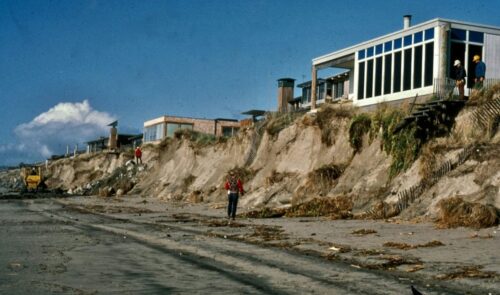
“California’s coastal bluffs and beaches look rugged, but they can be surprisingly fragile in the face of a powerful El Niño. The state saw that in 1982-83, when storms amid one of the most destructive El Niño winters in California history battered the coastline with powerful waves and torrential rain, leaving hundreds of millions of dollars in damage in its wake. The storms coincided with elevated sea levels, high astronomical tides and very large waves delivered by repeated storms. Extreme waves that winter destroyed one-third of the Santa Monica Pier and tore off large sections of the Huntington Beach Pier and the Paradise Cove Pier, while also damaging the Seal Beach, San Clemente and Malibu piers. Numerous seawalls, decks and stairways were torn apart, and 33 oceanfront homes were destroyed. … ” Read more from The Conversation.
Where El Niño may impact California coastal areas this winter
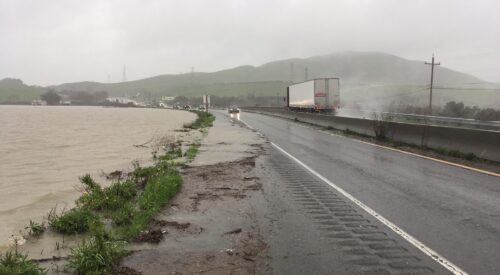
“Driving across Highway 37 in the San Francisco Bay Area on the best of days already feels like driving on top of water. Buffeted on both sides by marshlands hosting egrets, herons, ducks and a handful of endangered species, the sea-level highway is a major connector linking Marin, Sonoma, Napa and Solano Counties. It is also the sinking flagship for California’s vulnerability to sea level rise, according to the “Coastal Flooding Risks for California” report released this week from the University of California, Davis. Recent shoreline flooding in Southern California may be a precursor of what’s facing California this winter, said report author Fraser Shilling, director of the UC Davis Road Ecology Center, at the Institute of Transportation Studies. Highway 37 and other roads and highways along California’s coastline are extremely vulnerable to floods and failure during this winter’s coming El Niño, the report said. “We face the risk — though not the certainty — of catastrophic flooding in a variety of coastal towns this winter,” Shilling said. “It’s important to be informed of risk so you can make decisions.” … ” Read more from UC Davis.
Getting groundwater recharge ready for Super El Niño—and the wet years beyond
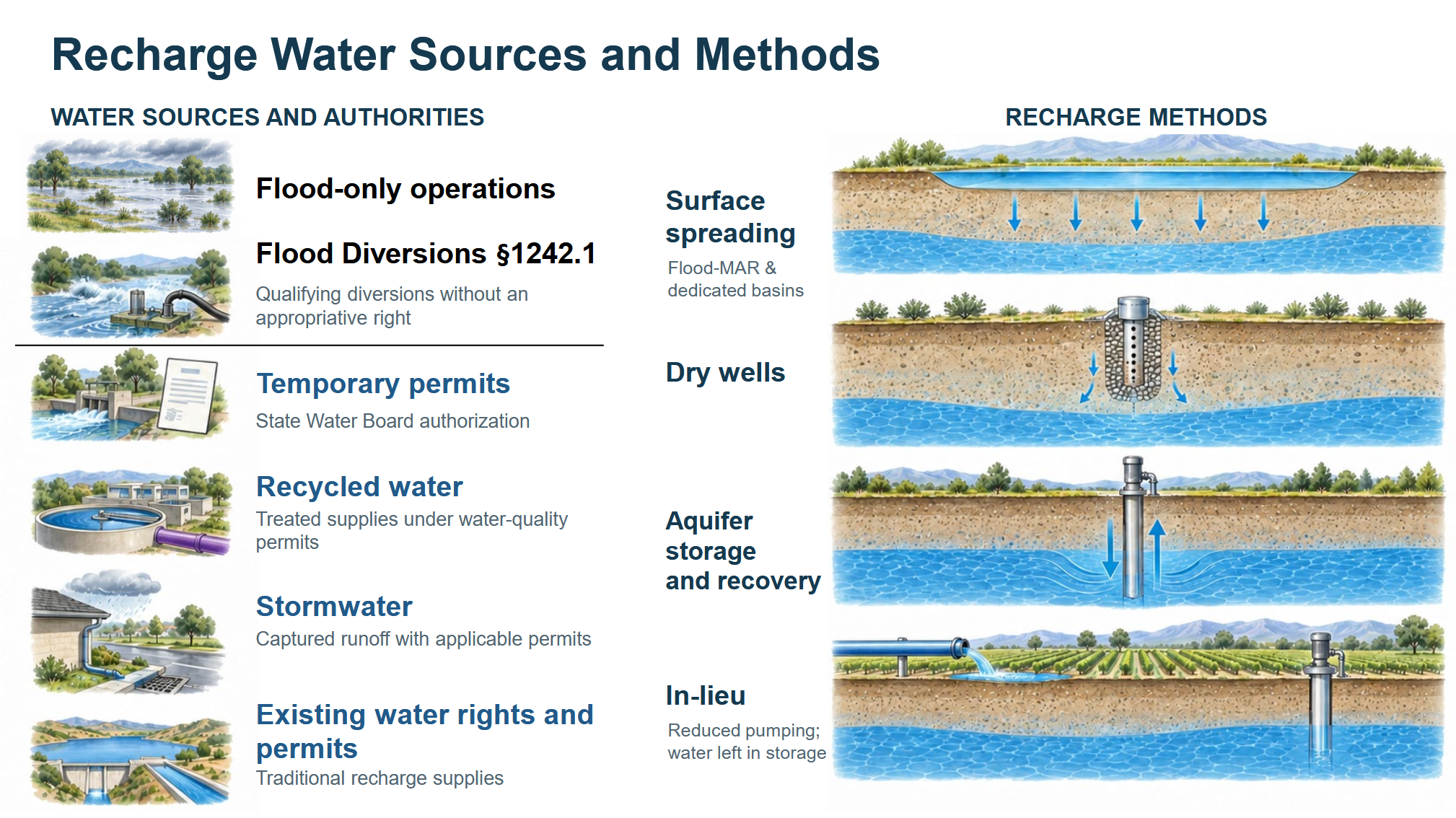 “Groundwater basins can serve as large underground reservoirs, storing water during wet periods for use in drought years. When water rights and environmental requirements are met, excess flood flows can be directed underground to replenish aquifers, reduce flood risk and improve drought preparedness. Recharge is becoming more important as climate change reduces the Sierra Nevada and Cascade snowpack and brings greater swings between drought and intense storms. Well-planned projects can provide multiple benefits, including water-supply reliability, aquifer replenishment and ecosystem enhancement. Twelve years into implementation of the Sustainable Groundwater Management Act, more than 250 groundwater sustainability agencies are carrying out nearly 2,000 projects and actions under more than 100 groundwater sustainability plans. More than 500 proposed projects focus on recharge and could add an estimated 1.5 million acre-feet of water supply annually. Recharge reported to the Department of Water Resources varies widely with conditions—from about 200,000 acre-feet in dry years to 4.9 million acre-feet in wet 2023. At the California Water Commission’s September meeting, a forecasted Super El Niño added urgency to a broader discussion of groundwater recharge readiness. State and local representatives examined how agencies could prepare to capture high flows if an unusually wet winter developed, while also building long-term capacity for future storms. … ” Read more from Maven’s Notebook.
State Water Board releases revised final Bay-Delta Plan
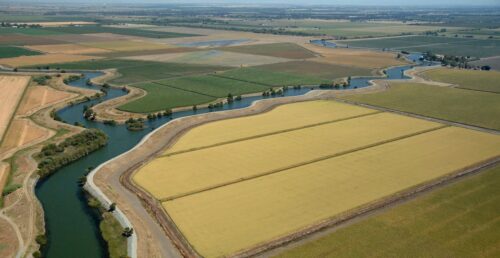
“Following a years-long process that included multiple workshops, hearings and extensive public input, the State Water Resources Control Board today released final proposed amendments to the San Francisco Bay/Sacramento-San Joaquin Delta Watershed (Bay-Delta Plan) before considering the plan for adoption at the end of the month. The proposed amendments focus on the Sacramento River watershed, Delta eastside tributaries (including the Calaveras, Cosumnes, and Mokelumne Rivers), and Delta (referred to as the Sacramento/Delta). Today’s draft includes clarifications and minor revisions to the Aug. 18 version that were made based on written comments the board received during its final written comment period, which concluded Sept. 18. Oral comments will still be heard before the board votes whether to adopt the plan at its Oct. 28-29 meeting. … ” Read more from the State Water Board.
Critics blast California’s $180-million water buy as ‘extraordinarily expensive’
“The Newsom administration is coming under fire for paying $180 million to a private investment firm that speculates on water in exchange for a relatively small amount of additional water for Sacramento River salmon. Some environmental advocates fear it could set a precedent for overcharging California taxpayers in a water-constrained future. State officials and supporters of the deal say it’s not that simple because, among other things, it’s a one-time payment for water in perpetuity, not just for one year. This year, the Newsom administration reached the deal to purchase water used by a Northern California farm, saying the goal was to leave the water in the river to help fish and the environment. But Barry Nelson, an advisor for the Golden State Salmon Assn., said the small amount doesn’t justify the cost. “This is extraordinarily expensive water,” said Nelson, who, along with leaders of other environmental and fishing groups, wrote to state regulators raising concern. He said it “seems like a really bad investment for the public.” … ” Read more from the LA Times.
Could saving summer snow change the future of skiing?
“Skiers and snowboarders returned to the slopes at Colorado’s Snowmass ski resort in early October, carving turns on snow that had survived the state’s hottest summer on record. It wasn’t newly fallen snow, and it wasn’t made by snowmaking machines. It was leftover snow from last winter, preserved for nearly five months beneath enormous insulated blankets. The experiment worked so well that Aspen Snowmass has already purchased additional blankets for next year, raising an intriguing possibility for ski resorts confronting warmer water and growing pressure on water and energy resources: What if some of winter’s snow could simply be saved for later? In spring 2026, crews at Aspen Snowmass gathered remaining snow into large piles at Snowmass and nearby Buttermilk, covering them with insulated blankets developed by Finnish company Snow Secure. … ” Read more from AccuWeather.
California recycled water use rises as state tracks long-term goals
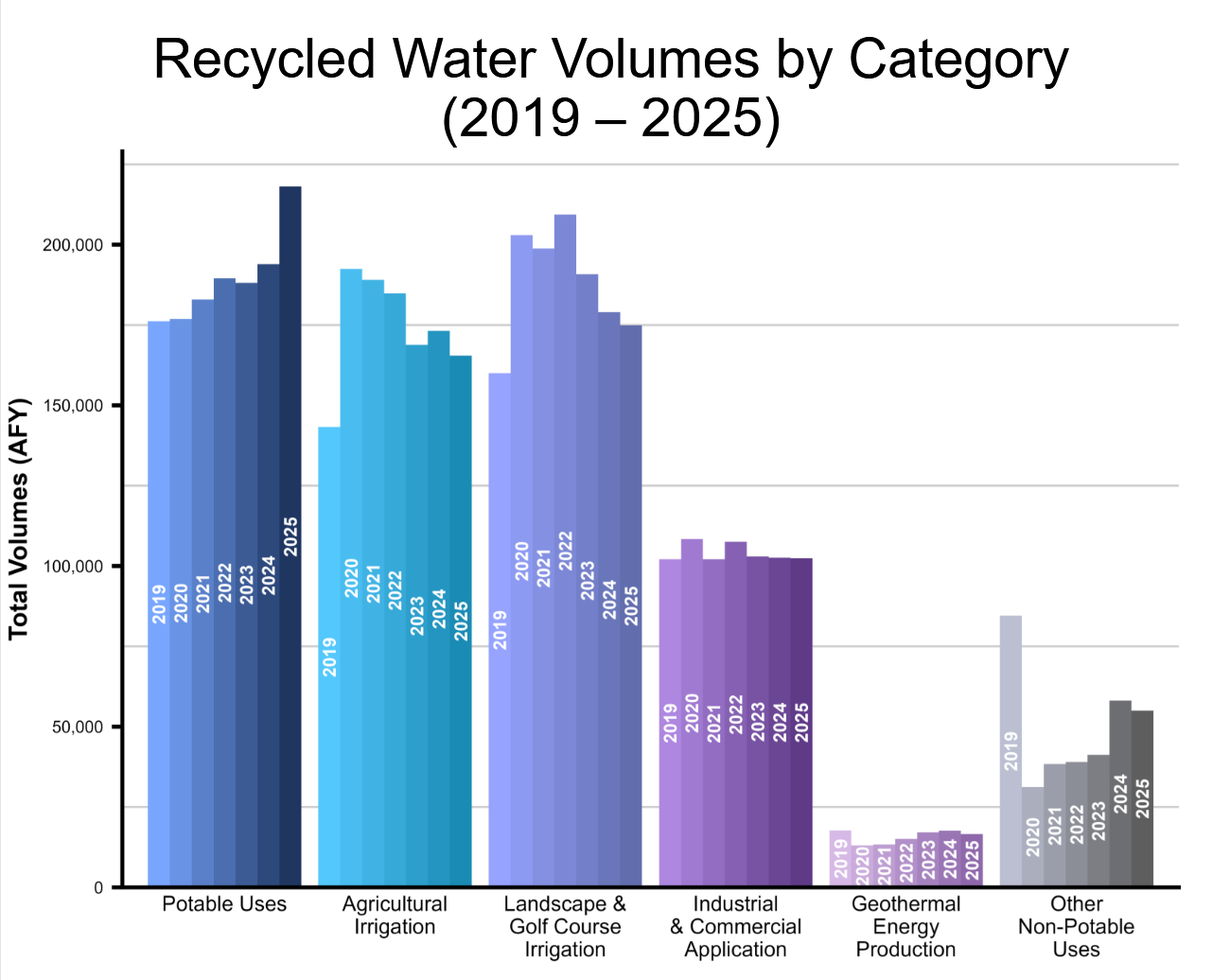 “At its October 6 meeting, the State Water Board reviewed the latest statewide data on wastewater and recycled water production. Kaylah Marcello, a research data specialist with the Recycled Water and Desalination Unit in the State Water Board’s Division of Water Quality, presented results from the seventh year of annual volumetric reporting. The findings provide an updated view of reporting compliance, recycled water use, regional trends, and progress toward California’s long-term recycling goals. California has collected recycled water data since the 1970s, initially through periodic surveys rather than consistent annual reporting. Legislation, the recycled water policy, and the water supply strategy established goals to guide planning and infrastructure investment. To support consistent progress tracking, annual volumetric reporting became mandatory under the 2018 amendment to the recycled water policy. … ” Read more from Maven’s Notebook.
Dairy groups file legal challenge to State Dairy Order
“Dairy Cares, a coalition of California dairy organizations, announced today that it has filed a legal challenge against the state’s recently adopted Dairy Order (WQ 2026-0028). Petitioners also include Milk Producers Council, California Farm Bureau, Western United Dairies, and California Dairy Campaign. The lawsuit filed in the Superior Court of Tulare County primarily aims at a provision of the Order that is inconsistent with state law and previous Board actions. “Unfortunately, the State Water Board has overstepped their authority, and we are forced to file this legal challenge. We are doing so to protect the future viability of dairy farms in California,” Dairy Cares Executive Director Michael Boccadoro said. “It is critical that our family-owned dairies be able to modernize, grow, and remain competitive as these farms are passed on to the next generations.” … ” Read more from Dairy Cares.
Tire-derived pollutant found at elevated levels in critical fish habitats
“Endangered coho salmon and steelhead trout live and spawn in habitats surrounded by human activity, such as the San Francisco Bay area. During a recent storm, researchers found high levels of the tire-derived pollutant 6PPD-quinone in roadway outflows, creeks, and rivers. They report in ACS’ Environmental Science & Technology Letters that many samples exceeded levels considered fatal to juvenile salmon. Treating stormwater runoff and creating less toxic or non-toxic tire materials could make healthier environments. Rubber tires contain a protectant chemical, called 6PPD, that reacts with ozone in the air and forms 6PPD-quinone. Wind and rain transport tire debris and 6PPD-quinone into waterways, where it’s highly toxic to several fish species, including brook and rainbow trout. Coho salmon and steelhead trout are also highly susceptible to 6PPD-quinone, but not much is known about their exposure to the pollutant at the southern end of where the fish live along the U.S. West Coast. So, Ed Kolodziej and colleagues wanted to measure its concentration in critical watersheds where the fishes live and spawn along the Central California coast. … ” Read more from the American Chemical Society.
Voluntary agreements … yes or no?
As the State Water Board moves toward a vote on the Voluntary Agreements, known as the Healthy Rivers and Landscapes Program, Maven’s Notebook will publish commentaries this week examining the many sides of the proposal.
YES
California’s rivers cannot wait. Neither can its people.
 Charley Wilson, Executive Director and CEO, Southern California Water Coalition, writes, “For decades, California has been fighting over the same water. How much should remain in our rivers? How much should be available for communities, farms, and businesses? And how do we protect endangered fish while providing reliable water for nearly 40 million Californians? After years of studies, lawsuits, regulatory proceedings, and political battles, one thing should be clear: The status quo isn’t working. But replacing it with a decision that produces worse outcomes would be no improvement at all. Native fish populations continue to struggle. Our rivers and the Sacramento-San Joaquin Delta face mounting environmental pressures. Meanwhile, millions of Californians depend on a water system increasingly challenged by climate extremes, aging infrastructure, and rising costs. We cannot keep treating environmental protection and water reliability as competing goals. California needs both. That is why the Southern California Water Coalition supports adoption of the Healthy Rivers and Landscapes Program, commonly known as the Voluntary Agreements. But for it to succeed, the State Water Resources Control Board must get the decision right by ensuring enforceable commitments, measurable outcomes, and credible science. … ” Continue reading this commentary.
Healthy Rivers and Landscapes: A better path forward for the Bay-Delta
Roger Cornwell, Chair, Northern California Water Association, writes, “California has an opportunity to move water policy toward a healthier and more resilient future. As the State Water Board considers the update for the Bay-Delta Water Quality Control Plan (Plan), Northern California Water believes the Healthy Rivers and Landscapes approach is the best path forward—a comprehensive strategy that combines river flows, habitat restoration and floodplain reactivation, science, and collaboration to support fish and wildlife while sustaining our communities and working lands. As the Board considers its Plan update, it faces a stark choice that matters for all Californias. The Board’s proposed update provides two pathways: Healthy Rivers and Landscapes (Healthy Rivers) for participating water users, and an old-fashioned regulatory approach that requires a percentage of unimpaired flow to remain in rivers. Modern science suggests that the Healthy Rivers pathway offers a stronger foundation for achieving lasting environmental improvements and greater water supply stability throughout California. Contrast this with the unimpaired flow approach, which would be devastating to Californians and our environment and landscape. … ” Continue reading this commentary.
State Water Contractors: State Board releases final draft Bay-Delta Plan ahead of hearing
“On Friday, October 16, the State Water Resources Control Board (SWRCB) released an updated draft of the Bay-Delta Water Quality Control Plan, a draft that considers public comments submitted in September. Statement from Jennifer Pierre, General Manager of the State Water Contractors: “The State Water Contractors are reviewing the updates to the update Draft Bay-Delta Plan to better understand how the settling parties’ feedback has been incorporated and whether remaining concerns have been addressed. “We continue to believe that the Healthy Rivers and Landscapes Program has the potential to provide a more collaborative, science-based path forward for improving ecosystem conditions while maintaining water supply reliability for Californians. However, several important issues remain unresolved, and it is critical that the final framework follow the 2022 MOU for successful implementation. “We are hopeful that the State Water Board will address these outstanding concerns before adopting. Doing so will ensure that the program can deliver meaningful environmental benefits while supporting the communities, businesses, and millions of Californians who rely on a reliable water supply.” (Source)
NO:
Why Newsom’s Voluntary Agreements won’t work, Part 1: Inadequate resources
Jon Rosenfield, Ph.D., Science Director for San Francisco Baykeeper, and Devon Pearse, Ph.D. Lead Scientist for Friends of the River, write, “Over the past 30 years, scientific studies of San Francisco Bay and its watershed have demonstrated the critical role that river flows play in protecting water quality, native fish and wildlife and their habitats, and the fishing, Delta, and Tribal communities that depend on vibrant aquatic ecosystems. Yet, despite all this knowledge, California’s unsustainable diversion of Central Valley rivers that create the Bay’s estuarine ecosystem has continued and even increased. Diverting large fractions of the available river flow is driving the deterioration of water quality, the decline and closure of fisheries, and the impending extinction of numerous species. The Water Board has repeatedly observed that the San Francisco Bay estuary is in crisis. Evidence for this conclusion includes the collapse of the Bay’s native fish populations (seven of which are listed as threatened or endangered under state or federal law), loss of its once-vibrant fisheries, and proliferation of toxic algal blooms in the Delta. The Water Board, which is responsible for the reasonable protection of all beneficial uses of water, has for many years also acknowledged that the solution to this crisis must include substantial increases in the amount of water from Central Valley rivers that reaches San Francisco Bay. … ” Continue reading this guest commentary.
Why Newsom’s Voluntary Agreements won’t work, part 2: No money, no requirements, no results
Eric Buescher, Managing Attorney at San Francisco Baykeeper, writes, “As my colleagues wrote last week, the water and habitat commitments made by Voluntary Agreement parties are woefully inadequate to address the crisis in the Bay-Delta’s ecosystem and will not prevent water quality degradation, restore healthy river and estuary ecosystems, or revive flagging commercial and recreational fisheries, even if all the VA projects are fully implemented. Adding insult to injury, the VA Program is unlikely to deliver on even its own minimal water or habitat promises, and certainly will not do so in a transparent or timely manner. If the additional river flow does arrive, those additions (and then some) will be swallowed up by new water supply projects in the future. And there is no accountability or mechanism to change course when this likely failure comes to fruition. If approved, the VAs will lock Californians into billions of dollars of taxpayer funded projects that will not solve the ecological crises throughout San Francisco Bay’s watershed, with no exit for nearly a decade. A program that relies on uncertain funding, unenforceable commitments, inflexible and unaccountable decisions, and that paves the way for more bad choices in the future is not a solution. … ” Continue reading this commentary.
Why Newsom’s Voluntary Agreements won’t work, part 3: A fundamentally flawed process
Gary Bobker, the Program Director for Friends of the River, and Christie Ralston, an Associate Attorney for San Francisco Baykeeper, write, “The Water Board is currently poised to adopt the Voluntary Agreement (VA) Program for the Bay-Delta Water Quality Control Plan despite the fact that the VA Program provides far too little water and habitat and is highly unlikely to deliver on its stated promises, according to the Water Board’s own record. How did we get to this point? The short answer: Governor Newsom has had his thumb on the scale in favor of the VA Program from the very beginning of his first term. Communities with the most to lose from a bad deal–including Tribal, fishing, Delta, and environmental interests–were excluded from the process. And the agencies responsible for reviewing the contents of the VA Program were routinely hamstrung and manipulated. … ” Continue reading this commentary.
In other commentary this week …
Save our lawns: Reform AB 1572
Edward Ring, director of water and energy policy for the California Policy Center, writes, “Californians are within months, if not weeks, of getting what could be the most thorough statewide drenching in decades, as a “super” El Nino grows in the Pacific. Expect hundreds (plural) of millions of acre feet of water to dump onto watersheds across the state this winter, as California experiences its fifth year in a row with above average rainfall. There’s no water shortage in California. There never was. The solution to water scarcity is, and has always been, figuring out how to save enough water during wet winters to still easily supply all our needs during droughts. And even in drought years, around 100 million acre feet falls onto the state. This is why, in a state where precipitation whipsaws between years with ridiculous over-abundance and years where there is barely enough, the worst possible strategy is to invest in lowering demand, instead of investing in increasing supply. But that’s exactly what California’s state legislature is doing. The latest example of this arrives on January 1, when AB 1572 begins to take effect. Rolling out over three years, by 2029 it will be illegal to use potable water to irrigate “nonfunctional” grass on commercial, institutional, and industrial properties. … ” Continue reading this commentary.
Yes on Prop 45: A more affordable California starts with reliable water
San Joaquin County Farm Bureau Executive Director Andrew Genasci writes, “Water is at the core of almost every challenge that farmers face across California. In wet years, billions of gallons of water flow through our rivers and out to sea while farmers and communities struggle to prepare for the next drought. We know we need more reservoirs, groundwater recharge facilities and other infrastructure to capture and store water when it’s available. Yet California’s outdated permitting system makes building that infrastructure unnecessarily slow, expensive and difficult. That is why the San Joaquin County Farm Bureau supports Proposition 45, the Building an Affordable California Act. We represent over 1,400 family farms and ranches across San Joaquin County, all of which depend on reliable water supplies. Proposition 45 would help deliver that supply by building essential water projects faster and more affordably. … ” Read more from the San Joaquin Valley Sun.
SEE ALSO: Prop 45 would make major changes to CEQA. But many CEQA reformers don’t support it, from Joe Garfoli at the San Francisco Chronicle
Delta Stewardship Council hears revised Delta Conveyance Project filing
“On Thursday, October 15, the Delta Stewardship Council heard expert testimony and public comment regarding the Revised Certification of Consistency filing from the Department of Water Resources. In April, the Delta Stewardship Council unanimously determined that all but two parts of the Delta Conveyance Project are consistent with the Bay Delta Plan. The Council “remanded” those two parts to the Department of Water Resources, requiring them to address concerns on potential land use conflicts and Golden Mussels before refiling. The Council is expected to determine if they will issue a Certification of Consistency for the Delta Conveyance Project by December 9, 2026. The State Water Contractors urge the Delta Stewardship Council to deny the appeals and affirm the Department of Water Resources’ Revised Certification. … ” Read more from the State Water Contractors.
Priorities for California’s water: Advice for the incoming governor
“California is in a moment of political transition, as one governor leaves office and another prepares to take over leadership of this remarkable state that nearly 40 million people call home. The new governor will face a small army of advocates championing a variety of causes. And few issues are as fundamental to life in California as water. The state’s economy has long relied on water as a key ingredient for growth. Amazing feats of engineering have transported water across the state, causing deserts to bloom and cities to flourish. But the natural world—the source of the state’s water supply—has suffered. The state is now reckoning with the costs of over 175 years of land and water development, which has affected everything from ecosystems to water quality. Its highly engineered water grid is showing its age. And the changing climate is adding layers of complexity as snowpack dwindles, weather whiplash intensifies, and western states struggle to share the depleted waters of the Colorado River. … ” Read more from the PPIC.
In regional water news this week …
Can pumped-hydro energy storage protect Lake County from wildfires?
“The wind was starting to kick up near Hidden Valley Lake, as officials gathered to launch studies for an unusual renewable energy project intended to help Lake County communities withstand exactly the kind of wildfire threat developing around them. With red flag fire-weather conditions affecting Lake County and neighboring areas — and Pacific Gas and Electric Co. cutting electricity to thousands of local customers because of the fire danger — the Oct. 15 event marked the start of geotechnical investigations for pumped-hydroelectric storage systems designed to generate electricity, keep communities powered during outages and maintain millions of gallons of water for firefighting. The projects, being developed by Trane Technologies with PG&E support, are among a widening range of energy proposals prompting Lake County officials to develop a strategy for managing potential investments in geothermal, naturally occurring hydrogen, wind, solar and energy storage. … ” Read more from the Santa Rosa Press Democrat.
Near Nevada City, two proposed lakes would feed a 750-MW underground power station that pumps water back uphill
“In the pine-forested ridges of the Sierra Nevada foothills east of Nevada City, a San Francisco-based energy firm has filed federal paperwork for something California has rarely seen attempted at this scale: two entirely new lakes, built from scratch on opposite slopes of the Fish Creek drainage basin, connected by a buried shaft to a powerhouse hidden underground. The project, proposed by RamaFlux Sierra PSH LLC and submitted to federal regulators in April 2026, would generate up to 750 megawatts of electricity — with no river dammed and no existing waterway diverted. Pumped storage hydropower runs on a beautifully simple idea. When the grid has more electricity than it needs — say, on a sunny afternoon when solar panels are overproducing — operators use that surplus to pump water uphill to an elevated reservoir. Hours later, when demand peaks, they release that water back downhill through turbines to generate electricity on cue. The reservoir becomes, in effect, a giant rechargeable battery. … ” Read more from Energies Media.
‘This is not 1849’: California father, son sentenced in illegal mining case
“A father and son from Nevada County were sentenced to jail and ordered to restore land damaged by illegal mining along Keystone Creek near Loganville in Sierra County, prosecutors said. Gregory Arnoldi Jr. of Nevada City and Gregory Arnoldi Sr. of Browns Valley pleaded no contest to felony vandalism of public and private property and misdemeanor charges of water pollution and stream alteration, the Sierra County District Attorney’s Office said. The case involved an illegally built dirt road and mining near the creek. Each man was sentenced to 30 days in county jail, fined $8,135 and placed on felony probation for three years. They are barred from mining during their probation and must pay to design and complete a restoration plan for the damaged properties by Aug. 1, 2027. … ” Read more from the San Francisco Chronicle. | Read via Yahoo News.
Tehama directors vote to exempt ‘de minimis’ users
“On Monday afternoon, the Tehama County Flood Control and Water Conservation District Board of Directors held a meeting where they discussed defining and exempting certain users from potential future groundwater fees. As Director/Supervisor Matt Hansen explained at the Board of Supervisors meeting the following day, the board’s ultimate decision “means that most people in here that have a domestic well for domestic purposes will not see a charge for the groundwater sustainability program as we move forward.” The board’s discussion on Monday was around “de minimis users.” As defined in the resolution the board voted on, “a residential groundwater user qualifies for the de minimis threshold if the user’s total verified groundwater extraction for residential domestic purposes is two (2) acre-feet or less during a calendar year.” … ” Read more from the Red Bluff Daily News.
The contentious eminent domain case kicks off between Cal Am and the Monterey Peninsula Water Management District.
“Katie Rodriguez here, reporting that the long-awaited and contentious eminent domain case between the Monterey Peninsula Water Management District and California-American Water Company officially kicked off yesterday, Monday, Oct. 19. The trial will determine whether the district has the legal authority to take over Cal Am’s water system. The private utility provides water to roughly 100,000 people with a network of more than 680 miles of pipeline and over 100 storage tanks, regularly touted by Cal Am as one of the most complex water systems in California. Opening statements were delivered by Edward Schexnayder, an attorney representing the Monterey Peninsula Water Management District, and David Moran, an attorney representing Cal Am. The statements were followed promptly by testimony from Cal Am employees as the company began presenting its case for why it should continue operating the water system. … ” Read more from Monterey County Now.
Farmers should seek state’s help with upcoming groundwater reports
“If farmers need help navigating the state’s online portal to report groundwater pumping, that will be between them and the state, some groundwater agencies have said. Walking farmers through the state’s pumping portal, also known as GEARS, during the last reporting period took way too much time and effort, said Travis Millwee, Resources Manager at Lower Tule River Irrigation District Groundwater Sustainability Agency (GSA). “Moving forward, the GSA is gonna have to take a step back from reporting for its landowners,” Millwee said at an Oct. 13 GSA meeting. Millwee said Lower Tule incurred significant overtime as staff helped up to five landowners a day work through GEARS so farmers could meet the state’s last reporting deadline. The GSA was inundated with calls, taking staff away from regular tasks. … ” Read more from SJV Water.
Should Bell Gardens privatize its water? Voters face choice in November election
“A city of Bell Gardens ballot measure in the November election asks residents if they want the city’s municipal water system to be sold to the private Golden State Water Company for $41 million. The Bell Gardens Municipal Water System provides water to one-third of the city’s residents while Golden State provides water for the rest. If voters approve the measure and the sale goes through, the city would sell the utility to Golden State and cede all of its water rights to the company. This is part of a larger trend nationally as public utilities look to sell amid higher costs and aging water infrastructure, a study from Risk Analysis, an International Journal said last year. Those who broadly oppose water privatization liken water to oil: They say water is even more valuable because it’s needed for all life and it should not be in the hands of private interests. … ” Read more from the University Times.
Newport Beach adds sand to build up beach in battle against the sea
“It’s a race against the tides. Newport Beach is scrambling to get sand on its beaches ahead of a mega high tide expected to hit early next week, and to add protection at the coast as forecasts warn of king tides and more Kelvin waves in coming months that could again threaten to flood the Balboa Peninsula. City officials declared an emergency this week ahead of the El Niño winter and following flooding that already caught the town off guard on Oct. 9 when a hurricane swell and high tides, along with elevated sea levels due to warm water conditions, combined to send seawater up and over already-eroded beaches and into streets and homes. The city on Monday, Oct. 19, also approved a contract for about $1.5 million to scoop an estimated 100,000 cubic yards of sand, possibly up to 200,000 cubic yards, built up in the Santa Ana River mouth to spread on beaches between groin jetties throughout 36th and 62nd streets. That work started on Wednesday, Oct. 21. … ” Read more from the OC Register.
Interior Secretary discusses Colorado River plan, calls Arizona’s water cuts ‘completely manageable’
“U.S. Secretary of the Interior Doug Burgum said Arizona’s reductions under the federal government’s Colorado River plan are “completely manageable” in an exclusive interview with 13 News. Burgum’s comments come less than a week after Arizona joined a lawsuit filed by Nevada challenging the department over what the plaintiffs describe as “devastating” cuts to their water supply. Arizona Gov. Katie Hobbs joined the lawsuit filed by Nevada last week to hold the Department of Interior accountable for “failing to enforce Upper Basin water delivery obligations” and potentially imposing cuts that would devastate Lower Basin water levels. Burgum said he expects the lawsuit to be thrown out because it assumes injury that has not yet occurred. … ” Read more from Channel 13.

