
Several news sources featured in the Daily Digest may limit the number of articles you can access without a subscription. However, gift articles and open-access links are provided when available. For more open access California water news articles, explore the main page at MavensNotebook.com.
On the calendar today …
- WEBINAR: Asset Management Research Insights and Delta Diablo’s Transformation Journey beginning at 8am. Water and wastewater utilities are facing aging infrastructure, limited resources, workforce constraints and increasingly reactive maintenance. Recent industry research shows that aging assets remain the primary driver of asset management investments, while nearly half of utilities continue to operate in a predominantly reactive maintenance environment. Join this webinar to explore how stronger asset management foundations can support greater reliability and long-term performance. You’ll hear key research findings and learn how Delta Diablo used an Enterprise Asset Management (EAM) implementation as an opportunity to improve asset data, governance, maintenance practices and organizational alignment. Click here to register.
- MEETING: State Water Resources Control Board beginning at 9am. Agenda items include 2026 Water Year in review and looking ahead, Informational update on the Water Board’s Fiscal Year 2025-2026 web-based Performance Report; and Consideration of a proposed Resolution adopting Utility Wildfire and Similar Operations and Maintenance Activities Clean Water Act section 401 Water Quality Certification and General Waste Discharge Requirements and Resolution certifying the Environmental Impact Report. Click here for the agenda.
In California water news today …
California releases new climate science, projections to prepare for climate change impacts
 “As California faces unprecedented warming and increasingly severe climate impacts, the state is releasing new research from California’s Fifth Climate Change Assessment, which details how climate conditions are changing across the state and what communities can expect. The Fifth Assessment brings together the latest climate science, data, research, tribal knowledge and community perspectives to help state and local leaders better understand the risks posed by climate change and take action to protect their communities. The research will inform efforts to strengthen climate resilience, guide local planning, and prepare for worsening climate impacts. “As the Trump administration turns its back on science, California is doubling down on climate action, on protecting our communities, and on building a safer future,” said Governor Gavin Newsom. “We are putting the latest science to work so communities across the state have the tools to confront the climate crisis head-on.” … ” Continue reading this press release.
How will California be shaped by climate change? The fifth assessment provides some clues
“Today, California is releasing its Fifth Climate Change Assessment. Since 2006, the State has periodically gathered the best available science on how climate change is affecting California, and current law now requires these assessments at least every five years. The assessments are based on what we call “synthesis science”, which combines the most cutting-edge climate science into a set of reports written over several years by scientists with support from community members and Tribes and independently reviewed by experts. Before I joined UCS, I coordinated the San Joaquin Valley regional report for California’s Fourth Climate Change Assessment, the first regional assessment ever done specifically for the Valley. Back then, we wrote about what might happen: longer droughts, less snowpack, more dry wells, more extreme heat, and drought-to-flood whiplash. Since then, we have watched much of it happen, sometimes more extreme and more frequent than we expected. … ” Read more from the Union of Concerned Scientists.
As flood preparedness week begins, DWR calls on all Californians to prepare for an El Niño-driven winter
“As California marks the start of Flood Preparedness Week, a record-setting El Niño is raising the odds of a wetter-than-average winter and heightened flood risk statewide. With major storms possible in the months ahead, the Department of Water Resources (DWR) is calling on all Californians to take simple steps now to prepare for flooding emergencies. “Now is the time to prepare for emergencies, and the strong El Niño conditions anticipated this winter make preparation more important than ever,” said DWR Director Tom Gibson. “While DWR and our partners are taking proactive steps to prepare for extreme weather, true preparedness begins at home. Taking just a few steps today can protect your family during severe storms.” … ” Read more from DWR.
10 things to know about this very strong El Niño
“You’ve likely heard about El Niño, but what does that mean? El Niño is a climate pattern that is declared when monthly sea-surface temperatures in the central and eastern tropical Pacific Ocean are measured above normal, for consecutive overlapping three-month periods. In early October, the National Oceanic and Atmospheric Administration (NOAA) announced an 83% chance that a strong-to-very-strong El Niño would arrive January through March 2027. El Niño’s effects can be powerful and even deadly. El Niño-driven ocean warming can increase global temperatures, alter atmospheric patterns, raise sea levels along coastlines, deliver large waves and dangerous coastal conditions, and impact marine ecosystems. … ” Read more from UC San Diego.
Getting groundwater recharge ready for Super El Niño—and the wet years beyond
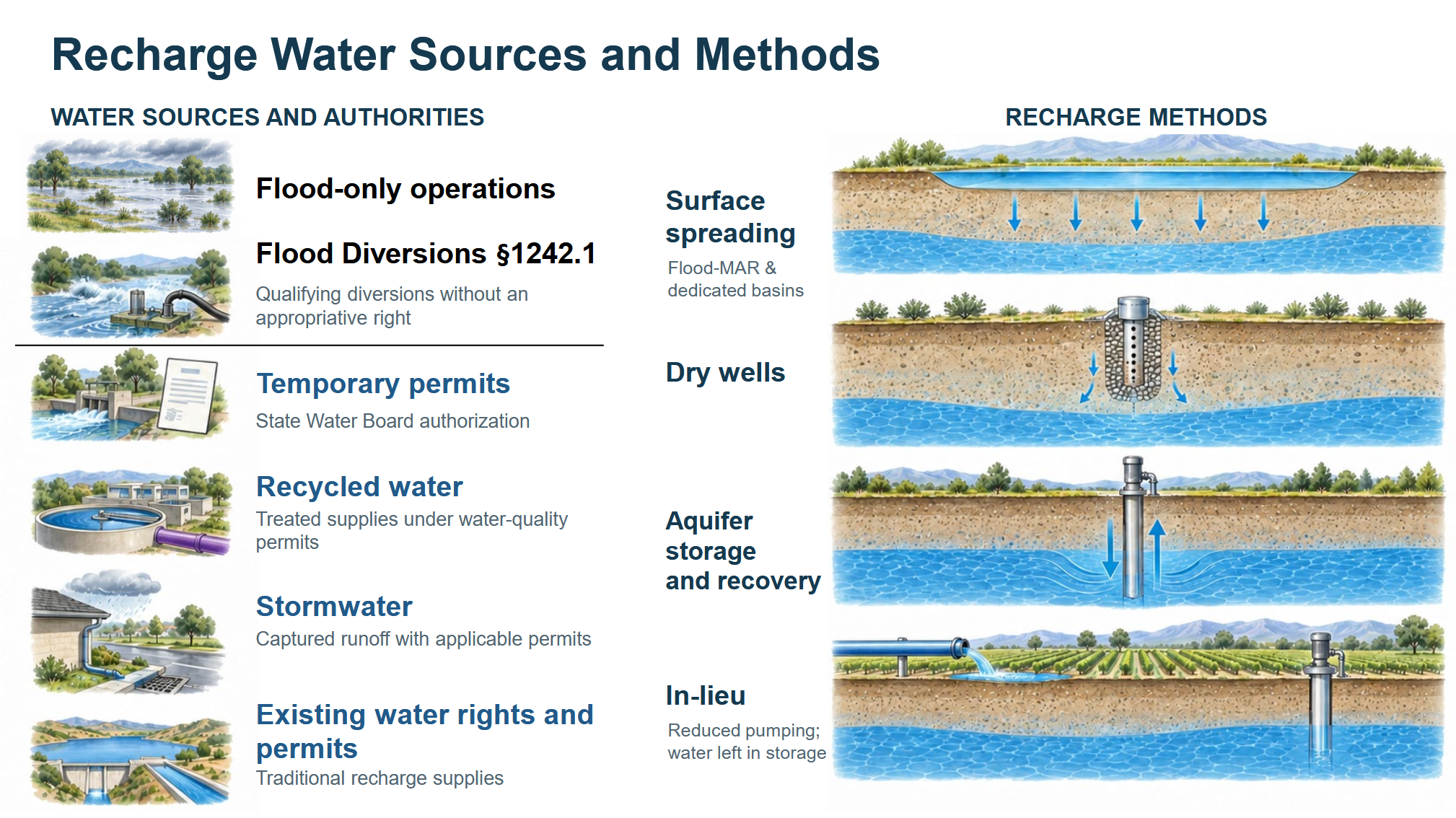 “Groundwater basins can serve as large underground reservoirs, storing water during wet periods for use in drought years. When water rights and environmental requirements are met, excess flood flows can be directed underground to replenish aquifers, reduce flood risk and improve drought preparedness. Recharge is becoming more important as climate change reduces the Sierra Nevada and Cascade snowpack and brings greater swings between drought and intense storms. Well-planned projects can provide multiple benefits, including water-supply reliability, aquifer replenishment and ecosystem enhancement. Twelve years into implementation of the Sustainable Groundwater Management Act, more than 250 groundwater sustainability agencies are carrying out nearly 2,000 projects and actions under more than 100 groundwater sustainability plans. More than 500 proposed projects focus on recharge and could add an estimated 1.5 million acre-feet of water supply annually. Recharge reported to the Department of Water Resources varies widely with conditions—from about 200,000 acre-feet in dry years to 4.9 million acre-feet in wet 2023. At the California Water Commission’s September meeting, a forecasted Super El Niño added urgency to a broader discussion of groundwater recharge readiness. State and local representatives examined how agencies could prepare to capture high flows if an unusually wet winter developed, while also building long-term capacity for future storms. … ” Read more from Maven’s Notebook.
El Niño is making days on Earth slightly longer
“El Niño is doing more than changing the weather. It is also making days on Earth slightly longer. As El Niño intensifies across the Pacific Ocean, the large-scale climate pattern can cause Earth to rotate a little more slowly. “The change, however, is only about 1 millisecond at the peak of a strong El Niño,” NOAA explained. One millisecond is one-thousandth of a second, large enough for scientists to measure but far too small for people to notice in their everyday lives. With 86,400 seconds in a day, the difference amounts to roughly one part in 100 million. How can El Niño alter the rotation of the entire planet? … ” Read more from AccuWeather.
Changes to Bay Delta Plan, Delta tunnel loom after recent revisions
“Revisions to a pair of key Delta documents were released last week – the outcomes from which remain uncertain. Local water officials are still reviewing the latest changes to the Bay Delta Plan released on Friday, and as of Monday were not sure what the amendments mean for Solano County water users. The formal name to the plan is the Water Quality Control Plan for the San Francisco Bay/Sacramento-San Joaquin Delta Watershed. The Delta Stewardship Council has until Dec. 9 to decide whether to approve a revised Certification of Consistency for the Delta Conveyance Project as applied to the Bay Delta Plan. … ” Read more from the Daily Republic.
Functional flows: Working with nature’s rhythm to keep California’s rivers healthy
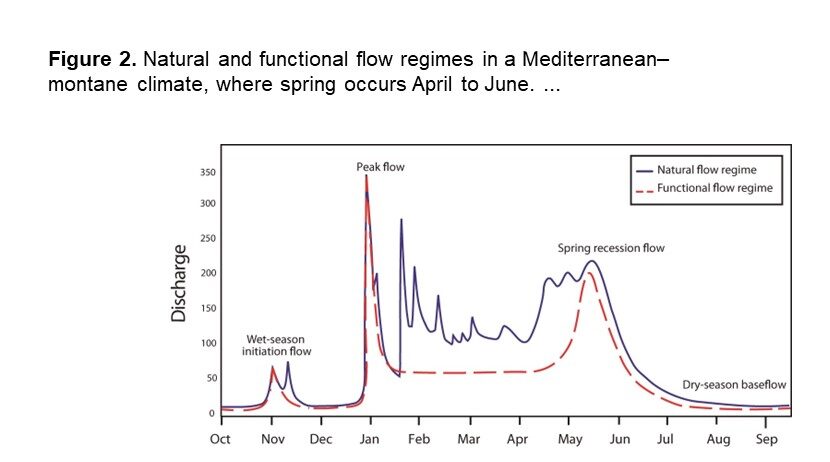
“Visit a California river in January and again in August, and you’ll see two different places. Winter storms send water surging over the banks, while late summer brings a slow trickle between gravel bars. This transition is the natural rhythm that keeps California’s rivers and wildlife healthy. Understanding this natural pattern guides the California Department of Fish and Wildlife’s (CDFW) understanding of rivers today. No two seasons are alike, just like no two water years are alike. As a result, CDFW needs to work with the water nature provides each year, to better understand rivers and work to protect fish. Protecting native fish is critical to maintaining the biodiversity that makes California a unique and special place to live, raise a family, and make a living. Outdoor recreation, fishing, and abundant fresh food produced with reliable agricultural water despite the ups and downs of climate change are cornerstones of California culture and our economy. … ” Read more from the Department of Fish and Wildlife.
Dairy groups file legal challenge to State Dairy Order
“Dairy Cares, a coalition of California dairy organizations, announced today that it has filed a legal challenge against the state’s recently adopted Dairy Order (WQ 2026-0028). Petitioners also include Milk Producers Council, California Farm Bureau, Western United Dairies, and California Dairy Campaign. The lawsuit filed in the Superior Court of Tulare County primarily aims at a provision of the Order that is inconsistent with state law and previous Board actions. “Unfortunately, the State Water Board has overstepped their authority, and we are forced to file this legal challenge. We are doing so to protect the future viability of dairy farms in California,” Dairy Cares Executive Director Michael Boccadoro said. “It is critical that our family-owned dairies be able to modernize, grow, and remain competitive as these farms are passed on to the next generations.” … ” Read more from Dairy Cares.
Two firefighters died in Yosemite—for what? The effort put into controlling even remote fires has started to baffle some veterans.
“This year, the Trump administration gave federal firefighters a mandate: no more letting fires burn. Conventional wisdom among firefighters and public-land managers has held that allowing fires in remote areas to run their course can be beneficial. But now the administration’s new U.S. Wildland Fire Service was to pursue a policy of “full suppression” on every wildfire, Interior Secretary Doug Burgum instructed his workforce, to avoid the possibility of dangerous spread. “Accelerate initial attack,” Agriculture Secretary Brooke Rollins put it in her own directive to the Forest Service. “Suppress fires early and limit growth.” And when Yosemite National Park caught on fire last month, that is what firefighters did. … Under the Trump administration’s policy of full fire suppression, so far this year entrapments—when firefighters’ positions are surrounded by flames—are above the average for the previous two decades. At least 17 wildland firefighters, pilots, and contractors have been killed, surpassing the full-year average over the past decade, according to the Wildland Firefighter Foundation. … ” Continue reading at the Atlantic.
Voluntary agreements … yes or no?
As the State Water Board moves toward a vote on the Voluntary Agreements, known as the Healthy Rivers and Landscapes Program, Maven’s Notebook will publish commentaries this week examining the many sides of the proposal.
California’s rivers cannot wait. Neither can its people.
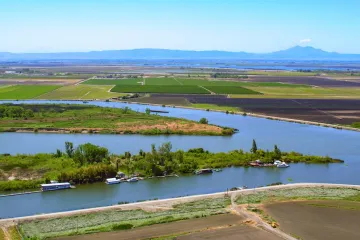 Charley Wilson, Executive Director and CEO, Southern California Water Coalition, writes, “For decades, California has been fighting over the same water. How much should remain in our rivers? How much should be available for communities, farms, and businesses? And how do we protect endangered fish while providing reliable water for nearly 40 million Californians? After years of studies, lawsuits, regulatory proceedings, and political battles, one thing should be clear: The status quo isn’t working. But replacing it with a decision that produces worse outcomes would be no improvement at all. Native fish populations continue to struggle. Our rivers and the Sacramento-San Joaquin Delta face mounting environmental pressures. Meanwhile, millions of Californians depend on a water system increasingly challenged by climate extremes, aging infrastructure, and rising costs. We cannot keep treating environmental protection and water reliability as competing goals. California needs both. That is why the Southern California Water Coalition supports adoption of the Healthy Rivers and Landscapes Program, commonly known as the Voluntary Agreements. But for it to succeed, the State Water Resources Control Board must get the decision right by ensuring enforceable commitments, measurable outcomes, and credible science. … ” Continue reading this commentary.
Why Newsom’s Voluntary Agreements won’t work, part 2: No money, no requirements, no results
Eric Buescher, Managing Attorney at San Francisco Baykeeper, writes, “As my colleagues wrote last week, the water and habitat commitments made by Voluntary Agreement parties are woefully inadequate to address the crisis in the Bay-Delta’s ecosystem and will not prevent water quality degradation, restore healthy river and estuary ecosystems, or revive flagging commercial and recreational fisheries, even if all the VA projects are fully implemented. Adding insult to injury, the VA Program is unlikely to deliver on even its own minimal water or habitat promises, and certainly will not do so in a transparent or timely manner. If the additional river flow does arrive, those additions (and then some) will be swallowed up by new water supply projects in the future. And there is no accountability or mechanism to change course when this likely failure comes to fruition. If approved, the VAs will lock Californians into billions of dollars of taxpayer funded projects that will not solve the ecological crises throughout San Francisco Bay’s watershed, with no exit for nearly a decade. A program that relies on uncertain funding, unenforceable commitments, inflexible and unaccountable decisions, and that paves the way for more bad choices in the future is not a solution. … ” Continue reading this commentary.
State Water Contractors: State Board releases final draft Bay-Delta Plan ahead of hearing
“On Friday, October 16, the State Water Resources Control Board (SWRCB) released an updated draft of the Bay-Delta Water Quality Control Plan, a draft that considers public comments submitted in September. Statement from Jennifer Pierre, General Manager of the State Water Contractors: “The State Water Contractors are reviewing the updates to the update Draft Bay-Delta Plan to better understand how the settling parties’ feedback has been incorporated and whether remaining concerns have been addressed. “We continue to believe that the Healthy Rivers and Landscapes Program has the potential to provide a more collaborative, science-based path forward for improving ecosystem conditions while maintaining water supply reliability for Californians. However, several important issues remain unresolved, and it is critical that the final framework follow the 2022 MOU for successful implementation. “We are hopeful that the State Water Board will address these outstanding concerns before adopting. Doing so will ensure that the program can deliver meaningful environmental benefits while supporting the communities, businesses, and millions of Californians who rely on a reliable water supply.” (Source)
In regional water news and commentary today …
NORTH COAST
New report explores how climate change is shaping the North Coast’s future
“Climate change presents significant challenges for California’s North Coast, where Humboldt Bay is experiencing the state’s highest rate of sea-level rise. A new report brings together the latest climate science with local and Tribal knowledge to help communities prepare and develop solutions. The North Coast Regional Report—released this October as part of California’s Fifth Climate Change Assessment—covers Humboldt, Mendocino, Del Norte, Lake, Siskiyou, and Trinity counties. Conducted by the Governor’s Office of Land Use & Climate Innovation, the Climate Change Assessment examines impacts and projections in nine regions across the state, highlighting each region’s unique vulnerabilities and opportunities. Regions include: the North Coast, Sacramento Valley, San Joaquin Valley, San Francisco Bay Area, Central Coast, Sierra Nevada, Los Angeles, Inland Deserts, and San Diego. Each focuses on the unique climate vulnerabilities and opportunities specific regions face. … ” Read more from Cal Poly Humboldt.
BAY AREA
Bay Area could see its most rain since May. Here’s how much to expect
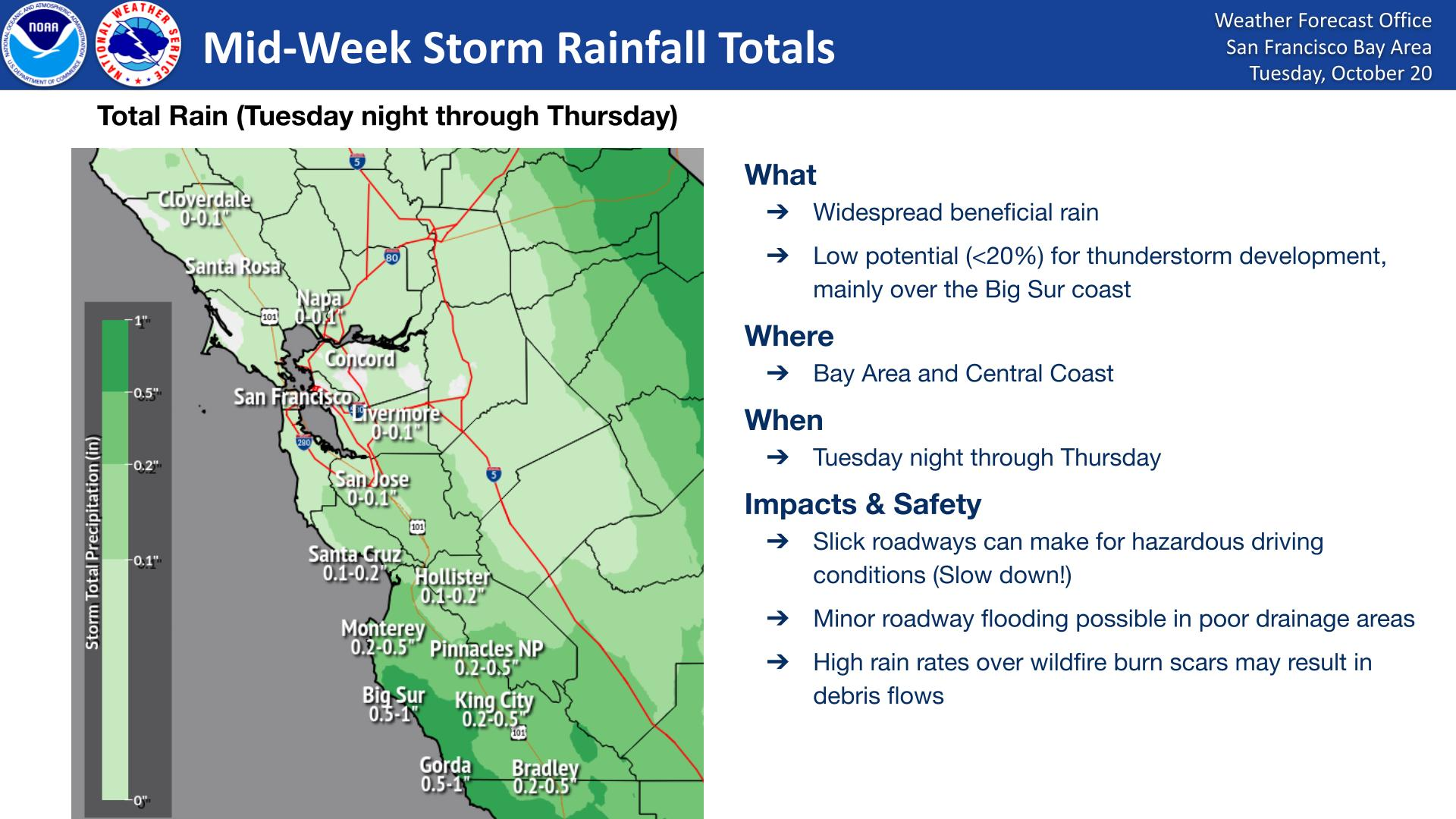 “The Bay Area will soon see its first legitimate rain chance of the season, but the window for wet weather is trending later and weaker than previously indicated. Rain is not expected to begin until Wednesday morning at the earliest for most of the region, rather than Tuesday afternoon or evening. Showers could continue through Thursday evening, but most of the rain is forecast to come midday Wednesday through early Thursday. You’ll want to bring in your lawn furniture, air-drying clothes and other outdoor items on Tuesday night. Wednesday might be a good day to bring a rain jacket to work. Roads could be slippery for the evening commute. … ” Read more from the San Francisco Chronicle.
Shellfish farms in Tomales Bay cleared to reopen after sewage spill
“Shellfish farms for companies like Hog Island Oyster Co. in Tomales Bay were cleared to reopen after a sewage spill at a hotel and restaurant near the West Marin waterway earlier this month led to their closure, a spokesperson for the company confirmed Monday. The sewage spill was reported on Oct. 9 at the Olema House hotel and Due West tavern along state Highway 1 south of Tomales Bay. Marin County officials said in a press release that county environmental health staff discovered a septic system leak into Olema Creek, and the leak was promptly capped. According to the county, the California Department of Public Health on Oct. 12 closed all shellfish growing areas and wet storage intakes at Tomales Bay until follow-up sampling confirmed bacteria levels had returned to safe levels. … ” Read more from Local News Matters.
Bolinas reef fishing restrictions rejected by state commission
“The California Fish and Game Commission has rejected a petition to restrict all fishing in the intertidal area of Duxbury Reef off Bolinas. Duxbury Reef is the largest shale reef in California and one of the largest in North America. Its extensive tidepool network supports a diversity of marine species, including clams, mussels, algae, fish and visiting birds. In 2023, the Environmental Action Committee of West Marin petitioned the state commission to change the reef’s designation from a marine conservation area to a marine reserve. The organization called on the state to prohibit all fishing from land and by boat within 1,000 feet of shore within the protected zone, and asked for an extension of the northern and southern borders of the protected area. After a group of Bolinas fishermen and other residents pushed back, the environmental group scaled back its request to simply expanding the borders, and the commission’s staff had endorsed that idea in broad strokes. … ” Read more from the Marin Independent Journal.
Preparing SFEI Science for a historic El Niño
“What could an El Niño look like in the Sacramento-San Joaquin Delta and San Francisco Bay? El Niño is already contributing to temporary elevated sea levels in San Francisco Bay. Higher than usual rainfall this winter and warmer water entering the Bay from the ocean are also likely effects in our region. However, nobody can predict exactly what El Niño will bring Northern California. How are SFEI scientists preparing for potentially extreme conditions? Data from extreme events, like heavy rains and higher sea level, are critical for anticipating future conditions in the Bay and understanding how it works today. SFEI is a core member of several collaboratives that monitor the long-term health of different parts of the San Francisco Estuary that strong El Niño conditions could impact. … ” Read more from the San Francisco Estuary Institute.
Livermore: New PFAS treatment systems could be on tap for three water stations
“Three California Water Service stations in Livermore could receive new treatment systems aimed at eliminating toxic chemicals. The Planning Commission on Tuesday will consider modifications to conditional use permits and site plan design review to install the new PFAS water treatment systems at Station 9, located at 3474 East Ave.; Station 19, at 1748 Elm St.; and Station 31, 732 Olivina Ave., according to the staff report prepared by Livermore assistant planner Emily LaDue. Cal Water currently uses each station for water storage under “long-standing” conditional use permits, LaDue said. The upgrades are intended to ensure the safety and reliability of drinking water and to expand storage capacity. … ” Read more from the Livermore Vine.
CENTRAL COAST
Central Coast will face more extremes, regional report of California’s Fifth Climate Assessment finds
“California’s Central Coast is headed toward more climate extremes, with hotter days, stronger storms, and more intense droughts. That’s a major finding of the Central Coast report of California’s Fifth Climate Assessment, led in part by researchers at the University of California, Santa Cruz and part of a statewide effort to build a scientific foundation for understanding climate-related vulnerability. The report brings together the best climate science projections for the mid-21st century and examines how they may impact the region’s natural, built, and social systems, and may serve as a tool for future resource management and climate planning. This is particularly important in the Central Coast, which is an overall under-studied region of the state, and the most heavily dependent on groundwater. Despite projections for alarming climate trends, this report also highlights the increase in climate change mitigation and adaptation measures since the last state-wide climate report in 2018. It covers four main areas: climate, natural and working lands, built environments, and social science. … ” Read more from UC Santa Cruz.
EPA award funds wildfire hardening at two Monterey County drinking water facilities
“Two drinking water facilities in high-risk wildfire zones in Monterey County, California, will be upgraded with an $864,500 EPA award, California American Water announced Oct. 15. The award covers about 84% of the project’s initial cost estimate of $1,027,816, according to the utility. The work targets the Carmel Valley Clearwell Tank and the San Carlos Booster Pump Station. … ” Read more from Environmental Protection.
Down the drain in Montecito
“Most Montecito residents flush their toilet, take a shower, wash dirty clothes, turn on the dishwasher, brush their teeth, or eat at a local restaurant, and don’t know (or care) what happens to their wastewater. Elections for the Board of Directors of the Montecito Sanitary District (MSD) are normally a “big snooze” for Montecito voters. Well, not this year! Why is this year different? Five candidates are running for three seats on the MSD Board with 180-degree opposing platforms that will affect wastewater management in Montecito for at least the next 50 years. This year, your vote has consequences. … ” Read more from the Montecito Journal.
SAN JOAQUIN VALLEY
Mormon Slough restoration project achieves major milestones
“Today, Restore the Delta and the Mormon Slough Restoration Association reached a new milestone through the release of the Mormon Slough Restoration Project Economic Cost-Benefit Analysis alongside an Art Installation Guide and Project StoryMap, unveiling clear community benefits and resources for Stockton residents to envision the future of Mormon Slough. The groups have been working with the community since 2023 to envision the slough as a healthier, safer, and more vibrant greenway after decades of disinvestment and neglect. Pivotal to meeting this important milestone was grant funding from North Valley THRIVE’s Catalyst Fund, pushing forward the group’s hopes of reconnecting Stockton’s communities with their waterways while improving flood protection, environmental health, and creating economic opportunity. “The economic case for restoring Mormon Slough is clear. The project will result in nearly $430 million in net benefits to communities currently underserved by park space, create hundreds of jobs, and support future community-driven economic development,” said Michelle Mendoza, Flood and Land Restoration Program Manager at Restore the Delta. “Understanding what job opportunities become available for locals by restoring the slough is exciting.” … ” Read more from Restore the Delta.
SOUTHERN CALIFORNIA
Rain — and potentially lots of it — heading to Southern California
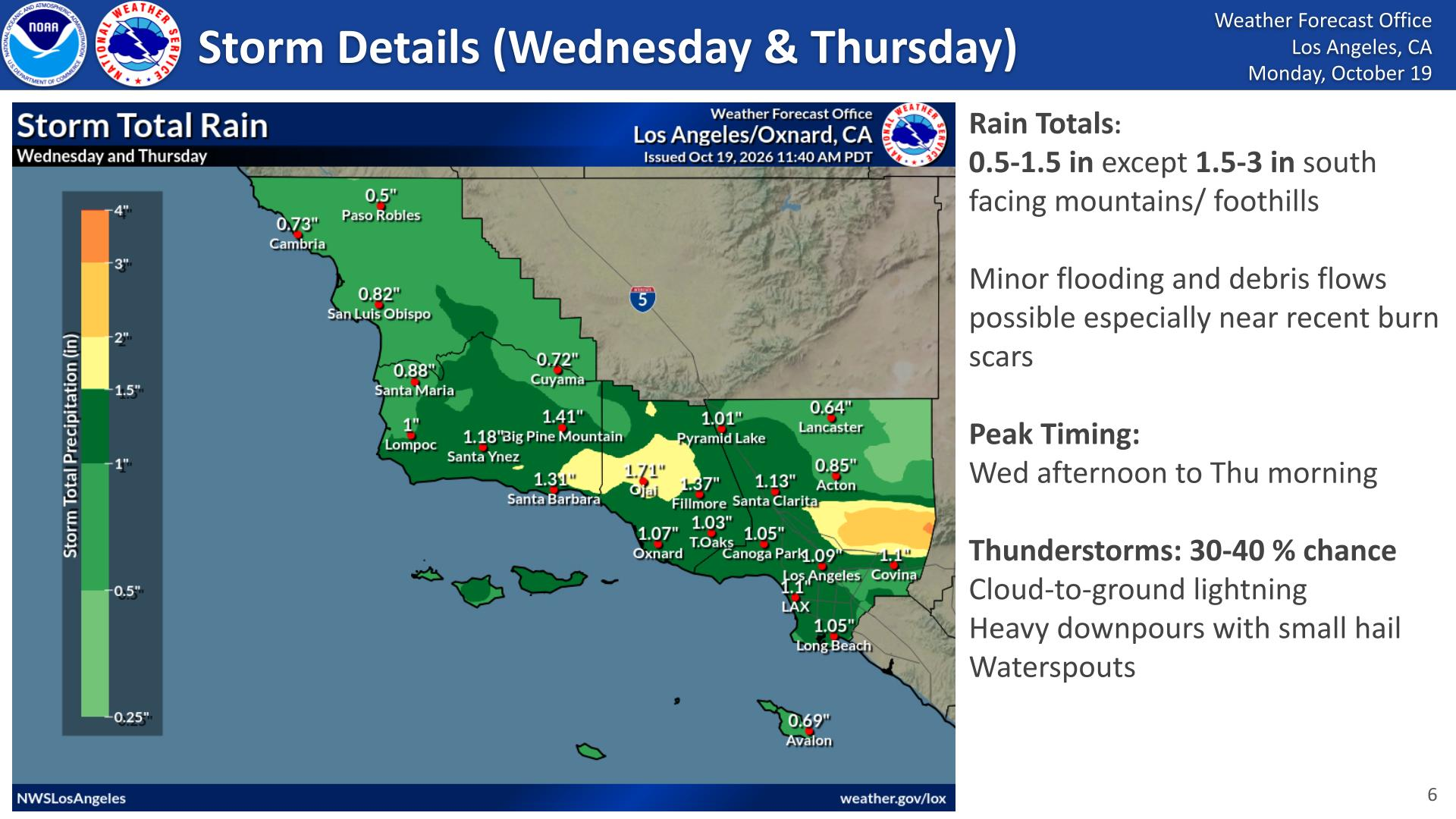 “Widespread rain and possible thunderstorms are headed for Southern California this week, with forecasters on Monday warning that some areas could receive up to 2 inches of rain. The National Weather Service said a low-pressure system moving south along the California coast will bring cooler temperatures ahead of the rain. “Still looking at a good chance of our first traditional storm system of the season Wednesday and Thursday,” according to the NWS. “Timing still an issue but for now it looks like Wednesday will primarily be light rain, then transitioning to more of a convective/showery system overnight into Thursday.” Forecasters said Los Angeles County could receive between three-quarters of an inch and 1 inch of rain, with totals reaching 2 inches in foothill areas and along coastal mountain slopes. … ” Read more from the LA Daily News.
California’s latest Climate Change Assessment looks at what rising temperatures could mean for SoCal
“California’s fifth Climate Change Assessment was released on Monday, detailing what rising temperatures could mean for the ocean, the Golden State coastline and residents’ safety. The state began publishing climate assessments in 2006, reviewing new and existing research to map risks California faces region by region. The latest edition projects that average temperatures could climb between 3.5 and 4.3 degrees Fahrenheit by 2050, and the state’s snowpack could shrink by nearly 40% by mid-century. Abby Edwards, the Senior Deputy Director of the Governor’s Office of Land Use and Climate Innovation, said the goal of the assessments is to give Californians the best available science. “It’s really, for me, about being clear-eyed about the future, so we can make decisions today for the future that we want to create,” Edwards said. … ” Read more from CBS News.
California Inland Empire agencies form Joint Powers Authority to finance new water supply infrastructure
“Public water agencies in San Bernardino County, California have formed a new public joint powers authority (“JPA”) to provide financing support for water and power infrastructure projects being developed in Inland Empire and High Desert communities. The San Bernardino Water and Power Authority (the “Authority”) held its first meeting on October 5 and elected Inland Empire Utilities Agency (“IEUA”) Board President Steve Elie as President of the Authority. San Bernardino County voted to form the new JPA with Fenner Gap Mutual Water Company (“Fenner Gap”) on April 21, 2026. IEUA formally joined the Authority on September 2, 2026, and on September 17, the Victor Valley Wastewater Reclamation Authority (“VVWRA”) Board of Commissioners also voted to express its intent to join the Authority. The governing board of the Authority includes Steve Elie (representing IEUA) as President; Barbara Lloyd (representing Fenner Gap) as Treasurer; Dakota Higgins (representing San Bernardino County Supervisor Paul Cook) as Interim Secretary; and Supervisor Curt Hagman (representing San Bernardino County). … ” Continue reading this press release.
‘Extremely’ hazardous old Orange County dam set for repairs ahead of El Niño
“Orange County is known more for its sandy beaches and ocean access than as a freshwater fishing destination. But tucked into the foothills just north of Irvine’s suburban sprawl sits Irvine Lake, an approximately 750-acre reservoir that serves as the largest body of freshwater in Orange County. The lake’s primary purpose is water storage, but it’s also become a popular destination for shoreline fishing — the only recreational use allowed at the lake. Camping, boating and swimming aren’t permitted, and there also aren’t any hiking trails. But now, the lake is about to sit empty for the next five years, as the local water district upgrades aging infrastructure and prepares the lake for more intense and frequent storms in the future. … ” Read more from SF Gate.
California State Parks provides update on coastal storm damage and recovery efforts at state parks and beaches in Orange County
“California State Parks continues emergency response, cleanup and infrastructure repairs to Crystal Cove State Park (SP), Doheny State Beach (SB) and San Onofre SB following significant coastal erosion, flooding and damage caused by recent large surf and elevated tides from Tropical Storm Rachel and Kelvin waves. While portions of the affected parks remain closed due to unsafe conditions and damaged infrastructure, State Parks staff are working expeditiously to restore public access and essential services while coordinating with local, state and federal agencies on immediate repairs and longer-term coastal resilience measures. “The coastal damage at Crystal Cove, Doheny and San Onofre demonstrates the increasing challenges our coastal parks face from powerful ocean conditions,” said Orange Coast District Superintendent Scott Kibbey. “Our immediate priority remains public safety, protecting our historic and natural resources, and restoring public access and essential services as quickly and safely as possible. I’m grateful for the extraordinary work of our State Parks employees and the support of our local, state, federal and community partners as we respond to these impacts. Beyond the immediate recovery, we are working collaboratively to identify longer-term solutions that will help protect these treasured coastal resources for future generations.” … ” Read more from California State Parks.
‘We’re in crisis’: The California coastal town under siege from fires, high surf, El Niño
“Few cities in California last week felt the full brunt of the climate crisis more than the small coastal town of San Clemente. The beach city at the southern end of Orange County for months has been dealing with widespread coastal erosion from El Niño-related Pacific storms that has threatened a crucial rail line and reshaped swaths of its beaches. Then, as the waves were still pounding, a fire broke out in the city’s bushy foothills Friday, quickly burning toward hillside neighborhoods and destroying homes in nearby San Juan Capistrano. San Clemente’s challenges demonstrate what more of California will probably face as the twin dangers of fire and coastal erosion converge this winter. Southern California is just entering its traditional fire season, and forecasters are predicting more coastal flooding and erosion from what is expected to be a severe El Niño winter. … ” Read more from the LA Times.
IMPERIAL/COACHELLA VALLEYS
2026 Salton Sea Summit: Discussing ways to improve impacts of the Salton Sea
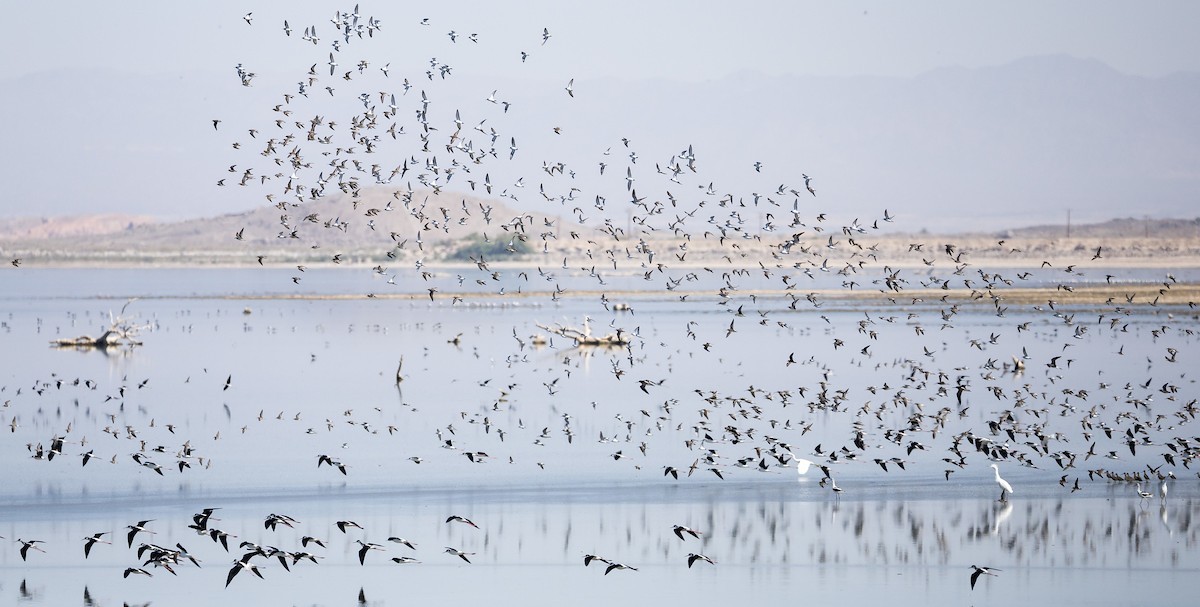
“For those who have written off the Salton Sea as an environmental ticking time bomb — or stink bomb — as it may be — the tide may now be turning. Millions of dollars poured into restoration projects around the Salton Sea are bringing life back. “This moment is different. It’s backed by real dollars, three-quarters of a billion dollars. It’s backed by projects that are basically a year old, where we’re already seeing so many birds come out that you can’t even see the ground,” said Joe Shea of the California Natural Resources Agency. At the 2026 Salton Sea Summit — government leaders, think tanks, researchers, and more gathered at UCR Palm Desert to hear about the latest efforts to tackle the toxicity of the sea. The theme this year, “Spotlight on Solutions.” …” Read more from KESQ.
Along the Colorado River …
Colorado River is losing groundwater where scientists least expected
 “When the Colorado River runs short, attention usually turns to Lake Mead, where a pale ring along the shoreline reveals how far the water has fallen. The mountain half of the river, where the snow falls and the water starts, is supposed to be the safe half. During the drought of 2020 to 2022, the Colorado River’s upper basin lost nearly twice as much groundwater as the desert half did. Esther Oyedele and Susanna Werth of Virginia Tech, with a colleague at Indiana University, measured the loss with NASA satellites that weigh the water in the ground from orbit. Across the whole Colorado River Basin, groundwater has been shrinking for two decades. The decline sped up after 2019. … ” Read more from Earth.com.
There’s another water crisis happening in the Colorado River Basin — and this one’s invisible
“The United States’ two largest reservoirs have dropped to unprecedented lows this year as drought grips the Southwest, but below the ground there’s another water crisis playing out — one that’s much less visible, but no less alarming. The amount of groundwater in the Colorado River Basin is declining rapidly, and it’s doing so in unexpected ways, according to a new study from scientists at Virginia Tech, published in the journal Water Resources Research. Lake Mead and Lake Powell are the visible faces of the Southwest’s critical water problem, as the Colorado River — which supplies water to nearly 40 million people — shrinks due to a combination of climate change and human demand.“However, they represent only part of the region’s water resources,” said Esther Oyedele, a study author and a geosciences graduate student at Virginia Tech. “Groundwater is another essential component.” It is a vital alternative source in the Colorado River Basin, especially when surface water in rivers, lakes and reservoirs dries up. … ” Read more from CNN.
Arizona joins Nevada in Colorado River lawsuit. This ASU law professor is surprised by the timing
“Arizona says it’ll join the lawsuit Nevada has filed against the federal government, challenging new rules on allocating Colorado River water. Nevada filed its lawsuit in August. Under the new federal rules, the Lower Basin states of Arizona, Nevada and California would take cuts to their allocations through 2028 — with bigger cuts potentially coming beyond that. The Upper Basin states of Colorado, New Mexico, Wyoming and Utah would not be required to take any cuts. With me now to talk about this is Rhett Larson, the Richard Morrison Professor of Law at ASU’s Sandra Day O’Connor College of Law. Rhett, good morning. Thanks for being here. … ” Read more or listen to podcast from KJZZ.
SEE ALSO: Arizona joins Nevada to fight federal Colorado River plan, from High Country News
Mesa prepares for Colorado River water cuts but says decades of planning leave the city well positioned
“The City of Mesa is preparing for potential water cuts as the federal government’s new Colorado River rules are expected to shrink its supply from that source by about 22% beginning next year. City officials say Mesa is well positioned to handle the reductions — if they happen — thanks to decades of planning that included storing water underground. At an Oct. 8 study session, city leaders heard what they’d been expecting: Mesa could lose close to 12,000 acre-feet of water. “This is a drought, and we are going to have a reduction in water supply, but we’re pretty well-positioned to handle that,” Joe Giudice said. … ” Read more from Channel 15.
As Lake Mead sinks, Southern Nevada experts outline solutions to water crisis
“Throughout her decades-long political career, Rep. Dina Titus has seen rhetoric about water shift from a conversation of abundance to one of scarcity. Lake Mead, once an overflowing reservoir, has become a symbol of overuse and imbalance. Simultaneously, Southern Nevada has gained an international reputation for conservation, to the chagrin of some of her constituents bearing the brunt of those conservation measures. “I hear from constituents who say, ‘Well, they’re just taking my water to give it to somebody else. They’re not just really saving water. They’re just moving water around. You have to take out my grass to steal my trees, which is running off my birds, all so you can build a new development,’” Titus said. “How do you answer to that?” … ” Read more from the Las Vegas Review-Journal.
The Colorado River is shrinking. Here’s why that matters for Utah’s biggest cities.
“A massive concrete wall rises 200-feet above a trickling creek where Duchesne County’s tan plateaus transform into green forested slopes. Behind it, snowmelt from the Uinta Mountains pools into a dark blue reservoir, water lapping on red rock shores. At just over 8,000 feet in elevation, the Upper Stillwater Dam marks the start of the Central Utah Project, which conveys water from the Colorado River Basin to the Great Basin where around 90% of Utahns live. “It’s the crown jewel of the Central Utah Project,” Dylan Dastrup, Stillwater area manager with the Central Utah Water Conservancy District, said as he pointed to the grey wall. The district maintains and operates the project facilities, which are owned by the federal government. … ” Read more from the Salt Lake Tribune.
Colorado: Watchers bemoan water conditions, as federal authorities mull releases
“Federal water authorities intend to assess winter snowpack, runoff forecasts, reservoir conditions and other hydrologic data before making any decisions about water releases from Lake Powell, even as a Colorado official reported that conditions are so dire some are now selling cows because they can’t feed them. One federal official estimated that the volume of release will be between 6 and 7 million acre-feet. The U.S. Bureau of Reclamation doesn’t intend to announce just how much water can be released from Lake Powell and down the river to Lake Mead until April 2027, according to Wayne Pullan, who is the Upper Colorado River Basin regional director for the federal agency. “It’s going to be nice to know what kind of year we’ve got before we decide exactly what our obligations will be with respect to deliveries,” Pullan told the commissioners. … ” Read more from the Colorado Springs Gazette.
It’s time for Colorado to sound the alarm on agriculture-to-urban water transfers’
“Dry years like this one take on a special meaning in Colorado water policy. What we once called a “2002 year” or a “2012 year” will now be described as a “2026 year,” a year when the snow failed to fall, and summer monsoons offered only brief, scattered relief. Now imagine receiving that same paltry water supply every year, not because of drought, but because of something completely avoidable. Many Colorado communities know firsthand that “buy and dry,” the permanent transfer of agricultural water to urban uses, can have damaging effects when that water is moved to distant communities. The loss extends far beyond the farm where the water was historically used. Water is more than an asset tied to an individual farm. Rather, it is a vital building block of the community where it has historically been used, supporting farms, businesses, jobs, the tax base, wildlife habitat and the broader local economy. When that water is permanently exported, those benefits leave with it, while the economic, environmental and social impacts remain. … ” Read more from the Colorado Sun.

