
Several news sources featured in the Daily Digest may limit the number of articles you can access without a subscription. However, gift articles and open-access links are provided when available. For more open access California water news articles, explore the main page at MavensNotebook.com.
In California water news this weekend …
Avert ‘ecological tailspin’: Advocates sue California over one of the largest water systems in the world
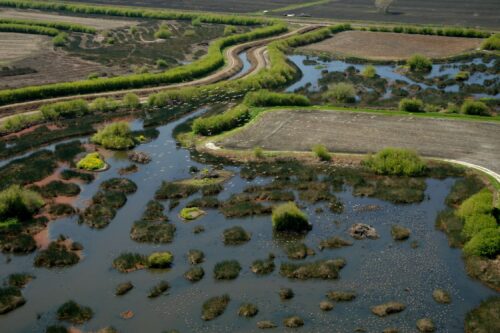 “In the Sacramento-San Joaquin River Delta, where California’s biggest rivers meet, the state’s massive pumps send water flowing into canals to about 27 million people and 750,000 acres of farmland. A major new lawsuit argues the state is taking far too much water out of the Delta, harming native fish and the ecosystem, causing toxic algae blooms, and threatening local farms and communities. “The goal that we are aiming for is to save the Delta,” said Carolee Krieger, executive director of the environmental group California Water Impact Network. “We want them to cut back the water they take out of the Delta by half.” Her group filed the lawsuit Friday together with the Central Delta Water Agency, which represents hundreds of local farmers concerned that heavy pumping can draw seawater farther into the estuary, making their irrigation water salty, damaging their crops. Dave Owen, a professor at UC Law San Francisco, said the suit is “a frontal assault on the State Water Project.” “I think this case is a very big deal if it manages to go forward,” Owen said. “This is one of the most ambitious California water lawsuits that I have seen.” … ” Read more from the LA Times. | Read via Yahoo News.
SEE ALSO: C-WIN: Lawsuit filed against the Department of Water Resources, press release from C-WIN
Ahead of El Niño this winter, Governor Newsom prepares California for winter storms and flooding impacts
“Governor Gavin Newsom is taking early action to prepare for a potentially historic winter storm season amid an unprecedented El Niño forecast. Responding to the Governor’s emergency proclamation issued on September 21, state agencies are coordinating with local communities, staging flood-fighting supplies, inspecting levees and water infrastructure, helping coastal communities prepare for flooding and erosion, and positioning resources to capture and store stormwaters. The storm season is already making itself felt. This year, “Kelvin waves” have raised sea levels, and offshore Pacific Hurricanes fueled by warm eastern Pacific water have sent strong waves into the California coast, causing coastal flooding that scientists attribute to El Niño. Recent years have shown how quickly California can swing between severe drought and devastating floods — extremes that climate change is making more pronounced. The state’s preparations focus on protecting people, communities, and businesses, while capturing and storing water for future use when conditions allow. … ” Read more from the Office of the Governor.
VIDEO: DWR state climatologist details potential El Niño impacts in sit down chat
“Let’s Talk Super El Niño with State Climatologist Mike Anderson. Sea surface temperatures off the coast of California have reached a historic high, creating El Niño conditions that increase the likelihood of impactful storms this winter. California State Climatologist Mike Anderson emphasizes that while El Niño conditions do not guarantee major storms, it does heighten the risk of other weather hazards like elevated sea levels, powerful waves, and coastal damage. El Niño could bring anything from extreme drought to devastating floods, making preparedness a priority. DWR is actively planning for every scenario to help safeguard communities across the state. …, ” Read more from DWR.
Kings County groundwater lawsuit against the state hangs in the balance
“A Kings County judge will determine whether to issue a second preliminary injunction barring the Water Resources Control Board from charging farmers pumping fees and if the underlying lawsuit against the state should move forward or be dismissed after a hearing that stretched over two days last week. The Water Board and Kings County Farm Bureau faced off for lengthy hearings held Oct. 6 and 7, arguing about pumping fees and whether the state acted outside its authority when it placed the region on probation in April 2024. Kings County Judge Robert S. Burns took the matter under submission. His ruling could have major implications for farmers in the Tulare Lake subbasin, which covers most of Kings County. This latest legal skirmish stems from an ongoing lawsuit by the Farm Bureau filed in 2024 alleging the Water Board overstepped its authority when it placed the Tulare Lake subbasin on probation earlier that year. … ” Read more from SJV Water.
Podcasts …
WE GROW CALIFORNIA: Assemblywoman Esmeralda Soria shares her take on the end of the California legislative season
The Governor finished signing or vetoing all the bills on his desk by the September 30th deadline. In all, he signed 1,040 bills into law and vetoed 120. This week, Darcy and Darcy start this episode off by thanking a faithful listener for writing-in with critical, but-right-on-the-money comments and then welcomed back Assembly Ag Committee Chair Esmeralda Soria to share her thoughts on how the legislative session ended. She discussed some key legislation she was able to get over the finish line as well as some that fell short. She also discussed with the Darcys how she continues to bridge the gap between urban and ag policymakers, and her hopes on how we can do better investing in water infrastructure as well as how she has been able to remove regulatory barriers for farmers, growers, and processors.
ECONEWS REPORT: How Will Climate Change Affect the North Coast?
California’s Fifth Climate Assessment is about to be released. The Assessment is broken up into nine different regions of California, as climate change is going to affect regions differently across the state. The Assessment not only looks at what climate models forecast for each region, but also dives deeper into how climate change is going to impact the region’s natural systems, like our rivers, forests and wildlife, its infrastructure, and the culture of the region. Three of the authors of the chapter on the North Coast—CalPoly Humboldt Professors Andrew Stubblefield, Rosemary Sherriff, and Jennifer Marlow—join the program to discuss the forthcoming report.
TALKING UNDER WATER: AI and innovation at WEFTEC 2026: Shaping the future of water utilities
In this episode Talking Under Water co-hosts discuss key takeaways from WEFTEC 2026, including the growing influence of artificial intelligence in the water sector, cybersecurity preparedness, utility financing, potable reuse, and the innovative technologies generating buzz on the show floor.
Sunday read …
BOOK REVIEW: The Most Powerful Idea in the World: A Story of Steam, Industry, and Invention
 Jim Lauria writes, “The Most Powerful Idea in the World: A Story of Steam, Industry, and Invention (University of Chicago Press, 2012) by William Rosen is one of those rare books that makes you see modern life — industry, commerce, even intellectual property — as the downstream consequence of a very simple human insight: boiling water can be turned into motion. Rosen tells the story of how humanity learned to harness the expansive force of steam, tracing a line from humble waterwheels to steam engines and ultimately to the foundations of the Industrial Revolution. This is not just a tale of machines, but of ideas…how they emerge, how they spread, and how societies choose to value them. … ” Read more from Jim Lauria on the Water Shelf.
In regional water news this weekend …
NAPA/SONOMA
Consider the pumphouse
“T hey say a double play is a pitcher’s best friend in baseball. At Caltrans, a pumphouse can be a maintenance worker’s best friend, especially during storm season. The 2023 storm season in Northern California featured a number of atmospheric rivers, but maintenance workers turned the equivalent of double or triple plays on an everyday basis. The Stoney Point Pumphouse, located on a State Route 12 on-ramp in Sonoma County, may look unassuming, but the structure is critical to maintenance keeping the highways clear of water. The automatic, computerized system measures groundwater and stormwater. The Caltrans Maintenance Department has several individuals who are experts on pumphouses throughout District 4. Bridge Crew Supervisor Vicente Perez and Area Superintendent John O’Neill are two of those in the North Bay. … Perez and O’Neill said the pumphouse will siphon about 450 gallons of water per minute. “If we have a really heavy winter, the pumps will be running a lot more,” O’Neill said during a warm afternoon in May. “If we have a mild winter, the stormwater pumps won’t be running as much, but the groundwater pumps will run year-around.” … ” Read more from Cal Trans.
CENTRAL COAST
Strawberry farmer hopes steam holds the key to healthy soil and a better crop
“Long-time strawberry farmer Rod Koda has rows of plants on his California farm that are still producing fruit well after the harvest would typically end. The fields brimming with green near the Pacific Coast have produced nearly twice the amount of organic strawberries this year as other plots thanks to steam, he said. The bountiful plots were treated with steam before Koda planted his organic strawberries as part of a project aimed at finding an alternative to chemical fumigants used to kill soil-borne diseases and weeds. “It’s a very noticeable difference,” Koda said. … ” Read more from Capital Public Radio.
SAN JOAQUIN VALLEY
Blast mine on San Joaquin River outside Fresno temporarily paused, but appeal is likely
“A controversial gravel mining project north of Fresno near the San Joaquin River received a temporary stop sign Thursday by the Fresno County Planning Commission. Multinational mining company CEMEX proposed expanding their current operation on the river into a 600-foot deep blast mine with a 100-year timeline. However, county staff recommended a shallower, shorter project alternative. By a 3-3 deadlocked vote, commission members rejected the modified proposal, which had required a majority for approval. “This is going to impact the cities and the people who live in the area. I have a real major concern with that,” Fresno Planning Commission Vice Chair Glenda Hill said from the dais. “It’s probably a really good project. But it’s in the wrong location.” … ” Read more from KVPR.
SEE ALSO: Planning Commission Nixes Controversial Cemex Proposal. What Happens Next?, from GV Wire
Westlands Water District may get funding from Department of War to combat golden mussels
“Westlands Water District has partnered with the Lemoore Naval Air Station to request $1.8 million in funding from the Department of War in its ongoing efforts to battle invasive golden mussels. The funding is through the Department of War’s Readiness and Environmental Protection Integration (REPI) program, which is aimed at avoiding land-use conflicts around federal bases and increasing base resilience, according to its website. “Golden mussels threaten water supplies that are critical to operational readiness and mission continuity in support of the U.S. Pacific Fleet,” wrote Westlands spokesperson Jason Mendez in an email. … ” Read more from SJV Water.
In California, water, sewer bills face their first reset in years, and one official sees SEDA behind it
“An effort to change utility rates in one California city has raised questions about fairness and where large cash infusions went. Fresno officials are weighing the city’s first water-rate change in a decade, Fresnoland reported. The proposed rate changes would also affect sewer service, whose rates haven’t been adjusted in 16 years. Jerry Dyer, the mayor of Fresno, said the push for higher rates is rooted in the cost and condition of the city’s water and sewer networks, according to Fresnoland. Dyer pointed to aging infrastructure, higher day-to-day operating costs, and the need to keep the city’s water and sewer systems safe. However, others have argued that the utility-rate increases are necessary due to the mayor’s other costly endeavors. Miguel Arias, a councilmember, said the utility proposal is linked to the Southeast Development Area, or SEDA. “They have money set aside for yet-to-be-defined capital projects,” Arias said, per Fresnoland. “That’s code for SEDA.” … ” Read more from The Cool Down.
Kern County judge rips California over ‘invalid’ fracking ban
“A Superior Court judge in Kern County has issued a tentative order that, if made final, could have the effect of striking down California’s ban on drilling for oil using hydraulic fracturing, commonly known as fracking. In his tentative ruling, Judge Bernard Barmann Jr. called the blanket ban on well stimulation treatments, including fracking, an “invalid underground regulation” that was “adopted without the rulemaking the Administrative Procedure Act requires.” “The permit denials were arbitrary and unsupported because they rested on a climate-change rationale that was not in fact the operative basis for the ban,” Barmann wrote. He added that a state agency’s “determination that a categorical ban is reasonably necessary to reduce greenhouse gas emissions is not supported by substantial evidence and lacks a rational connection to that purpose,” pointing to the agency’s own finding that the ban would increase net global greenhouse gas emissions, because oil would have to be imported into the state. … ” Read more from the Courthouse News Service.
EASTERN SIERRA
Stream by stream: Bringing Lahontan cutthroat trout home to the Eastern Sierra
“High in the Walker Basin, where the Eastern Sierra spills across the California–Nevada border, an imperiled native trout is hanging on. Lahontan cutthroat trout (LCT) once thrived throughout the region’s high-elevation streams and lakes. Today, roughly 95% of their historic California habitat has been lost. Non-native trout introductions and decades of land use change pushed this ancient fish to the edge. Now, protecting the handful of isolated, fragile populations, is critical. CalTrout and our partners are working stream by stream to change that trajectory. Alongside the California Department of Fish and Wildlife, U.S. Fish and Wildlife Service, Humboldt-Toiyabe National Forest, Trout Unlimited, and the Walker Basin Conservancy, and with funding from the Keefe Family Foundation, we’re reclaiming waters where LCT can build durable, self-sustaining populations. It’s slow, careful work, but it’s exactly the kind of stronghold-by-stronghold recovery this native trout needs to persist in the waters it has called home for thousands of years. Here’s a look at where that work stands across the region, and what it looks like up close from one of the impressive members of our field team. …, ” Read more from Cal Trout.
SOUTHERN CALIFORNIA.
Remarkable weather weekend ahead as Tropical Storm Rachel approaches San Diego and early-season trough ends record-breaking autumn heatwave
Dr. Daniel Swain writes, “I am writing this quick post rapidly from my hotel room, so it’ll rely more heavily on embedded social media threads than usual. But I would be remiss if I didn’t write something up regarding the remarkable weather weekend coming up in Southern California, which has sprung up on us rather quickly due to a northerly shift in Tropical Storm Rachel’s expected trajectory. … For only the second time in history, NOAA’s National Hurricane Center (NHC) has issued a Tropical Storm Watch for a portion of Southern California (along the coast from the CA/MX border to the OC/SD county line, and then inland across a slightly broader region. The reason: Tropical Storm Rachel is now expected to make a much closer approach on the San Diego region than previously anticipated as an early-season trough forces a last-minute northerly recurve. This trough will also enable strong upper-level divergence, enhancing storm ventilation. Remarkably, despite dry air and a stable atmosphere, this exact trough positioning combined with record-warm ocean temperatures may actually allow Rachel to re-strengthen slightly into a strong tropical storm before landfall, something that is now explicitly predicted by the NHC. That, in itself, is exceptionally unusual in this part of the world. … ” Read more from Weather West.
Brunt of rain from Post-Tropical Cyclone Rachel arriving in Southern California
“The brunt of the rain associated with Post-Tropical Cyclone Rachel is arriving in Southern California on Sunday. According to the National Weather Service, communities in Ventura and Los Angeles counties began to see sprinkles Saturday evening. The moisture moved further north by Sunday morning towards Santa Barbara and San Luis Obispo counties; according to the NWS, all four counties will likely be receiving rain by Sunday evening. The precipitation will linger throughout the later part of Sunday and all day Monday, per NWS projections. By early Tuesday morning, most, if not all of SoCal, will be dry. … ” Read more from KTLA.
Long Beach braces for more damage as Tropical Storm Rachel closes in on Southern California
“Long Beach residents on Saturday braced for potentially heavy rain, strong winds, high tides and flooding, with Tropical Storm Rachel expected to close in on Southern California on Sunday, Oct. 11. Mayor Rex Richardson and other city officials at a Saturday news conference said the fallout from the storm and two previous hurricanes that hit Long Beach since Labor Day weekend has been “unprecedented.” “We have plans and systems in place to address natural disasters and other emergencies, but this is a sobering reminder of the power of nature and, most importantly, it’s a reminder of the importance of staying prepared,” Richardson said. City officials warned the worst is ahead and urged residents citywide – not just in the Peninsula neighborhood – to sign up for Alert Long Beach, the city’s emergency notification system, and make sure they have sandbags for their homes, not only for this weekend but the upcoming El Nino season. … ” Read more from the LA Daily News.
SEE ALSO:
- Why one small stretch of Long Beach keeps getting pounded with damaging waves, from the LAist
- Southern California endures coastal flooding, high tides and rain as Rachel’s potentially destructive impacts arrive, from CBS LA
Along the Colorado River …
Colorado River Cuts: How the Lower Basin states are preparing
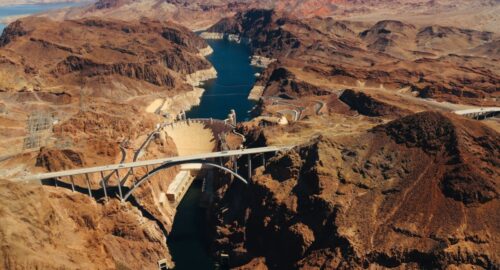 “The Colorado River’s new water year began October 1, 2026, and Arizona, California, and Nevada are preparing for another period of reduced water supplies. The three states, known as the Lower Basin states, are responding in different ways. Arizona is preparing to draw on water it stored during wetter years. California is paying farmers to reduce irrigation. Nevada is preparing to enforce new restrictions on watering decorative grass. Cities are also making changes. Phoenix has invested in pipelines that can move alternative water supplies to neighborhoods. Mesa is studying advanced water treatment. Southern California water agencies are expanding conservation and water storage programs. … ” Read more from Western Water.
As the West burned in 2026, Arizona saw fewer and smaller wildfires
“Fire experts predicted that the West was headed for a calamitous 2026 fire season, and those predictions came to pass. For the most part. More fires sparked and more acres burned across the entire West compared with the 10-year average, fueled in part by scanty snow, spring heat waves and high summer temperatures. But Arizona and parts of the Southwest emerged the least worse for wear. Experts say Arizona’s peak wildfire season fell short of 2025, calling this year’s season “moderate.” Long-term efforts to harden landscapes for fires, along with public education on preventing human-caused ignitions — plus some amount of luck — could explain why some places like Arizona escaped a more destructive year. … ” Read more from Arizona Central.
Denver Water to cut Fraser River winter flows in half as drought shrinks reservoirs
“Denver Water will cut the minimum flow on the Fraser River in half starting Tuesday to preserve reservoir storage as the severe drought continues. That could create impacts to the ecosystem if the river freezes this winter. The utility will reduce the Fraser to 2 cubic feet per second at the U.S. Geological Survey gage, down from a 4 cfs minimum, Denver Water said in a statement to 9News. The reductions are scheduled to last until May 15 unless conditions improve significantly or “unforeseen operational issues” require an increase, the statement said. Denver Water said the cuts will reduce flows by 33% to 50% this winter and will help the utility “prepare for the possibility of another dry year.” As of Oct. 5, its reservoirs were 67% full, compared with an average of 90% for this time of year, the statement said. … ” Read more from Channel 9.

