
Several news sources featured in the Daily Digest may limit the number of articles you can access without a subscription. However, gift articles and open-access links are provided when available. For more open access California water news articles, explore the main page at MavensNotebook.com.
On the calendar today …
- WEBINAR: Science Under Pressure: What’s at Stake for California? from 12pm to 1pm. As climate threats intensify, California is relying on science to protect communities, safeguard water supplies, and prepare for new risks. But what happens when the science guiding California’s future is itself under threat? Join Secretary Wade Crowfoot and leading scientists and policy experts to explore the latest climate findings, from California’s Fifth Climate Change Assessment to evolving El Niño conditions. Learn how federal funding cuts are threatening critical research and how California is stepping up to advance climate science and prepare for emerging climate threats. Click here to register.
In California water news today …
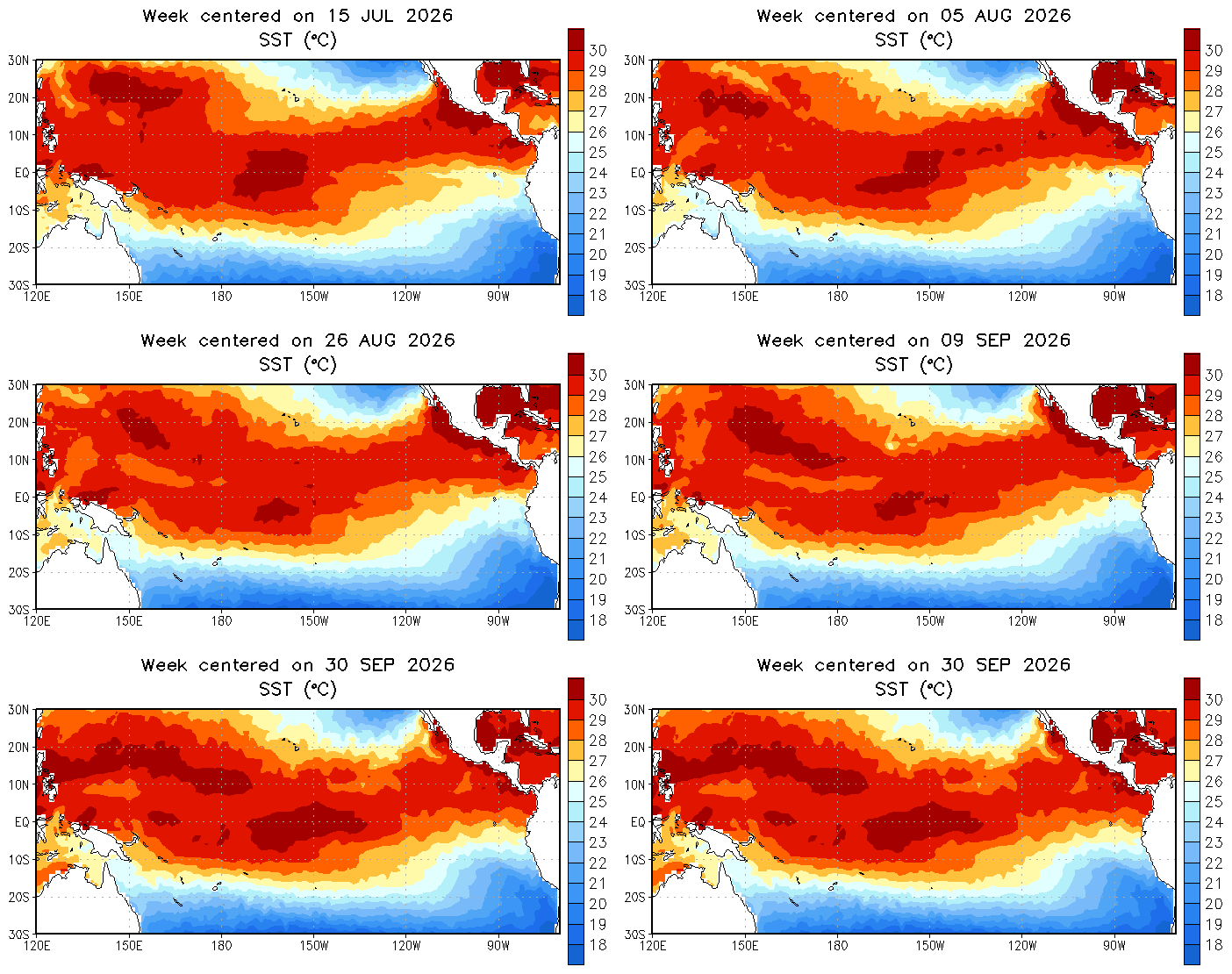 A monstrous El Niño has arrived. Here’s what it means for where you live.
“A monster is growing in the Pacific — not the kraken, but something far scarier and deadlier. El Niño is a natural phenomenon in which a band of warm water forms every three to five years off the coast of South America. It raises ocean water temperatures by just a few extra degrees for typically nine to 12 months and ends up injecting an extraordinary amount of energy into the sky. It’s already the strongest El Niño on record, and it might not even peak for about another month or two. “Those are actually really big changes for the ocean,” Art Miller, a climate scientist at the Scripps Institution of Oceanography, told Grist in September. “The ocean has a lot of heat content — 1,000 times more ability to hold heat than the atmosphere — so slight changes in the ocean surface temperatures can actually do a lot for the atmosphere.” … ” Read more from Grist.
SEE ALSO: 5 ways to prepare for El Nino’s extreme weather this winter, from Grist
El Niño’s warm water, wet winter, and California’s fisheries
“From high numbers of bluefin tuna to the first olive ridley sea turtle nesting in California, signs of an impending El Niño are here. A weather phenomenon that has been pervasive in the news, it starts in the tropical Pacific when surface waters become unusually warm and the easterly trade winds weaken. That ocean-atmosphere shift can rearrange weather patterns across the globe, and current sea surface temperatures indicate that this could be the strongest event in living memory. That makes this a serious anomaly to watch and be prepared for, but even a very strong El Niño does not guarantee a particular kind of winter in California. That uncertainty is especially important in Northern and Central California where many FISHBIO field projects are in full swing over the winter months, right on the impact line where El Niño can be quite variable. A typical El Niño shifts the jet stream and storm track south, favoring wetter conditions across the southern United States, while the Pacific Northwest often leans drier. If the storm track settles a little farther north, atmospheric rivers can repeatedly hit Northern and Central California; if it stays south, those same watersheds may have a warm winter with limited precipitation and snowpack. This variability explains why past El Niño winters have produced everything from severe flooding to simply average water years in the same part of the state. … ” Read more from FishBio.
The state has $1 million to watch the California coast through El Niño
“The state has $1 million for cities, tribes, harbor districts and nonprofits that can watch a beach, a bluff or a kelp bed through what forecasters say could be a record El Niño, and tell the state what they see. Applications were due Friday night. No Fort Bragg or Mendocino County agency or group had announced plans to ask for it. The California Ocean Protection Council said it would look at late proposals until Friday, Nov. 13. The grants run about $50,000 to $250,000, for up to a year, to pay for “rapid monitoring, assessment, and targeted intervention” on what the El Niño does to the coast and ocean. The money comes from Proposition 4, the climate bond voters passed in 2024. Cities, harbor districts, tribes, public universities and nonprofits can apply. … ” Read more from the Mendocino Voice.
The waters off California are unrecognizable
“Up and down the West Coast, ichthyologists—professional fish nerds—can barely contain themselves. Whale sharks normally in the Sea of Cortez have been seen as far north as Malibu. Spotter planes have photographed giant manta rays flapping their way north. Sport fishermen who normally have to travel to Baja for wahoo and blue marlin are now catching them by the boatload off the coast of San Diego. And a rainbow of reef fish that are hundreds of miles beyond their normal range are poking around the piers of Southern California. Mike Couffer, a semiretired biologist from Newport Beach, has been scuba diving nearly every day to see the mohawk-style fins of star-studded grouper, tiny iridescent orange creolefish, three-banded butterflyfish, and other exotic fish hardly ever seen in this area. “It’s just nuts, what’s going on out there,” he told me. The balmy waters produced during this year’s El Niño have essentially imported a whole ecosystem from Mexico. In recorded history, “this is the most profound movement of tropical fishes into California that anyone’s ever seen,” Milton Love, a research biologist at UC Santa Barbara’s Marine Science Institute, told me. … ” Read more from the Atlantic.
California Natural Resources on water storage, coastal power struggle with Trump admin.
“California Natural Resources Secretary Wade Crowfoot discussed the Trump administration’s reported ultimatum threatening California’s authority to protect its coastline, as well as the state’s environmental priorities and progress on key water projects. Crowfoot described the administration’s actions as a “political attack” on California’s coastal management program in an interview on California Politics 360. The state’s authority has been in place for 50 years and allows state entities to provide public input on federal activities. “We learned through basically a press release several months ago that the Trump administration was targeting our coastal program, undertaking this quote unquote, review of the program, with the threat of actually removing our ability to figure in on federal projects like offshore drilling,” Crowfoot said. … ” Read more from KCRA 3.
Solano County echoes water agency concerns on Bay Delta Plan
“The Solano County administration on Friday released a Significant Issues update on the recently updated Bay Delta Plan, echoing prior comments by other water agencies impacted by the plan. While the adoption of the Plan does not immediately change local water allocations, several concerns remain … Cary Keaten, general manager of the Solano Irrigation District, expressed similar concerns in a statement released on Oct. 31. While acknowledging the “difficult task before the State Water Resources Control Board,” Keaten stated there “retains significant risk for Solano County. Of particular concern is the plan’s regulatory pathway, including its unimpaired-flow requirements and carryover-storage restrictions, which govern river flows and the amount of water retained in reservoirs. SID believes these provisions could impose severe water supply losses on Solano County without a sufficient demonstration of corresponding environmental benefits.” … ” Read more from the Daily Republic.
Learning about Native American fishing traditions
“As the State Water Resources Control Board considers the development of Tribal Beneficial Uses (TBUs), it is a good idea to look at how Native American people throughout California uphold and celebrate their fishing traditions. It comes with the season. November is recognized as National Native American Heritage Month. Across California’s 109+ Native American groups, fishing traditions are a way to continue culturally significant foodways. Fishing links people with one another. Fishing creates cultural practices that people mark through cleaning, cooking, drying, and honoring caught fish. People also recognize the importance of fish through traditional arts, like basket-weaving, as well as songs, dance, and stories. Fishing provides ways to be present in and understand the natural environment. It gives people opportunities to share time together and develop and use new and traditional fishing technologies. … ” Read more from the California Sportfishing Protection Alliance.
California’s biggest water project in 50 years gets green light. Here’s what to know
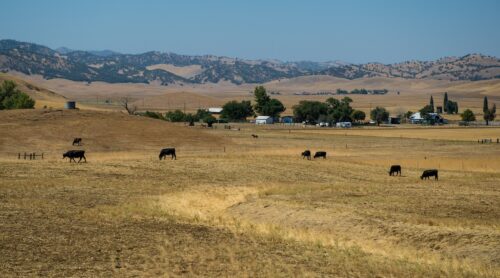
“California regulators have cleared the way for construction of Sites Reservoir, a major new water storage project in Colusa County. The decision marks the state’s largest reservoir undertaking in more than five decades and caps years of debate over cost, environmental harm and tribal objections. Here are key takeaways: The State Water Resources Board on Wednesday, Nov. 4, approved a water rights permit for Sites Reservoir, a 13-mile-long, four-mile-wide and 260-foot-deep project near Maxwell that will hold up to 1.5 million acre feet of water at an estimated cost of more than $6 billion. A draft approval issued in March drew sharp criticism from environmental advocates, with Harrison Beck of the Center for Biological Diversity warning the decision did not address serious threats to the Sacramento River ecosystem and imperiled fish populations. … ” Read more from the Sacramento Bee.
SEE ALSO: ‘Major blow to Tribes’: California approves Sites Reservoir permit, from KRCR
Draft Delta Protection Commission report calls for saving more land for farms
“A draft report calls for California to convert less of its agricultural land in the Sacramento-San Joaquin Delta for natural habitat and flood control. The report reduces the amount of land from what the state previously planned to convert. But there’s little to no indication of how much the plan could cost taxpayers. That draft report, which was released in September, follows a 17-year-old mandate that state officials find ways to create a more reliable water supply throughout the state while simultaneously restoring wildlife habitats in the Sacramento-San Joaquin River Delta. The report also proposes ways to offset losses in reclamation district assessments and local tax revenues, which are paid by property owners in the state’s 110 reclamation districts and the five counties that fall in the boundaries of the Delta. That report also recommends methods of increasing the agricultural and economic viability of farms in the Delta, as well as ways to decrease carbon emissions and subsidence. The current draft doesn’t stipulate how much any of the report’s goals could cost taxpayers, or which taxpayer-funded agencies could pay the price of turning farmland into natural habitat restoration. … ” Read more from The Center Square.
Ventura County Farm Bureau warns strawberry farm closures signal a growing agricultural crisis
 “On today’s episode of the AgNet News Hour, Louise Lampara, CEO of the Ventura County Farm Bureau, joined Nick Papagni for Part 1 of a two-part conversation examining the growing financial pressures facing California agriculture. The discussion centered on the announced closure of six SoCal Berry farming operations, hundreds of anticipated layoffs and new economic data showing that production costs are exceeding revenues for some of Ventura County’s most important crops. Lampara explained that SoCal Berry Growers filed a WARN Act notice announcing plans to close six Ventura County farming operations, affecting more than 570 employees. The announcement has attracted national attention and raised concerns about the long-term viability of strawberry production in one of California’s leading agricultural counties. But the financial figures behind the closures may be even more troubling. … ” Read more from AgNet West.
Beyond Duck Clubs: Suisun Marsh as a network of plankton hotspots
“Located in the center of the San Francisco Estuary, Suisun Marsh is an ecological hotspot in the intermediate zone between the freshwater Sacramento-San Joaquin Delta and salty San Francisco Bay. The Suisun Marsh landscape looks wildly different today compared to its historic past. In 1850, U.S. Congress passed the Swamp Land Act, which handed federal wetlands to states to encourage rapid reclamation for agriculture (Moyle et al. 2014). Wetland reclamation, i.e. the process of converting wetlands to drylands, converted tidal wetlands to drylands in Suisun Marsh into parcels and enclosed with dikes. However, agriculture succumbed to high salinity and, over time, was converted into seasonally managed wetlands for waterfowl habitat and recreational hunting. Now, managed wetlands comprise about 70% of Suisun Marsh and include both public and private lands mainly managed for waterfowl habitat … ” Read more from the California Water Blog.
Becerra urged to plan for floods, droughts & water shortages
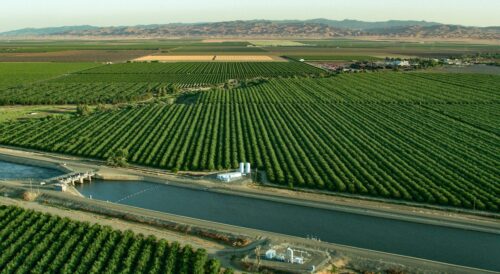
“California’s governor-elect, Xavier Becerra, should make flood and drought preparedness a top priority while protecting aging water infrastructure and replenishing depleted groundwater supplies, according to a new report co-authored by a UC Riverside water expert. The report, “Priorities for California’s Water: Advice for the Incoming Governor,” warns that California’s water system is increasingly vulnerable to extreme weather from climate change, excessive groundwater pumping, and decades of deferred infrastructure improvements. Prepared by the Public Policy Institute of California’s Water Policy Center, the report recommends better disaster preparedness, stronger groundwater protections, and long-term investments in water storage and delivery systems. UCR public policy professor Kurt Schwabe, a report co-author, said California must prepare for more intense storms while addressing problems that threaten water deliveries to farms and cities. “Our conveyance system is set up for 19th-century floods. So, both our storage and our conveyance is undersized right now,” Schwabe said. “Our storage system isn’t set up to mitigate the increased chances of floods, nor to mitigate the increased chances of drought.” … ” Read more from UC Riverside.
SEE ALSO: PPIC Report: Priorities for California’s water: Advice for the incoming governor
California’s 2028 watering deadline is closer than it looks: why commercial property owners need to review irrigation lines, backflow protection and plumbing maintenance now
“California’s 2028 watering deadline is approaching for commercial property owners whose landscapes contain decorative grass irrigated with drinking water. A strip of lawn around an office parking lot may seem like a minor maintenance issue, but it could require a closer look at how a property’s irrigation system uses water, where its supply lines run and which areas the current equipment serves. Assembly Bill 1572, commonly called AB 1572, phases in restrictions on using potable water to irrigate nonfunctional turf at certain California properties. Most commercial, industrial and institutional properties face a January 1, 2028 compliance date. Common areas managed by homeowners’ associations and similar organizations generally have until January 1, 2029. The law does not order every property owner to remove grass, replace an entire irrigation system or install new plumbing equipment. Its central restriction concerns the use of potable water on qualifying nonfunctional turf. … ” Read more from Newswise.
Californians vote to keep environmental protections, even with the red tape
“Voters on Saturday rejected a measure that would have weakened California’s landmark environmental law by fast-tracking reviews for some projects. With about 76% of votes counted, voters rejected Prop. 45 by 55.7% to 44.3%. The vote maintains the status quo under the state’s Environmental Quality Act, which since 1970 has required public agencies to review project developments that could have harmful environmental impacts, and mitigate those harms. “Californians have sent a clear message to corporate developers, utilities and data center builders that they will not stand for a broad assault at the ballot box on state law protecting our air, water and natural resources,” No on 45’s Woody Little said. “We were outspent but not outgunned.” … ” Read more from the LAist.
SEE ALSO: Prop. 45, measure to change California’s environmental review, rejected by voters, AP projects, from CBS News
CAL FIRE unveils statewide forest and rangeland assessment tracking wildfire risks and land health
“The California Department of Forestry and Fire Protection’s (CAL FIRE) Fire and Resource Assessment Program (FRAP) today announced the release of the latest edition of the California Forest and Rangeland Assessment, a comprehensive,science-based report that examines the health, trends, and resilience of the state’s forests and rangelands amid growing pressures from climate change, wildfire, and land-use change. The new California Forest and Rangeland Assessment is available on the FRAP webpage. To ensure timely access to high-quality data while ongoing review and analysis continue, the Assessment will be released in batches. The final compiled report is expected to be released in Q2, 2027. … ” Read more from Edhat.
In commentary today …
Now official: State Water Board sells out the Bay-Delta Watershed
Chris Shutes, Executive Director of the California Sportfishing Protection Alliance, writes, “On October 30, 2026, the State Water Resources Control Board (Board) approved a Bay-Delta Plan for the Sacramento and Bay-Delta watersheds. The Plan incorporates “voluntary agreements” (VAs) by water users to release small additional amounts of water into and through the Bay-Delta estuary. It also promises to spend about $3 billion, mostly of taxpayer money, on water purchases and habitat enhancement projects over the next eight years. Bluntly, the Plan is a stinker. It promises far too little water to turn around an estuary in crisis. California Natural Resources Secretary Wade Crowfoot told the Board on October 29 that the Plan was a “paradigm shift” that “protects water security for California communities.” Actually, the adopted Plan is more accurately characterized is business as usual. The Plan continues to starve San Francisco Bay and the Bay-Delta estuary of freshwater flow. It is the substantive sequel to the 1994 Bay-Delta Accord, an earlier excursion in magical thinking that also sought to substitute physical solutions and money for adequate flow. … ” Continue reading from the California Sportfishing Protection Alliance.
Grateful for watersheds
Angelina Cook, Restoration Associate with the California Sportfishing Protection Alliance, writes, “During this month of Thanksgiving, CSPA expresses gratitude for the people and elements that sustain riverine ecosystems. Without ecological processes interacting to maintain specific conditions conducive to life on Earth, Californians could not enjoy such abundant natural diversity and cultural creativity. Agencies, advocates, scientists, and attorneys work on a daily basis to protect public interests by safeguarding California’s magnificent natural endowment. Vital rivers and their aquatic ecosystems always have been and always will be essential for thriving communities. Since the dawn of time, humans have established their settlements close to sources of fresh water. Riparian ecosystems provide a wide array of essential goods and services free of charge that people rely on every day for subsistence and generating wealth. Storage and delivery of fresh water allow drinking, cooking, cleaning, and bathing. Natural and engineered irrigation grows trees, plants, grass and food. Rivers also perform industrial services such as conveying vessels, generating hydropower, and transporting people and goods. … ” Read more from the California Sportfishing Protection Alliance.
Five ways dam removal supports rewilding
Gary Wockner, , writes, “The United States built more than 90,000 dams over the past century, and in doing so, we quietly (and unintentionally) kicked off one of the largest ecological experiments in human history: What happens when you sever a river from itself? We are now living through the answer, but we’re also starting to see a correction take place. From the Elwha in Washington to the Klamath along the California-Oregon border — the largest dam-removal project in U.S. history, completed in 2024 — dam removal has emerged as one of the most powerful, evidence-backed tools available for rewilding our rivers and restoring ecosystems. Here are five ways that works. First, dam removal restores fish migration and reproduction.Dams are, at their core, blockades. They stop salmon, steelhead, shad, and eels from reaching the spawning grounds their species have used for millennia and require for survival. On the Klamath the removal of four dams reopened more than 400 miles of habitat that had been sealed off for over a century. Within months Chinook salmon were documented spawning in reaches their ancestors hadn’t touched since Theodore Roosevelt was president. This isn’t a slow, theoretical recovery — it’s often immediate, because the fish never stopped trying. They were just waiting for the door to open. … ” Read more from The Revelator.
In regional water news and commentary today …
SIERRA NEVADA
Tahoe ski season is about to start. Here’s what’s new at each major resort
“With ski season’s unofficial start two weeks away and a powerful El Niño in the forecast, California skiers and resorts are anticipating a banner winter ahead. Temperatures are dropping and dustings of snow are falling on the Sierra — welcome conditions that enable two ski areas, Mt. Rose and Mammoth, to begin spinning chairlifts this week. The bulk of Tahoe resorts are due to open around Thanksgiving and early December — more on those below. A strangely warm season last year had some in Tahoe wondering whether it was among the worst winters ever, and skier numbers plunged. But resorts are hoping that a so-called Super El Niño will drop substantial amounts of snow on mountains across the Western U.S. this year. A Chronicle analysis indicates that winter may get off to a slow start before the snow really starts falling between January and March. … ” Read more from the San Francisco Chronicle. | Read via Yahoo News.
SACRAMENTO VALLEY
Returning Paradise to what it once was | Camp Fire: 8 years later
“Shortly after the Camp Fire, Steve Crowder was chosen as the mayor of Paradise, a daunting position in an unimaginable time for the town. In the early days, the concept of rebuilding as abstract and nothing was certain. Everyone affected by the wildfire, of which the scope was vast, had to take each day one at a time. Since the fire, Crowder and his colleagues have watched the town heal and rebuild in ways some thought would be impossible in such a short time frame. When asked whether his recovery expectations were met, he said he was optimistic. “I think it’s pretty close,” Crowder said. “We had targets and we’ve been pretty close to every one except for commercial. And that’s lagging behind where I was hoping it would be. Housing is right spot on where I thought we would be but we need businesses back.” … ” Read more from the Chico Enterprise-Record.
Checking in on the Lower Feather River
Eric Woodruff writes, “As autumn begins, I think about fall-run Chinook salmon and their steelhead cousins swimming close behind. One place I love fly fishing this time of year is the lower Feather River. Most fly fishers refer to this season as “the egg bite,” as salmonids change their diet from aquatic insects to the thousands of loose salmon eggs drifting downstream from spawning activity in redds. For years, I have been heading to reaches of the lower Feather River between Oroville Dam and the confluence with the lower Sacramento River in Verona. This is a great destination to observe fall-run Chinook salmon activity. During prolific fall runs, this stretch of water can feel like Alaska. From the banks of the river, one can see thousands of Chinook salmon migrating upstream. The fish spawn in the Feather River Fish Hatchery or naturally in the tailouts downstream of the hatchery. … ” Continue reading from the California Sportfishing Protection Alliance.
Big wading birds with a prehistoric past arrive in Sacramento. Where to see them
“The days are getting shorter and the air is getting colder. But for certain migratory birds, the Sacramento Valley and the Delta is a balmy winter getaway. Sandhill cranes are some of the area’s most fascinating visitors. These large birds winged their way from breeding sites in Alaska, Canada even Siberia to the area. Here’s how to get a glimpse before they make their way back north in the spring. … ” Read more from the Sacramento Bee.
NAPA/SONOMA
Fort Ross Elementary faces failing septic system and uncertain funding for repair
“The tiny Fort Ross school district on Sonoma County’s rugged northern coast is facing an unexpected expense that could have big implications: the breakdown of its ailing septic system. The one-school district, currently with about 17 students from transitional kindergarten through 8th grade, has faced myriad challenges with its septic system over the years, including a backup a few weeks ago. That Oct. 21 incident, at Fort Ross Elementary, saw untreated wastewater come up through the drains in the bathroom floors. Students were sent home early, around midday. The next day, a Thursday, they were off-site for a planned field trip. The school district tacked on an additional trip for that Friday. By Monday, Oct. 26, students were back on campus with a new portable toilet trailer. … ” Read more from the Santa Rosa Press Democrat.
BAY AREA
San Rafael: Storm drain system needs $45.9M rehabilitation
“Rehabilitating San Rafael’s degrading storm drain system of pipes and pump stations will cost about $45.9 million, city officials said. The estimate is part of the 2026 storm drain master plan update, which the City Council unanimously approved at its meeting on Monday. The plan recommends spending about $9 million a year for the storm drain system — $4.6 million for capital improvements on top of $4.4 million for general maintenance and operations. “We’re looking at about a $5.4 million shortfall per year,” said Joanna Kwok, the city’s assistant director of public works. Kwok said the recommendations are based on a conditions assessment. “A majority of our storm drain system was constructed prior to 1950,” Kwok said. “It’s aging and it’s deteriorating, and we’re also met with other competing priorities, like dealing with regulatory requirements, stormwater treatment, trash capture requirements and reactive repairs and maintenance.” … ” Read more from the Marin Independent Journal.
San Francisco awards PLC, Jacobs joint venture $1 billion nutrient reduction project
“The San Francisco Public Utilities Commission (SFPUC) has awarded the $1 billion Southeast Water Pollution Control Plant nutrient reduction project to a joint venture of PCL Construction Inc. and Jacobs Project Management. In a press release, PCL said the project will advance a major investment in the San Francisco’s wastewater infrastructure and support long-term nutrient reduction to the plant’s effluent entering San Francisco Bay. The Southeast Water Pollution Control Plant is San Francisco’s largest wastewater treatment facility, processing nearly 80% of the city’s combined stormwater and wastewater annually. The nutrient reduction project will focus on upgrades within the existing facility to reduce nutrient loads and help SFPUC respond to evolving environmental needs and regulatory requirements. … ” Read moire from Water Finance & Management.
Anderson Dam: Crews finish new $307 million outlet tunnel to reduce flood risk in San Jose during El Niño storms
“Construction crews have finished a huge new $307 million outlet tunnel at Anderson Dam, completing a key step in a $3.2 billion seismic project to rebuild the largest dam in Santa Clara County — and reduce the risk of flooding this winter in San Jose as a historically strong El Niño winter approaches. The new tunnel, which is 24 feet high and 1,736 feet long with a 13-foot-diameter steel pipe running through the middle, has been under construction for two years. It will allow the sprawling reservoir east of Highway 101 near Morgan Hill to be drained more quickly in the event of an earthquake, extreme storm or other incident. On Oct. 30, crews tested the new outlet structure, releasing 4 million gallons of water successfully into Coyote Creek. “We’ll be able to drain the reservoir now in a more controlled way, reducing the chance of a flood event like in 2017,” said Ryan McCarter, deputy operating officer for the Santa Clara Valley Water District, a government agency in San Jose that owns Anderson Dam. … ” Read more from the San Jose Mercury News.
SEE ALSO: Valley Water conducts successful water release through new Anderson Dam Tunnel, press release from Valley Water
The history of groundwater and subsidence in Santa Clara County
“For more than a century, groundwater has supported life, agriculture, and business in Santa Clara County. Yet in the early 1900s, the region faced a hidden crisis: uncontrolled groundwater pumping caused the land to sink, creating conditions that threatened both communities and infrastructure. The history of groundwater here shows the risks of unmanaged pumping and the value of careful, science‑based stewardship. Santa Clara County was the first place in the United States where land subsidence was linked to groundwater overdraft. As pumping increased in the early 20th century, groundwater levels dropped sharply. By the 1960s, more than 100 square miles of northern Santa Clara County had sunk, and parts of downtown San José had dropped nearly 14 feet. Today, some neighborhoods, corporate campuses, and wastewater facilities sit below sea level because of this historic sinking and rely on levees along San Francisco Bay for protection. The historical cost of addressing subsidence impacts is estimated at over $1 billion in today’s dollars. The severity of the problem led to the creation of the Santa Clara Valley Water Conservation District, now Valley Water, to protect and restore groundwater. … ” Continue reading from Valley Water.
Google data center could be approved before San Jose sets standards
“San Jose could approve at least one significant data center before its development standards are finalized. This would allow the developer to skirt limitations on noise, emissions, audits and more in spite of the mayor promising to implement the strictest data center standards in the U.S. Google’s data center project in Alviso — which the company has referred to as a research and development lab — could come up for approval before the end of the year, Deputy City Manager Manuel Pineda said. The project located at 5087 Disk Drive would require 250 megawatts — enough to power 250,000 households. Advocates fear developers will aim to push projects through before standards are set, because any projects approved before the standards are finalized will be exempt. The City Council is expected to vote on the development standards in December. Mayor Matt Mahan declined to comment on how the city will ensure data center projects mitigate health and environmental concerns if approved before the standards are in place. … ” Read more from the San Jose Spotlight.
CENTRAL COAST
Sunflower Stars temporarily make their return to Monterey Bay
“Sea urchins scurried – well, if you can call moving a few inches a minute “scurrying” – away from lab-grown sunflower stars that were placed in cages on the Monterey Bay ocean floor by Sunflower Star Laboratory recently. This research project’s purpose was to temporarily put these sunflower stars back into the ecosystem where they are critically endangered to see how other marine species responded. It turns out the sunflower star presence alone is enough to scare sea urchins into hiding. Over the course of a month, the sea urchins surrounding the cage went from between 80-100 urchins to just two — an over 99% decrease within 3 feet of the sunflower star cages. Reuven Bank was underwater watching this phenomenon. “Sea urchins that had never even considered the existence of a sunflower star before were running in fear just by the smell of one,” Bank said. “That shows how strong the millions of years of evolutionary history are that came flooding back onto the ocean reef as soon as some sunflower stars were temporarily introduced.” … ” Read more from the Monterey Herald
San Luis Obispo County explains water in-lieu fee study
“County Planners have responded to Estero Bay News’ questions regarding a study they’ve begun on possibly setting up an “in-lieu” payment system in Los Osos to satisfy County rules for water conservation. Briana Medvecki, a planner with the County’s Long-Range Planning Division, who is leading the project responded to several questions EBN had posed to the County for a previous story that ran in the Oct. 22 edition. Officially called the “Los Osos Title 19 Retrofit-to-Build Program Nexus Study,” the exercise is being conducted by a consultant hired by County Planning. Maddaus Water Management, Medvecki said, is conducting what she referred to as a “desktop study” that is due to be completed sometime next February (2027). “Maddaus Water Management,” she said, “has a robust history of working on water resource-related matters in the Los Osos Groundwater Basin.” The County wants to see if it can substitute an in-lieu fee system to satisfy the water conservation requirements written into County Codes. … ” Read more from the Estero Bay News.
SAN JOAQUIN VALLEY
Fresno sets late December hearing for proposed water rate hikes
“Fresno residents could be faced with higher water utility rates at the start of next year, unless enough people formally protest the proposed increases. The Fresno City Council voted 5-2 on Thursday to initiate the Proposition 218 process, setting a public hearing for late December. By the numbers: Under the proposed rate hikes, water and wastewater rates would increase by more than 20% over the next five years. The city is considering a 27% increase in water rates by Fiscal Year 2031, increasing the average single family monthly bill from $47.48 to $60.31. The proposed wastewater monthly bill would increase by 22% in that same span, bringing the average bill from $25.75 per month to $31.30. … ” Read more from the San Joaquin Valley Sun.
SOUTHERN CALIFORNIA
“This El Niño could test the limits of the Los Angeles River”
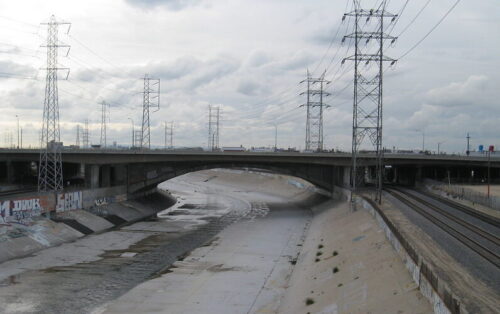 Mitul Nahar writes, “Seasonal climate forecasts estimate how El Niño may affect Southern California’s rainfall. I study the next stage: what happens once that rain reaches the ground and how quickly runoff enters and moves through the Los Angeles River before reaching the ocean. Much of the Los Angeles watershed is paved or developed, so relatively little rain infiltrates the ground. During an intense storm, debris-laden runoff rapidly drains into tributaries and the main channel. In the El Niño winter of 1982–83, peak flow near Long Beach exceeded 80,000 cubic feet per second. Storms caused hundreds of millions of dollars in damage across California, although Los Angeles’ flood-control system prevented substantially greater losses. Since the river was channelized in the mid-20th century, its channels, dams and upstream flood-control basins have managed several wet winters effectively. Managers use short-range rainfall forecasts and real-time measurements to keep enough storage available in the basins to capture runoff, then release water into the channels when conditions allow. … ” Read more from the USC Viterbi School of Engineering.
L.A. had its worst mosquito year this decade. El Niño could make it even worse
“When temperatures rise above 70 degrees, tiny West Nile viral particles begin to rapidly replicate in the gut of Culex mosquitoes, which then go hunting for their next “blood meal,” injecting virus-laden saliva into their prey when they feast. This year, California’s warm, wet summer and fall produced the most West Nile activity in five years. As of Nov. 6, the virus has seriously sickened 528 people and killed 32, according to the California Department of Public Health. Most people who are infected never feel sick, but about 1 in 5 may develop fever, headache and body aches. For the rare few — 1 in 150 — things get serious: The virus can hitch a ride to the brain, causing inflammation, neurological problems and even death. There is no cure, only supportive medical care. Southern California bore the brunt of infections, with Los Angeles County accounting for more than half of all reported human cases. … ” Read more from Cal Matters.
Orange County surf town votes against tax plan to save its own beaches
“Sunny San Clemente’s beach issues are not new. The southern Orange County city has been fighting a war with the waves for years now, as strong tides pull at the surfer-friendly shoreline and erode away its precious sand. On the south end of town, the headaches of beach erosion have only become more intense in recent years as pounding waves lap against — and now routinely force the closure of — an important rail corridor connecting San Diego to the rest of California. In an attempt to find answers, politicians have suggested more rocky riprap to stave off the water or even a long seawall. Both solutions come with drawbacks, including the removal of some public coastline access and erosion acceleration (as water crashes on rocks, it can spread out and more quickly scrape away sand). … ” Read more from SF Gate.
SAN DIEGO
Record water levels caused by tides, El Niño are giving a stark preview of future sea level rise
“A highly unusual combination of warm water and king tides is damaging animal habitats in Mission Bay and providing a stark preview of how the bay might look if sea levels rise as much as predicted in coming decades. Four factors came together last month to create record water levels in Mission Bay: the king tide phenomenon that happens every fall, Kelvin waves caused by El Niño, unusually warm water and ongoing sea-level rise caused by climate change. For humans, the record water levels wiped out most of the bay’s sandy beaches, flooded bike paths and changed where and how recreational activities like swimming and paddle boarding could take place. For birds, the higher water submerged nesting platforms in Kendall-Frost Marsh, shifted habitats for a wide variety of species and changed where some birds choose to hunt fish. “This is a visualization of what we’re all concerned about,” said Andrew Meyer, conservation director for the San Diego Bird Alliance and a big proponent of efforts to fight sea-level rise. “You can come see the future.” … ” Read more from the San Diego Union-Tribune.
Local theater group putting together an all-Indigenous cast for a play about protecting the Tijuana River Valley
“Native Theater Co. is an organization providing a place for Indigenous creatives to learn and create, particularly in the realm of storytelling through theater, and one of those projects is an all-Native production of “Shuuluk Wechuwvi — Where Lightning Was Born.” “Shuuluk Wechuwvi” is a play about the environmental problems, and potential solutions, in the Tijuana River Valley, told through the story of a teen gamer who goes on a journey reconnecting with his Kumeyaay heritage and learning about the story of the Tijuana Estuary and the Kumeyaay connection to the land. Created by sisters Mabelle (playwright) and Zulema (production art and an accompanying comic book) Reynoso, the play was originally produced by their Teatro Las Hermanas collective and premiered in 2025, and the sisters previously explored environmental justice issues and air quality in San Ysidro in their 2024 play, “Somos Aire.” … ” Read moire from the San Diego Union-Tribune.
Tijuana River sewage impacts communities as far north as La Jolla, study finds
“A new study is raising concerns about how far impacts of the ongoing Tijuana River sewage crisis can reach. Millions of gallons of raw sewage flow into the Tijuana River Channel daily, which is a decades-old issue known as the Tijuana River sewage crisis. The study, led by University of California Riverside researchers, in cooperation with University of California San Diego’s Scripps Institution of Oceanography scientists, found that the waste dumped in the river can travel seven times father than expected before becoming airborne. The findings help explain why researchers detected Tijuana River linked pollution in the air near the Scripps Pier in La Jolla, which is about 22 miles from the river mouth. … ” Read more from Fox 5.
Along the Colorado River …
Super El Niño’s moisture may bring more problems than relief to Colorado River Basin
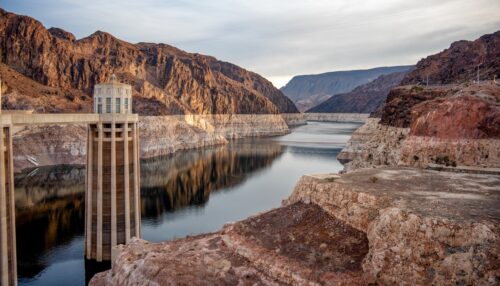
“Crews are starting to reopen the boat ramps at Lake Powell, less than two months after the reservoir dried to its lowest recorded level. The water elevation rose more than 19 feet since it bottomed out on Sept. 15 at about 3516 feet, and nearly 16 feet since Oct. 20, when this year’s Super El Niño weather pattern brought consecutive rain events across the Southwest. Just downstream, Lake Mead, which was expected to hit a point where hydroelectric power would need to be partially or fully shut down to preserve water levels in Lake Powell, is also rising again. It’s up two feet in the same time period. While fears of hitting dead pool in both reservoirs are starting to ease, those rain events were not the saving grace for the Colorado River Basin they appear to be. Not all moisture is good moisture, experts say, and rain like this is temporarily raising reservoirs at the cost of smaller communities along their tributaries. … ” Read more from Straight Arrow News.
Nevada has lots of water in a Lake Mead “bank.” What happens if water levels keep dropping?
“Much like a household puts money into a savings account, Southern Nevada has been setting aside part of its allocated Colorado River water in Lake Mead for the last two decades. At the end of 2025, the state had approximately 890,000 acre-feet of that water in the proverbial bank, according to the Bureau of Reclamation’s annual water accounting report. Nevada’s bank holds nearly three years’ worth of the water the state can take from the river, which is capped at 300,000 acre-feet a year. To picture an acre-foot, imagine a football field covered in water about a foot deep, or roughly 326,000 gallons. That’s enough to supply about two Southern Nevada homes for a year. The official name for these credits, Intentionally Created Surplus, makes them sound like a rainy-day fund. But under federal rules for the river, most of the water can’t be taken out once Lake Mead drops below 1,000 feet above sea level. … ” Read more from the Nevada Independent.
Low-level Hoover Dam tests, historic floods could buy time in hydropower crisis
“Sitting on a wooden plank covering the original terrazzo floor of Hoover Dam’s underbelly is a big, stationary hunk of steel. Turbine A8, the eighth turbine on the Arizona side, is one of only five wide-head turbines at the dam that are primed for drought, able to function with water levels below 1,035 feet elevation at Lake Mead without guaranteed risk of permanent damage. A8 has been out of commission awaiting repairs for months. The dam has 17 turbines in all. Now, Lake Mead’s projected decline could spell crisis for rural utilities across Nevada, Arizona and California that have counted on Hoover Dam hydropower for decades. The federal government intends to see how far it can push the dam’s infrastructure. Bureau of Reclamation spokesman Peter Soeth said the agency will, for the first time in history, test whether those older turbines can operate at lower water levels, with strict limits on operating hours as well as monitoring and frequent inspections to ensure safety. … ” Read more from the Las Vegas Review Journal.
Will Super El Niño bring the west much-needed snow? For Utah, the answer is complicated.
“A monster is growing in the Pacific — not the kraken, but something far scarier. El Niño is a natural phenomenon in which a band of warm water forms every three to five years off the coast of South America. It raises ocean water temperatures by just a few extra degrees for nine to 12 months, sure enough, but ends up injecting an extraordinary amount of energy into the sky. It’s already the strongest El Niño on record, and it might not even peak for another couple of months. “Those are actually really big changes for the ocean,” Art Miller, a climate scientist at the Scripps Institution of Oceanography, told Grist in September. “The ocean has a lot of heat content — 1,000 times more ability to hold heat than the atmosphere — so slight changes in the ocean surface temperatures can actually do a lot for the atmosphere.” … ” Read more from the San Diego Union-Tribune.
Floods bring rare relief to US Southwest reservoirs as Lake Powell rises 20 feet
“Recent flooding across the U.S. Southwest is providing rare relief to thirsty reservoirs that had fallen to record lows amid a yearslong megadrought. Storms in late October and early November sent torrents of water through normally small or dry creeks that overflowed their banks and flooded local communities. Hundreds of people were told to evacuate, and the flooding cut off access to some areas. Yet most of that water will end up feeding depleted lakes and underground aquifers, said Martin Hoerling, a climate scientist and hydrologist at the University of Colorado, Boulder. “That’s somewhat of an unexpected boost from Mother Nature,” Hoerling said. Last winter’s lackluster snowfall did little to recharge water bodies when it melted in the spring and summer, when they typically get their biggest bump of the year. … ” Read more from Newsday.
As the Colorado River shrinks, calls to drain Lake Powell grow
“The 27-year-long drought in the Southwestern U.S. — the longest dry period in the last 1,200 years — is taking a serious toll on the flow of the Colorado River. Climate change is shrinking the snowpack in Colorado’s Rocky Mountains, the source of roughly 80 percent of the river’s annual flow, and higher temperatures are melting the snowpack earlier in the year, which saps runoff in late summer and fall. Warmer weather is also increasing evaporation from the river’s 40 reservoirs, including its two largest — lakes Powell and Mead. Last month, Lake Powell, on the Utah-Arizona border, reached a record low, at less than 150 feet above dead pool, the point at which water can no longer flow through the Glen Canyon Dam’s bypass tubes to reach Lake Mead, behind Hoover Dam, 300 miles downstream. The low water levels reduced the generation of hydropower from both reservoirs, complicated how riverine ecosystems are managed, and slashed deliveries of water to the Lower Basin states of Arizona, California, and Nevada. … ” Read more from Grist.
Colorado’s anemic water flows could have been worse if not for a vote 6 years ago
“Western Colorado saw paltry water flows this summer, but in some parts of Western Colorado, that depressed runoff highlighted infrastructure improvements that are slowly making the region more resilient to drought. “When you really see the difference is in summers like this — when we just have a little bit of water, and we have to be extremely intentional and efficient with it,” Melissa Wills, a program manager with the Colorado River District, said. “If you are relying on 100-year-old infrastructure, it’s going to be a difficult summer.” Wills manages the Community Funding Partnership, a program funded through a 2020 ballot question. That measure increased property taxes by almost $2 for every $100,000 in value to support water projects and passed with more than 70% support during the 2020 general election. In the five years the program has been funded, it’s dolled out around $34 million in grant funds across Western Colorado, funding everything from canal improvements to studies researching alternative forage plants better suited to drier climates. … ” Read more from Colorado Public Radio.
In national water news today …
Many regions have warmed beyond 1.5°c and some beyond 2°c, new study finds
“On average, global temperatures have warmed about 1.44°C (2.60°F) since preindustrial times. But scientists are confident that the world has likely already entered the 20-year time period in which it will breach the 1.5°C (2.7°F) warming limit set by the Paris Agreement when it was signed in 2016. The United Nations agrees: A September report stated the world has virtually no chance to stay below the Paris limit. A new study, published in Nature Climate Change, indicates that at the regional level, many places on Earth have already surpassed 1.5°C (2.7°F), and suggests that other regions have warmed as much as 2°C (3.6°F) due to human-caused climate change. The study is the first to provide such an analysis of warming on a regional scale by filling in data gaps for regions that lack historic climate observations. “Today’s global mean climate is already statistically indistinguishable from a one and a half-degree warming world,” Francis Zwiers, a climate scientist at the University of Victoria and coauthor of the new study, said at a press conference. … ” Read more from EOS.

