
Several news sources featured in the Daily Digest may limit the number of articles you can access without a subscription. However, gift articles and open-access links are provided when available. For more open access California water news articles, explore the main page at MavensNotebook.com.
In California water news this weekend …
From Big Sur to Santa Cruz, California is fortifying its coast for El Niño winter
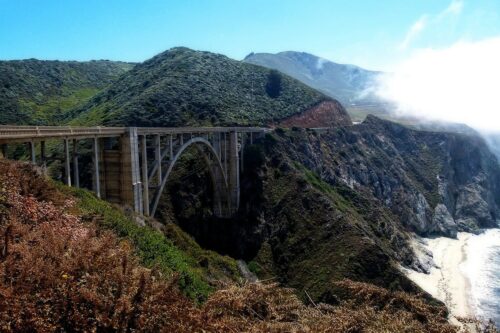 “The concrete is barely dry from the repairs made when storms in 2023 hammered California’s Central Coast and beyond. Yet already many of the hard-hit coastal communities are bracing for another possible drubbing with El Niño. From Santa Cruz to Big Sur to Pacifica, local leaders say they’re doing what they can to safeguard vulnerable infrastructure while heeding lessons from the past to improve their emergency response and better prepare residents for disaster. Such seaside landmarks as Santa Cruz’s West Cliff Drive, Capitola Village, scenic Highway 1 south of Monterey and the beaches of Half Moon Bay are among the areas where officials anticipate potential problems over the next few months. Many of these sites remain in various states of recovery from the turbulent atmospheric rivers of late 2022 and early 2023, which prompted a federal disaster declaration across much of the state. … ” Read more from the San Francisco Chronicle. | Read via Yahoo News.
El Niño is making a splash — and State Parks is getting ready
“Two state beaches in Orange County are still partially closed, as the remnants of Tropical Storm Rachel pounded Southern California in October with heavy rain, strong winds and powerful swells. It could be a taste of more to come, according to forecasts that predict an exceptionally strong El Niño season this winter. El Niño has received considerable media attention this fall, especially since Governor Newsom declared an emergency proclamation on Sept. 21, mobilizing state resources to protect California ahead of potential extreme weather events. On Oct. 27, the Governor signed another executive order to protect Highway 1 and the coastal communities, businesses and jobs that depend on it. The signing took place at Crystal Cove State Park, where coastal erosion, a major bluff crack and threats to the park’s historic cottages underscore the dangers already facing California’s coastline. … ” Read more from California State Parks.
Forecasts say Super El Niño will accelerate climate change
“Balmy water temperatures in California feel more like peak summertime than a few weeks from winter. A supercharged hurricane season has plundered the Southern California coast of sand. Kelvin waves have raised the sea to record levels. And this is all before the classic El Niño atmospheric river deluges have even begun on the West Coast. Now, adding insult to injury, the UK’s national meteorological service says it predicts this winter’s “Godzilla” El Niño will speed up climate change by releasing more carbon dioxide into the atmosphere. According to the Met Office, the annual average carbon dioxide concentration recorded at the Mauna Loa Observatory in Hawaii will reach new highs in 2027. “The rise is the largest annual increase ever forecast by the Met Office and is comparable to the record increase of 3.57 ppm observed in 2024, which was boosted by exceptional wildfire emissions,” the Met Office said in an article. … ” Read more from The Inertia.
State offers $6 million grant to stem golden mussel spread from Delta
“The California Department of Fish and Wildlife is offering $6 million in grant funding to create or enhance boating control efforts in the Sacramento-San Joaquin Delta to slow or stop the spread of invasive golden mussels. The department will hold a webinar to go over grant details on Nov. 18 at 10 a.m. Grants and all supporting documents must be submitted on Dec. 15 by 4 p.m., according to a notice on the department’s website. … ” Read more from SJV Water.
This toxin is killing California’s marine life
“Sea lions were washing ashore along California’s central coast, lethargic, disoriented, and convulsing from seizures. By mid-August, Giancarlo Rulli was fielding more than 300 calls a day about the sick and stranded animals. “It’s highly emotional,” said Rulli, who is the associate director of public relations at the Marine Mammal Center in Sausalito. “Sea lions are an incredible window into the health of our ocean.” When the center is called, the response team deploys four to six other volunteers, who then must carry a 100-pound carrying crate to save animals that are poisoned. The culprit is a marine neurotoxin called domoic acid, produced by Pseudo-nitzschia algae. When marine animals eat the naturally occurring material, toxins accumulate in their bodies. As larger predators eat smaller prey, it spreads through the food chain, endangering both apex predators, such as sea lions, and people. … ” Read more from Sierra Magazine.
Pacific Legal Foundation joins new challenges to Clean Water Act citizen suits in California, Pennsylvania, and Tennessee
“Pacific Legal Foundation has joined three citizen suits in defense of a family-owned California business, a Pennsylvania manufacturer, and a Tennessee town. In each case, PLF asks the court to hold that the Clean Water Act’s 1972 “citizen suit” provision violates the Constitution by handing the executive branch’s prosecutorial power to unaccountable private actors. “The Constitution reserves executive power for the executive branch — it does not carve out exceptions allowing private groups to leverage government power to hinder the productivity of American cities and businesses,” said Sean Radomski, an attorney at Pacific Legal Foundation. “The Clean Water Act’s citizen suit provision has empowered private groups to circumvent the Constitution for over fifty years. That’s wrong.” In California, PLF represents Corona Clay Company, a family business that produces clay for baseball diamonds and other athletic fields. Corona Clay was sued in 2018 by two nonprofits, Inland Empire Waterkeeper and Orange County Coastkeeper, for alleged violations of a discharge permit. … ” Read more from the Pacific Legal Foundation.
After EPA proposes plan to remove federal protections for wetlands and streams, Sens. Schiff, Markey push EPA to abandon extreme threat to clean drinking water
“U.S. Senators Adam Schiff (D-Calif.), Ranking Member of the Senate Environment and Public Works’ Fisheries, Water, and Wildlife Subcommittee, and Ed Markey (D-Mass.) are calling on the U.S. Environmental Protection Agency (EPA) and the U.S. Army Corps of Engineers (USACE) to abandon their new proposal that threatens to harm public health and leave communities vulnerable to flooding and loss of access to clean drinking water. The EPA’s new proposal to revise the definition of the Waters of the United States (WOTUS) rule replaces the proposed November 2025 standard with an even more extreme one, defining “relatively permanent” to mean “perennial” waters, stripping federal protections for hundreds of bodies of waters. Previously, in January 2026, the Senators urged the agencies to reverse this proposal. “As we explained then, excluding these waters from federal protection threatens drinking water, increases downstream pollution and flood risk, and shifts substantial costs onto states, communities, and ratepayers. We are disappointed that your agencies have not only chosen to disregard all of these concerns, but have put out a second, more extreme proposal that does even more harm. We urge you to abandon this effort altogether and remember your statutory responsibilities to protect drinking water, public health, and the environment,” the Senators wrote in a letter to the EPA. … ” Read more from Senator Adam Schiff.
CAL FIRE report: California forests are overcrowded and at risk
“CAL FIRE released a new science-based report examining the health and challenges facing California’s forests and rangelands as they face mounting pressures from climate change and wildfire. The California Forest and Rangeland Assessment brings together data for more than 50 indicators showing trends in wildfire severity, tree mortality, water resources and wildlife habitat. The report is designed to help policymakers, land managers and communities make informed decisions about protecting and restoring natural landscapes. “California’s forests and rangelands are essential to our way of life,” CAL FIRE Director and Fire Chief Joe Tyler said. “They provide clean air and water, support wildlife, store carbon and help protect our communities from wildfire. This Assessment shows where conditions are changing—and where strategic action can make a real difference.” … ” Read more from Action News Now.
Solano County Planning Commission rejects Collinsville-area rezoning
“The Solano County Planning Commission voted Thursday night unanimously to recommend against a proposed zoning change affecting 1,312 acres of land east of Collinsville that California Forever has identified for potential shipbuilding operations. The 4-0 vote rejected county staff’s recommendation to change the property’s zoning from Exclusive Agriculture to Industrial-Water Dependent, bringing it into alignment with a designation in the county’s 2008 General Plan. More than a dozen people spoke against the proposal during the public hearing, while one speaker voiced support for it. The property, owned by Flannery Associates LLC, the company behind California Forever, consists of one legal parcel identified by seven assessor parcel numbers. It is located along the Sacramento River and currently consists primarily of grazing land and wetlands, with wind turbines on the hills behind it. … ” Read more from the Vacaville Reporter.
In regional water news this weekend …
NORTH COAST
Humboldt County warns of scam emails demanding $5,960 well permit fee
“The Humboldt County Sheriff’s Office, Planning & Building Department, and Division of Environmental Health have received new reports of another email scam targeting the community. In this scam, fraudulent emails claim to be from a false “Executive Director of Humboldt County Planning & Building Department Administration.” The scammer tells the victim that they have reviewed their well permit project application and instructs the applicant to reply to the scam email to “request settlement instructions and fee confirmation for their application invoice” and that a “standard default application fee of $5,960 must be settled prior to final permit issuance.” … ” Read more from the Redheaded Blackbelt.
SIERRA NEVADA
Global Springs Alliance launches at Lake Tahoe to protect irreplaceable ecosystems and prevent extinctions
“In Nevada, a desert oasis shelters 26 species found nowhere else on Earth. In Australia, shallow spring pools sustain an extraordinary community of unique fish, snails and other invertebrates. In the Indian Himalaya, springs supply water to nearly 50 million people. These remarkable ecosystems are the focus of the Global Springs Alliance, launched at the University of Nevada at Lake Tahoe, to help protect some of the world’s most distinctive and imperiled freshwater habitats. Hosted by the Tahoe Institute for Global Sustainability, the October “Springs of Life” workshop brought together international researchers, conservation organizations, policy specialists, Nevada Department of Wildlife representatives, and University of Nevada, Reno faculty and students. Participants established a road map to identify the world’s most important spring ecosystems, assess threatened species and translate scientific knowledge into protection of springs and the groundwater that sustains them. “A single spring can be its own unique underwater world, home to an entire suite of species that exists nowhere else on the planet,” said Chouly Ou, freshwater fish conservation specialist at Re:wild and workshop co-organizer. “We want to find and protect these places before they disappear, and support the people whose water, livelihoods and cultural traditions depend on them.” … ” Read more from Nevada Today.
Sierra Club: Tahoe Keys Marina settlement advances environmental protection at Lake Tahoe
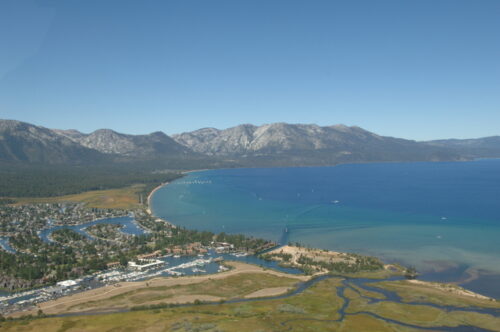 “A landmark settlement agreement between the Sierra Club Tahoe Area Group, South Lake Tahoe resident Alan Miller, Suntex Marinas, and the City of South Lake Tahoe represents an important victory for protecting Lake Tahoe’s water quality and sensitive aquatic environment. See more from the Sierra Club. The agreement resolves environmental concerns surrounding the Tahoe Keys Marina redevelopment and establishes commitments to improve stormwater treatment, address aquatic invasive species, reduce pollution from shoreline infrastructure, and support scientific research. A major achievement is Suntex’s commitment to pursue an improved stormwater treatment system that captures, treats, and discharges runoff rather than relying primarily on underground infiltration. This is particularly important at Tahoe Keys, where shallow groundwater and contaminated soils raise concerns about transporting legacy pollutants into surrounding waterways. The agreement provides for up to $750,000 in additional stormwater treatment costs and two years of water quality monitoring. … ” Read more from South Tahoe Now.
Storm season in the Sierra foothills: How Nevada Irrigation District prepares for a very strong El Niño winter
“As the Sierra foothills head into what forecasters expect to be a very strong El Niño winter, the Nevada Irrigation District (NID) is already working behind the scenes to harden the region’s water system for months of storm activity. Crews are out inspecting canals, reinforcing vulnerable sections, clearing debris and coordinating reservoir operations to handle fast-moving runoff. For NID, winter readiness is a full-season effort that begins long before the first storm arrives. California is entering the season with more than a 90 percent chance of a very strong El Niño, according to the National Oceanic and Atmospheric Administration. The foothills may not experience the widespread flooding seen in larger river basins, but intense rainfall, rapid runoff and clogged drainage systems can still create challenges across the region. With storms expected to arrive quickly and forcefully, NID has spent months preparing the water system and the communities it supports. … ” Read more from YubaNet.
A UC Riverside scientist skied deep into the Sierra to track microplastics in snow
“Microscopic shards of plastic have been found everywhere scientists have looked, from the depths of the ocean to the clouds above. Now a UC Riverside environmental scientist with a particular set of outdoor and laboratory skills has found them in remote mountain snows reachable only on skis. In a new paper, she and 13 colleagues report they found plastics at every site sampled. They also describe how storms act like a scrub brush for the sky, and hint that the longer the gap between them, the more plastic the next one brings down. For Aleksandra Karapetrova, the answers were hiding in plain sight; layered in the snow she already knew how to read. She has been an avid alpine enthusiast for more than a decade: ski mountaineering, alpine climbing and digging snow pits to read the snow and evaluate avalanche risk in the Rockies, Cascades and Sierra. … ” Read more from the LA Times.
SACRAMENTO VALLEY
DWR preps Oroville Dam spillway for inspections
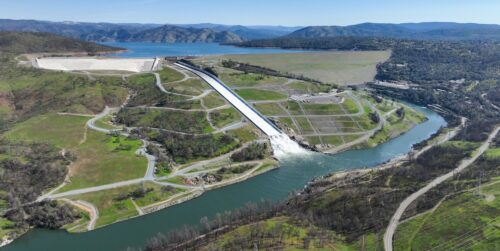
“Those driving by the Oroville Dam spillway in recent weeks have likely noticed it’s dry and often covered in workers and trucks. In preparation for its annual inspections, the California Department of Water Resources has begun the cleaning process. “Cleaning crews used pressure washers, brooms, and small equipment to remove debris,” said DWR spokesperson Raquel Borrayo in an exchange via email. “The week of Oct. 12, DWR engineers performed comprehensive inspections of the main spillway to evaluate the condition of concrete slabs and walls, joint sealants, and dentates (energy-dissipating structures at the base of the spillway). Minor joint sealant and small concrete surface repairs are now underway. Work is likely to continue through November but is dependent on weather.” … ” Read more from the Chico Enterprise-Record.
Mother and daughter work to preserve native traditions and California’s wetlands
“For Diana Almendariz, tule is more than just a plant. It’s a connection to her ancestors, her Native American heritage and the land and she’s determined to make sure those traditions continue for future generations. As California’s wetlands disappear, the risk of losing the cultural knowledge and traditions tied to these ecosystems increases. Almendariz and her daughter, Christina, are working to preserve both through traditional tule practices and an exhibit highlighting the relationship between Native communities and California’s wetlands. For more than 30 years, Diana Almendariz has worked with tule to keep her cultural traditions alive, creating baskets, dolls, ducks and other traditional items. “It’s like a big sponge. I can squish it, and it holds space. And it also feels to me like clay. I can mold a lot of things out of it,” Almendariz said. … ” Read more from CBS Sacramento.
BAY AREA
Mill Valley declares local emergency for tides, storms
“The Mill Valley City Council has approved a local emergency proclamation as it faces tidal flooding and a winter storm season predicted to be severe. The proclamation approved Monday gives staff flexibility to prepare for and respond to hazardous events, City Manager Todd Cusimano said. “This isn’t just one scenario,” he said. “It’s the prolonged or intense rainfall that can drive our creek and roadway flooding conditions, slope instability, debris flows, downed trees.” “That’s No. 1. No. 2, king tides,” he said. “If you get No. 1 and No. 2 tied together, it’s all hands on deck. And then again, regional disruption.” … ” Read more from the Marin Independent Journal.
San Jose to declare state of emergency ahead of potential El Niño storms
“Facing the threat of severe storms and flooding fueled by a potential “Super El Niño,” San Jose is preparing to proclaim a local emergency Tuesday that would mobilize city resources and unlock millions in its emergency funding. Aligned with California’s emergency declaration issued in September, the proclamation would take effect immediately upon approval and grant city management the authority to order evacuations and issue emergency alerts as needed. It also makes $5.5 million from its emergency reserves available to fast-track procurement for flood mitigation supplies, equipment and contracted response services. Instead of a set expiration date, the measure requires local emergency officials to report back to the City Council every 60 days to either end or justify extending the emergency status. … ” Read more from the San Jose Mercury News.
SAN JOAQUIN VALLEY
Kings River water fight heats up as 1.13 million acre-feet called up for grabs
“State water regulators say as much as 1.13 million acre-feet of Kings River water could be sitting unclaimed, a finding that has reignited a years-long standoff between a Kern County water district and the Fresno-area communities that depend on the river for their groundwater. The dispute centers on flood flows that have historically spilled out of the watershed through the James Bypass, and on whether that water should stay in the San Joaquin Valley’s Kings River basin or be moved south. The California State Water Resources Control Board’s water rights office reported the 1.13 million acre-foot figure as excess and unused Kings River water, according to SJV Water. At the center of the fight is Semitropic Water Storage District, a Kern County agency that first filed for access to Kings River floodwater in 2017, seeking 1.6 million acre-feet, according to KMPH. Consolidated Irrigation District, Alta Irrigation District and Fresno Irrigation District filed a joint application the same year, with the McMullin Area Groundwater Agency following a few years later, per SJV Water’s reporting…. ” Read more from Hoodline.
EASTERN SIERRA
Rare Devils Hole pupfish count more than doubles since fall 2025
“The National Park Service counted 137 endangered Devils Hole pupfish during an Oct. 10 population survey, nearly double the 77 fish observed in spring 2026 and more than double the 69 recorded in fall 2025. The increase is an encouraging sign for one of the world’s rarest fish, which lives exclusively in Devils Hole, a deep, water-filled cavern within Death Valley National Park. During the fall survey, scuba divers and surface counters from the National Park Service and U.S. Fish and Wildlife Service observed fish in the cavern’s depths and along the shallow limestone shelf where they feed and spawn. Biologists from the two agencies have monitored the population using these methods since 1972. “It’s exciting to see Devils Hole pupfish numbers increase so significantly over the past year,” said Death Valley National Park Superintendent Mike Reynolds. “These results reflect the dedication of our scientists and conservation partners working to protect this extraordinary species. While challenges remain, we’re encouraged by this progress and committed to its long-term survival.” … ” Read more from the Sierra Wave.
SOUTHERN CALIFORNIA
California says 6,500 homes near shuttered Exide plant are ‘clean.’ But soil samples raise questions
“California has cleaned up lead-contaminated soil at thousands of homes in neighborhoods surrounding a shuttered battery recycling plant in southeast L.A. County, state officials say. The former Exide facility in Vernon spewed toxic dust for decades as it melted down lead-acid car batteries for recycling. Its operations released lead dust across Boyle Heights, East Los Angeles, Commerce and Maywood while the state allowed the plant to operate for decades with a temporary permit. “Every school, park, and childcare center in the affected area has been cleaned,” Gov. Gavin Newsom said in a statement Friday, “and nearly 6,500 homes have been made safer.” The 6,500 figure, which was current as of Oct. 23, reflects roughly 80% of the 8,000 total eligible properties where owners granted access, according to the statement. That means there are about 1,500 properties left for the state to clean up. … ” Read more from the LA Times.
SAN DIEGO
Study traces Tijuana River pollution ripple effects to La Jolla
“A recently published study has detected a chemical associated with Tijuana River wastewater in the air near the Scripps Pier in La Jolla, roughly 22 miles north of the river, raising concerns about how far the ongoing sewage crisis can reach. Researchers collected air samples at four locations between August and September 2024, including near the La Jolla pier. There, they found dimethyl trisulfide, a compound linked to the natural process that converts Tijuana River wastewater into toxic gases. According to a UC Riverside report on the study, a pump station began diverting wastewater southward in 2024, reducing the amount flowing into the Tijuana River. Following that diversion, the level of the chemical measured in La Jolla dropped by 86%. For students at nearby UC San Diego, the findings hit close to home. … ” Read more from Channel 8.
Mexican ambassador to the U.S. pledges during San Diego visit to work on Tijuana River pollution crisis
“Since becoming the Mexican ambassador to the U.S., Roberto Lazzeri has been confronted with many pressing cross-border issues, ranging from trade deals and border security to immigration. But he said there’s one in particular that comes up constantly in his many meetings in Washington — the Tijuana River Valley’s pollution crisis. The Mexican ambassador visited San Diego for the first time last week since taking the job in June. During his stay, he met with leadership from U.S. Customs and Border Protection, U.S. Border Patrol and the International Boundary and Water Commission, among others. Lazzeri, an economist appointed ambassador amid trade negotiations between Mexico and the U.S., said he has been aware of the region’s longstanding cross-border pollution issue since his time at Mexico’s Ministry of Finance and Public Credit, where he served as chief of staff from 2022 to 2025. … ” Read more from the San Diego Union-Tribune.
Along the Colorado River …
Federal government seeks more time to respond to Arizona’s Colorado River lawsuit
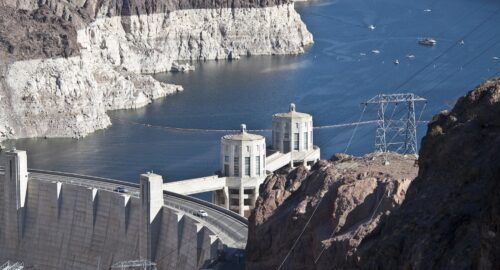
“The Arizona Department of Water Resources confirmed the federal government has requested more time to respond to a lawsuit challenging its new Colorado River management plan. Arizona and the Central Arizona Project have moved to join Nevada’s lawsuit against the U.S. Department of the Interior, challenging a plan that could significantly reduce the amount of Colorado River water delivered to Arizona. The legal battle comes after the seven states that share the river failed to reach an agreement on how to manage its increasingly limited water supply. Tom Romero, a law professor at the University of Nevada, Las Vegas, believes the lawsuit could be about more than stopping future cuts. … ” Read more from Channel 15.
Rain boosts Lake Powell and Lake Mead. Here’s why drought concerns remain
“Recent rain has given Lake Powell and Lake Mead a welcome boost, but a water policy expert says the Colorado River system is still facing serious challenges. Lake Powell’s water level rose about 19 feet between the end of September and Nov. 5, according to the U.S. Bureau of Reclamation. Lake Mead has also seen a modest rise. Sarah Porter, director of Arizona State University’s Kyl Center for Water Policy, said Lake Powell had fallen to about 22% full, while Lake Mead was only a few percentage points higher. Despite the recent increase, Porter said Lake Powell is still around the level it was last spring, when water managers were worried about how low it had become. … ” Read more from Arizona Family.
In national water news this weekend …
The $43 billion water boost is over. Now what?
“Communities across the country are facing a federal water infrastructure funding cliff following the expiration of a bipartisan, multibillion-dollar cash infusion that Congress approved during the Biden administration. The State Revolving Funds (SRF) — which assist projects like lead pipe replacement and sewer repairs — are expected to decrease around 80 percent from last year’s levels. Congress will need to approve next year’s budget for the loan program, a foundation of federal support for local water systems, when lawmakers return on November 9. Advocates are sounding alarm bells after the recent sunset of the Infrastructure Investment and Jobs Act of 2021. A bipartisan feat, the law quadrupled the amount of money states received via the SRF. It was a major federal effort to support the gaping need to fix water infrastructure across the country. … ” Read more from Circle of Blue.
The Great Pacific Garbage Patch may now have so much plastic, it’s changing the color of the ocean
“Far out in the Pacific Ocean, between Hawaii and California, a wide patch of water has been changing color over the past two decades, becoming significantly bluer and greener. It may sound inviting, but scientists have discovered there may be a disturbing reason for it: increasing plastic pollution. This part of the ocean is called the Great Pacific Garbage Patch. It’s a swirling soup of plastic trash made up of everything from old fishing nets to food and drink packaging. People often think of it as vast islands of visible waste, but in reality, much is made up of tiny fragments called microplastics, many too small to be seen by the naked eye. And it’s an increase of these tiny plastic pieces that may be responsible for changing the color of the Great Pacific Garbage Patch’s water, according to a study published Thursday in the journal Communications Earth & Environment by scientists from the University of Bergen in Norway. … ” Read more from CNN.
[spacer]
