

Several news sources featured in the Daily Digest may limit the number of articles you can access without a subscription. However, gift articles and open-access links are provided when available. For more open access California water news articles, explore the main page at MavensNotebook.com.
On the calendar today …
- OPEN HOUSE: Final Just Transitions in the Delta from 11am to 3pm at the Jean Harvie Community Center in Walnut Grove. At the open house, the six future scenarios that we have crafted, modeled, and evaluated with ongoing engagement from Delta communities, advocates, and experts will be presented. Take part in reviewing and ranking these future scenarios to help define a more resilient future Delta that is grounded in the values and concerns of local public input. For more information on the project, click here.
- WEBINAR: Fact and Fiction: What Changed for Water Systems Following the 2025 LA Fires from 12pm to 1pm. Speaker: Gregory Pierce, Senior Director of the University of California, Los Angeles (UCLA), Luskin Center for Innovation, the Director of the Human Right to Water Solutions Lab, and the Director of the UCLA Water Resources Group within the Institute of the Environment and Sustainability. Click here to register.
In California water news today …
Atmospheric rivers enter California’s forecast
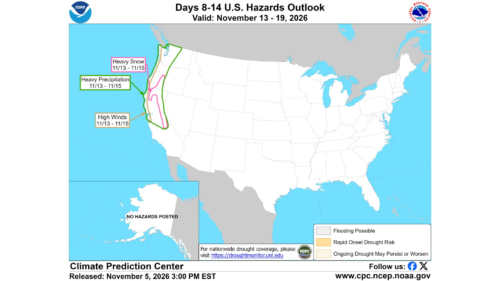 “Chances of heavy precipitation in California have entered next week’s forecast. Atmospheric river activity could bring rain, snow and high winds for roughly the period of Nov. 13-17 to parts of California and the Pacific Northwest, according to the Climate Prediction Center. In California, the greatest risk of significant precipitation is in the north, though it’s too early for forecasters to know exactly where the atmospheric rivers will land. “We know there’s going to be above-average atmospheric river activity over the U.S. West Coast next week, but we’ll hone in on where that will happen as it gets closer to the event,” Deanna Nash, a precipitation and geohazard scientist for the Center for Western Weather and Water Extremes at UC San Diego’s Scripps Institution of Oceanography, told SFGATE. “The signal for those high anomalies is the highest over Washington and Oregon, but other models are showing higher anomalies from Oregon to Northern California.” … ” Read more from SF Gate.
This weekend’s California weather: Enjoy the calm before atmospheric river rainstorm
“Enjoy the wonderful weather this weekend, because it won’t last much longer. This weekend, high temperatures will sit comfortably in the low 70s and upper 60s across Central California, and even into the low 80s for portions of Southern California; all just slightly above average for early November. With mostly sunny skies and light winds, it is the perfect weekend to spend outside, whether it be on the coast or in the mountains. This is all thanks to a weak ridge of high pressure that is setting up over the western U.S. As it sits overhead, skies are cleared and temperatures underneath the ridge will stay slightly above average alongside calm and stable skies. … ” Read more from the Sacramento Bee.
A super El Niño is here. What does it mean for skiing?
“Godzilla has arrived. A super El Niño is here. What sounds like the plot of a horror movie is actually a forecast for a climate event that is predicted to shatter records and reshape global snowfall patterns this winter. An El Niño results from an intricate interplay between ocean and atmosphere: The temperature of the sea’s surface in the eastern Pacific Ocean near the Equator warms, releases heat and affects the trade winds, which changes global weather patterns. El Niños occur every two to seven years, typically peaking from November to January. For skiers, this year’s powerful El Niño could mean abundant snow in some regions, while large expanses of North America endure warm temperatures, rain or drought. Many skiers have been anxiously watching the predictions and trying to game out where they should go this winter, especially after a disastrous season in much of the West last year. … ” Read more from the New York Times.
Kings River may have more than 1 million acre feet up for grabs
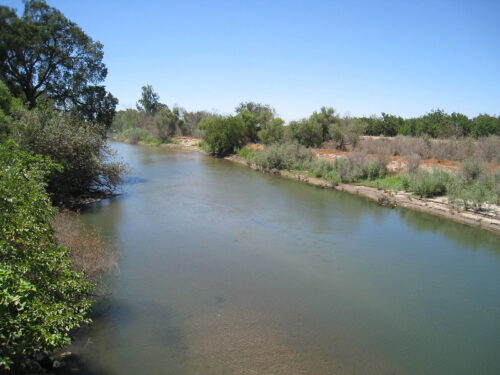 “The state’s water rights office says there is excess water – up to 1.13 million acre feet – going unused on the Kings River, which could open the system to a flood of water seekers. The Administrative Hearing Office (AHO) will hold a hearing Jan. 19, 2027 to delve into whether the Water Resources Control Board should revoke the 1967 “fully appropriated stream” designation on the Kings River. If that happens, it would open the river to new water permit applications, according to the AHO’s hearing notice. This all stems from a legal fight that started in 2017 when the the Semitropic Water Storage District in Kern County filed an application for Kings River flood flows. Longtime Kings River districts, including the Consolidated, Alta and Fresno irrigation districts also filed a joint application. And the McMullin Area Groundwater Agency filed one a few years later. Applicants had been battling it out through various AHO proceedings, with the last one held in 2024. … ” Read more from SJV Water.
California approves water right for Sites Reservoir, with construction planned soon
“California’s largest reservoir project in a half century is moving forward. Sites Reservoir, which would store large amounts of Sacramento River water in a remote valley in Colusa County, received its water rights from the state Wednesday. The decision follows years of negotiation and debate over the controversial project, pushing it towards long awaited construction. “This decision is the product of one of the most thorough water right hearings the board has conducted,” said E. Joaquin Esquivel, chair of the State Water Resources Control Board, at the start of a nine-hour hearing Wednesday. Now the reservoir, which would be the eighth largest in California, has cleared its most significant regulatory hurdles and is on track to be completed in the next decade. “It’s probably the only new off-stream reservoir project that makes any sense in California right now,” water board member Sean Maguire said. “This is a huge moment for California.” … ” Read more from PBS Abridged.
With Sites approval, California poised to build biggest water project in 50 years
“The State Water Resources Board approved a water rights permit for the Sites Reservoir project on Wednesday, clearing the way for construction of a 13 mile-long, four mile-wide and 260 foot-deep water body in Colusa County near the farming town of Maxwell. Gov. Gavin Newsom celebrated the approval, in the final months of his tenure, of a historic water project he has pushed for years, as the five board members voted over the strenuous objections of environmental groups, fishing advocacy organizations and tribal members who say their heritage will be buried beneath the 1.5 million acre feet of water Sites is one day projected to hold. … ” Read more from the Sacramento Bee.
SEE ALSO:
- Sites Reservoir Clears Major Milestone with State Board Water Right Decision, from the Sites Project Authority
- Newsom administration approves largest new reservoir in California in 50 years, construction set to begin next year, from the San Jose Mercury News
- California water board clears final hurdle for Sites Reservoir construction to begin, from CBS News
- ‘Major blow to Tribes’: California approves Sites Reservoir permit, from KRCR
State Water Board approves update to Bay-Delta water plan
“Last week, the California State Water Resources Control Board adopted an update to the water plan that will govern water usage and reservoir operations in the state for the next seven years. Adoption of the updated water quality control plan for the San Francisco Bay/Sacramento-San Joaquin Delta Watershed (Bay-Delta Plan) on Oct. 29 marked the end of a multi-year process, involving hours of public hearings with testimony from environmental groups, tribes, water agencies, local community representatives, and statewide business groups. The updated plan provides what’s called a “regulatory pathway” that focuses on controlling water flows through the Delta and a second pathway the State Water Board said is based on the Healthy Rivers and Landscapes (HRL) program (formerly referred to as the voluntary agreements). … ” Read more from the California Chamber.
PPIC: California’s water financing needs
“PPIC Water Policy Center research fellow Bradley Franklin testified before a joint informational hearing with the Assembly Local Government and Assembly Water, Parks, and Wildlife Committees, “Pay Now or Pay Later: Understanding the Challenges of Water Financing, What Investments Are Necessary, and Exploring Policy Levers for Managing the Cost of Water in the Era of Climate Uncertainty.” … Updating and adapting water systems requires significant investment. The main message of my talk today is that California needs to identify steady and reliable funding sources for water. California has an exceptionally complex water system. Water conditions change dramatically from season to season and year to year. And water supplies must be transported long distances through a highly engineered network. Keeping this system working is costly. California spends over $40 billion a year on water, including water supply, water quality, flood protection, and ecosystems. More than 80 percent of this funding comes from local sources, mostly water and sewer bills. Most of the rest comes from the state, with a small amount from the federal government. … ” Read more from PPIC.
SEE ALSO: Understanding the State’s Role in Funding Water Projects, handout from the LAO
Procedural ruling and amended schedule for AHO Delta Conveyance Project hearing
The Administrative Hearings Office (AHO) issued a procedural ruling letter on October 7, 2026. The ruling set page limits and deadlines for closing and reply briefs and addressed other procedural matters. This letter amends, supplements, and clarifies that ruling based on the statements by party representatives during the status conference on October 19, 2026. All elements of the October 7 Procedural Ruling Letter not amended by this ruling letter remain in effect. This letter also sets deadlines for the submission of evidentiary objections and responses. … ” Read more from the State Water Board.
Public comment period opens for draft California Bulletin 74 Well Standards
“The Department of Water Resources (DWR) has released the Draft California Bulletin 74 Well Standards for public review and comment. DWR Bulletin 74 sets the minimum standards for water, monitoring, cathodic protection, and geothermal heat exchange wells, with the purpose of protecting California’s groundwater quality. … ” Read more from DWR.
California’s first carbon capture project shot down in court in setback for climate policy

“A Kern County judge ruled that approval of California’s first operating carbon capture and storage project — a technology the state is counting on to meet its climate goals — violated state environmental law and must be set aside. Judge Marcos Camacho found that environmental review of California Resources Corp.’s TerraVault project, which Kern County supervisors approved in October 2024, fell short in several ways. Among them, it failed to analyze the industries expected to supply the project with carbon dioxide. Because the judgment is not yet final, it’s not clear when CRC must stop injecting carbon dioxide and suspend the facility’s operations. A real-time project tracker on the company’s website indicates that carbon injection continues. Carbon TerraVault 1 — the first of at least nine carbon storage projects the company plans around the state — is designed to collect up to 46 million metric tons of carbon dioxide, according to CRC. The company is injecting carbon deep underground in a Kern County oil field to keep it from warming the atmosphere. The project began operating earlier this year after a lengthy and controversial approval process. … ” Read more from Cal Matters.
AB 2180 clarifies how California agencies may demonstrate Prop 218 compliance for water, sewer, and solid waste rates
“On September 27, 2026, Governor Newsom signed Assembly Bill 2180 (“AB 2180”) into law. AB 2180 adds Government Code section 53751.5, effective on January 1, 2027, as part of the Proposition 218 (“Prop 218”) Omnibus Implementation Act. In response to uncertainty and litigation over how local agencies demonstrate compliance with Prop 218’s proportionality and cost-of-service requirements for property-related fees, AB 2180 establishes statutory standards and methodologies that clarify how an agency may make that showing, including standardized methods for the equitable allocation of service-related costs. In plain terms, AB 2180 makes it easier for local agencies — such as cities, counties, and water districts — to show that the rates they charge for water, sewer, and trash service are legally compliant. AB 2180 spells out the kinds of data and the cost-allocation methods an agency may use to justify those rates. But AB 2180 does not change the core rule of Prop 218: a property owner cannot be charged more than the cost of serving that owner’s property. … ” Read more from AALRR.
Huffman: Democrats will use the gavel to follow the money, bring down costs, protect our public lands and waters
“Today, House Natural Resources Committee Ranking Member Jared Huffman (D-Calif.) released the following statement after Democrats won majorities in both the House and Senate in the midterm elections: “Last night, Americans across the country sent a message loud and clear: America belongs to all of us, not just the billionaires and special interests who have been getting the red carpet treatment while working families struggle to make ends meet. “The American people were fed up with a Congress that looks away from Trump’s corruption and rubberstamps his sweetheart deals. The Great Gatsby party is over. Come January, Democrats will use the awesome power the American people just gave us to follow the money, drag corruption into the daylight, and hold this administration accountable for putting the wealthy and well-connected ahead of struggling families. … ” Read more from Representative Jared Huffman.
In commentary today …
New Bay-Delta rules highlight state’s slow water progress
Steven Greenhut, director of the Pacific Research Institute’s Free Cities Center, writes, “If you turn a map of California on its side with the Nevada border to the north, you’ll notice a low-lying area where nearly half of the water from the Sierra Nevada Mountains drains before it heads to the San Francisco Bay and then to the Pacific Ocean. That is the Sacramento-San Joaquin Delta. It’s the West Coast’s largest estuary, an enchanting ecosystem of rivers, historic small towns and orchards. Per state estimates, the area’s overall watershed “drinking and municipal water to nearly 30 million people irrigation water” and “for 4 million acres of farmland.” It’s also Ground Zero for California’s long-running water wars given its significance in divvying up the state’s scarcest resource. The mighty Sacramento River runs south into the Delta, then gets tangled in a maze of wetlands, tributaries and sloughs before its water is pumped to farms in the San Joaquin Valley. The latest political tussle involves overhauling the water-management rules in the area, via something known as the Bay-Delta plan. It was last updated 31 years ago. The California Water Resources Control Board last week voted 4-1 to approve a new plan which, per Politico, “will trade billions of dollars in habitat restoration for greater water flexibility for farms and cities in the sensitive Bay-Delta region.” As economist Thomas Sowell once quipped, “There are no solutions. There are only tradeoffs.” This plan seems to recognize that reality. … ” Read more from the Pacific Research Institute.
Trump’s latest Clean Water Act proposal would strip federal protections from most California streams
Sean Bothwell, executive director of California Coastkeeper Alliance, writes, “In September, the Trump administration’s EPA and Army Corps of Engineers proposed a new definition of “waters of the United States,” known as WOTUS. The new rule severely limits which waterways can receive Clean Water Act protections under the new proposed definition. As proposed, a stream will only receive protection under the Clean Water Act if it holds water almost every day of the year. In California, where dry streambeds in summer are normal, that test means most streams will lose Clean Water Act protections. Only 9% of California’s will remain protected under the Clean Water Act, according to an analysis of the National Hydrography Dataset. Seasonal creeks, desert washes, snowmelt-fed mountain streams, vernal pools, and wetlands separated from a river by a levee or road would all lose federal protection under the Trump proposal. The rule includes specific parameters that are likely to further limit the number of creeks and streams that will continue to enjoy Clean Water Act protections. … ” Read more from City Watch LA.
In regional water news and commentary today …
NORTH COAST
The State Water Board finally put the Trinity River on the agenda, sort of
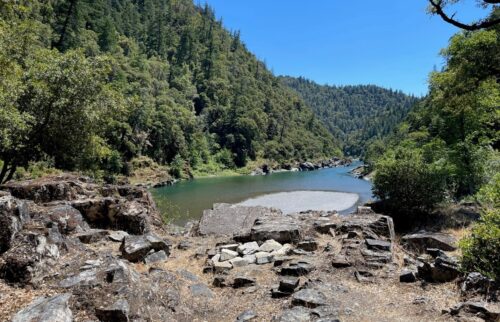
“After 36 years of asking, Trinity River advocates finally got the State Water Board to put the river’s flows and temperatures on the agenda. What they got is a workshop, and not everyone is thrilled. The State Water Resources Control Board approved a sweeping update to the Bay-Delta Plan after a marathon October 29 hearing that ran past 11 p.m. Tucked into the final resolution is a directive for staff to hold a public scoping workshop on minimum flows, temperature standards and other protections for the Trinity, coordinated with tribes, the two counties, the Bureau of Reclamation and fisheries agencies. The concession followed testimony from dozens of tribal members, many of whom drove 10 hours to speak for three minutes, arguing the Bay-Delta process ignored the Klamath-Trinity system. The Trinity is the Klamath’s largest tributary, and most of its water gets diverted south to the Delta for agriculture. Yurok and Karuk speakers noted that cold, oxygen-rich Trinity releases are what keep the Klamath from repeating its fish kills. … ” Read more from Active NorCal.
They tore out an 8-foot dam on a Mendocino County creek. The coho salmon came back within a year.
“Nine miles of cold, clean creek sat behind an eight-foot concrete wall for nearly 60 years, and all it took to give it back to salmon was tearing the wall out. Four years later, the fish are proving the point. Cedar Creek is a tributary of the South Fork Eel River in Mendocino County, where California Trout and the state Department of Fish and Wildlife removed an abandoned hatchery dam in 2022. The structure was left over from a hatchery decommissioned after the 1964 flood, and it sat just 700 feet above the creek’s mouth, which cut nearly the entire watershed off from migrating fish except at perfect flows. Adult Chinook were spawning above the old dam site within three months of removal. Then in August 2023, a snorkel survey turned up 34 juvenile coho in the creek, most of them upstream of where the barrier used to stand. Surveys had not detected a single coho in Cedar Creek in the previous 15 years. … ” Read more from Active NorCal.
Noyo Center receives $100,000 PG&E grant for kelp forest recovery
“Bull kelp forests along the Mendocino Coast are getting a boost from the PG&E Corporation Foundation, which awarded Noyo Center for Marine Science $100,000 to expand its recovery work. The Noyo Center is one of five groups in Northern and Central California to receive a grant through PG&E’s Better Together Nature Positive Innovation Grant Program. This year, PG&E awarded a total of $500,000 to five organizations for environmental stewardship projects focused on land, air quality and water. The money will support Noyo Center’s Kelp Forest Ecosystem Recovery Project, which builds on existing efforts to restore bull kelp forest. The project involves removing overabundant purple sea urchins that can damage kelp forests and planting new bull kelp in restoration areas. … ” Read more from the Mendocino Voice.
SIERRA NEVADA
Experts explain what this year’s water flow conditions mean for Kokanee salmon spawn at Taylor Creek
“As water temperatures begin to cool and bouts of autumn precipitation make their way across the region, Kokanee salmon spawn season has become a highly anticipated spectacle since they were first introduced to Lake Tahoe in 1944. Yet with minimal snowpack last season and early spring weather, stream flow rates are dismal, and many are wondering how the Kokanee salmon will fare this year. When water temperatures drop, it signals to Kokanee salmon that autumn has arrived. This typically occurs between late September through November. Spawning is triggered by a rush of cold water, either from tributaries or through releases from dam management seen at Fallen Leaf Lake into Taylor Creek. … ” Read more from the Tahoe Daily Tribune.
SACRAMENTO VALLEY
Sacramento River habitat project planned along Redding golf course
“A nearly 500-yard side channel along Redding’s Riverview Golf and Country Club is being restored to improve habitat for salmon and steelhead in the Sacramento River, the Sacramento River Settlement Contractors (SRSC) announced. The SRSC is a coalition of irrigation and reclamation districts, mutual water companies, cities, partnerships and landowners connected to the Sacramento River from Redding to Sacramento. They said the project, scheduled to begin Monday and Tuesday, Nov. 9-10, is designed to give young fish places to feed, rest and shelter from strong currents and predators as they migrate toward the ocean, while creating more spawning habitat for adult fish. … ” Read more from KRCR.
Salmon comeback takes center stage Saturday in Winters
“Winters will celebrate the return of Chinook salmon to Putah Creek this Saturday, Nov. 7, during the ninth annual Winters Salmon Festival. This year’s event also marks the 25th anniversary of the Putah Creek Accord, a landmark agreement that helped establish the conditions needed for salmon to return. The free, family-friendly festival runs from 11 a.m. to 4 p.m. at Rotary Park, 201 Railroad Ave. Activities include live music, food trucks, children’s activities and local vendors. Main Street will be closed between Railroad Avenue and Elliott Street from 8 a.m. to 5 p.m. Saturday to accommodate festival activities. … ” Read more from the Winters Express.
BAY AREA
A weather model ran 51 forecasts. All pointed to the same thing for San Francisco’s winter
“The polls have closed on the latest seasonal outlook for California, and the results are unanimous. All 51 forecasts of one of the world’s leading seasonal models call for a wetter-than-normal December through March in the San Francisco area, with the average forecast at about 26 inches of rain, nearly double the normal. The forecasts, released Thursday by the European Centre for Medium-Range Weather Forecasts, also anticipate a wetter than normal winter for cities up and down the state amid the extremely strong El Niño. They aren’t unanimous that every city will be above normal, but the trend line is clearly there — and they were unanimous for San Jose, Paso Robles, Santa Barbara and San Diego, in addition to San Francisco. When all 51 forecasts land in the same place, it is considered a mark of unusually high confidence. … ” Read more from the San Francisco Chronicle.
SAN JOAQUIN VALLEY
Arcadis selected to provide construction management for the Friant-Kern Canal Middle Reach Capacity Correction project
“Arcadis, a global design and consultancy organization for natural and built assets, today announced its selection by the Friant Water Authority to provide construction management services for phase 2A of the crucial Friant-Kern Canal Middle Reach Capacity Correction project. The Friant Water Authority estimates construction costs for Phase 2A between $80 and $98 million. The Friant-Kern Canal is a 152-mile water conveyance facility that delivers water throughout California’s Central Valley. Decades of land subsidence have reduced the canal’s carrying capacity, limiting the amount of water that can be delivered to farms, communities and water districts that depend upon the system. The Middle Reach Capacity Correction Program was developed to restore lost capacity and improve long-term water reliability. … ” Read more from PR Newswire.
EASTERN SIERRA
Motus operandi: Migration monitoring at Mono Lake
“2026 was the Mono Lake Committee’s fourth year managing Motus wildlife tracking stations at Mono Lake. The Committee’s three stations have helped detect and track the movements of 15 Red-necked Phalaropes and five Wilson’s Phalaropes tagged at Mono Lake. Additionally, Mono Lake stations have contributed migration data for two American White Pelicans tagged at Great Salt Lake, a Swainson’s Thrush and a White-crowned Sparrow each tagged in British Columbia, a Common Poorwill tagged in Montana, and a Purple Martin tagged in Oregon. … ” Read more from the Mono Lake Committee.
SOUTHERN CALIFORNIA
A beginner’s guide to understanding the Super El Niño in Southern California
“October’s storms announced that El Niño has arrived in Southern California. Now, Southern California is bracing for the impending Super El Niño expected to bring above-average rainfall to the area. The climate pattern is nothing new for residents, but forecasts are pointing to a potentially record-breaking storm season. Here’s what to know about the upcoming season. El Niño occurs naturally every two to seven years when temperatures in the eastern tropical Pacific Ocean rise at least 0.5 degrees Celsius (0.9 degrees Fahrenheit) above average for several months, according to the National Oceanic and Atmospheric Administration. At the same time, trade winds that usually push warm water from east to west weaken. This leads to a buildup of warm water in the tropical Pacific. … ” Read more from the LA Daily News.
California steps up El Niño preparations as high water floods southern California coast
“Southern California hasn’t reached the heart of winter yet, but coastal communities are already getting a glimpse of why state and local officials are taking this year’s El Niño seriously. Unusually high ocean levels have pushed water over seawalls, flooded streets and waterfront businesses, forced closures along Pacific Coast Highway, and sent crews scrambling to reinforce sand berms and operate pumps from Newport Beach to Long Beach. Against that backdrop, Gov. Gavin Newsom announced additional action that’s aimed at protecting Pacific Coast Highway and preparing communities for the potentially powerful storms expected during the coming months. Newsom signed an executive order on Tuesday, Oct. 27, which directs additional efforts to protect Highway 1 from El Niño-related storms, erosion, flooding and other coastal hazards. This second executive order builds upon the statewide emergency proclamation Newsom issued on Sept. 21, 2026, giving state agencies additional tools to reduce flood risks and protect critical infrastructure. … ” Read more from The Log.
Caltech, Dr. Lucy Jones launching disaster resilience center to bring science and policy together
“Caltech will launch a Center for Disaster Resilience on Wednesday, Nov. 11, with the mission of bringing scientists deeper into policy decision-making across Southern California. Longtime seismologist Dr. Lucy Jones will serve as director of the new center, building on her nonprofit, the Dr. Lucy Jones Center for Science and Society, which she started about a decade ago. At the time, Jones had left the U.S. Geological Survey to pursue policy work, which she was not allowed to do at USGS. Like her nonprofit, the mission of the Center for Disaster Resilience will be “to support the application of science in the creation of more resilient communities,” Jones said. The center’s central goal will be to bridge the gap between scientists, whose findings hold answers to how to best respond to and mitigate disasters, and local decision-makers and community members. “I can see how science could really help people deal with disasters,” Jones said. “But the structure of science in the United States is not very accommodating of that. You don’t get tenure at Caltech because of policy work. You need to be publishing papers. So there’s essentially a disincentive for young scientists to get involved in this.” … ” Read more from the OC Register.
Governor Newsom announces major cleanup progress in communities impacted by shuttered Exide battery recycling facility in South Los Angeles
“Governor Gavin Newsom today announced major progress in cleaning up lead-contaminated soil in neighborhoods around the former Exide facility in Vernon. As of October 23, California’s Department of Toxic Substances Control (DTSC) has cleaned nearly 6,500 residential parcels, about 80% of the roughly 8,000 eligible properties where owners have granted access, and all 7,800 eligible parkways along sidewalks and roads in the surrounding Southeast Los Angeles communities. DTSC has also cleaned all schools, parks, and childcare centers in the affected area, ensuring the places where kids learn and play are safe. Residential cleanup remains ongoing, with additional properties underway. … ” Read more from the Office of the Governor.
Torrance to ban using drinking water on nonfunctional turf in 2027
“Come January, Torrance will start implementing a ban on using drinking water on nonfunctional turf throughout the city. The City Council this week unanimously approved amending a local ordinance to implement the ban, and discussed when it will go into effect and how it will be enforced. A second reading and approval of the amendment will take place before the end of the year. This amendment is required by state law through Assembly Bill 1572, which was signed into law in 2023. The bill establishes a phased prohibition on using potable water – or drinking water – on nonfunctional turf. “Water supplies in California are a limited resource and increasingly scarce due to climatic changes,” Torrance Water Operations Manager Andrew Darlak said in a report to the Torrance Water Commission. “Although water is a renewable resource, it is subject to increasing demands and reductions in vulnerable traditional water supply sources, including imported supplies derived from the Colorado River and the State Water Project.” … ” Read more from the Daily Breeze.
More than 20 acres of riparian habitat are now protected in the Inland Empire
“Rivers & Lands Conservancy recorded two new conservation easements in 2026, permanently protecting more than 20 acres of riparian habitat. According to the California Native Plant Society, California has lost 85% to 98% of its riparian and wetland habitat. Wetlands have seasonally or permanently saturated soils. Riparian habitat forms a transition zone between water and upland ecosystems, along the edges of rivers, streams, creeks and other bodies of water. Riparian lands filter runoff, slow floodwaters, stabilize banks and store carbon. Riparian habitat is easy to overlook. From the road, it may look like a tangled thicket at the bottom of a slope, but within that tangle is a rich ecosystem. Supported by a more reliable water supply than the surrounding land, these areas shelter far more wildlife than their size suggests. … ” Read more from the San Bernardino Sun.
Controversial plan for rocks, seawalls and sand approved to protect rail in San Clemente
“The Orange County Transportation Authority has the green light to add to rock revetments and build a 1,223-foot-long seawall along south San Clemente to protect train tracks where they run beachfront from a threatening sea; a plan that also includes adding sand to the north and south ends of town as a buffer between the tracks and the ocean. The agency’s controversial proposal was approved by the California Coastal Commission on Thursday, Nov. 5. Dozens of speakers called for not just one big shot of sand, but for requirements that a sandy beach is maintained as part of mitigation for erosion damage following years of rock dumping to armor the train tracks against the waves. As a compromise, the commissioners added a study period of five years to assess whether the 450,000 cubic yards of sand planned for the southernmost stretch of San Clemente is enough mitigation in light of the nearly 50,000 tons of rip rap previously installed along the beachside tracks, and the 2,100 tons of new rock embankment to be added. It is estimated the additional boulders will take up about 3.5 acres of beach space. … ” Read more from the OC Register.
SEE ALSO:
- Between a rock and a sandy place: Coastal Commission approves beach armoring in San Clemente, from the Courthouse News Service
- Coastal Commission approves seawall, sand for battered stretch of San Clemente, from the LAist
IMPERIAL/COACHELLA VALLEYS
Documentary screening: ‘The River’ exposes Colorado River crisis at free event
“A special free screening of “The River,” a documentary highlighting the existential crisis facing the Colorado River and the communities dependent on its waters, will take place Saturday, Nov. 14, at the Jimmie Cannon Theater for the Performing Arts at Southwest High School. The event begins at 6:30 p.m. and is open to the public free of charge. The film explores the unprecedented drought and severe water management challenges plaguing the Colorado River basin through the personal stories of local farmers, Indigenous leaders, and residents whose livelihoods hinge on the waterway. Following the feature presentation, audience members are invited to stay for an interactive Q&A session with the filmmakers and members of the local Leimgruber family, who are featured in the documentary. … ” Read more from the Imperial Valley Press.
SAN DIEGO
‘The pollution hides itself’: Tijuana River sewage travels underwater to La Jolla, study finds
“The sewage-tainted water from the Tijuana River is traveling further north than previously suspected, suggesting communities beyond Imperial Beach may face potential health risks, according to a new study. University of California Riverside researchers, in cooperation with scientists from University of California San Diego’s Scripps Institution of Oceanography, discovered that the polluted water from the U.S.-Mexico border can flow roughly 22 miles up the San Diego County coast before releasing pollutants in the air near the pier at Scripps in La Jolla. The study, published in the journal Scientific Reports, found that wastewater chemicals unable to survive that distance in the air instead remained in the ocean. Currents then carried them north before they escaped into the atmosphere near the pier. … ” Read more from the San Diego Union-Tribune.
Now they have to solve the TJ river crisis
“San Diego County supervisors just got a lot more power and money – and have a major new promise to keep. County governance reform Measure A and a countywide sales tax increase Measure B each passed with about 52 percent of the vote. Measure B is a half-cent countywide sales tax that will pull in an estimated $400 million to $450 million annually for health care, public safety, Tijuana River solutions and child care. … ” Read more from the Voice of San Diego.
Along the Colorado River …
The Economist: The Colorado River’s economic battles
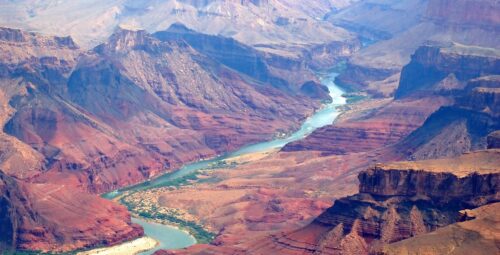
“As a kid growing up in New Orleans, I was quite familiar with the line from Samuel Taylor Coleridge’s 1798 poem Rime of the Ancient Mariner: “Water, water everywhere, but not a drop to drink.” Water was everywhere, and for the most part it was a nuisance. The water table is only a few feet below ground, and massive pumps are needed to get rid of rainwater by pumping it to the river or lake side of levees. It was not water one would drink. But as an economist in Colorado, water was scarce, and I found an African proverb to be more relevant: “Where there is water, there is life.” Early Rocky Mountain and Desert Southwest settlements were all connected to water for survival and it often became a source of conflict. The quote, erroneously attributed to Mark Twain, that “whisky is for drinking and water is for fighting” sums up local, regional and interstate politics. In Colorado, conflicts manifest between agriculture and urban (aka Municipal and Industrial or M&I) uses as well as between the western and eastern slopes of the Continental Divide. … ” Read more from Colorado Biz.
Arizona pulls the plug on money for Colorado River cloud seeding
“The Central Arizona Project is pulling financial support for cloud-seeding efforts meant to boost snowfall in the Colorado River headwaters, the latest casualty of a widening Colorado River water war. CAP had provided some $447,000 to the program in Wyoming, Colorado and Utah last year, and would have provided up to $525,000 in the coming year, rising gradually to $750,000 by 2036. Instead, the CAP board’s majority rejected renewal at a time when states are fighting over the river and there’s no clear documentation of where the water ends up. The board on Nov. 5 decided not to renew a 10-year agreement that in the past used funds from water agencies in all seven Colorado River states to spray silver iodide molecules into advancing storms in the Rocky Mountains to squeeze more precipitation. The collaboration is meant to boost the flows that all seven states rely upon, though some of the detractors questioned whether any of the resulting water actually reaches Arizona. … ” Read more from the Arizona Republic.
Energy and water issues propel Democrats to victory in Arizona
“Two years after President Donald Trump won Arizona with 52 percent of the vote, Democrats are poised to win a trifecta in the state House, Senate and governor’s office, and could potentially win every statewide elected position. The battleground state’s blue wave could fundamentally alter how it responds to increasingly deadly heat and persistent drought brought on by climate change. Central to the Democrats’ wins, party members and candidates said, was their focus on addressing the state’s growing energy demand and declining water resources, which are increasingly top issues for Arizonans. … ” Read more from Inside Climate News.
Chronicling the West’s hidden springs before they’re gone
“Desert springs are remote pools of water, an unexpected and unlikely sight in a landscape defined by dryness. For millennia, they sustained life across the western United States, guiding migration and shaping where people settled. They are living archives, holding both human and natural history in the same small patch of ground, rare lifelines that sustain biodiversity, cultural history and hydrological systems far out of proportion to their size. Their depletion is often gradual, easy to miss without some memory of what these places once were. At a Hopi festival in Flagstaff, I spoke with members of the Black Mesa Water Coalition, who described losing the springs their community depends on, and how that loss affects them both physically and culturally. Their words stayed with me. … ” Continue reading from High Country News.
Recent flooding gives Lake Powell a boost, experts say drought concerns remain
“Recent storms brought historic flooding to southeastern Utah, sending a surge of water into Lake Powell and giving the reservoir a much-needed boost. Lake Powell has risen nearly 20 feet since the beginning of October, but despite the increase, the reservoir remains at only about 26% capacity. Water experts say the recent rainfall is beneficial, but it will take much more than one wet month to make up for decades of drought. “This water is very beneficial to Lake Powell, but we’ve been in a drought for the better part of the last 30 years,” said Paul Miller, service coordination hydrologist for the Colorado Basin River Forecast Center. Heavy rainfall across southeastern Utah caused significant flooding along the San Juan River, which feeds into Lake Powell. … ” Read more from Channel 4.

