

Several news sources featured in the Daily Digest may limit the number of articles you can access without a subscription. However, gift articles and open-access links are provided when available. For more open access California water news articles, explore the main page at MavensNotebook.com.
On the calendar today …
- WORKSHOP: Central Valley Prediction and Assessment of Salmon from 9am to 3:30pm. Reclamation, in partnership with the University of Washington, is hosting an in-person and online workshop for the Central Valley Prediction and Assessment of Salmon. Known as SacPAS, it is a publicly accessible, web-based query and reporting system of historical/current fish, environmental, and hydrologic information, vital to year-round planning and adaptive management of the Central Valley Project and State Water Project. The goals and objectives of the workshop are to provide stakeholders greater awareness of SacPAS tools, streamline data management processes, refine tools with better understanding of needs and receive requests for new tools to be developed. The public is welcome to attend the workshop, which will be followed by an open discussion. The agenda and Teams meeting link can be found here: https://www.usbr.gov/mp/docs/sac-pas-workshop-2023-agenda.pdf. For more information, contact Lisa Elliott at lelliott@usbr.gov.
State Water Board adopts Voluntary Agreements/Healthy Rivers and Landscapes Program
State Water Board adopts innovative new model to protect California’s Bay-Delta, water and wildlife
Paul Hames / California Department of Water Resources
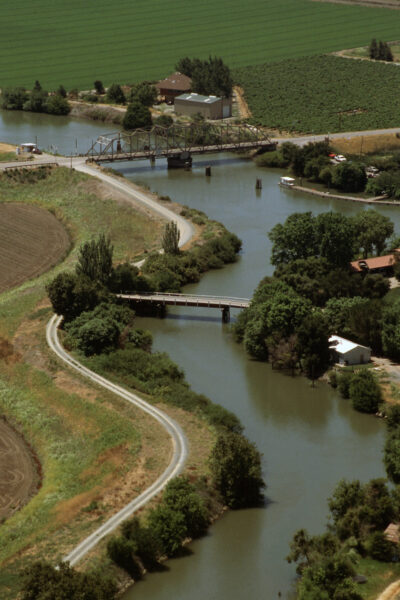
“In a landmark development driving large-scale ecosystem restoration and creating greater security for the heart of California’s water system, the State Water Resources Control Board today adopted modernized water quality protections for the Sacramento River and San Francisco Bay-Delta. The updated Water Quality Control Plan for the San Francisco Bay/Sacramento-San Joaquin Delta Watershed (Bay-Delta Plan) strengthens protections for native fish and wildlife, provides water security, improves water quality and positions the state to better withstand the challenges of a changing climate. Today’s decision concludes a multi-year public process and reflects years of scientific study, hundreds of hours of public engagement, and significant input from environmental organizations, tribes, water agencies, and local communities. “This groundbreaking plan begins a new era of environmental protection, creating enforceable flow standards while giving communities, farms and industry the flexibility to manage their supplies and work together to restore California’s most important and overburdened watershed,” said State Water Board Chair E. Joaquin Esquivel. “The new plan also gives us the modern tools we need — especially increased monitoring and data collection — to manage the Bay-Delta for the 21st century. Today we celebrate the collective work that brought us here and the progress this represents for the entire state.” … ” Read more from the State Water Board.
Fierce debate as California changes course in central water hub
“For some, it’s a solution to ensure reliable water for millions of Californians while protecting fish and the environment. For others, it’s a travesty that will deprive the state’s rivers of vital water and push its declining native fish closer to extinction. A controversial plan that dramatically changes how the state governs the pumping of water out of the Sacramento-San Joaquin River Delta — the heart of the state water system — was adopted by California regulators late Thursday after two days of debate involving more than 200 people. The plan adopted by the five-member State Water Resources Control Board breaks from the traditional approach of requiring all water agencies to limit pumping to maintain required minimum levels of water in rivers and the estuary. Instead, it allows agencies the option of negotiated deals in which they commit to ensuring certain river flows for the environment and contribute funds for projects that restore habitat for fish in the Delta. … ” Read more from the LA Times. | Read via Yahoo News.
Has the Trump administration doomed Newsom’s water plan?
“California water regulators have approved a new plan overhauling how farms and cities take water from the Sacramento-San Joaquin Delta and rivers that feed it, setting up the next fight over Gov. Gavin Newsom’s plan to balance water supplies with the needs of a struggling ecosystem. The plan gives water agencies a choice: agree to forgo some water and restore habitats, or fall under the regulatory backup — a set of mandatory rules for how much water must remain in rivers and streams to flow through the Delta. But the compromise the Newsom administration reached four years ago with the state’s most powerful water suppliers now faces opposition from unexpected quarters. Powerful water agencies that once backed it say Newsom’s voluntary agreements have become too restrictive. The Trump administration has threatened to withdraw support and several hundred million dollars in funding. And environmental advocates, tribes, and fishing groups warn that the deal and its regulatory backup gut protections for an ecosystem already in crisis. … ” Read more from Cal Matters.
Tribes and environmental groups slam State Water Board’s anticipated adoption of updated Bay-Delta Plan, vow further action
“In anticipation of the State Water Resources Control Board’s vote to adopt the updated Bay-Delta Plan, tribal leaders, environmental advocates, and Delta residents gathered at a press conference to condemn the decision and pledge further action to defend California’s water rights, protect critical ecosystems, and ensure meaningful public participation in decisions affecting the state’s water future. Representatives from the Shingle Springs Band of Miwok Indians, the Winnemem Wintu Tribe, Little Manila Rising and Restore the Delta, alongside Delta community members, denounced the plan, arguing that it entrenches the very inequities and ecological damage the update should address while sidelining tribes and environmental justice communities. At the center of the plan newly adopted by the State Water Board are so-called “voluntary agreements”, privately negotiated deals allowing powerful water districts to offer limited flow commitments and funding in exchange for exemptions from stronger, enforceable regulatory requirements. … ” Read more from Restore the Delta.
Newsom races to lock in his water legacy
“Gov. Gavin Newsom has been working hard to wrap up his pet water projects before he leaves office in early January, but he’s facing some stubborn obstacles. How things shake out could shape his image as an executive of a major economy ahead of a likely 2028 presidential run. A major new reservoir and a habitat restoration deal are at the top of the governor’s to-do list as he leans on state regulators. He’s also trying to advance a controversial, decades-old proposal to build a tunnel under the state’s Bay-Delta region to send more water south to farmers and cities. On the campaign trail, the governor’s efforts are unlikely to win over many blue-leaning environmentalists, who worry his plans could harm endangered species. And the Central Valley farmers who stand to benefit the most from the new water projects don’t generally vote for Democratic presidential candidates anyway. But Newsom’s allies and advisors do see a potential upside: For a politician whose legacy as governor is going to be colored by the state’s high housing and gas prices and persistent homelessness, the water projects offer evidence that he can govern in a difficult bureaucracy and deliver on difficult, critical initiatives — all while navigating threats from President Donald Trump, who has taken a keen interest in California’s water wars. … ” Read more from Politico.
SEE ALSO:
- Governor Newsom secures innovative approach to major Bay-Delta protections that will restore rivers and strengthen California’s water future, press release from Governor Newsom
- California water board passes major water plan after marathon session, from the Courthouse News Service
In other California water news today …
More coastal flooding is coming to California. Here are 3 more king tide dates
“The highest tides of the year so far are causing problems along the California coast, producing coastal flooding advisories and warnings from Los Angeles to Eureka to this week. And it’s not just normal tidal action that is to blame. For starters, the king tides are the strongest tides of the year, occurring during new and full moons in the fall and winter as the Earth, sun, and moon come into close alignment. They are highly predictable and regular. They can still cause problems on their own, as Miami has experienced this week, but California has two other factors that are making these tides even higher than they otherwise would be. The first is a major marine heat wave along the coast that started last year. As ocean temperatures rise, the water expands enough to produce a measurable increase in sea levels. The second factor is the record El Niño. … ” Read more from the Sacramento Bee.
Preparing for El Niño: California Conservation Corps train for potential flooding
“With El Niño conditions potentially developing this winter, California Conservation Corps members from across Northern California are training to help protect communities from potential flooding. Corpsmembers from the Chico, Redding and Siskiyou centers gathered at the Red Bluff Recreation Area on Thursday, Oct. 29, for the annual flood-fighting exercise. The training gave young adults, ages 18 to 25, hands-on experience building flood barriers and practicing techniques they could use during an emergency. Exercises included filling and passing sandbags, constructing sandbag rings, building muscle walls and using plastic sheeting known as visqueen. … ” Read more from Action News Now.
Ski season forecast: Where El Niño could bring the best snow this winter
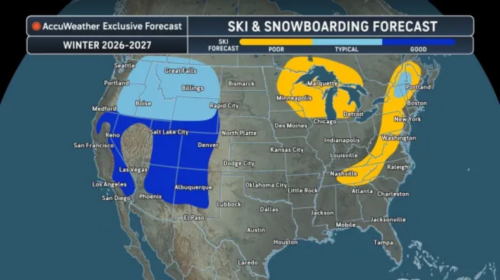 “Skiers and snowboarders are gearing up to hit the slopes, and AccuWeather forecasters say the upcoming season could look dramatically different from last winter across much of the country. El Niño is expected to be the main driver of this winter’s weather pattern, favoring more frequent storms in some of the nation’s most popular ski regions. Elsewhere, prolonged warmth and fewer snowstorms could make it harder for resorts to build and maintain a reliable snowpack. … The ski season could get off to an early start from the Sierra Nevada through the central and southern Rockies, setting the stage for a winter with frequent snow and excellent conditions on the slopes. Some ski resorts in Colorado are already open, including Arapahoe Basin Ski Area. This El Niño-fueled pattern will be a significant turnaround from last season. Salt Lake City measured only 3.7 inches of snow last winter, its least snowy season since records began in the 1880s. AccuWeather is forecasting 50-65 inches this winter, slightly above the historical average. The best ski conditions across the entire country are expected in Colorado, New Mexico, Utah, Arizona, California and Nevada. … ” Read more from AccuWeather.
Microplastics found in freshly fallen snow in Sierra Nevada
“Microplastics are everywhere — including in Nevada’s snowpack. After years of skiing on freshly fallen snow in remote locations across the Sierra Nevada, Aleksandra Karapetrov — an environmental toxicologist at the University of California, Riverside — wondered how pristine the snow really was. Over six months, Karapetrov and a team of University of California, Riverside scientists tested fresh snowfall at seven sites across the Sierra Nevada and found something they did not expect: a steady delivery of tiny plastic fibers, even in the most remote locations. “It was surprising the consistency at which we found microplastics everywhere,” Karapetrov said. “It’s kind of disrupting this narrative of pristineness. I hope it brings awareness to the circularity and widespreadness of pollution. There’s this boomerang effect, and it’s important we recognize that.” The study, published this month in the journal Environmental Science and Technology, found significant amounts of microplastics in fresh snowfall at both remote and populated sites across the Sierra Nevada, which supplies about 60% of freshwater in northern Nevada. … ” Read more from the Nevada Current.
California American Water invests $1.68 Million in Isleton water system
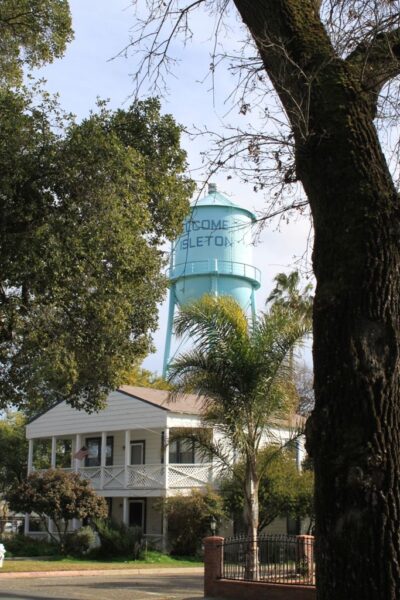 “California American Water is investing approximately $1.68 million to rehabilitate the Isleton 3B Well, helping strengthen the reliability of the local water system and extend the life of critical infrastructure serving Isleton customers. The project will restore the well’s performance and help maintain the water system’s capacity through proactive inspection, cleaning, treatment and testing. By rehabilitation the existing well, California American Water can extend its useful life while reducing the potential for unexpected equipment failures and costly emergency repairs. “Investing in our existing infrastructure is an important part of providing safe, clean, reliable water service to our customers,” said Charlie Wolfe, Principal Project Delivery Engineer at California American Water. “This project will help strengthen the reliability of the Isleton water system while extending the life of infrastructure that our customers rely on every day.” … ” Read more from California American Water.
Toxic algae outbreak poisons over 300 marine mammals in California this year
“An ocean conservation group reports an unprecedented number of poisoned marine life. The Marine Mammal Center announced Wednesday it had documented more than 300 cases this year of domoic acid poisoning in marine mammals. The Sausalito-based organization, which covers 600 miles of California coastline, said it typically only sees 75 to 90 cases per year. “The outbreak caused a dramatic increase in call volume, with our response hotline receiving more than 600 calls on the busiest days, nearly four times what our team usually sees,” the center said in a news release. … ” Read more from SF Gate.
How Prop 45 could reshape California’s fight over data centers
“California voters considering Proposition 45 will decide the fate of a sweeping infrastructure measure that opponents warn could render the state’s brand-new data center laws virtually toothless. That would make it far easier for developers to force unwanted facilities into local communities, potentially undermining a growing wave of bans, moratoriums, and anti-data-center resolutions at the city and county level. Data center backers insist the ballot measure will do nothing for them — even as some data center beneficiaries are spending big backing Prop. 45. Supporters have framed Prop. 45 as a tool to accelerate critical infrastructure projects, like housing and schools and the measure does not directly name data centers among the sorts of projects it considers critical. But some legal scholars and environmental advocates say that the proposition’s technical language creates a loophole. By expediting environmental reviews under the California Environmental Quality Act for broad categories of projects — including broadband internet facilities and any additional infrastructure required to get them up and running — the measure could quietly allow data centers to bypass recent state safeguards and local scrutiny. … ” Read more from Cal Matters.
SEE ALSO:
- Your last-minute guide to Proposition 45: CEQA and data centers, from the LA Times
- No on 45: State has already streamlined CEQA, commentary at Santa Cruz Sentinel
In regional water news and commentary today …
NORTH COAST
BLM to fix eroding riverbank at Klamath Falls wetlands
“The Bureau of Land Management (BLM) will begin a bank stabilization project at the Wood River Wetlands to address ongoing erosion that threatens a critical stream gauge and a bridge along Wood River Dike Road. The Wood River currently backs up as it flows beneath the bridge and is eroding the riverbank. This is increasing the risk of further structural damage if left unaddressed. To stabilize the area, crews will install large wood debris along the riverbank using heavy equipment. The logs will be partially buried to anchor them in place, with root wads extending into the water to slow and deflect the waterflow and reduce erosion. … ” Read more from KDRV.
A plan to reconnect the Klamath River with wetlands clears a design milestone
“Five alternative designs could reconnect the Klamath River and Lower Klamath refuge, restoring water flows and improving habitat for birds and fish. A project to reconnect the Klamath River to the Lower Klamath National Wildlife Refuge has completed its first design phase. The partners presented the concept at a public meeting at Oregon Tech on Tuesday night. “There’s been enough engineering, modeling, and ingenuity to help us understand that this is a possibility, and we can move forward,” said DJ Bandrowski, civil engineer and program manager at the Yurok Tribe. The Lower Klamath Lake Reconnection Project would allow water to ebb and flow between the river and the refuge, emulating how the ecosystem functioned before it was altered for agriculture. Partners say restoring the connection would provide reliable habitat for thousands of migratory birds. … ” Read more from Jefferson Public Radio.
SIERRA NEVADA
Tahoe forecast calls for weekend rain, high-elevation snow
“A storm could bring rain to Lake Tahoe and several inches of snow to the higher elevations of the Sierra Nevada this weekend, with precipitation potentially lingering into Sunday morning. The storm is expected to bring mainly rain to lower elevations, a mix of rain and snow at mid-mountain elevations and accumulating snow at higher elevations. The system could clear by Sunday, giving way to drier weather and warmer temperatures heading into November. Snow levels are expected to fluctuate around 7,000 feet for much of the storm, rising toward 8,000 feet during lighter precipitation and potentially dropping closer to the base of the mountains by Sunday morning as the system moves out, weather forecaster Bryan Allegretto wrote on OpenSnow. … ” Read more from the Tahoe Daily Tribune.
SACRAMENTO VALLEY
Salmon habitat project along Sacramento River to improve access on and off Red Bluff floodplain
“A three-acre floodplain along the Sacramento River that has become attractive for native fish to rest and feed is receiving a critical redesign to help reduce the number of juvenile salmon and steelhead trout that end up stranded with no way back to the river once water levels recede. A coalition of farmers, cities and water districts, known as the Sacramento River Settlement Contractors, has teamed up with local, state and federal agencies to reshape a former boat harbor at the Red Bluff Elks Lodge. The project will allow the area to flood more frequently, which will provide young salmon and steelhead with a place to feed, grow and find refuge. The project will also allow for volitional passage, which means the fish will have the freedom to leave the floodplain when they are ready to continue their downstream migration. “Our native fish don’t recognize property lines or agency boundaries, so improving their migration takes collaboration across the entire Sacramento River Basin,” said Jeff Sutton, Glenn-Colusa Irrigation District General Manager and a member of the Sacramento River Settlement Contractors. “This project shows what we can accomplish when water users, landowners, scientists, fishermen and agencies work together to give young salmon and steelhead better access to productive habitat and a safer route downstream.” … ” Read more from the Northern California Water Association.
SEE ALSO: Construction begins in Red Bluff to prevent flooding, protect young salmon and steelhead, from KRCR
Why Folsom reservoir storage matters heading into an El Niño winter
“This summer, water managers across the Sacramento region were watching Folsom Reservoir closely. Early projections suggested summer operations might leave storage below the Water Forum’s 300,000-acre-foot (AF) end-of-December planning minimum, raising concerns about how the region would fare if the coming winter was dry. The planning minimum provides a safeguard for protecting regional water supplies and the health of the lower American River heading into a potentially dry year. Fortunately, conditions have improved. Folsom Reservoir ended the 2026 water year on September 30 with 444,000 AF in storage and is on track to stay above the 300,000 AF planning threshold through the end of the calendar year. The stronger-than-expected storage provides a cushion for regional water supplies and the lower American River in the months ahead, even as a very strong El Niño increases the likelihood of a wetter-than-average winter. … ” Read more from the Water Forum.
Folsom’s water treatment tanks leaked for months. City approves $918K to replace them
“Two storage tanks holding a corrosive chemical used to disinfect Folsom’s drinking water have been leaking for months, prompting city officials to authorize nearly $918,000 in additional spending to replace the aging equipment. The Folsom City Council voted 5-0 Tuesday to approve the spending after city officials warned that the leaks posed safety risks to workers and could damage equipment at the water treatment plant. An 8,500-gallon tank storing sodium hypochlorite at the city’s water treatment plant began leaking July 22, and a second tank developed a leak Sept. 10, according to a city staff report. When the first leak was discovered, plant employees considered it “minimal and manageable,” according to the report. Because both tanks were needed during the summer’s peak water demand, officials planned to make repairs during the lower-demand winter months. But the second leak was in a location that required outside contractors. … ” Read more from the Sacramento Bee.
NAPA/SONOMA
Community push for revised Napa floodwall plan ramps up
“A community push for the final phase of the decades-long Napa River flood-control project to go beyond building flood walls from downtown Napa to Imola Avenue is continuing to ramp up. After hearing calls for a more engaged planning process, the Napa County Flood Control and Water Conservation District recently paused design efforts on the final phase of the project. Though flood district manager CJ DiMaggio told a crowd of about 70 people at an Oct. 1 meeting that staff want to make sure the final design incorporates the community’s current needs and preferences, residents at a district board meeting Tuesday, Oct. 27, said more still needs to be done to recognize how the flood project could enhance the area and not diminish its aesthetic appeal. … ” Read more from the Santa Rosa Press Democrat.
BAY AREA
Bay Area flood advisories extended as water levels continue to shatter records
“Coastal flood advisories in the Bay Area have been extended through the weekend as record-high water levels have been declining slower than anticipated, according to the National Weather Service. The update comes as water levels Thursday surpassed records for October and November at 2.2 feet above normal, largely due to a drop in pressure over the last few days, the weather service said. The weather service issued the advisories last Friday ahead of above normal high tides, which meteorologists attributed to extraordinary warm surface temperatures off the California coast driven by El Niño conditions. The flood advisories were initially set to expire Thursday. … ” Read more from the San Francisco Chronicle.
‘Marin is the hotspot’: Bay Area to see coastal flooding through Saturday
“The edges of the San Francisco Bay are flooding this week. Kayakers cruised water-filled streets along Marin County‘s bayside. Waves splashed over Pier 14 in San Francisco’s Embarcadero. A river of water surrounded a Mexican restaurant in San Rafael. And it’s just the beginning. “We have not seen the worst coastal flooding this year that we’re likely to see later,” Daniel Swain, a climate scientist with UC Agriculture and Natural Resources, said. “This is probably, unfortunately for those who are dealing with it, just a preview of what is to come.” The National Weather Service extended a moderate coastal flood advisory through Saturday for nearly 2 feet of flooding in low-lying spots throughout the Bay Area and Central Coast. Several factors are driving the extra-high water, including the influence of the full moon earlier this week and warming water caused by El Niño expanding and pushing local and sea levels up. … ” Read more from KQED.
West Marin town hall advises residents on El Niño storm risks, preparations
“Road closures, evacuations, failed septic systems and landslides were some of the dire warnings covered in a West Marin El Niño town hall meeting this week in Point Reyes Station. The event Tuesday at the Dance Palace featured a panel of Marin County emergency preparedness officials and Supervisor Dennis Rodoni, who represents West Marin. “Our responsibility as a board is to make sure our communities have the resources they need,” said Rodoni. “But government cannot do this work alone.” Rodoni reminded residents that West Marin has unique risks that include flooding, wildfires, landslides, earthquakes and road closures. The best way to make choices about what actions to take is by signing up for advance notices through the Nixle or AlertMarin apps, he said. … ” Read more from Local News Matters.
SEE ALSO: Town hall advises North Bay coastal zone residents on storm preparation, from NorCal Media
San Rafael residents brace for severe flooding as expected rainy winter looms
“After another day of high tides, neighborhoods in San Rafael are soaked, with water creeping up to garage doors and flooding front yards. The damage currently being caused by flooding is due to high tides, but San Rafael residents say their main concern is what will happen when the winter storms bring in even more rain. Last January, king tides flooded homes and businesses across Marin County. It was just a month after taqueria El Tucan opened for business in San Rafael’s Canal neighborhood. “It was like the Russian River over here in the Canal area,” Christina Williams with El Tucan said. “I haven’t seen it like this since the ’80s. It’s been almost 40 years.” … ” Read more from CBS News.
Ocean Beach flooding might hit S.F.’s Great Highway this winter amid El Niño
“High tides expected to reach record levels in San Francisco this winter could bring seawater all the way up to the Great Highway, a city official said Thursday. Ocean Beach is among waterfront spots in the city expected to flood this winter as an exceptionally strong El Niño will bring record tides to the Bay Area. “We have heard very clearly from the National Weather Service that they would expect the water to reach all the way to the seawall up to where the Great Highway is this winter,” Mary Ellen Carroll, the director of the city’s Department of Emergency Management, told members of the Board of Supervisors during a hearing on El Niño preparedness. … ” Read more from the San Francisco Chronicle.
CENTRAL COAST
Groundwater authority seeks stakeholders for interviews on communication
“The Paso Robles Area Groundwater Authority is inviting people with a stake in the Paso Robles groundwater basin to take part in interviews that will shape how the authority communicates with the public. The interviews are part of a stakeholder assessment looking at how people currently get information about groundwater management and the state’s Sustainable Groundwater Management Act, what is working, and where communication could improve, according to the authority. … ” Read more from the Paso Robles Daily News.
SAN JOAQUIN VALLEY
Funding available for Fresno farmers to build water conservation projects
“Fresno Irrigation District growers can get help with up to 80% of their costs for projects that improve groundwater conservation and irrigation efficiency through a program run by the federal Natural Resources Conservation Service and Bureau of Reclamation. The fund helps pay for projects such as drip irrigation or adding soil moisture sensors on farms. It also pays water districts for large-scale work such as new recharge basins. Applications are open until Nov. 6. Though applications go directly to the federal agencies, Fresno Irrigation District growers have a slight edge as the district received a “priority area” designation four years ago, according to Kassy Chauhan, special projects manager for the district. … ” Read more from SJV Water.
SOUTHERN CALIFORNIA
Pineapple Express to rain buckets, renew flash flooding threats for southwest US
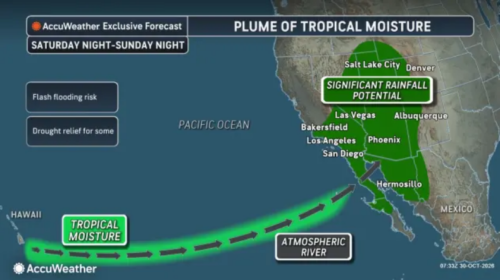 “As October draws to a close and November begins, a plume of tropical moisture with origins from Olana near Hawaii will act as a firehose of rain for a time in Arizona and parts of Utah, New Mexico and Colorado this weekend, with some downpours to graze part of Southern California. The setup is sometimes referred to as an atmospheric river and, more specifically in this case, a Pineapple Express. “The swath of heaviest rain is likely to pass just south and east of coastal Southern California later Saturday to early Sunday,” AccuWeather Senior Meteorologist Heather Zehr said. “Los Angeles and probably San Diego as well will get some showers that will cause slick roads and may even lead to minor street flooding, but they should escape the bulk of the rain from this setup. Hydroplaning on wet roads will be the greatest risk for motorists in this area.” … ” Read more from AccuWeather.
El Niño-linked waves push California water levels to historic highs
“Ocean water levels along the California coast are reaching some of their highest readings in more than a century, with massive underwater waves linked to El Niño contributing to the unusually high seas, federal officials say. The National Oceanic and Atmospheric Administration (NOAA) reported Wednesday that tide stations across California have recorded new or broken water level records, including readings in Los Angeles, San Diego, La Jolla and Santa Barbara. The elevated levels are being driven by a combination of unusually high tides associated with the full moon and the moon’s close approach to Earth, along with oceanic Kelvin waves moving north along the West Coast, according to NOAA. … NOAA said the observations include some of the highest readings in more than 100 years, although it did not specify which individual stations had established new all-time records. … ” Read more from KTLA.
Recent high tides worsen landslide activity in Rancho Palos Verdes
“Land in the Portuguese Bend area of Rancho Palos Verdes is now moving more than an inch per week, city officials said in a statement Wednesday. That’s an increase from August, but it is still moving much less than it was last year at this time. Officials said the increase in land movement is due to coastal erosion after tropical storm-fueled waves walloped the Southern California coastline in mid-October. The Portuguese Bend area in Rancho Palos Verdes once offered spectacular views of the Pacific Ocean and Catalina Island. Now, much of that land is riddled with chasms that run as much as 20 feet deep or span a dozen feet across. For decades, land movement was minimal. But with above-average rainfall in recent years, that movement rapidly accelerated — up to 1 foot per week in some places. Land movement has since slowed, thanks in part to wells the city installed that suck water out of the ground. But damage to the area remains, and the underlying issue will likely never be stopped. … ” Read more from the LAist.
O.C. coast is losing battle against El Niño flooding, and it’s about to get worse
“Diane Copley-Botica stacked rows of sandbags and tarps around her home in Sunset Beach, hoping it might be enough to keep the rising water at bay. But the seawater from record high tides came anyway, flowing across the neighborhood like a river, flooding homes and businesses along the stretch of Pacific Coast Highway. Each day this week, neighbors tried a new strategy to buttress their homes from the rising tide. But it’s never enough. “All you can do is sit and wait and watch the water,” she said. “No one has been able to figure out how to stop it.” The flooding this week has hit several Orange County coastal towns, but experts say it is likely just a preview of more intense problems to come this winter as a major El Niño is expected to bring heavy rain, high surf and flooding. … ” Read more from the LA Times.
Calimesa: New basin could send 479 million gallons a year into a drought-depleted aquifer
“A newly completed basin project in California has been designed to recharge a drought-depleted aquifer with as much as 479 million gallons annually, helping protect the drinking water supply for roughly 18,000 residents in the Calimesa area. The County Line Road basin and turnout project was completed just 12 months after construction began, according to Patch. Water executives and regional officials came out to celebrate its completion on Oct. 14. “Just a month ago, this water was in Lake Oroville,” Heather Dyer, general manager and CEO of the San Bernardino Valley Municipal Water District, said at the celebration, per Patch. “It traveled more than 500 miles through California’s water system to reach this community.” Prolonged regional droughts have significantly drained groundwater reserves in the Yucaipa Subbasin. Recharge water is coming from Northern California, marking the first time imported water has reached Calimesa. … ” Read more from The Cool Down.
IMPERIAL/COACHELLA VALLEYS
‘I don’t trust them’: Data center fight mobilizing Imperial County voters
“Retired probation officer Diana Salcedo had downsized to a home in Imperial’s Paseo del Sol neighborhood and was looking forward to a new chapter in her life caring for her mother and young grandchildren. Then Salcedo found out about a proposal to build what could be California’s largest data center across the street. The more she learned about how data centers affect energy, water and quality of life for those living nearby, the more upset she became. “I was so angry,” she said. “I even cried.” That outrage inspired Salcedo, 65, a Republican who supports President Donald Trump, to join a grassroots movement of local residents fighting the proposed Imperial Valley Computer Manufacturing LLC data center. The plan, which Imperial County officials voted to clear the way for in April, calls for a nearly 1-million-square-foot data center on parcels of unincorporated land just outside of Imperial, a city of about 22,000 people less than 15 miles from the U.S-Mexico border. Salcedo is now part of a diverse new coalition of residents in California’s southeasternmost county that is harnessing anger over data centers into organizing around the November election in hopes of creating lasting change. … ” Read more from the Desert Sun.
SAN DIEGO
Is the nuclear waste at San Onofre safe from high tides and El Niño?
“Forecasters warn of coastal flooding and high tides in Southern California, but officials at Southern California Edison say dozens of stored canisters containing nuclear waste at the now-shuttered San Onofre Nuclear Generating Station pose no public safety threats — even if rainfall in the coming months is heavier than expected. But longtime critics of the plant, which is in the midst of an eight-year dismantlement project, say they are not reassured. The National Weather Service has issued a Coastal Flood Advisory for San Diego and Orange counties through noon Friday, with high tides expected to crest near 7.25 feet. “It’s definitely seasonal,” said Adam Roser, meteorologist at the San Diego office of the weather service. “We see these higher tides every late fall into winter, but this year we have warmer than average water temperatures.” … ” Read more from the San Diego Union-Tribune.
What to know about the incoming changes to your San Diego water bill
“City of San Diego water customers will see changes to their bills starting in January, when a new billing structure for single-family homes takes effect alongside a previously approved water rate increase. The changes stem from a lawsuit filed in 2015 challenging the city’s tiered water pricing system. Under the new structure, customers who use less water are expected to see their monthly bills increase, while those who use more water could pay less. The city estimates the average monthly bill for a low-use customer in a single-family home will increase by about $6, while the bill for a high-use customer is expected to decrease by $20. The San Diego City Council voted 6-2 on Tuesday to approve the modified water rate structure. City leaders said they disagreed with the court’s decision but were legally required to comply. … ” Read more from NBC San Diego.
Concerns over safety of aging Lake Hodges Dam as El Niño rains approach
“As Southern California prepares for a potentially wet winter, concerns are growing about the safety of Lake Hodges Dam, a 108-year-old structure that city officials say needs significant improvements. The dam, which collects water from one of San Diego County’s largest watersheds, faces long-term safety concerns as officials consider options ranging from lowering its spillway to building an entirely new dam. Rhonda Farrar, founder and president of Friends of Lake Hodges, said the prospect of heavy rainfall associated with El Niño has raised concerns about how much water the aging dam can safely handle. “With the upcoming El Niño rains predicted, there is a lot of concern about what happens when there is more water than this very, very old dam can manage,” Farrar said. … ” Read more from Fox 5.
District attorney enters border pollution fray, seeks records regarding potential producers of hazardous waste
“The San Diego County District Attorney’s Office is seeking records from the Mexican government to determine whether Tijuana-based industrial businesses might be contributing to cross-border pollution, officials said Thursday. While billions of gallons of sewage flow into the county via the Tijuana River on an annual basis, jeopardizing the health of South Bay residents, the D.A.’s Office cited a recent report from nonprofit environmental organization San Diego Coastkeeper that found industrial pollutants were also present in the water. Among the chemicals detected were volatile and semi-volatile compounds such as heavy metals, pesticides, PFAs, acetone, phenols and benzoic acid. Coastkeeper’s report, the 2025 Tijuana River Valley Water Quality Report, stated that the findings pointed to pollutants coming from Tijuana factories known as maquiladoras. They were found to either be dumping pollutants directly into surface waters or allowing them to enter the sanitary sewer system due to inadequate wastewater treatment at the factories. … ” Read more from the Times of San Diego.
Along the Colorado River …
Recent storms boost Arizona reservoir levels, but Colorado River crisis persists

“Recent rain storms across the Valley have boosted water levels in Arizona’s largest reservoirs, offering temporary relief after a dry summer while water experts caution that local precipitation will not resolve the broader Colorado River crisis. Lake Powell gained 12 feet in two weeks following the storms, according to Sarah Porter, director of Arizona State University’s Kyl Center for Water Policy. Despite the increase, the reservoir remains at approximately 25% capacity. “It’s water. It helps. Is it enough to solve the Colorado River crisis? No,” Porter said. “It isn’t enough for us to sort of celebrate and take the rest of the year off because Lake Powell is still at a very low level with it being it’s currently at about 25% full.” Downstream, Lake Mead — the nation’s second-largest reservoir — sits at approximately 23% capacity following the recent weather system. … ” Read more from Arizona Family.
SEE ALSO: Did recent floods save the Colorado River?, from Western Water
Arizona’s lifeline to the Colorado River is drying up. Its designers warned us decades ago
“The Colorado River is at a pivotal crossroads. People are taking more water out of the river than it can provide, and the policymakers that manage water use cannot agree on how to rein in demand. That has left the river — and the nearly 40 million people who use it — hanging in the balance. Across seven Western states, major cities, tribes, and powerful economies are stuck in a moment defined by low reservoirs, high-stakes legal tension and an uncertain future. This fall, a new federal plan for cutting back water use has triggered legal action from Nevada, Arizona and the massive canal system that brings Colorado River water to the Phoenix area. But this tense moment and this 21st century crisis are not showing up as a complete surprise. … ” Read more from NPR.
AI has come for Arizona’s water
“A hulking gray giant rises from the desert. Inside, engineers create the force behind our phones and computers and appliances, our streaming services and search engines and chatbots and vibe-coded apps and websites. The complex is simultaneously massive and squat, dwarfed by the mountains that surround it, and it is endless. I drive past one building, and then another, and then the ground opens up where construction crews have dug up the earth so a third building can rise. There is a parking lot, and then another, and then another. There is an empty lot on the other side of the street, full of cars and the occasional food truck to feed the thousands of laborers who are busy transforming this expanse of desert into an industrial park. There is dust, so much of it, choking the air. I stand before the savior of Arizona’s economy. Like all great deities, it demands sacrifice. In the desert, nothing is more precious than water, and water is what must be given — nearly 5 million gallons a day, every day, sourced from Phoenix’s municipal supply. The offering has been well worth it. … ” Read more from The Verge.
Arizona water heavyweight joins Colorado River lawsuit against Trump administration
“Another powerhouse in Arizona water, the Central Arizona Project, plans to join a lawsuit against the Trump administration over its plan for dividing up the Colorado River’s water supply with steep cuts for several states. The lawsuit, originally filed by Nevada, takes aim at the federal government for its recently announced management plan for key Colorado River reservoirs, lakes Mead and Powell. The 10-year plan includes heavy, mandatory water cuts for the three Lower Basin states — Arizona, California and Nevada — during dry years. Arizona announced its plans to join the lawsuit this month. One of the central complaints for the downstream water agencies is that the plan calls on upstream states, like Colorado, to voluntarily cut back on water use, but does not require mandatory cuts. … ” Read more from the Colorado Sun.
Scottsdale Council members battle over water presentation
“As Mark Twain disciples might dryly note, “Everyone’s talking about the water – but no one’s doing anything about it.” Indeed, there was much water talk during an Oct. 20 Scottsdale City Council study session, with a three-hour presentation titled “Scottsdale Water Resources Present and Future Discussion.” But no action was taken. Thyra Ryden-Diaz, Water Resources interim senior director, Jill Brumand, the city’s water policy manager, and a water consultant talked their way through a 50-slide presentation. The topic is on many minds, with the Colorado River that many states rely on in a severe drought. In 2027, the city anticipates a 17% cut in the Colorado water Scottsdale relies on, according to Ryden-Diaz. … ” Read more from the East Valley Tribune.
Nevada: Judge weighs pause on enforcement of ‘nonfunctional’ grass law
“A Clark County judge is considering whether water managers must halt their enforcement of a 2021 law requiring the removal of grass that they have deemed “nonfunctional.” Judge Anna Albertson will decide, too, if she will certify the lawsuit as a class action, meaning any party who meets certain definitions would be added to the challenge to the Southern Nevada Water Authority’s turf removal policy, whether they are in favor of the plaintiffs’ argument or not. Though attorneys argued two motions in court on Wednesday and Thursday, the judge has yet to make a ruling, as she awaits word as to whether the attorney general’s office would like to be involved in the case. … ” Read more from the Las Vegas Review-Journal.
‘War games’ involving the Colorado River play out on Utah’s Capitol Hill
“Some of the state’s most powerful and influential people huddled around tables in a conference room on Utah’s Capitol Hill for a “war games” exercise over the Colorado River. “I think there’s a lot of real-world implications,” Grand County Commissioner Brian Martinez told FOX 13 News following the activity. … Thursday’s tabletop exercise put political leaders, experts, advocates and others in a room for hours, working through scenarios for getting more water into the Colorado River Basin in Utah. While the Colorado River’s issues are multi-state, Thursday’s exercise kept it focused on Utah. “There’s not enough water and so how are we going to deal with the future and less water in the river?” said Zach Renstrom, the general manager of the Washington County Water Conservancy District, which serves communities that rely on Colorado River system water. … ” Read more from Fox 13.
Utah has received above-normal rain for the past 3½ months. Why is it still in drought?
“Utah’s run of moisture over the past three and a half months continues to chip away at its drought. Over 90% of the state remains in drought, but the percentage in severe or worse drought slid from 62% to 51% over the past week, the U.S. Drought Monitor reported on Thursday. Only 13.5% remains in extreme drought. The ongoing reduction comes as Utah’s mountain snowpack sites have, on average, now collected more than 12 inches of precipitation since July 15. Stormy patterns have lingered into meteorological fall, with at least 4.7 inches of that accumulating in October. It’s about 4 inches above what Utah typically receives from mid-July through October, per Natural Resources Conservation Service data. … ” Read more from KSL.
Desperate measures: Advocates weigh draining Lake Powell to fill Colorado River
“As the Southwestern United States battles a 27-year drought — the longest in 1,200 years — and the Colorado River gets drier and drier, some advocates are pushing for a drastic action: draining Lake Powell, one of the river’s two key reservoirs. Draining the reservoir and letting all its water flow into Lake Mead could reduce evaporation losses by a couple hundred thousand acre-feet, increase hydropower production at Lake Mead and reveal sites sacred to Indigenous people, which the man-made Lake Powell obscures. The Glenn Canyon Dam created Lake Powell. Pipes in the dam send water down to turbines, which generate energy, and then into the Colorado River. However, once Lake Powell’s water level dips too low, water can’t escape through the main pipes. “Allowing more water to flow through the Glen Canyon Dam — by draining the lake through the existing bypass tubes and newly drilled diversion tunnels near the riverbed — is no longer dismissed out of hand,” Jim Robbins writes for Yale Environment 360. … ” Read more from Planetizen.
In national water news today …
EPA unveils first agencywide PFAS tech strategy: What industry, utilities & litigants should know
“The Environmental Protection Agency on Oct. 26 launched its first agencywide PFAS Technology, Evaluation, Coordination, and Harmonization (PFAS TECH) strategy, which it describes as an effort to “catapult technology innovation on PFAS” while giving communities practical tools, funding, and technical assistance for local PFAS problems. EPA has committed to carrying out the strategy actions across its National Program Offices and Regional Offices over the next two years. A stated focus is ensuring that local decisionmakers and the public can access PFAS technology information that is “up-to-date, easy to navigate and understand.” For companies facing PFAS exposure, water systems preparing for compliance, and lawyers handling PFAS litigation, the strategy signals where EPA is putting its scientific and financial resources. It is not a regulation. It is a roadmap for technology, and that technology could shape cleanup expectations, remedy selection, and cost arguments. … ” Read more from Goldberg Segalla.

