

Several news sources featured in the Daily Digest may limit the number of articles you can access without a subscription. However, gift articles and open-access links are provided when available. For more open access California water news articles, explore the main page at MavensNotebook.com.
On the calendar today …
- MEETING: State Water Board consideration of Bay Delta Plan update beginning at 9am. The State Water Board will consider adoption of the final draft Bay Delta Plan and final Staff Report, Day 2. Click here for the notice. Click here for the agenda and remote access instructions.
- EVENT: California Financing Coordinating Committee from 9am to 12pm. Connect with federal, state, and local agencies to discuss available bonds, grants, loans, and technical resources for local infrastructure projects. View the Fall 2026 CFCC Funding Fair Flyer. Register here.
- WEBINAR: Update on the San Francisco Bay Water Quality Trading Program from 10am to 11am. The Nutrients Watershed Permit (NPDES CA0038873, Order R2-2024-0013), issued July 2024 by the SF Bay Regional Water Quality Control Board, sets Total Inorganic Nitrogen (TIN) limits for wastewater dischargers into San Francisco Bay. The Nutrients Watershed Permit explicitly allows a nutrient trading program as a compliance option. BACWA, The Freshwater Trust, and the San Francisco Estuary Institute will present an update on the development of a water quality trading program. Registration: Deadline is October 26th. Click here to register.
- WEBINAR: CV-SALTS 2026 Webinar: Implementing Nitrate Solutions and Building the Foundation for Long-Term Salt Management from 12pm to 1:30pm. The webinar will provide an overview of key CV-SALTS program highlights and take a deeper look at both the Salt and Nitrate Control Programs, including implementing the Nitrate Control Program, advancing the Salt Control Program, learn about the CV-SALTS vision, what the latest salinity science is telling us, and how pilot studies and collaboration with Groundwater Sustainability Agencies are helping build the foundation for future implementation. Click here to register.
- WEBINAR: Strengthening Cybersecurity Across the Water & Wastewater Sector from 1pm to 2:30pm. Join the Association of California Water Agencies (ACWA), with U.S. Environmental Protection Agency (EPA) and California’s Office of Emergency Services (Cal OES) for an informative webinar focused on strengthening cybersecurity across the water and wastewater sector. As cyber threats grow in scale and sophistication, protecting critical infrastructure has never been more essential. This session will cover current threats facing the water sector, best practices for risk management, available federal and state resources, and actionable steps utilities can take to enhance their cyber resilience. ACWA members, utility leaders, IT professionals, and cybersecurity officials are encouraged to attend and engage with EPA and Cal OES experts and industry peers to build a more secure and sustainable water future. Click here to register.
In California water news today …
California water board hears competing views on major water plan update
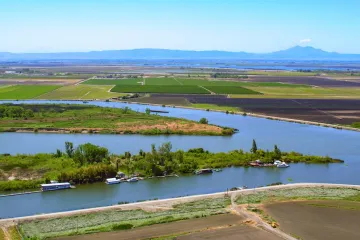 “People and agencies facing the effects of proposed changes to a major California water plan spoke in waves Wednesday, making their cases to the state’s water board. The State Water Resources Control Board is proposing amendments to the San Francisco Bay/Sacramento-San Joaquin Delta water quality control plan. The plan sets water quality goals for the Bay-Delta, a massive watershed that provides drinking and municipal water to some 30 million people, along with irrigation water for 4 million acres. The law requires periodic updates to the plan, leading to a multiyear process that culminated in a two- to three-day meeting that began Wednesday. The water board did not vote on the proposed changes that day. “That is not a delay,” said E. Joaquin Esquivel, the water board’s chair, of the time and amount of public comment that went into the plan’s development. “It’s the substance of this plan.” … ” Read more from the Courthouse News Service.
SEE ALSO: ACWA statement on Governor’s EO on flood protection work ahead of El Niño, from the Association of California Water Agencies
California braces for floods as atmospheric river threatens
“California is bracing for flooding as a so-called atmospheric river delivers a glancing blow to the south of the state, before moving across northern Mexico into the US Southwest this weekend. Coastal flood warnings and advisories are up through Friday as northwest winds push tides nearly 2 feet (61 centimeters) above normal around San Diego and Los Angeles, the National Weather Service said. The higher-than-normal tides are caused in part by the full moon, as well as Kelvin waves produced by the strengthening El Niño. Flood watches have also been issued for central Arizona, including Phoenix through Friday. “California could get something, but it is really farther east of there that we are most concerned about,” said Jennifer Tate, a meteorologist at the US Weather Prediction Center said. “It is going to be potentially heavy rainfall especially for Arizona. The biggest part of the event looks to be Sunday.” … ” Read more from Bloomberg.
Record-breaking high tides spark chaos – and kayak commutes – across California
“Historic high tides have caused chaos up and down the California coast this week, as parts of the state were inundated by record-breaking water levels. Seawater surged into low-lying communities from San Diego to the San Francisco Bay Area, submerging streets, flooding homes and businesses, and jamming important transportation corridors and train routes. Kayakers and paddle boarders could be seen gliding through typically busy thoroughfares in Marin county, north of San Francisco, on Monday and Tuesday. Several drivers had to be rescued from floating cars in the area, while cyclists who had attempted to cross the temporary lagoon that had formed quickly found themselves waist-deep. Further south, in cities such as Newport Beach, water pounded the emergency infrastructure set up to keep out the swelling sea, which seeped through berms, seawalls and sandbag blockades along the shoreline. Up and down the state, all-time records were smashed. Near Los Angeles and San Diego, tides rose above 8ft. San Francisco registered its highest reading for the month of October on Wednesday, breaking a record set the day before. … ” Read more from The Guardian.
SEE ALSO:
- King tides inundate streets and flood homes and businesses along both US coasts, from the Associated Press
- King tides and Kelvin waves are eroding California’s coastline. It won’t stop soon, from the Sacramento Bee
Securing California’s flood-resilient future amid political and climate-driven storms
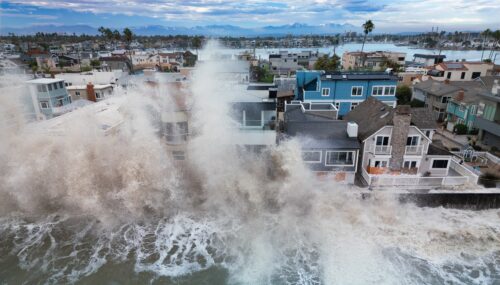
“A record-breaking El Niño winter and the potential loss or weakening of federal disaster management services are among the factors that could determine whether Californians face catastrophic floods this winter and beyond. A report released today from the Securing California’s Flood Future, or SCFF, panel outlines what California needs to consider for a durable and resilient flood future in the face of such disturbances. “Whereas we will emerge from this El Niño next spring — wet or dry — the potential damage to U.S. flood-management and disaster-management institutions may take much longer to repair,” said panel co-chair Nicholas Pinter, a professor with the UC Davis Center for Watershed Sciences and the Earth and Planetary Sciences department. “But political crises, like natural disasters themselves, open windows of opportunity for change. California possesses significant strengths on which to build.” … ” Read more from UC Davis.
SEE ALSO: Preparing for the storm, from the California Water Blog
California’s future has more summer but few beaches, new report warns
“Summer is getting longer as winter wanes in California, a new climate report warns. Over the next few decades, longer summers will come with more extreme heat, deadlier wildfires, meager snowpack, higher seas, eroded beaches and “whiplash” between drought and floods, according to California’s Fifth Climate Change Assessment. The assessment, published this month, gives the newest climate change projections through 2100 with the goal of helping communities statewide to prepare. “As the Trump administration turns its back on science, California is doubling down on climate action, on protecting our communities, and on building a safer future,” Gov. Gavin Newsom said in a statement. “We are putting the latest science to work so communities across the state have the tools to confront the climate crisis head-on.” … ” Read more from SF Gate.
Matt Angel warns groundwater declines could threaten California’s farming future
“On today’s episode of the AgNet News Hour, Matt Angel, Madera County farmer and longtime groundwater and irrigation pump expert formerly associated with Madera Pumps, joined Nick Papagni for an in-depth conversation about California’s declining groundwater supplies, irrigation efficiency and the challenges facing San Joaquin Valley agriculture. Angel warned that without better groundwater monitoring and management, some of the state’s most productive farmland could face an uncertain future. Angel explained that groundwater conditions can vary dramatically even within the same subbasin. In Madera County, he said, groundwater levels can range from approximately 70 feet below the surface near the river to 400 feet in other areas. Those differences, he argued, make it difficult to manage an entire groundwater basin under a uniform approach. … ” Read more from AgNet West.
Fresh as the microplastic-laden Sierra snow

“For the first time, UC Riverside scientists have measured how much microplastic pollution falls on the Sierra Nevada during snowstorms and were surprised to find significant amounts even in the most remote locations. Lead researcher Aleksandra Karapetrova, a UCR environmental toxicologist, could not access any of the snowfall collection sites by car or even on foot. She expected plastic to be harder to find or even nonexistent in at least a few of these locations, given their distance from human activity. “One site was accessed by chairlift. I had to ski to the rest of the remote sites. That’s how isolated they are,” Karapetrova said. “But no matter how far out the site, I always found microplastics there.” … ” Read more from UC Riverside.
Powerful interests aim to weaken California’s landmark environmental law
“Political action committees funded by technology companies, the state’s major utilities and other corporate interests have spent nearly twice as much to pass a ballot measure that would greenlight major development projects with minimal environmental or public review as public interest and labor groups have spent opposing it. Developers and other corporate interests aim to streamline the California Environmental Quality Act, or CEQA, which requires public agencies to identify, disclose and mitigate a development project’s negative impacts on a wide range of environmental resources, including wildlife, air and water quality and tribal cultural resources. Proposition 45 shifts who determines the scope of environmental review from public agencies and communities to project developers by rewriting the state’s foundational environmental law to fast-track major projects. … ” Read more from Inside Climate News.
SEE ALSO: Prop. 45 mounts Trump-style assault on California’s environment. Will it work?, commentary at Capitol Weekly
In regional water news and commentary today …
NORTH COAST
Humboldt County supervisors move forward with shifting Centerville Road inland
“The Humboldt County Board of Supervisors voted unanimously on Tuesday afternoon to proceed with a plan to shift Centerville Road inland in an effort to address a growing erosion problem. Humboldt County Public Works Department outlined the options available to the county to address the crumbling coastline. “There’s two fundamental options to address the situation here,” Hank Seemann, the county’s deputy director of Public Works, told the supervisors. “One option would be to establish a new inland road connection to the top of the bluff, and this was initially pursued … but in both cases, that effort was discontinued because the potentially affected landowners were not interested at the time in providing an easement for the road to the county. So the county proceeded with another option, which is to repair the road in place.” Last month, the California Coastal Commission gave the county the opportunity to move forward with repairing the road after approving a permit. But the permit came with certain conditions that county staff found problematic. … ” Read more from the Eureka Times-Standard.
SEE ALSO: This California county may abandon repairs and let a coastal road disappear, from the San Francisco Chronicle via Yahoo News
SIERRA NEVADA
Adaptive management actions: Building on restoration successes in the North Yuba
“As the summer heat faded and the cold morning crept in, SYRCL partnered with HUṠWEJ (formerly California Heritage Indigenous Research Project) and First Rain Land Stewardship Services (FRLSS) to complete adaptive management within two distinct restoration projects in the North Yuba: the Haskell Peak Meadows Restoration Project and the Yuba Aspen 49 Project. Restoration is not a one-and-done process. A good restoration project includes years of site visits and monitoring to inform adaptive management, the process of adjusting implementation actions in response to changes within the site. This sometimes means relatively simple actions like kick-starting re-vegetation efforts but, in the worst of cases, can mean going back to the drawing board. … ” Read more from the South Yuba River Citizens League.
Van Norden Meadow Restoration 2026: Monitoring, BDA construction, conifer removal, and the New Loop Trail
“2026 has delivered another busy year at Van Norden Meadow. A lackluster winter and snowpack paved the way for early access to the meadow for our hydrology monitoring staff to begin bi-weekly streamflow, water quality, and groundwater level measurements. We were also able to get an early look at how Phase 2 at the Lytton Fan held up to the warm, rainy, and unpredictable 2025-2026 winter season. The features that were installed in the fall of 2026 have functioned as intended, with the goal of getting water out of the incised channel and back on the historic alluvial fan to promote sheet flow. In late May, SYRCL hosted a site tour of Van Norden Meadow for the Sierra Meadows Partnership Annual Gathering. Fellow meadow practitioners were all welcomed with spring snow flurries and important facts, considerations, and lessons learned from the restoration project so far. … ” Read more from the South Yuba River Citizens League.
Fish Creek pumped storage project: What it is, why SYRCL is concerned
“Just minutes from the town of Washington, Fish Creek begins on ridgetops high above the South Yuba River near the White Cloud Campground. It flows 1.5 miles north through forests near Lupine Point and into a narrow canyon until it meets the Wild and Scenic South Yuba River. Now, a company formed just this past spring, wants to dam it. RamaFlux Sierra PSH, LLC has asked the Federal Energy Regulatory Commission (FERC) for a two-year permit to study a 750-megawatt (MW) “pumped storage” power plant on Fish Creek. The plan would put one dam and a reservoir on the creek, 200 vertical feet above where it meets the South Yuba, and build a second reservoir high on the ridge near Jefferson Creek. … ” Read more from the South Yuba River Citizens League.
Five years after the Caldor Fire, researchers study what protected Tahoe communities and how to reduce future wildfire impacts
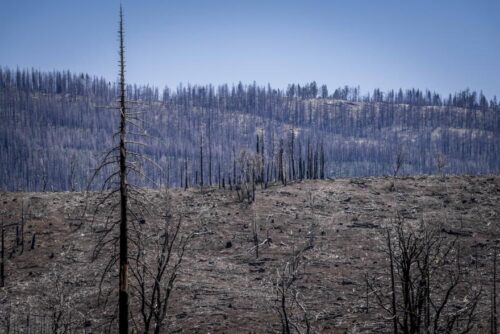
“Five years after the Caldor Fire burned more than 220,000 acres in the Sierra Nevada, researchers are studying what helped protect the Christmas Valley and Meyers communities, and what could reduce wildfire impacts in the future. When the Caldor Fire threatened the Lake Tahoe Basin in 2021, no structures were lost in Christmas Valley. UC Davis research ecologist Hugh Safford said that outcome reflected several factors working together, including years of fuel treatments, fire-resistant homes, residents prepared for wildfire and firefighters ready to respond. … ” Read more from the Tahoe Daily Tribune.
UC Davis conducts studies to inform whitebark pine recovery
“The UC Davis Tahoe Environmental Research Center is studying how to restore whitebark pine, one of the Tahoe region’s most vulnerable trees. These trees grow in high, remote regions of Lake Tahoe and face a number of mounting pressures, from drought and bark beetles to an invasive disease that kills cone-producing branches. Called white pine blister rust, the disease is particularly concerning because without cones, there are no seeds, and without seeds, there are no future generations of trees, spelling impacts beyond the species itself. “A healthy lake starts with a healthy watershed—including the forests surrounding it,” TERC said in its update on the study. … ” Read more from the Tahoe Daily Tribune.
Regional leaders gather to tackle Tahoe’s litter challenges
“From waste management to single-use plastics, regional leaders gathered at the historic Thunderbird Lodge on Lake Tahoe’s East Shore on Wednesday for the fourth annual Lake Tahoe Litter Summit to discuss ongoing litter challenges and identify solutions to protect the basin. Hosted by Clean Up The Lake, the summit brought together representatives from federal, state and local government agencies, nonprofits and businesses involved in litter prevention, mitigation and management throughout the Tahoe region. Representatives from the Town of Truckee, the Tahoe Regional Planning Agency, Clean Tahoe, Keep Tahoe Blue and other organizations attended. “The goal of this event is to really bring the region together to discuss not only the issues that continue to perpetuate with litter around the Tahoe Basin, but also propose solutions and strategies to tackle ongoing issues that have not been addressed,” said Collin West, founder of Clean Up The Lake. … ” Read more from the Tahoe Daily Tribune.
Lake Tahoe inspectors intercept boats carrying invasive golden mussels
“Lake Tahoe boat inspectors intercepted 10 watercraft carrying invasive golden mussels this season, according to the Tahoe Regional Planning Agency (TRPA). Officials reported the findings during an end-of-boating-season briefing Wednesday, following about 5,200 watercraft inspections. The Lake Tahoe Watercraft Inspection Program, led by TRPA and the Tahoe Resource Conservation District, works to prevent aquatic invasive species from entering Lake Tahoe. The increased number of interceptions this year was not unexpected, officials said, as golden mussels continue to spread through California waterways from San Diego to Sacramento. … ” Read more from KTVN.
SEE ALSO: 84 boats prevented from entering Lake Tahoe with invasive species this summer; 10 had golden mussels, from South Tahoe Now
SACRAMENTO VALLEY
Salmon habitat project along Sacramento River to improve access on and off Red Bluff floodplain
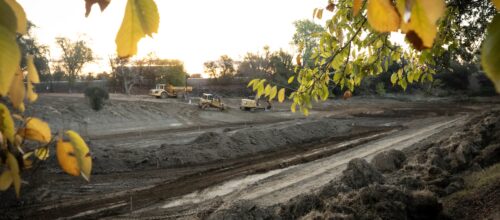 “A three-acre floodplain along the Sacramento River that has become attractive for native fish to rest and feed is receiving a critical redesign to help reduce the number of juvenile salmon and steelhead trout that end up stranded with no way back to the river once water levels recede. A coalition of farmers, cities and water districts, known as the Sacramento River Settlement Contractors, has teamed up with local, state and federal agencies to reshape a former boat harbor at the Red Bluff Elks Lodge. The project will allow the area to flood more frequently, which will provide young salmon and steelhead with a place to feed, grow and find refuge. The project will also allow for volitional passage, which means the fish will have the freedom to leave the floodplain when they are ready to continue their downstream migration. “Our native fish don’t recognize property lines or agency boundaries, so improving their migration takes collaboration across the entire Sacramento River Basin,” said Jeff Sutton, Glenn-Colusa Irrigation District General Manager and a member of the Sacramento River Settlement Contractors. “This project shows what we can accomplish when water users, landowners, scientists, fishermen and agencies work together to give young salmon and steelhead better access to productive habitat and a safer route downstream.” … ” Continue reading this press release.
Butte County Public Works keeps Five-Mile basin clear
“The debris removal project at the Five-Mile basin may have taken years to get off the ground, but this year’s work took only three and a half days to complete. Butte County Public Works Director Colt Esenwein went before the Board of Supervisors on Tuesday to give an update on the flood mitigation efforts at the middle portion of Bidwell Park where, for two years in a row, crews have worked to clear out plants and other biological debris to keep the channel from overflowing during the winter months. “We anticipated 15 days of work,” Esenwein said. “We were able to complete it in three and a half days. It focused mainly on vegetation removal, sediment removal and a reopening of the pilot channel.” … ” Read more from the Chico Enterprise-Record.
Salmon surveys suggest best salmon count coming to area in years
“This year’s salmon count is expected to be the best we’ve seen in years, and a significant event is planned in Roseville to celebrate the arrival of this year’s fish after their long and treacherous journey to our local waterways. A significant event is being organized in the Roseville area for the salmon arrival: the Dry Creek Conservancy and Placer Group-Sierra Club announced the first-ever Salmon Homecoming event in anticipation of the especially strong salmon run this year. The event will be a free family-friendly celebration of the arrival of the Chinook/King Salmon spawning run. Organizers will also introduce the recently completed 11×26-foot color mural of Dry Creek salmon’s life cycle. Designed by professional graphic artist Lora Watts, the mural was funded and painted by volunteers. … ” Read more from Gold Country Media.
BAY AREA
Where will San Francisco flood this winter? Experts flag the trouble spots
“San Francisco could see unprecedented flooding this winter, with some of the highest tides in history submerging parts of the waterfront and rain overwhelming drainage systems inland. Experts and city officials paint a bleak picture: flooding along the Embarcadero possibly reaching the road; water inundating low-lying areas from Marina Green to Fisherman’s Wharf to Mission Bay; Ocean Beach “mostly underwater;” and heavy rainstorms causing storm drains to back up. This year’s historically strong El Niño, a climate pattern that warms the Pacific, is likely to bring water into the city in two ways. Warmer water takes up more space, causing ocean levels to rise — and San Francisco Bay is widely expected to reach record-breaking levels, particularly around Thanksgiving and Christmas. Plus, heavy rainstorms are more likely, leading to flash floods. … ” Read more from the San Francisco Chronicle.
‘Billion-dollar problem’: Marin’s most populous city is already planning El Niño evacuations
“There was no warning on the morning that Anabel found herself blocked by the water. It was January, and as the San Rafael resident left for work, she found herself stuck behind a long line of cars. Some began turning around, but Anabel waited, wondering what was happening as she searched for warnings on the radio, she recalled in Spanish. When Anabel finally reached the front of the line, she saw high waters had cut off the entrance to Highway 101. … It’s a scenario that seems very likely to repeat itself — potentially in a worse way — this winter for many residents of Marin County’s most populous city. A historically strong El Niño is poised to raise water levels higher than ever, especially on king-tide days such as the one Anabel experienced. It’s a particular concern for San Rafael’s Canal District, where nearly one-fifth of city residents are already living largely below sea level. … ” Read more from the San Francisco Chronicle.
More Marin municipalities declare El Niño emergencies
“The list of Marin municipalities with El Niño emergency declarations continues to grow as winter approaches. Larkspur, Corte Madera and Tiburon adopted declarations last week, following similar actions earlier this month by San Rafael and Sausalito. The county government also has issued an emergency proclamation. Gov. Gavin Newsom declared a statewide emergency on Sept. 21 to prepare for the rainy season, which forecasters expect to be particularly wet because of the El Niño pattern. Local emergency declarations allow municipalities to expedite resources by streamlining approval and bidding processes. They also help municipalities coordinate better with other government entities, and can facilitate state or federal aid. … ” Read more from the Marin Independent Journal.
El Niño winter: Bay Area airports face flooding risk during holidays, research suggests
“A new UC Davis report warns that parts of the Bay Area, including San Francisco International Airport and Oakland San Francisco Bay Airport, could face flooding risks this winter if several weather and tidal conditions occur simultaneously during the holiday travel season. The report, authored by Fraser Shilling, director of the UC Davis Road Ecology Center, examines areas along California’s coastline that could be vulnerable to flooding during an anticipated El Niño winter. High tides flooded parts of the Bay Area on Tuesday, an event Shilling said could serve as an early warning. “This was just like a preview. This is a trailer,” Shilling said. … ” Read more from ABC Bay Area.
Livermore water stations to receive upgrades to PFAS treatment systems
“New water treatment systems will be installed at three California Water Service stations in Livermore to remove toxic chemicals, with the Planning Commission directing city staff to address neighbors’ concerns about noise and screening at one of the sites. Cal Water plans to upgrade Station 9, located at 3474 East Ave.; Station 19, at 1748 Elm St.; and Station 31 at 732 Olivina Ave. The agency currently uses each station for water storage, but the stations require upgrades to ensure drinking water is safe and reliable and to expand their storage capacity. The projects involve installing two granular activated carbon vessels, which remove contaminants, along with associated control systems, underground utilities and piping connections, according to the staff report prepared by Livermore Assistant Planner Emily LaDue. … ” Read more from the Livermore Vine.
River otter sighting on San Mateo coast stuns conservationists
“Conservationists are celebrating after a North American river otter was sighted recently along the San Mateo coast for the first time in more than 100 years. The otter was photographed by wildlife cameras within a closed area of the Cloverdale Ranch Open Space Preserve in Pescadero in July, August and September. The cameras were set up to photograph other animals, such as foxes, so it was a welcome surprise when a river otter made an appearance, according to the Midpeninsula Regional Open Space District. “Checking wildlife cameras can be like Christmas, but river otters haven’t been known to occur on the San Mateo Coast since the 1800s,” Ken Hickman, an independent researcher and Midpen partner, said. “I knew Midpen and State Parks biologists would be as surprised and interested as I was to see the photos.” … ” Read more from the Daily Journal.
CENTRAL COAST
In the midst of a legal battle, Cal Am seeks to raise desalination project cost cap by 3.5.
“It’s been roughly eight years since California-American Water provided an estimate of how much it would cost to build a desalination project it argues would address the long-term water supply constraints plaguing the Monterey Peninsula. In 2018, that estimate was $239 million, a figure that has continued to be quoted in project plans as inflation, labor and material costs have been on the rise. In an application filed with the California Public Utilities Commission on Oct. 23, Cal Am has updated its estimate to $825 million, roughly 3.5 times more than the amount the CPUC approved in 2018. In its CPUC filing, the company says the desal project’s current estimate covers only Phase 1, which would produce 4.8 million gallons per day (mgd), 25-percent less than the 6.4mgd project proposed in 2018. The project is intended to be sized for future expansion to 6.4mgd, but the cost associated with that expansion hasn’t yet been estimated, and would hinge on whether there is additional future demand for water. … ” Read more from Monterey County Now.
SAN JOAQUIN VALLEY
Why build a levee where there’s no water?
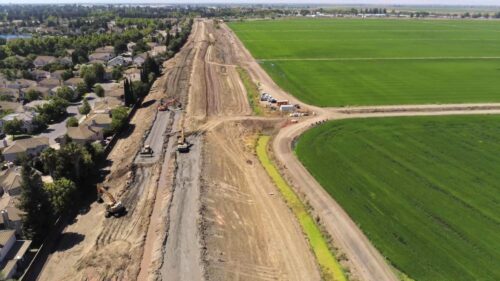
“Why strengthen a levee when there is no water in sight? Because a levee is not built for a normal day. It’s built for the day the water rises. During a major flood, water can spread into areas that are normally dry, threatening neighborhoods, businesses, roads and critical infrastructure in and around Stockton, California. Through the Lower San Joaquin River Project, the U.S. Army Corps of Engineers Sacramento District is improving levees to reduce that flood risk before high water arrives. … ” Read more and watch video from the Army Corps of Engineers.
San Joaquin County lawmakers push to combat golden mussels
“San Joaquin County lawmakers are urging state and federal officials to expand research and prevention efforts to combat invasive golden mussels threatening the Sacramento-San Joaquin Delta and the region’s waterways. During a discussion Monday at Hilton Stockton with water managers and other stakeholders, Assemblymember Rhodesia Ransom, D-Tracy, and U.S. Rep. Josh Harder, D-Tracy, discussed state and federal legislation aimed at addressing the infestation and the need to identify effective solutions. Golden mussels were first detected in North America in October 2024, when California Department of Water Resources staff discovered them attached to a float near the Port of Stockton. … ” Read more from Stocktonia.
SOUTHERN CALIFORNIA
Bonta: California suing Chiquita over violations
“California Attorney General Rob Bonta announced a lawsuit Tuesday filed in federal court seeking “environmental accountability” over years of violations from Chiquita Canyon Landfill, he announced in a news conference Tuesday. The announcement Tuesday, made alongside California Department of Toxic Substances Control officials inside the Department of Justice’s Ronald Reagan Building in Downtown Los Angeles, marks the latest chapter in yearslong problems at Waste Connections’ troubled Castaic facility, which has been closed for operations since January 2025. “Time and again, the owners and operators have failed to manage that waste the way the law requires,” Bonta said. “That’s why today, alongside DTSC, my office is suing Waste Connections and other owners and operators of the Chiquita Canyon Landfill for repeatedly breaking California hazardous waste laws and polluting our natural resources.” … ” Read more from The Signal.
SEE ALSO: Castaic’s Chiquita Canyon landfill blamed for headaches, dizziness and wheezing, says state lawsuit, from the LA Times
LA City Council votes to ban oil drilling citywide, capping a multiyear effort
“The Los Angeles City Council voted 13-0 Wednesday to ban new oil wells and phase out all existing ones within 20 years, the final vote needed to pass the citywide ban. For community residents and environmental advocates, this has been a long time coming — the push to enact this ordinance began over a decade ago. “To every single one of us, this is what this means: That we hopefully will inherit a safer Los Angeles, a healthier city, not just for us, but for generations to come,” said Ashley Hernandez, a community organizer and Wilmington resident. Hernandez was among dozens of demonstrators who gathered outside City Hall Wednesday morning for a rally ahead of the council vote, holding signs with slogans like “Clean air & health over big oil wealth” and “Together we can stop the climate emergency.” … ” Read more from the LAist.
Amid rash of unusually high DWP bills, board suspends shutoffs for nonpayment
“The Los Angeles Board of Water and Power Commissioners moved Tuesday to immediately suspend residential water and electricity service shutoffs due to nonpayment for the rest of the year after a period of unusually high utility bills. Though the board does not have the authority to forgive the charges, which will still be due by the end of the year, board President Allan Marks encouraged residents to enroll in programs that could help alleviate rising costs. The move comes as complaints about unusually pricey utility bills have spread widely on social media. During Tuesday’s board meeting, several residents spoke about being surprised by high bills and called for an audit of the Department of Water and Power. … ” Read more from the LA Times.
Tack on another day of misery from high tides that have swamped Southern California coast
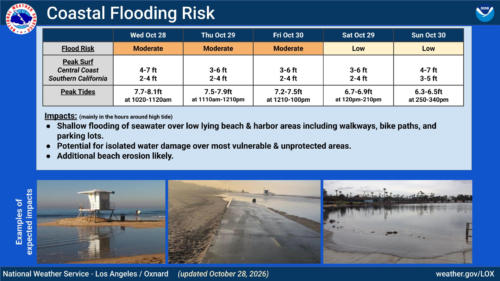 “Unusually high tides that have brought flooding to low-lying areas in Southern California including Newport Beach and Long Beach may linger longer than initially predicted. The National Weather Service on Wednesday extended flood advisories for all of Southern California’s coastal counties through 2 p.m. Friday, said Devin Black, a meteorologist for the weather service’s Oxnard office. They were originally scheduled to expire Thursday at 1 p.m. Orange and San Diego counties, which were under a more severe flood warning through Thursday afternoon, will be downgraded to a coastal advisory through Friday afternoon. … ” Read more from the LA Times. | Read via Yahoo News.
Why are Southern California ocean levels so high? What to know before winter
“In a viral video shared by an Amtrak rider earlier this month, a wave slams against the window of a Pacific Surfliner train in Oceanside as her 6-year-old daughter says, “Mommy, you should really see this.” It’s a startling reminder of how record-high ocean levels are already putting Southern California’s coast under strain. In Seal Beach and nearby Sunset Beach, recent high tides flooded streets and properties and forced closures along Pacific Coast Highway. The risks come as Los Angeles County officials prepare for a potentially challenging storm season, with LA Mayor Karen Bass directing city departments to take steps to reduce flooding, mudslide, and other El Niño related hazards. During a webinar Tuesday on his Weather West YouTube channel, LA’s favorite climate scientist, Daniel Swain, said multiple SoCal tide gauges, including those in San Diego, Los Angeles, and San Pedro, broke more than a century of water-level records Monday and Tuesday. And he warned that this winter could see more widespread coastal flooding. … ” Read more from the LA Public Press.
Erosion threatens California’s PCH as Newsom orders El Niño storm preparations
“Waves are wearing away a coastal bluff beneath California’s Pacific Coast Highway, while rain threatens to seep into cracks above, adding urgency to efforts to protect a critical route near Laguna Beach. Near Crystal Cove, a crack stretches nearly 400 feet and measures about 2 feet wide. Crews began assessing the slope after cracks were identified beneath the highway on Oct. 10, according to Caltrans. The damage has narrowed Pacific Coast Highway to one lane in each direction between Reef Point Drive and Irvine Cove Drive, with the speed limit temporarily reduced to 25 mph. “It’s very important to have that road open and repaired. There’s three ways in and out of Laguna Beach, so we need all of those open,” Laguna Beach Mayor Mark Orgill told AccuWeather. … ” Read more from AccuWeather.
Santa Monica’s $77.5 million water project just earned some major recognition
“A $77.5 million project designed to make Santa Monica less dependent on imported drinking water has earned national recognition for its environmental performance, highlighting improvements that allow the city to produce more water while using less energy and fewer chemicals. The Olympic Well Field Restoration and Arcadia Water Treatment Plant Expansion received an Excellence in Sustainability award and an Award of Merit in the water/environment category as part of Engineering News-Record’s 2026 West Best Projects awards. The construction industry publication highlighted the project in a report published Monday, detailing how the upgrades have improved Santa Monica’s drinking-water production while reducing waste and operating costs. … ” Read more from The Patch.
Calimesa recharge basin completed in record time, securing water for 18,000 residents
“For the first time in Calimesa’s history, imported water is flowing into a new groundwater recharge basin, marking a major milestone for regional water reliability. Completed just one year after breaking ground, the County Line Road Recharge Basin and Turnout Project reflects an ambitious partnership among San Gorgonio Pass Water Agency (SGPWA), San Bernardino Valley Municipal Water District (San Bernardino Valley), South Mesa Water Company, and Riverside County Fifth District Supervisor Dr. Yxstian Gutierrez. On October 14, more than 90 water leaders, elected officials and community stakeholders gathered to celebrate the achievement. With imported water already filling the basin behind them, attendees witnessed the results of a regional collaboration that will help protect water supplies for approximately 18,000 residents. “People see water flowing into this basin today, but think about what it took to get here,” said San Bernardino Valley Chief Executive Officer and General Manager Heather Dyer. “Just a month ago, this water was in Lake Oroville. It traveled more than 500 miles through California’s water system to reach this community. And behind that journey are relatively small teams of dedicated people doing extraordinary work. I am so proud of what our agencies have accomplished and what it means for the families who will depend on this water.” … ” Continue reading from the San Gorgonio Pass Water Agency.
SAN DIEGO
San Diego City Council passes a temporary moratorium on data centers
“The San Diego City Council, on a 9-0 vote Tuesday, passed an urgency ordinance that places a moratorium on the development of new data centers within the city. Coming days after an executive order from Mayor Todd Gloria, the moratorium is designed to give officials time to develop policies and recommendations to make sure that data centers align with the city’s General Plan and its Climate Action Plan. “I appreciate the City Council’s unanimous ratification of the temporary moratorium on data center development,” Gloria said in a statement. “This is a necessary and responsible step to make sure any development does not outpace our responsibility to protect San Diegans.” The temporary moratorium lasts 45 days but gives the City Council the power to extend the suspension for another 10 months and 15 days. No more than two extensions will be allowed and will require approval from four-fifths of the council. … ” Read more from the San Diego Union-Tribune.
Flood worries prompting San Diego to structurally shrink Hodges Dam by 35 feet
“San Diego has unveiled its long-awaited plan to prevent a major flood at Lake Hodges Dam: spend $30 million to $50 million to structurally shrink the unsound dam by lowering its spillway from 315 feet to 280 feet. The proposed project, which will take an estimated seven years to complete, is unpopular with civic groups near the 108-year-old dam, who prefer a higher water level for recreational and wildfire-prevention reasons. City officials say the seven-year project is considered an “interim solution” and that they are still pursuing a nearby replacement dam that might start being built shortly after the existing dam’s spillway is lowered. Civic groups, including Friends of Lake Hodges, are questioning the financial sensibility of pursuing the interim spillway-lowering project when a long-term solution might be built so quickly afterward. … ” Read more from the San Diego Union-Tribune.
What to know about the incoming changes to your San Diego water bill
“City of San Diego water customers will see changes to their bills starting in January, when a new billing structure for single-family homes takes effect alongside a previously approved water rate increase. The changes stem from a lawsuit filed in 2015 challenging the city’s tiered water pricing system. Under the new structure, customers who use less water are expected to see their monthly bills increase, while those who use more water could pay less. The city estimates the average monthly bill for a low-use customer in a single-family home will increase by about $6, while the bill for a high-use customer is expected to decrease by $20. The San Diego City Council voted 6-2 on Tuesday to approve the modified water rate structure. City leaders said they disagreed with the court’s decision but were legally required to comply. … ” Read more from NBC San Diego.
Along the Colorado River …
Central Arizona Project moves to join Colorado River lawsuit, warns of severe water cuts
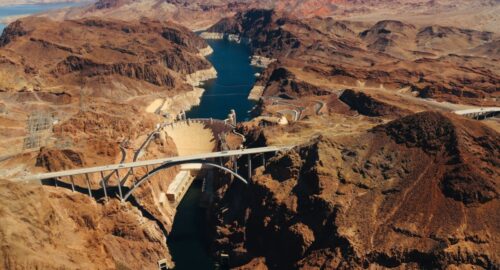 “Central Arizona Project has filed a motion to join a lawsuit challenging the federal government’s plans for managing the Colorado River after 2026, arguing the framework could cut off critical water supplies to cities and tribal communities across Arizona. The state of Arizona has also joined the fight, which started in Nevada in late August. Brenda Berman, CAP’s general manager, said the Arizona water provider had spent years trying to avoid litigation but believes legal action is now necessary. “Our goal has been to stay out of court but not at the expense of defending our rights and the laws governing the Colorado River,” Berman said during a Tuesday news conference. … ” Read more from KTAR.
Water settlement would be game-changer for northeastern Arizona tribes, experts argue
“Leaders from three tribes in northeastern Arizona urged Congress on Wednesday to pass legislation settling their water rights, saying the agreement would ensure their access to the vital resource and provide greater certainty for water users across the Colorado River basin. The legislation, known as the Northeastern Arizona Indian Water Rights Settlement Act, was the focus of a panel discussion, part of the Arizona Capitol Times’ Morning Scoop series. It featured leaders from the Hopi Tribe, San Juan Southern Paiute Tribe and Navajo Nation. A settlement would resolve the tribes’ outstanding water claims, fund a pipeline from Lake Powell to deliver water and create trust funds for the three tribes. It would also establish a reservation for the San Juan Southern Paiute Tribe and allow the Navajo Nation and Hopi Tribe to lease their Upper Basin Colorado River water to other Arizona users — a provision that Upper Basin states oppose. “If we’re able to get this settlement through, it’ll mean a lot of opportunity for our people, the region,” said Lamar Keevama, chairman of the Hopi Tribe. “It’ll mean safe, clean, reliable water for our people and the younger generation and the ones that are still coming.” … ” Read more from the Arizona Capital Times.
Rain raises Lake Powell water levels, but snow will decide its fate
“The same fall rains that swamped the Four Corners region with floodwaters have brought welcome if modest relief to Colorado River reservoirs that had previously seemed destined to hit new lows every month until next spring’s rush of Rocky Mountain snowmelt. Behind Glen Canyon Dam at Lake Powell, the Colorado River reservoir where federal managers are most dedicated to protecting water levels in the coming year, October downpours over the San Juan River and other tributaries had raised the water level some 12 feet as of Oct. 27. That pushed the surface 40 feet above the point at which Glen Canyon Dam would stop generating electricity, but still left the pool just a quarter full and 170 feet below the brim. … It’s a locally auspicious start to the official water year that began on Oct. 1, but hardly a fix for the decades of drought and drawdowns that have pushed the river into crisis. … ” Read more from Arizona Central.
As the Colorado River shrinks, calls to drain Lake Powell grow
“The 27-year-long drought in the Southwestern U.S. — the longest dry period in the last 1,200 years — is taking a serious toll on the flow of the Colorado River. Climate change is shrinking the snowpack in Colorado’s Rocky Mountains, the source of roughly 80 percent of the river’s annual flow, and higher temperatures are melting the snowpack earlier in the year, which saps runoff in late summer and fall. Warmer weather is also increasing evaporation from the river’s 40 reservoirs, including its two largest — Lakes Powell and Mead. Last month, Lake Powell, on the Utah-Arizona border, reached a record low, at less than 150 feet above dead pool, the point at which water can no longer flow through the Glen Canyon Dam’s bypass tubes to reach Lake Mead, behind Hoover Dam, 300 miles downstream. The low water levels reduced the generation of hydropower from both reservoirs, complicated how riverine ecosystems are managed, and slashed deliveries of water to the Lower Basin states of Arizona, California, and Nevada. … ” Read more from Yale e360.

