
Several news sources featured in the Daily Digest may limit the number of articles you can access without a subscription. However, gift articles and open-access links are provided when available. For more open access California water news articles, explore the main page at MavensNotebook.com.
On the calendar today …
- MEETING: State Water Board consideration of Bay Delta Plan update beginning at 9am. The State Water Board will consider adoption of the final draft Bay Delta Plan and final Staff Report, Day 1. Click here for the notice. Click here for the agenda and remote access instructions.
- MEETING: Delta Conservancy Board Meeting from 9am to 1pm. Agenda items include Ecosystem Restoration and Climate Adaptation Program Update, Community Enhancement Program Update, Delta Carbon Program Update, Consideration of grant requests, DWR Multibenefit Restoration Program Update, Delta conveyance update, and Delta agencies updates. Click here for the full agenda and remote access instructions.
- WEBINAR: Getting to Efficiency for Water Suppliers: Making Sense of Your Landscape Area Data from 10am to 11:30am. What does your landscape area measurement (LAM) data show, and what should your agency do with it next? Join the next installment in the Getting to Efficiency technical assistance webinar series for a practical look at residential and commercial, industrial, and institutional (CII) landscape data under Making Conservation a California Way of Life. Learn how to review the data available to your agency, identify where it may need refinement, and prepare for CII landscape measurement and reporting. Click here to register.
- WEBINAR: GAMA: Decadal Trends in the Quality of Groundwater at 10:30am. The capstone Trends report on the quality of groundwater used for public drinking water supplies in California will be presented in a webinar. Access the Scientific Investigations Report associated with this webinar. Please RSVP to the webinar here.
- SoCAL WATER DIALOG: Preparing for El Nino… Can dire predictions deliver stormwater capture opportunities? from 12pm to 1:30pm. El Niño is predicted to bring heavy storms that can overwhelm flood control systems, damage coastal infrastructure and threaten mudslides. But is there a silver lining in these clouds with possible stormwater capture? Marty Ralph, Scripps Center for Western Weather and Water Extremes, will speak on how an El Niño impacts weather patterns, future forecasts, and the tools scientists will deploy to help water managers understand what to expect to manage through the storms. John Huynh, LADWP, will discuss preparations underway to manage El Nino’s impacts and projects in place to capture stormwater in the City of LA. Click here to register.
- WEBINAR: Navigating SB 1153: Legal Shields and Operational Mandates for California Public Water Systems from 1pm to 2:15pm. Hosted by WLG, CWA and CalMutuals JPRIMA. The recent enactment of SB 1153 represents a significant development for California public water systems, addressing both wildfire-related liability and the operational responsibilities of water agencies serving wildfire-prone areas. The new law provides important protections concerning the role of public water systems in wildfire defense and suppression, while also establishing new preparedness and planning requirements for certain urban retail water suppliers. Because the implications extend well beyond the legal language of the statute, we have assembled a distinguished group of water industry leaders who were closely involved with the legislation and who understand its practical consequences. Click here to register.
In California water news today …
Farms or fish? State Water Board weighs critical decisions about San Joaquin River

“More water — or less — could be sent cascading down the San Joaquin River through Stockton as a result of a State Water Resources Control Board meeting starting Wednesday. The board is considering revisions to the Bay-Delta Water Quality Plan, the document that sets goals for the amount and quality of what flows through major rivers surrounding the Delta. It’s the latest update to a plan that started in 1978 and has seen updates three times since. Because it involves California’s most precious commodity — water — any changes are sure to bring disagreements. The latest issue pits farmers, Native American tribes, water districts, environmentalists and others trying to get sufficient water to meet their divergent needs. At issue is just how much water should course through Northern California rivers to ensure that badly depleted fish stocks can be replenished. The tiny Delta smelt became the center of a political firestorm earlier in the Trump administration. Now, a key goal is to bring back once-plentiful salmon to the Delta and other inland waterways. … ” Read more from Stocktonia.
Communities rally to protect Trinity and Klamath rivers after Newsom tribal rights veto
“Trinity and Klamath River Tribal communities and other local residents are hosting a series of events to encourage community participation in an adoption hearing for the Bay Delta Plan and Voluntary Agreements in Sacramento on Oct 29, along with other actions to protect the Trinity River. One event remains … This effort, coordinated by Communities United for Water Protection and local communities, aims to defend the Klamath River and tributaries from state and federal efforts to divert their water to Central Valley irrigators and other agricultural interests. Organizers say it is critical they take action after Gov. Gavin Newsom vetoed several critically important tribal rights and environmental bills. “Gov. Newsom’s rush to build new dams and diversions, and pass ‘voluntary agreements’ to avert real water protections, threatens the flow releases to the Klamath River that stopped previous fish kills and protected drinking water supplies, recreational opportunities and carry over storage on the Trinity River,” explained Regina Chichizola from Communities United for Water Protection. “We are urging the State Water Board to do what Newsom will not: protect water quality and salmon.” … ” Read more from the Trinity Journal.
Reclamation further increases Central Valley Project water supply allocations for south-of-Delta contractors from 28% to 31%; Westlands responds
“The Bureau of Reclamation is increasing Central Valley Project 2026 water supply allocations for south-of-Delta contractors, reflecting better than expected water supply conditions in the off-stream reservoir south-of-Delta. “This additional water will help meet the needs of farms and communities across California,” said Acting Regional Director Adam Nickels. “Through continued collaboration with our water users and stakeholders, Reclamation is working to improve water supply reliability and make the most of available water supplies.” … Based on current hydrology and updated forecasts, Reclamation is announcing the following changes to CVP water supply allocations: Irrigation water service and repayment contractors south-of-Delta are increased from 28% to 31% of their contract total. All other allocation amounts announced May 19 remain unchanged. … ” Read more from the Bureau of Reclamation.
SEE ALSO:
- Survey says: Westlands farmers to get more water in surprise release. from SJV Water
- West Fresno County farmers’ water allocations increased, reducing groundwater pumping need, from the Fresno Bee
- Reclamation gives Central Valley farmers late boost to water supplies, from the San Joaquin Valley Sun
Golden mussels may weaken concrete and degrade water quality, studies suggest

“Invasive golden mussels that have been clogging pipelines throughout the state’s water systems over the past two years may also weaken concrete and cause water quality issues, according to several studies. Westlands Water District Deputy General Manager Kelly Vandergon told the district’s board in September that a study in China showed golden mussel attachment could weaken cement. Vandergon said the study showed that the way the mussel’s byssal threads attach to concrete “essentially loosens that upper surface, allowing water to penetrate deeper into the concrete structure.” The mussels secrete byssal threads, thin strands with adhesive tips, from inside their shells. Vandergon said the concrete issue is “one of the research projects we’re trying to develop for Prop 4 funding, which has not yet been made available by the state.” … ” Read more from SJV Water.
Super El Niño and fossil fueled climate change are compounding record high sea levels in California. Here’s how
“We’re in the midst of a record-breaking super El Niño event in the Pacific Ocean, and the Southwestern US is already experiencing the significant impacts of a record Pacific hurricane season: flooding rains, and sharply elevated sea levels. Beaches are eroding, infrastructure is cracking, homes are slumping into the sea—and things are about to get significantly worse. What is happening here and why? In early October, Long Beach residents were evacuated from their homes, which were battered by waves from Tropical Storm Rachel. Many oceanfront houses were damaged by the relentless impacts from waves. But it wasn’t just Tropical Storm Rachel pushing the ocean into homes, it was a combination of many factors, including sea level rise from fossil fuel-driven climate change, the intense marine heatwave off the California coast, and a Kelvin wave from the super El Niño. These ingredients combined to produce water levels over several days that were 1.6 feet higher than the predicted tide, approaching record tide levels for Los Angeles County. Rachel’s waves were occurring on top of this increase in the normal tide, a combination that destroyed homes along the county’s coastline. But how exactly do all of these factors combine to raise sea levels? … ” Read more from the Union of Concerned Scientists.
SEE ALSO:
- California’s High Tides Set Records This Week. They’re Going to Get Higher, from the New York Times
- Record high tides bring flooding and glimpse of sea-level rise to California, from the Washington Post
Everything you could possibly want to know about El Niño
“El Niño is the planet’s naturally recurring chaos agent, scrambling weather patterns, spiking global temperatures and typically reaching full strength by December. It appears at irregular intervals, and no two events are the same. Scientists measure its magnitude by how far temperatures in the Pacific Ocean rise beyond the norm, but don’t think you have to live near the Pacific to experience El Niño: This year’s is predicted to be the strongest ever recorded, and its effects will be global. So what does this mean? Read on to find answers to your most pressing questions about the basics, what it does, how strong it is and how you can prepare. … ” Read more from the New York Times.
El Niño could bring increased rainfall and crop challenges to California
“With El Niño conditions expected to intensify over the coming months, California growers may face increased rainfall and potential flooding during the winter season. While it is still too early to determine the exact impact on agricultural production, David Holden with Holden Research & Consulting believes the period between December and February will be particularly important. “We can tell that El Niño is coming. It’s pulling southern moisture up,” says Holden, who is based in Ventura County, California. He points to unusually warm Pacific Ocean temperatures and higher tides as indications of changing weather patterns. “The ocean water is very warm, and tides are about a foot higher than normal. However, it is still too early to say what the impact will be.” … ” Read more from Fresh Plaza.
Desalination doesn’t pencil out for Western agriculture
“The Colorado River is one of the most economically important water systems in the West, supporting communities, businesses and some of the nation’s most productive agricultural regions. It also underpins food supply chains Americans depend on most heavily during the winter, when areas such as Yuma, Arizona, and California’s Imperial Valley become major sources of fresh vegetables. At the same time, the basin faces a long-term imbalance between available water and existing demands, intensifying debate over conservation, infrastructure and potential new sources of supply. One option that regularly enters that discussion is ocean desalination. The appeal is easy to understand. Rather than reallocating an existing water supply among users, desalination can create new, drought-resistant freshwater from the ocean. It is already used in communities around the world and could supplement municipal or industrial supplies in parts of the Western U.S. For agriculture, however, the central question is not whether desalination works. It is whether the water it produces can be supplied at a price compatible with commercial food production. On that question, the economics are difficult to overcome. … ” Read more from Farm Bureau Intel.
Expert talks illegal cannabis impacts on agriculture
“Although California legalized recreational cannabis in 2016, illegal cultivation continues. Gov. Gavin Newsom launched the Unified Cannabis Enforcement Task Force in 2022 to better understand and dismantle illegal operations. State officials have since spent hundreds of millions of dollars to address the problem. But much remains unclear regarding the size, scale and impacts from these operations. Ag Alert® spoke with Dan Sumner, a Univeristy of California agricultural economist and co-author of “Can Legal Weed Win?: The Blunt Realities of Cannabis Economics,”about the effects of illegal grows on agriculture. The interview has been edited for length and clarity. … ” Read more from Ag Alert.
The quiet collapse of America’s refuges
“Scan almost any corner of a U.S. map, and you’ll find a National Wildlife Refuge. In the far north, there’s the Arctic National Wildlife Refuge, a swath of Alaska protecting some of the nation’s remaining caribou herds, chunky salmon, and Arctic grayling. Glance southeast to find the 160,000-acre White River National Wildlife Refuge splashed across Arkansas with its bottomland forest and unparalleled waterfowl hunting. Head north again to see the John Heinz National Wildlife Refuge outside Philadelphia, offering a mentored white-tailed deer archery season on the edge of eight-lane Interstate 95. Then look West to find the tiny Mortenson Lake National Wildlife Refuge in Wyoming, one of the only places where the critically endangered Wyoming toad still croaks its mournful mating call. Chances are most people can only name a few of the nation’s more than 570 refuges, but the spaces carry an outsized importance in conserving not only endangered species like red wolves and whooping cranes but also the ducks, geese, elk, black bears, and white-tailed deer so many of us spend weeks or months of the year chasing. Unfortunately for the creatures who depend on those oases for places to eat, sleep, and raise their young, the wildlife refuge system is in a crisis like never before. … ” Read more from Re:public.
California Forever isn’t on the ballot, but it’s looming large over local elections
“The small North Bay community of Suisun City has a lot of problems facing it: a chronic budget deficit, empty stores on its picturesque marsh-facing waterfront and a scant supply of city staff to maintain public services, to name a few. But all of those are dwarfed by the billionaire-backed elephant in the room: California Forever. The controversial developer has loomed over election campaigns across Solano County. City Council and county supervisor candidates are taking stances on how they feel about the company and its plan to build homes and apartments for more than 100,000 people, retail, offices, and an advanced manufacturing center, among other ideas that could reshape the region — regardless of whether they’ll have any voting power to approve or reject the proposal. But nowhere are the stakes higher than in Suisun City. … ” Read more from KQED.
Proposition 45 would sideline dozens of Tribes from input on major California projects
“Buried in the language of Proposition 45, the initiative that would overhaul California’s powerful law on environmental review, are provisions that would mean government agencies have to consult only with certain tribes in the state, and not others when they develop major projects. Tribes that are federally recognized would be consulted; those without recognition would not. This effort mirrors similar ones supported by tribes that have federal recognition to limit the say of tribes without it in recent years. Non-recognized tribes see it as another move by economically powerful tribes to protect their own interests and avoid having to negotiate with other local tribes over territorial disputes and how to best protect important sites. … ” Read more from the LA Times. | Read via Yahoo News.
SEE ALSO: Commentary: Prop. 45 puts California’s environmental protections at risk. Voters, say no, commentary at the Sacramento Bee
Voluntary agreements: Yes or no?
As the State Water Board moves toward a vote on the Voluntary Agreements, known as the Healthy Rivers and Landscapes Program, Maven’s Notebook will publish commentaries this week examining the many sides of the proposal.
PRO
The science is clear: Restoring California’s salmon populations requires more than just water
Alex Rabidoux, Assistant General Manager, Solano County Water Agency, writes, “For decades, California has debated how much water should flow through its rivers to help recover struggling salmon populations. But an equally important question deserves attention: What happens to that water once it enters the river and how much ecological benefit does it actually provide? Salmon evolved in rivers connected to expansive floodplains, wetlands and side channels. Seasonal flows created shallow, food-rich habitats where juvenile fish could feed, grow and find refuge before migrating to the ocean. Their survival depended not simply on the amount of water moving downstream, but on how that water interacted with the surrounding landscape. Today, much of that connectivity has been lost. Modern restoration science recognizes that recovering salmon requires strategically timed flows that reconnect rivers with productive habitats, the reactivation of floodplains, and restoring the ecological functions that once supported abundant fish populations. … ” Continue reading this commentary.
CON
Reject the discriminatory, illegitimate, and harmful Voluntary Agreements
The Delta Tribal Environmental Coalition writes, “California has formally apologized to tribes for state-sanctioned atrocities and committed to improving relationships between the state and tribal governments. Our elected leaders have also passed numerous laws intended to advance environmental justice outcomes. Yet, when it comes to decisions for the Sacramento-San Joaquin watershed, the Newsom administration has thrown tribes and environmental justice communities under the bus. Newsom’s discriminatory and harmful actions include promoting the Delta Conveyance Project and Sites Reservoir along with “voluntary agreements” to deregulate agribusiness in the Bay-Delta Plan. The Bay-Delta Plan is supposed to provide ecosystem protections for the state’s largest and most fragile estuary. Instead, the current version extends unsustainable and harmful water diversions while paying lip service to tribal water use protections and Delta environmental justice communities. Its approval will not fulfill the state’s duties to sovereign tribal nations, Delta communities, and environmental protection. … ” Continue reading this commentary.
Fatal flaws in the State Water Board’s Draft Bay-Delta Plan Update
The Golden State Salmon Association writes, “Later this week, the State Water Resources Control Board is likely to adopt a final update to the Bay-Delta Plan. This plan is the state’s key document to protect the natural resources in the vast Bay-Delta estuary, as well as its Central Valley tributary rivers. This is the largest freshwater ecosystem in California and the largest estuary on the West Coast. Sacramento Valley salmon runs are the backbone of salmon fishing in California and coastal Oregon. The Board’s decision is particularly important to the salmon fishing community after a dramatic crash in naturally producing salmon and a three-year fishing shutdown. The need for stronger protections is also highlighted by another juvenile salmon kill below Shasta Dam this year, caused by lethal water temperatures. The Water Board is the only state or federal agency with the legal authority to require adequate flows and temperatures to protect Sacramento River fall run Chinook salmon. The Water Board’s current Bay-Delta Plan was adopted in 1995. Despite the dramatic failure of the 1995 plan, this will be the first update to the plan in 30 years. In short, this will be one of the most important decisions the Board has made in decades. … ” Continue reading this commentary.
In commentary today …
Editorial: Dam report underscores California’s poor priorities
The Southern California News Group editorial board writes, “Even as California’s government spends record levels each year, it does a terrible job maintaining and improving its basic infrastructure. The latest evidence is chilling. A report by the State Auditor finds “there are now 57 dams in poor or unsatisfactory condition, including 40 that have hazard classifications of high or extremely high.” It’s a big problem as we face an El Niño winter. We needn’t go far back into the past to understand what this could mean for California residents. In 2017, the Feather River Basin in northern California received an entire year’s worth of rain in January and February, thus overwhelming the Oroville Dam’s main spillway. After concerns about the integrity of the emergency spillway, local officials evacuated 188,000 people. The state’s system of dams is crucial not only in providing water to the state’s residents, but is crucial in protecting against massive floods. It’s imperative that this infrastructure be maintained, yet lawmakers rarely think about this crucial system until there’s a catastrophe. … ” Read more from the OC Register.
In regional water news and commentary today …
NORTH COAST
State Parks considers two small additions to Humboldt Redwoods, one to Jedediah Smith
“California State Parks will hold a virtual public meeting Monday, November 2, to discuss potential land acquisitions, including two small parcels along the Avenue of the Giants that would become additions to Humboldt Redwoods State Park. A third North Coast property, in Del Norte County, is being considered for addition to Jedediah Smith Redwoods State Park. … ” Read more from the Redheaded Blackbelt.
SACRAMENTO VALLEY
3-acre Red Bluff site redesigned to help juvenile salmon migrate
“A coalition of farmers, cities and water districts is working with local, state and federal agencies to reshape a former boat harbor at the Red Bluff Elks Lodge, helping juvenile salmon and steelhead access the Sacramento River as part of their downstream migration journey. The 3-acre floodplain project aims to reduce the number of young fish that become stranded each year. According to the Sacramento River Settlement Contractors, crews are regrading about 5,000 cubic yards of material at the former boat harbor. The redesign will allow the area to flood more frequently, providing young salmon and steelhead with a place to feed, grow and find refuge while giving them freedom to leave when ready to continue downstream. … ” Read more from Action News Now.
Chico: Supervisors hear benefit case for massive solar farm
“At 1,700 acres, the proposed Cenergy solar farm at the foot of the Skyway would be the largest of its kind in Butte County by magnitudes. The next largest project, as Supervisor Tami Ritter pointed out during Tuesday’s Butte County Board of Supervisors meeting, is only 10 acres. Complicating the matter further, the company, Cenergy, can and plans to apply through the state of California based on the state’s new laws pertaining to sustainable energy. However, one of the requirements by the state is that companies work with a local group to determine a legally binding agreement that benefits the community in some way. The Board of Supervisors heard suggestions Tuesday by Cenergy co-founder William Pham for a benefit agreement with the county as well as a myriad of concerns by community members, many of whom said they live near the proposed site. … ” Read more from the Chico Enterprise-Record.
Oroville pursues $5M grant for Bedrock Park redesign, with river access as focus
“Bedrock Park‘s restoration is continuing to move forward, as vegetation cleanup has completed and the city is seeking an estimated $5 million state grant for the park’s redesign. Public Works Director Tim Kaber said the focus of the redesign is to highlight Bedrock Park’s river access, rather than duplicate amenities available elsewhere. “We’re trying to do down at Bedrock (Park) is provide something that’s only at Bedrock,” Kaber said. “We don’t need pickle ball courts; we don’t need a splash pad; we don’t need a fantastic playground because we have that elsewhere. Those features and amenities we have available throughout town. What makes Bedrock special is the access to the river.” The idea for the Bedrock Park Rehabilitation came because, as Kaber said, the park had fallen into disrepair, with fencing falling down and the bathrooms at the park burning down. “We’ve been working on the design for Bedrock Park, going on about a year now, trying to get it back to a usable state,” he said. … ” Read more from the Chico Enterprise-Record.
Sutter County, with its own history of deadly flooding, is making plans for El Niño
“Sutter County officials don’t anticipate a large calamitous event due to El Niño, but they have a number of safeguards in place either way. “Obviously we have this very strong El Niño coming in,” the county’s emergency operations manager Zachary Hamill said. “It’s on track to be the strongest recorded since 1950. However, what does that mean for Sutter County? We don’t know.” Five years after the 1950 El Nino, on Christmas Eve, the Gum Tree Levee on the Feather River gave way and Yuba City was quickly submerged under a 21-foot wall of water in the middle of the night. The incident killed 38 residents and left a brutal memory around the importance of levee strength during harsh winter conditions. Hamill noted that the type of weather this year’s El Nino will bring remains obscure or in a “gray area” because of the six very strong El Niño events since 1950, two of them were dry, two were normal winters, and two were very wet. “A very strong El Niño doesn’t mean a whole lot to us,” he reiterated. … ” Read more from the Appeal-Democrat.
Sacramento approves next steps as storm drainage system faces cash shortfall
“Sacramento’s storm drainage system is aging and the city isn’t bringing in enough money to keep up, according to a new review, approved Tuesday by the city council. Councilmembers approved the storm drainage funds review that found the drainage system requirements and needs are increasing; additional capital investment is necessary to maintain the system; and current revenues are not enough to cover operating costs in the coming years. The report projects the city’s storm drainage funds will fall short by about $4.8 million a year over the next five years under current rates. Without changes, the funds could run out within eight years. The findings come as Sacramento enters the wet season, when the city’s drainage infrastructure plays a critical role in moving stormwater away from neighborhoods and reducing flood risks. … ” Read more from CBS News.
BAY AREA
New report shows El Niño could flood major highways, SFO
“Extreme high tides across the Bay Area flooded Miller Avenue in Mill Valley on Monday, apparently catching at least one motorist off-guard. The driver was seen in video from KTVU-TV hanging out of his window as a tow truck pulled his car from the flooded road. Roadway flooding is expected to return multiple times this week and could be just the start of a nightmare for the region during El Niño. According to a new report from the UC Davis Road Ecology Center, the high risk of flooding this winter threatens key infrastructure statewide. “The combination of Kelvin waves, king tides, heavy precipitation and the repeated storms pushing water into the bay could add up to 3 feet of the shore fairly easily,” Fraser Shilling, the report’s author and the director of the UC Davis Road Ecology Center, told SFGATE. … ” Read more from SF Gate.
SEE ALSO: El Niño could bring record flooding to S.F. These areas are most at risk, from the San Francisco Chronicle
High tides continue to submerge parts of Bay Area with more flooding expected
“Flooding continued in some communities across the Bay Area as high tides caused road closures and stranded vehicles for the second day Tuesday. SKY7 captured a vehicle stuck in floodwaters along with kayakers and runners on bike paths and numerous roads that were underwater. Officials said many people on Monday were caught off guard by the flooding and urged residents to prepare for future high-tide events, particularly with El Niño impacts expected over the coming months. “There’s a couple of things that the fire department cannot control and one is the tidal influence and another one is the weather,” Mill Valley Fire Department Battalion Chief Adam Vollmer said. “Our commitment to the citizens of Southern Marin is providing a high level of service and protecting life and property but some things are just out of our control, so our messaging to the community is preparedness.” … ” Read more from ABC News Bay Area
Vallejo announces ‘potential cleanup’ of White Slough encampment
“Plans are in the works for a “potential cleanup” of the White Slough encampment in the spring at an estimated cost of $400,000, the City of Vallejo announced Tuesday. Spring is a “planning window rather than a confirmed cleanup date,” according to the announcement. The action depends on factors including weather and site conditions, funding, legal and operational preparation and the ability to provide appropriate outreach to the people living there, officials said. White Slough is a tidal wetland encompassing over 50 acres between Redwood Street and Highway 37, and Sonoma Boulevard and Sacramento Street. It’s a habitat for endangered species, including the California clapper rail, and it contains a number of homeless encampments. … ” Read more from the Daily Reporter.
CENTRAL COAST
Granite upgrades Salinas Valley quarry to improve water reuse and plant operations
“Reliable local aggregate supplies and efficient resource management are important to infrastructure construction, particularly in agricultural regions where water conservation and material transport affect project operations. Granite Construction is upgrading its Handley Ranch Quarry in Gonzales, California, through water recycling improvements and planned control-system modernisation to support aggregate production across the Salinas Valley. Handley Ranch produces approximately 350,000 tons of materials annually, supplying construction aggregates, landscaping products and a nearby Granite asphalt plant in Salinas. The quarry relies on well water for its operations, making water reuse an important part of its resource management approach. In 2023, Granite invested approximately $1.2 million in a belt filter press system. Working alongside an existing clarifier, the equipment extracts water from slurry generated during material washing, allowing recovered water to return to the production process. … ” Read more from Construction Owners.
Montecito Water District steers towards selling a portion of its state water contract interests
“Montecito Water District’s Board of Directors has approved a non-binding Letter of Intent to sell approximately 40% of the District’s State Water contract interests. The MWD will keep nearly 60% of its State Water Contract interests, or approximately 1,900 acre-feet of annual water allocation, and the capacity to convey, store, and transfer water, if the sale succeeds. At the District’s September Board meeting, MWD General Manager Nick Turner presented information on the State Water Project and the partial sale opportunity. Data shared showed that the MWD has received its full annual State Water Project allocation only five times since participation started in 1997. “The MWD currently pays about $5 million annually in fixed costs regardless of whether the allocation is 100% or 0%,” Turner explained. “If there is water available and we deliver it, that cost increases.” … ” Read more from the Montecito Journal.
SAN JOAQUIN VALLEY
Video: Massive groundwater recharge project could store more water than Pine Flat reservoir
“The Westlands Water District Groundwater Pumping and Conveyance Project is designed to capture flood water during wet years and use it to recharge aquifers on westside farmland.” Watch video from the Fresno Bee.
SOUTHERN CALIFORNIA
Attorney General Bonta files lawsuit against Chiquita Canyon Landfill to force accountability for environmental contamination
‘California Attorney General Rob Bonta today, alongside the California Department of Toxic Substances Control (DTSC), filed a lawsuit against Waste Connections, and other owners and operators of the Chiquita Canyon Landfill, related to the ongoing subsurface elevated temperature event that is the source of persistent environmental contamination, including repeated releases of contaminated liquids known as leachate, which can have profound impacts to public health. Chiquita Canyon is a 639-acre landfill located in the Santa Clarita Valley in Los Angeles County that opened in 1972. Since at least May 2022, the subsurface elevated temperate event has caused odors, large volumes of leachate, and other environmental impacts resulting from the rapid breakdown of the waste mass in the landfill. During this time, Chiquita Canyon has repeatedly and pervasively failed to manage hazardous waste at the landfill, in violation of state laws meant to protect people and the environment from hazards like the leachate being produced at the landfill. There has been consistent evidence of leaks, seeps, and spills of hazardous leachate and improper transport, treatment, and storage of hazardous materials. … ” Read more from AG Rob Bonta.
After months of calls, residents will get the first county update on the East LA oil spill
“After months of calls for a town hall, East Los Angeles residents will hear from county representatives about recovery efforts and next steps at the first public update since a May spill released 25,000 gallons of crude oil onto streets and the L.A. River. The informational session will take place this Saturday, Oct. 24, from 9 a.m. to 12 p.m. at the City Terrace Park Social Hall. County agencies and the Los Angeles Regional Water Quality Control Board, which is directing the oil spill cleanup, will present findings from a report submitted by the pipeline operator in August. The session will also showcase informational displays and maps, cleanup and recovery updates, environmental monitoring information, a Q&A with agency representatives and resources for residents and businesses. … ” Read more from the LAist.
Record-breaking tides and coastal flooding are ‘a preview’ of what’s coming, scientists say
“Record-breaking high tides rolled into Southern California waters for the second day in a row Tuesday. The tide gauge in San Pedro read 8.18 feet Tuesday morning, its highest measurement since records began more than a century ago, after already setting a new record on Monday. The previous record of 7.93 feet was set in 2005. … The exceptionally high tides were expected to peak Tuesday and slowly subside as the week progresses. Coastal flood warnings are in effect up and down the coast until Thursday afternoon. But scientists say the conditions are just a preview of what’s to come in the next few months with the highest astronomical tides of the year — and peak El Niño season — still on the horizon. … ” Read more from the LAist.
El Niño flooding grips Newport Beach in a vise. ‘Mother Nature comes to collect some tax’
“Newport Beach resident Bill Sharp has seen his share of flooding in his six decades on the Balboa Peninsula. During past El Niño seasons, residents have been known to swap their cars for canoes and paddleboards to get around the peninsula after storms and high tides. But the record-breaking tides this week took even Sharp by surprise. Seawater from Newport Harbor surged over seawalls and flowed onto city streets, inundating homes and businesses. The tide was so high that the Balboa Island Ferry, which has shuttled cars between Balboa Island and the peninsula for more than 100 years, had to temporarily suspend operations. … ” Read more from the LA Times. | Read via Yahoo News.
SEE ALSO:
- Photos show record-breaking high tides flooding homes, roads in Southern California, from CBS News
- Aerial video shows California flooding amid ‘record-breaking tides’ – video, from The Guardian
Big Bear’s $88.5m water recycling plan aims to keep wastewater from reaching the desert
“For decades, treated wastewater from Big Bear Valley has been piped down the mountain to Lucerne Valley, where it irrigates alfalfa fields in the high desert rather than returning to the aquifer that feeds local taps. Now the Big Bear Area Regional Wastewater Agency is pushing ahead with a project that would keep much more of that water close to home, sending purified wastewater to recharge basins near Erwin Lake instead of letting it drain out of the watershed entirely. The agency’s Phase 1 Greenspot Recharge Project carries an estimated total cost of $88.5 million, including contingency, according to a funding and financing plan presentation posted by Big Bear Area Regional Wastewater Agency. As of May 31, 2026, the agency had already spent $7.17 million, leaving $81.4 million still to be financed. That figure differs from the $88.6 million total cited in SFGATE’s reporting on the project, though both figures describe the same Greenspot plan. … ” Read more from Hoodline.
SAN DIEGO
San Diego OKs new water rates that don’t reward conservation to comply with court ruling
“San Diego approved higher water rates Tuesday for low-volume users and cheaper water for golf courses and other high-volume users to comply with a controversial court ruling that essentially outlaws rewarding conservation. City officials also dashed hopes that a new state law might allow them to revive rates rewarding conservation as soon as 2028, contending they must wait for the state Supreme Court to rule on the issue. The new rates, which kick in Jan. 1, represent the same overall increase of 14.5% for calendar year 2027 that the council approved last fall. But the increase will now be divided up differently, with larger hikes for low-volume single-family homes and smaller hikes for high-volume single-family homes, apartment buildings and golf courses. … ” Read more from the San Diego Union-Tribune.
Along the Colorado River …
CAP seeks to join lawsuit against feds over Colorado River cuts
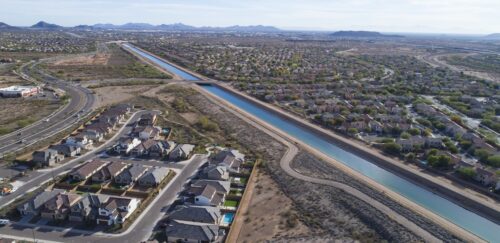 “The Central Arizona Project (CAP) said Tuesday it is looking to join a lawsuit against the federal government over proposed cuts to the Colorado River that it said are illegal. CAP General Manager Brenda Burman said officials requested in federal court in Nevada that CAP be added to the lawsuit that Nevada filed against the U.S. Department of the Interior and that Gov. Katie Hobbs and the Arizona Department of Water Resources joined earlier this month. She said CAP must have a seat at the table at the Colorado River negotiations so its “unique interests” are defended. During the summer, the Department of the Interior released its conservation plan, under which Arizona will take a cut of about 30% of its overall water allocation from the Colorado River. CAP, which delivers water to the Phoenix and Tucson areas, will take a 50% cut. … ” Read more from Arizona Family.
SEE ALSO: Central Arizona Project moves to join Colorado River water lawsuit against the federal government, from KJZZ
Arizona lawmakers have mixed views on Colorado River panel
“As Arizona and the American Southwest grapple with another year of historic drought conditions, one state senator believes he has an answer. Sen. Tim Dunn, R-Yuma, Ariz., told The Center Square that he plans on introducing legislation creating Arizona’s first Colorado River Commission when the Legislature reconvenes next year. Dunn’s proposal is being met by reactions varying from support to questions over what the commission would accomplish. Dunn’s goal is to have the new commission represent Arizona when the next round of negotiations takes place over the Colorado River Compact, which divides the seven states using the river by two basins. Arizona, California and Nevada are all part of the Lower Basin, and the mountainous states of Colorado, New Mexico, Utah and Wyoming make up the Upper Basin. … ” Read more from The Center Square.
Arizona’s water challenges trickle down to real estate agents, who increasingly face questions about the viability of living in the desert
“Arizona’s water challenges are trickling down to the real estate market, as agents increasingly face questions about the issue from potential homebuyers. In a recent presentation to Phoenix Realtors, Warren Tenney, executive director of the Arizona Municipal Water Users Association, called the prospect of a reduced Colorado River water supply a “paradigm shift.” The state is expected to lose about 30% of its Colorado River allocation starting next year under the new two-year agreement from the U.S. Bureau of Reclamation. “During this challenge, we cannot afford to give even the perception that any tap will go dry,” Tenney said in an Oct. 21 presentation. He said conservation alone won’t solve the problem; new water supplies will also be needed. But cities have been preparing for years, Tenney said. … ” Read more from KTAR.
Arizona data centers drive up water demand, but not the way you might think
“For all the talk about data centers, they can be pretty unassuming up close. Especially in Phoenix — a city full of office parks and industrial warehouses — it can be easy to drive by an unlabeled, windowless four-story building without knowing what’s inside. Drivers speeding by the Aligned Data Centers facility in north Phoenix probably don’t register the stout gray-and-blue building on the side of the freeway. Downtown, a QTS Data Centers building sits quietly between hotels and and parking garages, doing little to announce its presence to the throngs of college students, conference attendees and sports fans that walk by on any given day. Generally, researchers say, the amount of water used inside the four walls of these nondescript buildings is lower than most people think. However, they demand massive amounts of electricity, and power plants can use a lot of water while working to meet that demand. … ” Read more from KJZZ.
Western cropland may help slow wildfires, but millions of acres are disappearing
“Farmland across the West may be doing more than growing crops. It could also help stop wildfires in their tracks. Wildfires were five times more likely to be stopped by cropland than by grasslands, shrubs and forests, according to a new study led by the Reno-based Desert Research Institute. But researchers also found that millions of acres of Western cropland have disappeared over the past four decades. And as states look for ways to conserve water, losing more farmland could come with an unexpected wildfire risk. The study examined nearly 10,000 wildfires across 11 Western states between 1985 and 2024. Their findings were published in Environmental Research Letters. … ” Read more from KUNR.
Heavy rain boosts Colorado River in Grand Canyon to highest water level of 2026
“After an epically dry winter and a tense summer for the Colorado River, the autumn has delivered a rare boost to one of its most iconic stretches. In recent days, heavy rains pushed Colorado River flows through the Grand Canyon to their highest levels in years. The rains, which also caused flooding and destruction in communities throughout the Four Corners region, provided a crucial slug of water to the Grand Canyon’s unique ecosystems. River scientists are still gathering precise information about the exact volume of water surging through the river, but experts estimate flows reached at least 21,000 cubic feet per second. According to the U.S. Geological Survey’s measuring station above Diamond Creek, that marks the highest rate of flow since April 2023, when water managers deliberately sent a massive, sudden burst of water through the canyon. … ” Read more from KJZZ.
Lake Powell gained more than 10 feet this month. Will its run continue?
“This month’s wet weather has given Lake Powell a welcome boost, and it may continue to benefit from more wet weather. The nation’s second-largest reservoir, located along the Utah-Arizona border, remains less than a quarter full, but it has now gained more than 10 feet following a series of storms this month. It was listed at an elevation of a little more than 3,532 feet on Tuesday, according to the official U.S. Geological Survey site. That’s nearly 9 feet above its level last week, which was approximately 2½ feet above levels recorded at the beginning of the water year, Oct. 1. “We’ve definitely seen an excess of water into multiple reservoirs,” said Erin Walter, a hydrologist for the National Weather Service’s Grand Junction office, noting that boosts have also been reported along the Navajo Reservoir at the Colorado-New Mexico border. … ” Read more from KSL.
Denver Water wants to hire lawn patrol staff to enforce restrictions next summer
“Denver Water is pushing for rate increases for irrigation in expectation of drought restrictions continuing through at least the first part of next summer, as well as a new lawn patrol staff to enforce tight restrictions. The proposal up for a final board vote emphasizes higher rates for heavy water use, meant to lean more heavily on homeowners with large irrigated lawns who are draining resources amid the ongoing drought. Bill-payers for the average single-family home among Denver Water’s 1.5 million customers would see monthly charges rise 5.7% to $60.21. Suburban customers served by Denver Water’s resources would see their rates rise 7.9%, to an average of $61.57 a month. Denver Water says it is spotlighting the fairness issue by actually lowering the price for the first tier of use, which is based on average essential indoor use in a year. The top 5% of city users with profligate outdoor watering, meanwhile, will spend a total of $98 more in all of 2027. … ” Read more from the Colorado Sun.
In national water news today …
Extreme weather is creating a perfect storm of misinformation
“You likely remember the 2023 Maui wildfires, a tragedy that killed more than 100 people and destroyed nearly 2,000 homes, all but erasing a historic island community. You may also remember that the fires began when a broken power pole owned by the local electric utility sparked against dry vegetation on a windy day. But do you really know that? Were you there? How can you prove it? In the aftermath of the Maui fires, thousands of people across all the major social media platforms shared posts and videos alleging that the fires had a more sinister origin. They posited that the government had used a “direct energy weapon,” or a form of laser, to ignite the area. … Extreme weather events are always chaotic, and it’s always been easy for rumors to spread during moments of calamity, but the problem has never been as bad as it is now. The escalating pace of climate change has produced a series of supercharged wildfires, rapidly intensifying hurricanes, devastating drought, and sudden floods, all of which plunge communities into confusion and disarray. … ” Read more from Grist.

