Healthy Rivers and Landscapes provides critical habitat for salmon while also ensuring our farms, cities and rural communities remain vibrant
By Nicole Montna Van Vleck, President and CEO, Montna Farms
Think about the last time you enjoyed a piece of sushi or took a bite of pizza. The rice wrapped around your favorite sushi roll, the tomato sauce, the cheese, perhaps a few peppers or olives sprinkled on top of that perfect slice. Chances are, you weren’t thinking about the water, the soil, the farms or the people that helped bring those ingredients to your table. And it is highly unlikely you were thinking about the salmon swimming through Northern California’s rivers, the sandhill cranes wading through winter-flooded rice fields or the Giant Garter snakes slipping between the tule brush. But all of these vegetables, grains, people and wildlife are much more interconnected than one might imagine.
California’s rivers and landscapes sustain an extraordinary range of life and activity. Water flowing through the Sacramento River Basin helps salmon and other native fish survive, nourishes wetlands along the Pacific Flyway, grows food for families across the country and provides reliable supplies for homes and businesses. The same lands that produce rice, fruits, nuts and vegetables also offer valuable habitat for wildlife.
As a third-generation rice farmer in the Sacramento Valley, I’ve seen firsthand how agriculture and nature can thrive together. For nearly a century, my family has grown rice in this region, and over those generations, we’ve learned that our fields can do more than produce food for people. This land can also provide important habitat for fish and wildlife.
This interconnectedness is why California’s water future cannot be viewed through the lens of any single species, water use or environmental objective. Healthy rivers, thriving farms, abundant wildlife and vibrant communities are all part of the same picture.
That is the thinking behind the Healthy Rivers and Landscapes (HRL) Program, a collaborative approach being considered as part of California’s Bay-Delta Water Quality Control Plan update. Developed by public water agencies serving approximately 32 million Californians, the program combines strategically timed river flows, habitat restoration and science-based adaptive management to improve ecological conditions while sustaining the people and places that rely on California’s water.
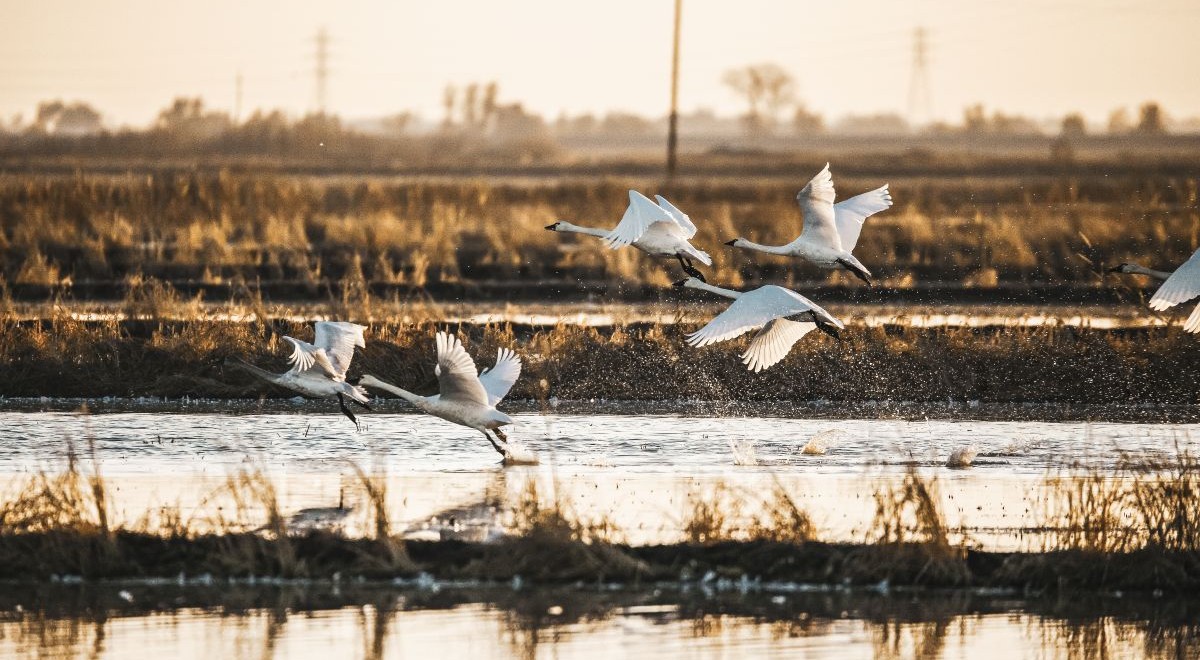
Consider the Sacramento Valley, where the relationship between agriculture and nature is visible throughout the year. Each fall and winter, millions of ducks, geese and shorebirds travel the Pacific Flyway, finding food and refuge in the region’s wetlands, wildlife refuges and seasonally flooded ricelands.
Decades ago, my father, Al Montna, recognized that our rice fields could do more for wildlife. He worked with neighboring farmers and conservation organizations, including Ducks Unlimited, to explore how flooding fields after harvest could provide habitat for migrating birds while helping manage left over rice straw. Those early efforts helped establish practices that have transformed Sacramento Valley ricelands into important surrogate wetland habitat along the Pacific Flyway.
Today, we’re building on that legacy by exploring how these same working lands can also benefit salmon. Research and restoration projects have shown that winter-flooded rice fields can provide rich feeding grounds for juvenile salmon, helping them grow bigger and stronger before continuing their journey toward the ocean. It’s another example of how a landscape managed to grow food can also support wildlife in remarkable ways.
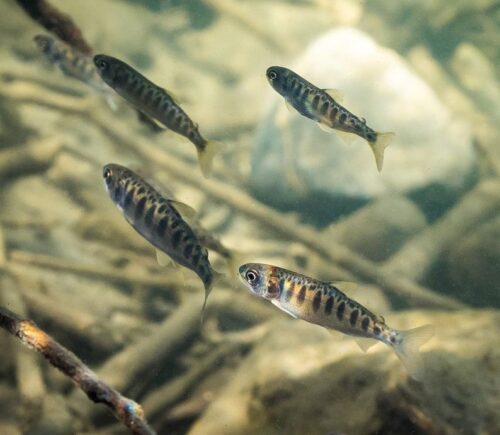 Along the region’s waterways, restored floodplains and side channels create places where juvenile salmon can find food and shelter. Strategically timed flows can connect fish to these habitats when they need them most. Together, these improvements recognize that a river’s health depends on more than the volume of water passing through it.
The benefits extend well beyond fish and birds. Thoughtful management of water and working lands can improve soil health, protect water quality and sustain orchards, field crops and ricelands. Rivers, lakes and accessible waterways also offer opportunities for fishing, boating, wildlife viewing and outdoor recreation, bringing people closer to nature while contributing to local tourism and businesses.
Reliable water supplies are equally essential to daily life. Families need clean water at home. Businesses require dependable supplies to operate and grow. Farmers rely on water to produce food, sustain jobs and anchor rural economies. Cities throughout California are connected to these same watersheds through the infrastructure that delivers water to millions of residents.
These needs are not separate from environmental stewardship. They reflect the reality of managing water in a state where people, agriculture and nature share the same resources. Our experience in the Sacramento Valley shows what is possible when we recognize these connections and manage our landscapes with multiple benefits in mind.
Delivering those benefits requires experience, investment in restoration, scientific monitoring and a willingness to adapt as conditions change. HRL builds on these principles, bringing together water managers, scientists, conservation organizations and communities to pursue measurable ecological improvements. Rather than relying on river flows alone, the program pairs additional water with habitat improvements designed to create the conditions fish and wildlife need to thrive.
As the State Water Resources Control Board considers the future of the Bay-Delta watershed, the opportunity reaches beyond a debate over water allocations. It is a chance to improve how California’s rivers and landscapes function for all the species, industries and communities connected to them.
The next time you enjoy a meal, sit on the banks of a river or watch migrating birds fill the winter sky, consider everything that makes those experiences possible. California’s water future should recognize and strengthen these relationships, creating healthier ecosystems, more resilient landscapes and a vibrant future for all Californians.
Note: The views and opinions expressed in this commentary are those of the author and do not necessarily reflect the official policy or position of Maven’s Notebook.
More coverage of the Voluntary Agreements on Maven’s Notebook …
Posted: November 3, 2026
By Dan Walters, Cal Matters This commentary was originally published by CalMatters. Sign up for their newsletters. Gray Davis became governor in 1999 and one of his first acts was to decree that there would be no major changes in water policy for eight years, which he assumed would be his two terms in office. Davis, a veteran politician who had climbed the political ladder one rung at a time, was well aware of the decades-long stalemate on the fundamental […]
Posted: October 30, 2026
Framework combines new flows, habitat restoration, science and enforceable rules to protect the Sacramento River and Delta From the State Water Board: In a landmark development driving large-scale ecosystem restoration and creating greater security for the heart of California’s water system, the State Water Resources Control Board today adopted modernized water quality protections for the Sacramento River and San Francisco Bay-Delta. The updated Water Quality Control Plan for the San Francisco Bay/Sacramento-San Joaquin Delta Watershed (Bay-Delta Plan) strengthens protections for […]
Posted: October 30, 2026
California approved Newsom’s Delta water rules, but Trump threatens to pull out and $740M with it. Water agencies that once backed the deal call it too strict; environmentalists say it’s too weak. By Rachel Becker, Cal Matters This story was originally published by CalMatters. Sign up for their newsletters. California water regulators have approved a new plan overhauling how farms and cities take water from the Sacramento-San Joaquin Delta and rivers that feed it, setting up the next fight over Gov. […]
Posted: October 30, 2026
Under the changes, water agencies can commit to voluntary agreements governing water usage that some environmentalists and tribes argue undermine the health of the Bay-Delta system. By Alan Riquelmy, Courthouse News Service California’s water board late Thursday approved major changes to a massive water plan that drew strong emotions, and at times sharp rebukes, from hundreds of stakeholders including water agencies, conservationists and tribes. The plan sets water quality goals for the San Francisco Bay/Sacramento-San Joaquin Delta, a massive watershed […]
Posted: October 30, 2026
Groups condemn the Newsom administration’s voluntary agreement framework, pledging to fight for water rights, environmental protections, and due process From Restore the Delta: In anticipation of the State Water Resources Control Board’s vote to adopt the updated Bay-Delta Plan, tribal leaders, environmental advocates, and Delta residents gathered at a press conference to condemn the decision and pledge further action to defend California’s water rights, protect critical ecosystems, and ensure meaningful public participation in decisions affecting the state’s water future. Representatives […]
Posted: October 29, 2026
The Bay-Delta is a watershed that provides drinking and municipal water to some 30 million people, along with irrigation water for 4 million acres. From the Courthouse News Service People and agencies facing the effects of proposed changes to a major California water plan spoke in waves Wednesday, making their cases to the state’s water board. The State Water Resources Control Board is proposing amendments to the San Francisco Bay/Sacramento-San Joaquin Delta water quality control plan. The plan sets water […]
Posted: October 28, 2026
By Alex Rabidoux, Assistant General Manager, Solano County Water Agency For decades, California has debated how much water should flow through its rivers to help recover struggling salmon populations. But an equally important question deserves attention: What happens to that water once it enters the river and how much ecological benefit does it actually provide? Salmon evolved in rivers connected to expansive floodplains, wetlands and side channels. Seasonal flows created shallow, food-rich habitats where juvenile fish could feed, grow and […]
Posted: October 28, 2026
By the Delta Tribal Environmental Coalition, consisting of the Shingle Springs Band of Miwok Indians, Winnemem Wintu Tribe, Little Manila Rising, and Restore the Delta. California has formally apologized to tribes for state-sanctioned atrocities and committed to improving relationships between the state and tribal governments. Our elected leaders have also passed numerous laws intended to advance environmental justice outcomes. Yet, when it comes to decisions for the Sacramento-San Joaquin watershed, the Newsom administration has thrown tribes and environmental justice communities […]
Posted: October 28, 2026
From the Golden Gate Salmon Association Later this week, the State Water Resources Control Board is likely to adopt a final update to the Bay-Delta Plan. This plan is the state’s key document to protect the natural resources in the vast Bay-Delta estuary, as well as its Central Valley tributary rivers. This is the largest freshwater ecosystem in California and the largest estuary on the West Coast. Sacramento Valley salmon runs are the backbone of salmon fishing in California and […]

Posted: October 27, 2026
Healthy Rivers and Landscapes provides critical habitat for salmon while also ensuring our farms, cities and rural communities remain vibrant By Nicole Montna Van Vleck, President and CEO, Montna Farms Think about the last time you enjoyed a piece of sushi or took a bite of pizza. The rice wrapped around your favorite sushi roll, the tomato sauce, the cheese, perhaps a few peppers or olives sprinkled on top of that perfect slice. Chances are, you weren’t thinking about the […]
View archive


GUEST COMMENTARY: Healthy Rivers and Landscapes: A healthier future for all of California
Healthy Rivers and Landscapes provides critical habitat for salmon while also ensuring our farms, cities and rural communities remain vibrant
By Nicole Montna Van Vleck, President and CEO, Montna Farms
Think about the last time you enjoyed a piece of sushi or took a bite of pizza. The rice wrapped around your favorite sushi roll, the tomato sauce, the cheese, perhaps a few peppers or olives sprinkled on top of that perfect slice. Chances are, you weren’t thinking about the water, the soil, the farms or the people that helped bring those ingredients to your table. And it is highly unlikely you were thinking about the salmon swimming through Northern California’s rivers, the sandhill cranes wading through winter-flooded rice fields or the Giant Garter snakes slipping between the tule brush. But all of these vegetables, grains, people and wildlife are much more interconnected than one might imagine.
California’s rivers and landscapes sustain an extraordinary range of life and activity. Water flowing through the Sacramento River Basin helps salmon and other native fish survive, nourishes wetlands along the Pacific Flyway, grows food for families across the country and provides reliable supplies for homes and businesses. The same lands that produce rice, fruits, nuts and vegetables also offer valuable habitat for wildlife.
As a third-generation rice farmer in the Sacramento Valley, I’ve seen firsthand how agriculture and nature can thrive together. For nearly a century, my family has grown rice in this region, and over those generations, we’ve learned that our fields can do more than produce food for people. This land can also provide important habitat for fish and wildlife.
This interconnectedness is why California’s water future cannot be viewed through the lens of any single species, water use or environmental objective. Healthy rivers, thriving farms, abundant wildlife and vibrant communities are all part of the same picture.
That is the thinking behind the Healthy Rivers and Landscapes (HRL) Program, a collaborative approach being considered as part of California’s Bay-Delta Water Quality Control Plan update. Developed by public water agencies serving approximately 32 million Californians, the program combines strategically timed river flows, habitat restoration and science-based adaptive management to improve ecological conditions while sustaining the people and places that rely on California’s water.
Consider the Sacramento Valley, where the relationship between agriculture and nature is visible throughout the year. Each fall and winter, millions of ducks, geese and shorebirds travel the Pacific Flyway, finding food and refuge in the region’s wetlands, wildlife refuges and seasonally flooded ricelands.
Decades ago, my father, Al Montna, recognized that our rice fields could do more for wildlife. He worked with neighboring farmers and conservation organizations, including Ducks Unlimited, to explore how flooding fields after harvest could provide habitat for migrating birds while helping manage left over rice straw. Those early efforts helped establish practices that have transformed Sacramento Valley ricelands into important surrogate wetland habitat along the Pacific Flyway.
Today, we’re building on that legacy by exploring how these same working lands can also benefit salmon. Research and restoration projects have shown that winter-flooded rice fields can provide rich feeding grounds for juvenile salmon, helping them grow bigger and stronger before continuing their journey toward the ocean. It’s another example of how a landscape managed to grow food can also support wildlife in remarkable ways.
The benefits extend well beyond fish and birds. Thoughtful management of water and working lands can improve soil health, protect water quality and sustain orchards, field crops and ricelands. Rivers, lakes and accessible waterways also offer opportunities for fishing, boating, wildlife viewing and outdoor recreation, bringing people closer to nature while contributing to local tourism and businesses.
Reliable water supplies are equally essential to daily life. Families need clean water at home. Businesses require dependable supplies to operate and grow. Farmers rely on water to produce food, sustain jobs and anchor rural economies. Cities throughout California are connected to these same watersheds through the infrastructure that delivers water to millions of residents.
These needs are not separate from environmental stewardship. They reflect the reality of managing water in a state where people, agriculture and nature share the same resources. Our experience in the Sacramento Valley shows what is possible when we recognize these connections and manage our landscapes with multiple benefits in mind.
Delivering those benefits requires experience, investment in restoration, scientific monitoring and a willingness to adapt as conditions change. HRL builds on these principles, bringing together water managers, scientists, conservation organizations and communities to pursue measurable ecological improvements. Rather than relying on river flows alone, the program pairs additional water with habitat improvements designed to create the conditions fish and wildlife need to thrive.
As the State Water Resources Control Board considers the future of the Bay-Delta watershed, the opportunity reaches beyond a debate over water allocations. It is a chance to improve how California’s rivers and landscapes function for all the species, industries and communities connected to them.
The next time you enjoy a meal, sit on the banks of a river or watch migrating birds fill the winter sky, consider everything that makes those experiences possible. California’s water future should recognize and strengthen these relationships, creating healthier ecosystems, more resilient landscapes and a vibrant future for all Californians.
More coverage of the Voluntary Agreements on Maven’s Notebook …
DAN WALTERS: California adopted a new water plan. It’s unlikely to end the state’s water wars
By Dan Walters, Cal Matters This commentary was originally published by CalMatters. Sign up for their newsletters. Gray Davis became governor in 1999 and one of his first acts was to decree that there would be no major changes in water policy for eight years, which he assumed would be his two terms in office. Davis, a veteran politician who had climbed the political ladder one rung at a time, was well aware of the decades-long stalemate on the fundamental […]
PRESS RELEASE: State Water Board adopts innovative new model to protect California’s Bay-Delta, water and wildlife
Framework combines new flows, habitat restoration, science and enforceable rules to protect the Sacramento River and Delta From the State Water Board: In a landmark development driving large-scale ecosystem restoration and creating greater security for the heart of California’s water system, the State Water Resources Control Board today adopted modernized water quality protections for the Sacramento River and San Francisco Bay-Delta. The updated Water Quality Control Plan for the San Francisco Bay/Sacramento-San Joaquin Delta Watershed (Bay-Delta Plan) strengthens protections for […]
CAL MATTERS: Has the Trump administration doomed Newsom’s water plan?
California approved Newsom’s Delta water rules, but Trump threatens to pull out and $740M with it. Water agencies that once backed the deal call it too strict; environmentalists say it’s too weak. By Rachel Becker, Cal Matters This story was originally published by CalMatters. Sign up for their newsletters. California water regulators have approved a new plan overhauling how farms and cities take water from the Sacramento-San Joaquin Delta and rivers that feed it, setting up the next fight over Gov. […]
COURTHOUSE NEWS: California water board passes major water plan after marathon session
Under the changes, water agencies can commit to voluntary agreements governing water usage that some environmentalists and tribes argue undermine the health of the Bay-Delta system. By Alan Riquelmy, Courthouse News Service California’s water board late Thursday approved major changes to a massive water plan that drew strong emotions, and at times sharp rebukes, from hundreds of stakeholders including water agencies, conservationists and tribes. The plan sets water quality goals for the San Francisco Bay/Sacramento-San Joaquin Delta, a massive watershed […]
RESTORE THE DELTA: Tribes and environmental groups slam State Water Board’s anticipated adoption of updated Bay-Delta Plan, vow further action
Groups condemn the Newsom administration’s voluntary agreement framework, pledging to fight for water rights, environmental protections, and due process From Restore the Delta: In anticipation of the State Water Resources Control Board’s vote to adopt the updated Bay-Delta Plan, tribal leaders, environmental advocates, and Delta residents gathered at a press conference to condemn the decision and pledge further action to defend California’s water rights, protect critical ecosystems, and ensure meaningful public participation in decisions affecting the state’s water future. Representatives […]
COURTHOUSE NEWS: California water board hears competing views on major water plan update
The Bay-Delta is a watershed that provides drinking and municipal water to some 30 million people, along with irrigation water for 4 million acres. From the Courthouse News Service People and agencies facing the effects of proposed changes to a major California water plan spoke in waves Wednesday, making their cases to the state’s water board. The State Water Resources Control Board is proposing amendments to the San Francisco Bay/Sacramento-San Joaquin Delta water quality control plan. The plan sets water […]
COMMENTARY: The science is clear: Restoring California’s salmon populations requires more than just water
By Alex Rabidoux, Assistant General Manager, Solano County Water Agency For decades, California has debated how much water should flow through its rivers to help recover struggling salmon populations. But an equally important question deserves attention: What happens to that water once it enters the river and how much ecological benefit does it actually provide? Salmon evolved in rivers connected to expansive floodplains, wetlands and side channels. Seasonal flows created shallow, food-rich habitats where juvenile fish could feed, grow and […]
COMMENTARY: Reject the discriminatory, illegitimate, and harmful Voluntary Agreements
By the Delta Tribal Environmental Coalition, consisting of the Shingle Springs Band of Miwok Indians, Winnemem Wintu Tribe, Little Manila Rising, and Restore the Delta. California has formally apologized to tribes for state-sanctioned atrocities and committed to improving relationships between the state and tribal governments. Our elected leaders have also passed numerous laws intended to advance environmental justice outcomes. Yet, when it comes to decisions for the Sacramento-San Joaquin watershed, the Newsom administration has thrown tribes and environmental justice communities […]
GUEST COMMENTARY: Fatal flaws in the State Water Board’s Draft Bay-Delta Plan Update
From the Golden Gate Salmon Association Later this week, the State Water Resources Control Board is likely to adopt a final update to the Bay-Delta Plan. This plan is the state’s key document to protect the natural resources in the vast Bay-Delta estuary, as well as its Central Valley tributary rivers. This is the largest freshwater ecosystem in California and the largest estuary on the West Coast. Sacramento Valley salmon runs are the backbone of salmon fishing in California and […]
GUEST COMMENTARY: Healthy Rivers and Landscapes: A healthier future for all of California
Healthy Rivers and Landscapes provides critical habitat for salmon while also ensuring our farms, cities and rural communities remain vibrant By Nicole Montna Van Vleck, President and CEO, Montna Farms Think about the last time you enjoyed a piece of sushi or took a bite of pizza. The rice wrapped around your favorite sushi roll, the tomato sauce, the cheese, perhaps a few peppers or olives sprinkled on top of that perfect slice. Chances are, you weren’t thinking about the […]
View archive
Tags