

Several news sources featured in the Daily Digest may limit the number of articles you can access without a subscription. However, gift articles and open-access links are provided when available. For more open access California water news articles, explore the main page at MavensNotebook.com.
On the calendar today …
- MEETING: SAFER Drinking Water Program: Advisory Group from 9:30am to 4:30pm. Agenda items include Annual Needs Assessment Dashboard, Draft Fund Expenditure Plan Fiscal Year 2026-2027, and SAFER Program Updates and Announcements. To watch and participate in the meeting, register at https://bit.ly/2026_AGM3
- WEBINAR SERIES: Expanding Recharge and Preparing for Wet Weather from 11am to 12pm. Very strong El Niño conditions are expected to develop this year. Understanding available forecasting tools will help water managers prepare for an active wet season. Brian Kawzenuk, with the Center for Western Weather and Water Extremes, will share information on atmospheric river forecasting tools and Mike Mierzwa, with the California Department of Water Resources, will share how to use the California Nevada River Forecast Center website runoff and flow forecasts. These are important tools for water managers to plan for and manage potential flood events. Meagan Wylie, Flood-MAR Network Administrator, will also share the newly updated Flood-MAR Hub where a collection of resources and guidance on using floodwaters for recharge can be found. Click here to register. Click here for a flyer.
In California water news today …
California’s oceans have become shockingly warm. And strange things are happening
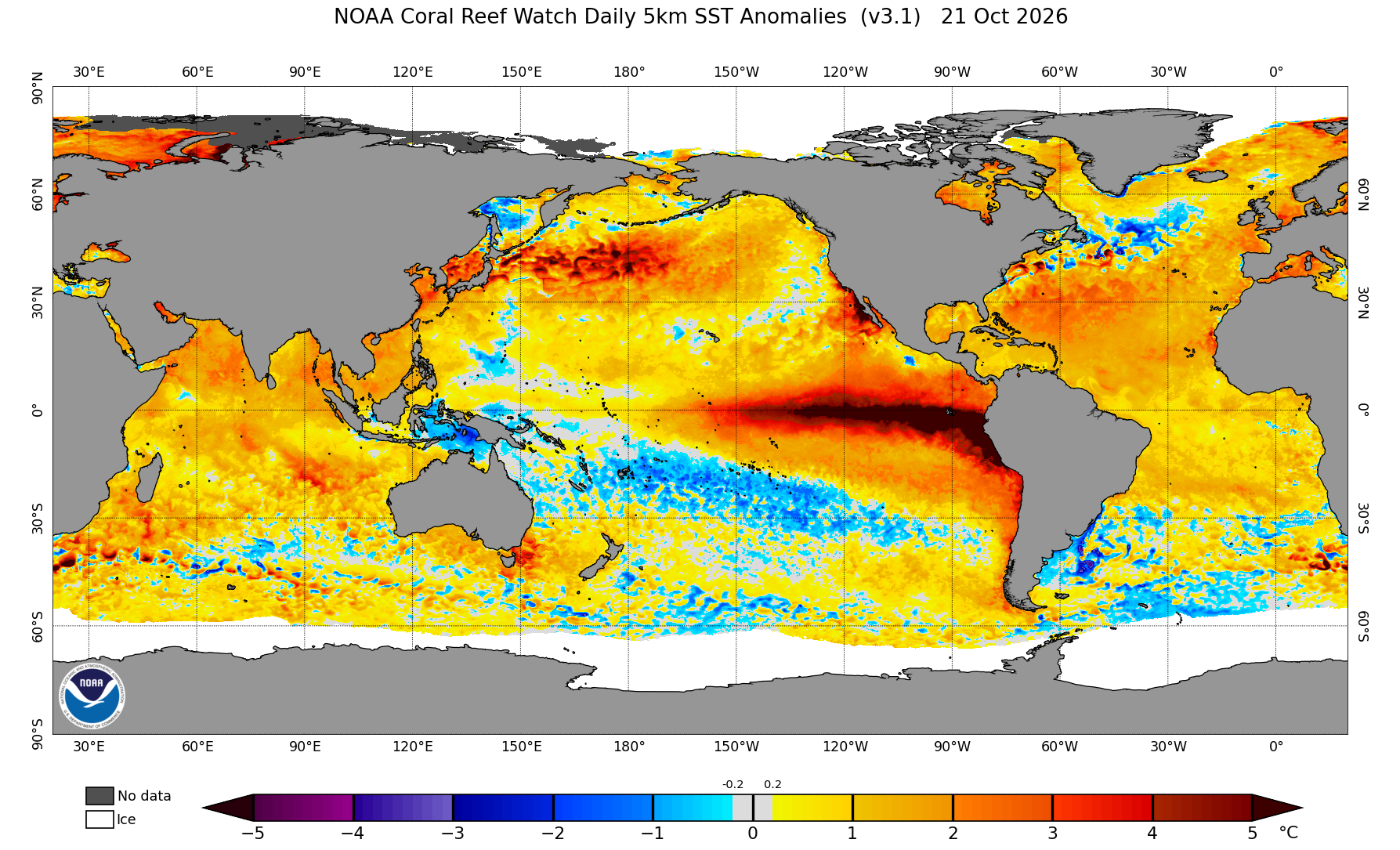 “Ocean temperatures off the California coast are surging to shockingly high levels as a historic El Niño grows even stronger. On Monday, a sea surface temperature of 74.5 degrees Fahrenheit was measured at the Scripps Pier in San Diego. It’s the highest temperature measured this late in the year at the pier in more than a century of records. Daily records are being set as far north as Point Reyes, with temperatures running as high as 9 degrees above normal in Monterey and Santa Barbara. The unusual heat is drawing tropical fish coastward, killing kelp forests, pushing tides to record high heights and providing extra fuel for storms. Here are things scientists are monitoring with the record heat. … ” Read more from the San Francisco Chronicle. | Read via Yahoo News.
Here’s the upside of a potentially historic El Niño in California
“A potentially historic El Niño could bring some much-needed benefits to California this winter, including increased rainfall, improved reservoir levels, and a healthier mountain snowpack after years of drought concerns. A “super” El Niño continues to gain strength, according to The Hill. If the climate phenomenon continues to build at this pace, it could become the strongest El Niño we’ve seen in more than 75 years. Forecasters predict much of California could see above-average precipitation and temperatures this winter. It’s unclear how the weather things will pan out this fall and winter, but similar events in past El Niño years have brought torrential downpours, coastal flooding, mudslides, power outages, and giant waves. … ” Read more from KTLA.
El Niño: Which Northern California places are most at risk this winter?
“By now, most Northern Californians know that there are historically strong El Niño conditions in the Pacific Ocean which are increasing the chances for a rough and very wet winter. But some places have more risk than others. Low-lying coastal and bayfront areas — including the beaches at Santa Cruz, the eastern approach to the Bay Bridge, Alviso in San Jose and the runways at San Francisco and Oakland airports — are particularly vulnerable to floods and damage this winter, according to a new report from UC Davis. Sea levels of 2 to 3 feet higher than normal this winter due to El Niño conditions, on top of a high tide during a big storm, could flood roads, wreck piers and harbors, erode away beaches and damage homes in low-lying areas, along with putting wildlife habitat underwater, said Fraser Shilling, the author of the study, and director of the Road Ecology Center at the UC Davis Institute of Transportation Studies. … ” Read more from the San Jose Mercury News.
California ups El Niño prep after FEMA tells states to handle disaster response
“California announced it is ramping up resources to help communities across the state prepare for potentially devastating storms and flooding spurred by a record ongoing El Niño, according to a news release shared first with The Washington Post. Emergency officials said new planned actions are also in response to President Donald Trump’s administration’s efforts to push more disaster response responsibility onto states. On Tuesday, Politico reported that Federal Emergency Management Agency Administrator Cameron Hamilton told an audience of emergency managers at a national conference that states needed to ready their budgets quickly to be able to handle disasters on their own, and to not rely as heavily on federal declarations. … ” Read more from the Washington Post.
El Niño effects on California salmon
“In a September 28, 2025 post, I was optimistic about the 2026 salmon season following wetter years 2023-2025. I expected strong recruitment from the tens of millions of hatchery smolts released in 2023 and 2024, in combination with the almost complete closure of salmon fishing in 2023-2025. What I failed to sufficiently account for was the 2023- El Niño and the companion Blob, though I did recognize some concerns. Now we are facing a projected “Super El Niño” in 2026 and 2027. I should have anticipated potential adverse effects on the salmon ready to make their runs in 2026. Six strong El Niños have occurred in the last five decades, including the ongoing El Niño in 2026. Salmon escapement to spawning rivers in the Central Valley was depressed during or following El Niño years (Figures 2 and 3). It now appears that the 2026 forecasted escapement may be depressed because of the Super El Niño. Salmon returns to date are less than expected. … ” Read more from the California Fisheries blog.
Tire-derived pollutant found at elevated levels in critical fish habitats
“Endangered coho salmon and steelhead trout live and spawn in habitats surrounded by human activity, such as the San Francisco Bay area. During a recent storm, researchers found high levels of the tire-derived pollutant 6PPD-quinone in roadway outflows, creeks, and rivers. They report in ACS’ Environmental Science & Technology Letters that many samples exceeded levels considered fatal to juvenile salmon. Treating stormwater runoff and creating less toxic or non-toxic tire materials could make healthier environments. Rubber tires contain a protectant chemical, called 6PPD, that reacts with ozone in the air and forms 6PPD-quinone. Wind and rain transport tire debris and 6PPD-quinone into waterways, where it’s highly toxic to several fish species, including brook and rainbow trout. Coho salmon and steelhead trout are also highly susceptible to 6PPD-quinone, but not much is known about their exposure to the pollutant at the southern end of where the fish live along the U.S. West Coast. So, Ed Kolodziej and colleagues wanted to measure its concentration in critical watersheds where the fishes live and spawn along the Central California coast. … ” Read more from the American Chemical Society.
Penguin-like seabirds are starving off California, and El Niño may be why, clinic says
“Swaddled in a towel, a small and stout tuxedoed seabird sat on an exam table waiting for blood work on Oct. 12. By then, this once-emaciated common murre had been receiving treatment from Pacific Wildlife Care in California for more than a week, and he was almost healthy enough to be returned to the wild. From Sept. 1 to Monday, the nonprofit wildlife rehabilitation clinic Pacific Wildlife Care admitted 867 common murres for care — more than ever before, development coordinator Kelley Boland said. “It’s the biggest influx of common murres we’ve ever seen,” she said. Most of those seabirds arrive at the clinic emaciated as part of what seems to be a mass starvation event off California’s Central Coast, Boland said. … ” Read more from the Sacramento Bee.
State’s water ‘switch yard’: 1,100 miles of Delta levees
“Gazing down from atop 3,489-foot high Mt. Diablo, the Sacramento-San Joaquin Delta levees below create a maze like patchwork of nearly 60 islands and tracts surrounded by water flowing toward the San Francisco Bay. The 1,100 linear miles of levees was created after the Gold Rush to reclaim vast wetlands for farming. The soil — laden with extremely rich nutrients — is considered among the most prime farmland in California. The levees were made by essentially dredging the adjacent river. Today, as various weather models call for a strong El Nino weather event this winter that means warmer temperatures and more precipitation than normal, the Delta is — for the most part — protected by stretches of levees that haven’t changed much for 160 years. … ” Read more from the Manteca Bulletin.
California recycled water use rises as state tracks long-term goals
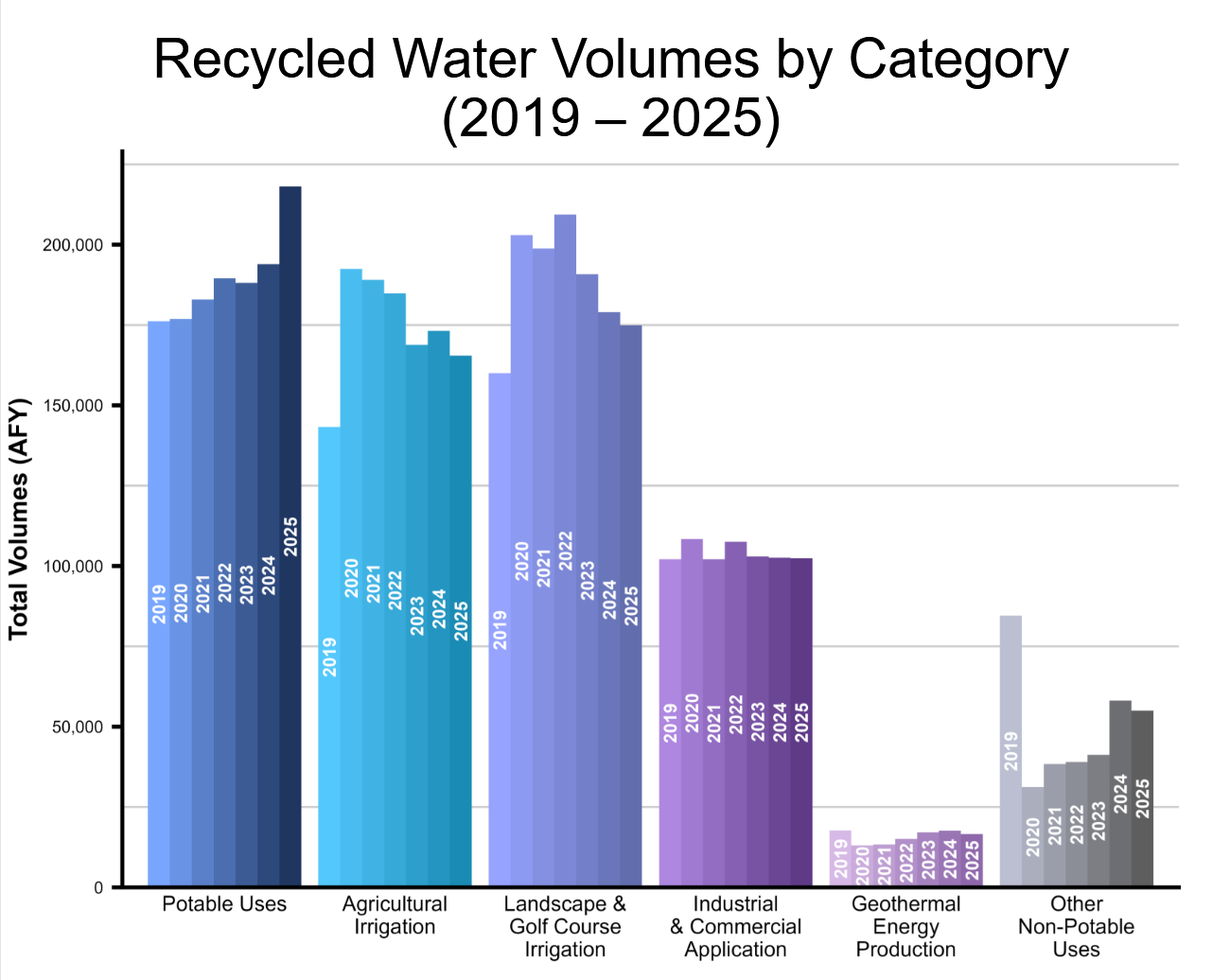 “At its October 6 meeting, the State Water Board reviewed the latest statewide data on wastewater and recycled water production. Kaylah Marcello, a research data specialist with the Recycled Water and Desalination Unit in the State Water Board’s Division of Water Quality, presented results from the seventh year of annual volumetric reporting. The findings provide an updated view of reporting compliance, recycled water use, regional trends, and progress toward California’s long-term recycling goals. California has collected recycled water data since the 1970s, initially through periodic surveys rather than consistent annual reporting. Legislation, the recycled water policy, and the water supply strategy established goals to guide planning and infrastructure investment. To support consistent progress tracking, annual volumetric reporting became mandatory under the 2018 amendment to the recycled water policy. … ” Read more from Maven’s Notebook.
California water crisis, rising costs and crop protection take center stage
“On today’s episode of the AgNet News Hour, Edward Ring, director of water and energy policy at the California Policy Center, joined Nick Papagni for Part 1 of a two-part conversation about California’s water infrastructure, rising costs and the policies affecting the state’s agricultural economy. … Ring argued that California’s water challenges stem partly from decades of insufficient investment in major infrastructure projects. While acknowledging improvements in conservation and water-use efficiency, he said the state needs to reconsider its approach to expanding water supplies. “We stopped doing really big things 50 years ago,” Ring said, pointing to the reservoirs, aqueducts and other infrastructure developed during the previous century. … ” Read more and listen to podcast from AgNet West.
California cities pull the plug on data centers after state regulations don’t scale up fast enough
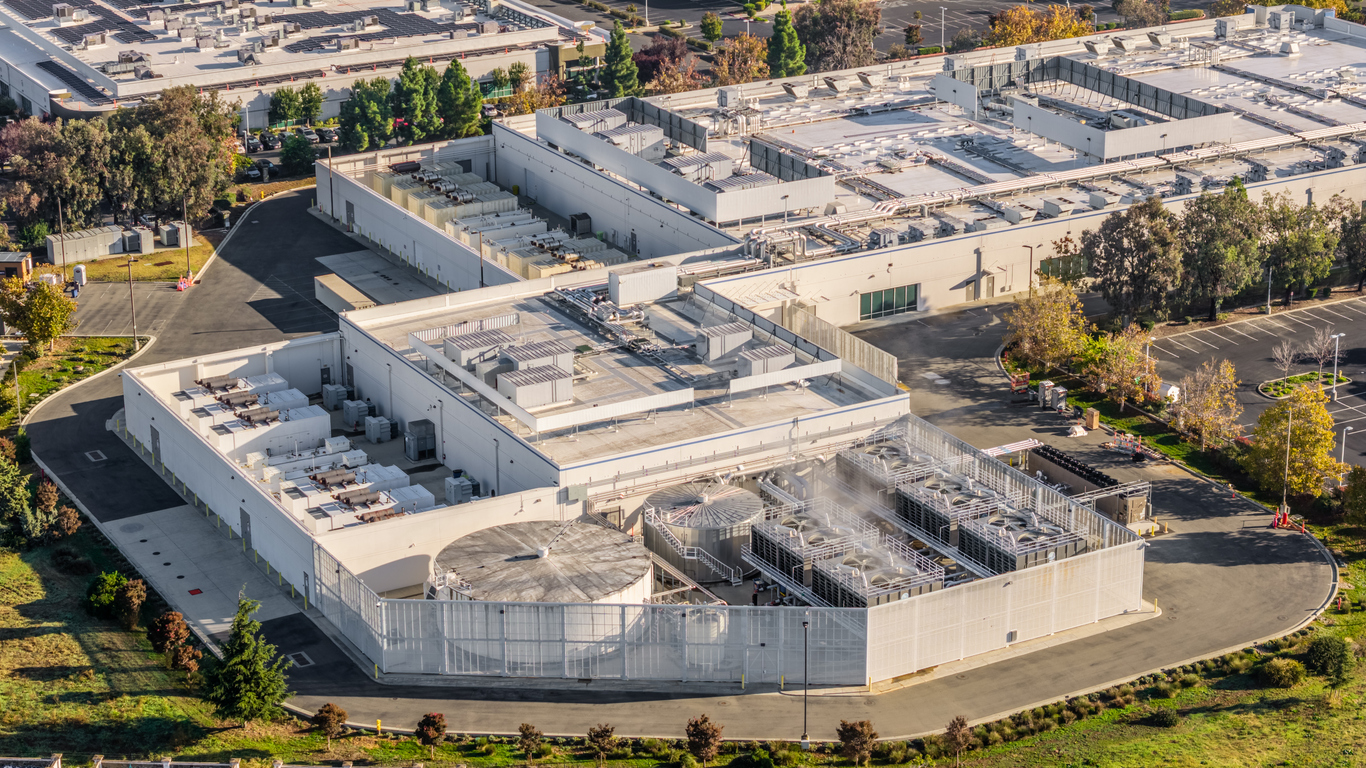
“Although California lawmakers recently passed a suite of laws intended to bring transparency to the development of new data centers, local communities across the state are signaling that disclosure isn’t enough. California currently ranks third among U.S. states in overall data center density, according to independent trackers like the US Data Center Map, with the state home to 366 of such facilities that are either fully operational, under construction, or moving through the planning process. Local elected officials are proposing data center moratoriums to slow that momentum — if not stop it in its tracks. … Across California, at least 26 resolutions, moratoriums, or bans on data center development have been passed or proposed since June, according to the D.C.-based non-governmental organization Food & Water Watch, which tracks similar proposals nationwide. The escalating pushback underscores a widening gap between state-level regulation and municipal action. … ” Read more from Cal Matters.
SEE ALSO: AI data centers turn politically toxic as tech giants court skeptical communities, from the LA Times
Twenty years after California’s landmark climate law, the state is not on track to meet its targets
“Dozens of California’s most influential lawmakers, environmentalists and policy experts gathered in Los Angeles this month to mark the 20th anniversary of the landmark Global Warming Solutions Act, which put the state on a science-driven path to address climate change. Two decades after the passage of the nation-leading bill, California is not on track to meet its future targets, new data show. When Assembly Bill 32 passed in 2006, it set in motion something never done before: a statewide effort to inventory and curb greenhouse gas emissions through legally mandated targets. It paved the way for the creation of California’s signature carbon market program, cap-and-invest. It also mandated returning emissions to their 1990 levels by 2020 — a target California met six years ahead of schedule. Annual emissions in 1990 were about 431 million metric tons of carbon dioxide equivalent. … ” Read more from the LA Times.
Voluntary agreements … yes or no?
As the State Water Board moves toward a vote on the Voluntary Agreements, known as the Healthy Rivers and Landscapes Program, Maven’s Notebook will publish commentaries this week examining the many sides of the proposal.
Healthy Rivers and Landscapes: A better path forward for the Bay-Delta
Roger Cornwell, Chair, Northern California Water Association, writes, “California has an opportunity to move water policy toward a healthier and more resilient future. As the State Water Board considers the update for the Bay-Delta Water Quality Control Plan (Plan), Northern California Water believes the Healthy Rivers and Landscapes approach is the best path forward—a comprehensive strategy that combines river flows, habitat restoration and floodplain reactivation, science, and collaboration to support fish and wildlife while sustaining our communities and working lands. As the Board considers its Plan update, it faces a stark choice that matters for all Californias. The Board’s proposed update provides two pathways: Healthy Rivers and Landscapes (Healthy Rivers) for participating water users, and an old-fashioned regulatory approach that requires a percentage of unimpaired flow to remain in rivers. Modern science suggests that the Healthy Rivers pathway offers a stronger foundation for achieving lasting environmental improvements and greater water supply stability throughout California. Contrast this with the unimpaired flow approach, which would be devastating to Californians and our environment and landscape. … ” Continue reading this commentary.
Why Newsom’s Voluntary Agreements won’t work, part 3: A fundamentally flawed process
Gary Bobker, the Program Director for Friends of the River, and Christie Ralston, an Associate Attorney for San Francisco Baykeeper, write, “The Water Board is currently poised to adopt the Voluntary Agreement (VA) Program for the Bay-Delta Water Quality Control Plan despite the fact that the VA Program provides far too little water and habitat and is highly unlikely to deliver on its stated promises, according to the Water Board’s own record. How did we get to this point? The short answer: Governor Newsom has had his thumb on the scale in favor of the VA Program from the very beginning of his first term. Communities with the most to lose from a bad deal–including Tribal, fishing, Delta, and environmental interests–were excluded from the process. And the agencies responsible for reviewing the contents of the VA Program were routinely hamstrung and manipulated. … ” Continue reading this commentary.
In other commentary today …
Save our lawns: Reform AB 1572
Edward Ring, director of water and energy policy for the California Policy Center, writes, “Californians are within months, if not weeks, of getting what could be the most thorough statewide drenching in decades, as a “super” El Nino grows in the Pacific. Expect hundreds (plural) of millions of acre feet of water to dump onto watersheds across the state this winter, as California experiences its fifth year in a row with above average rainfall. There’s no water shortage in California. There never was. The solution to water scarcity is, and has always been, figuring out how to save enough water during wet winters to still easily supply all our needs during droughts. And even in drought years, around 100 million acre feet falls onto the state. This is why, in a state where precipitation whipsaws between years with ridiculous over-abundance and years where there is barely enough, the worst possible strategy is to invest in lowering demand, instead of investing in increasing supply. But that’s exactly what California’s state legislature is doing. The latest example of this arrives on January 1, when AB 1572 begins to take effect. Rolling out over three years, by 2029 it will be illegal to use potable water to irrigate “nonfunctional” grass on commercial, institutional, and industrial properties. … ” Continue reading this commentary.
Yes on Prop 45: A more affordable California starts with reliable water
San Joaquin County Farm Bureau Executive Director Andrew Genasci writes, “Water is at the core of almost every challenge that farmers face across California. In wet years, billions of gallons of water flow through our rivers and out to sea while farmers and communities struggle to prepare for the next drought. We know we need more reservoirs, groundwater recharge facilities and other infrastructure to capture and store water when it’s available. Yet California’s outdated permitting system makes building that infrastructure unnecessarily slow, expensive and difficult. That is why the San Joaquin County Farm Bureau supports Proposition 45, the Building an Affordable California Act. We represent over 1,400 family farms and ranches across San Joaquin County, all of which depend on reliable water supplies. Proposition 45 would help deliver that supply by building essential water projects faster and more affordably. … ” Read more from the San Joaquin Valley Sun.
SEE ALSO: Prop 45 would make major changes to CEQA. But many CEQA reformers don’t support it, from Joe Garfoli at the San Francisco Chronicle
Priorities for California’s water: Advice for the incoming governor
“California is in a moment of political transition, as one governor leaves office and another prepares to take over leadership of this remarkable state that nearly 40 million people call home. The new governor will face a small army of advocates championing a variety of causes. And few issues are as fundamental to life in California as water. The state’s economy has long relied on water as a key ingredient for growth. Amazing feats of engineering have transported water across the state, causing deserts to bloom and cities to flourish. But the natural world—the source of the state’s water supply—has suffered. The state is now reckoning with the costs of over 175 years of land and water development, which has affected everything from ecosystems to water quality. Its highly engineered water grid is showing its age. And the changing climate is adding layers of complexity as snowpack dwindles, weather whiplash intensifies, and western states struggle to share the depleted waters of the Colorado River. … ” Read more from the PPIC.
In regional water news and commentary today …
NORTH COAST
PG&E plans November repair of void at Cape Horn Dam in Mendocino County
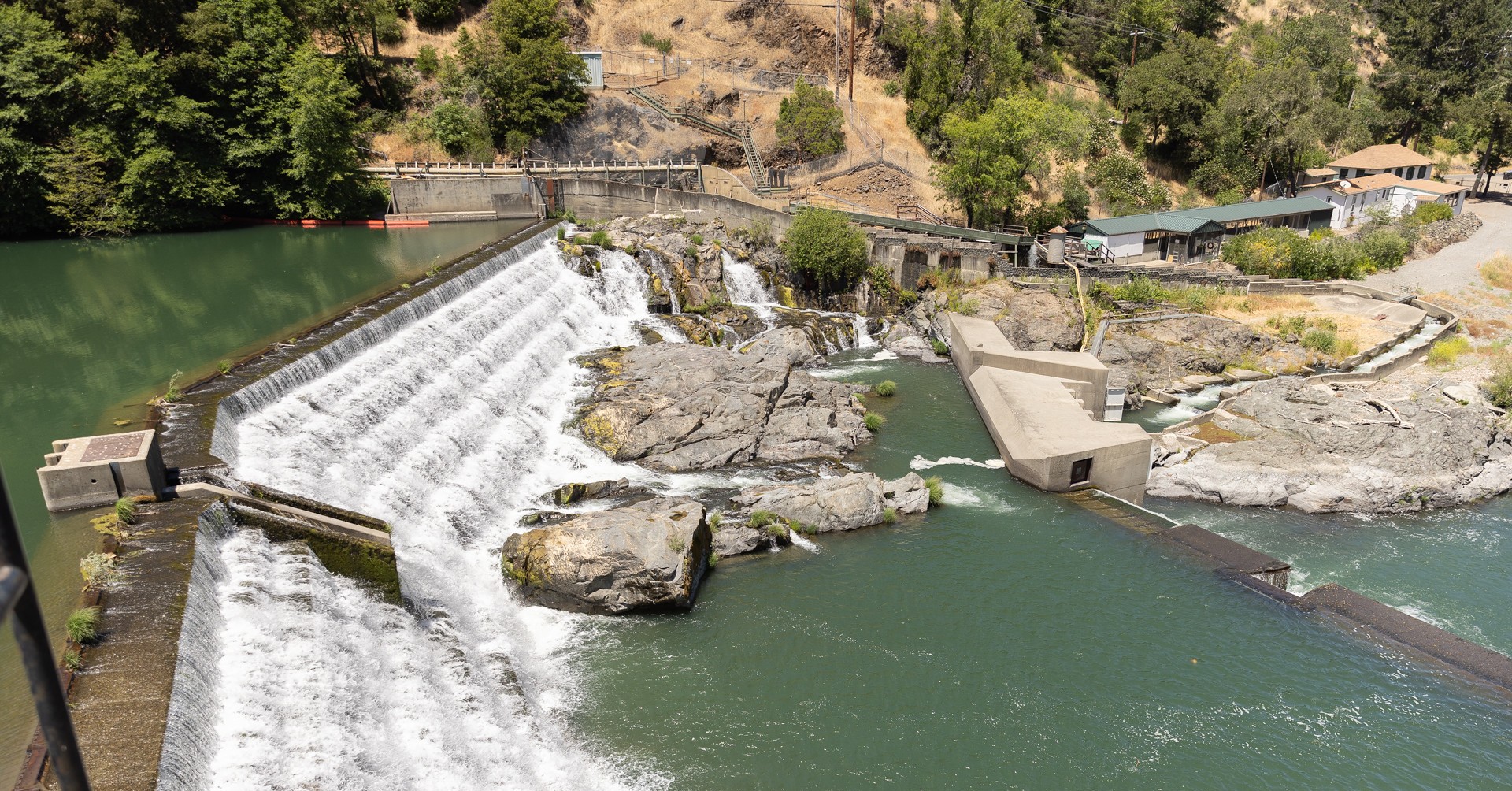
“PG&E plans to start repairing a void at the base of Cape Horn Dam by Nov. 20, according to a letter the utility filed with federal dam-safety regulators Oct. 6. Cape Horn Dam holds back Van Arsdale Reservoir on the Eel River in Mendocino County. An intake 400 feet upstream of the dam sends Eel River water into the Potter Valley Project’s tunnels. The water runs to the Potter Valley powerhouse, which empties into the East Fork of the Russian River. PG&E is obligated to deliver up to 19,000 acre-feet of that water to the Potter Valley Irrigation District, according to the Federal Energy Regulatory Commission. The dam is also home to the Van Arsdale Fisheries Station, where salmon and steelhead climb a fish ladder past the dam. … ” Read more from Local News Matters.
Can pumped-hydro energy storage protect Lake County from wildfires?
“The wind was starting to kick up near Hidden Valley Lake, as officials gathered to launch studies for an unusual renewable energy project intended to help Lake County communities withstand exactly the kind of wildfire threat developing around them. With red flag fire-weather conditions affecting Lake County and neighboring areas — and Pacific Gas and Electric Co. cutting electricity to thousands of local customers because of the fire danger — the Oct. 15 event marked the start of geotechnical investigations for pumped-hydroelectric storage systems designed to generate electricity, keep communities powered during outages and maintain millions of gallons of water for firefighting. The projects, being developed by Trane Technologies with PG&E support, are among a widening range of energy proposals prompting Lake County officials to develop a strategy for managing potential investments in geothermal, naturally occurring hydrogen, wind, solar and energy storage. … ” Read more from the Santa Rosa Press Democrat.
SIERRA NEVADA
Two charged with illegal gold mining in Sierra County enter no contest pleas; “This is not 1849”
“Two men charged with illegal gold mining in the Sierra along with felony vandalism of public land and private property entered no contest pleas, prosecutors announced Wednesday. Gregory Arnoldi Jr. and his father Gregory Arnoldi Sr. were also charged with felony conspiracy along with misdemeanor charges of water pollution, altering a stream without notifying state authorities, mining without a permit or reclamation plan, and grading without a permit. The Sierra County District Attorney’s Office said both men pleaded no contest on Oct. 8 to the felony vandalism and misdemeanor water pollution and stream alteration charges. … ” Read more from CBS Sacramento.
SACRAMENTO VALLEY
Redding declares emergency in anticipation of El Niño, makes plans to clear congested drainage ditch
“The Redding City Council voted last night to declare a local emergency ahead of the expected impacts of this year’s El Niño. El Niño is a climate pattern that disrupts normal weather conditions, leading to warmer-than-average temperatures in the tropical Pacific Ocean. In Northern California, El Niño is predicted to bring warmer temperatures and heavy rainfall this winter, which could lead to severe flooding. This year’s El Niño is particularly noteworthy because it has been projected to break records for its strength, leading to some calling it Super El Niño. The chance of increased precipitation this winter is especially alarming for many in Redding given the flooding that occurred after last year’s brief but heavy rainfall during the holidays, which caused major damage to residents’ homes and businesses. … ” Read more from the Shasta Scout.
Cal Water to begin water main installation project in Chico next week
“The California Water Service on Wednesday announced they are nearing completion on a major water infrastructure upgrade in central Chico and will soon start a second project that aims to improve water system reliability and fire protection. Officials say the nearly completed project includes the installation of approximately 4,300 feet of new 12-, 8- and 6-inch water main on Madrone Avenue and Cooks Way. The improvements are designed to strengthen system reliability and support fire protection for residential customers, businesses, schools and emergency services throughout the area. … ” Read more from Action News Now.
New CA climate report warns of heat waves and less snow. What it means for Sacramento
“The snowpack that refills Folsom Lake, Lake Oroville and Lake Shasta each spring — the reservoirs that supply roughly two thirds of California’s population with water — could shrink by about 40% within 25 years. As temperatures warm, more of Northern California’s water is set to arrive as rain instead of snow, with water running downstream instead of melting slowly into reservoirs as a stable water supply. It is one of a dozen projections in California’s Fifth Climate Change Assessment, released Monday. The report estimates the state will warm to around 4 degrees by the 2050s, that heat waves will last far longer, that whiplash between drought and wet periods will be more extreme, and that wildfire smoke will kill more people in California than in any other state. … ” Read more from the Sacramento Bee.
BAY AREA
Bay Area rain forecast changes: Thursday now looks wetter, with thunderstorms possible
“The first significant storm of the wet season has somewhat eluded forecast models. Wednesday had been expected to be more wet in much of the Bay Area but may end up mostly dry, with the better chance of showers shifting to overnight and through much of Thursday. Further south, in the Central Coast and Southern California, the storm will continue to pump rounds of moderate to at times heavy rain overnight on Wednesday. Some of those showers should make their way to our region this evening and overnight. The storm will weaken and move inland Thursday. That’s when the atmosphere will become more unstable, with cold air aloft sitting over warmer, moister air near the ground — which lets that air rise quickly and raises the odds of showers with downpours or an isolated thunderstorm across much of the region. … ” Read more from the San Francisco Chronicle.
Invasive mussels found in Lake Del Valle
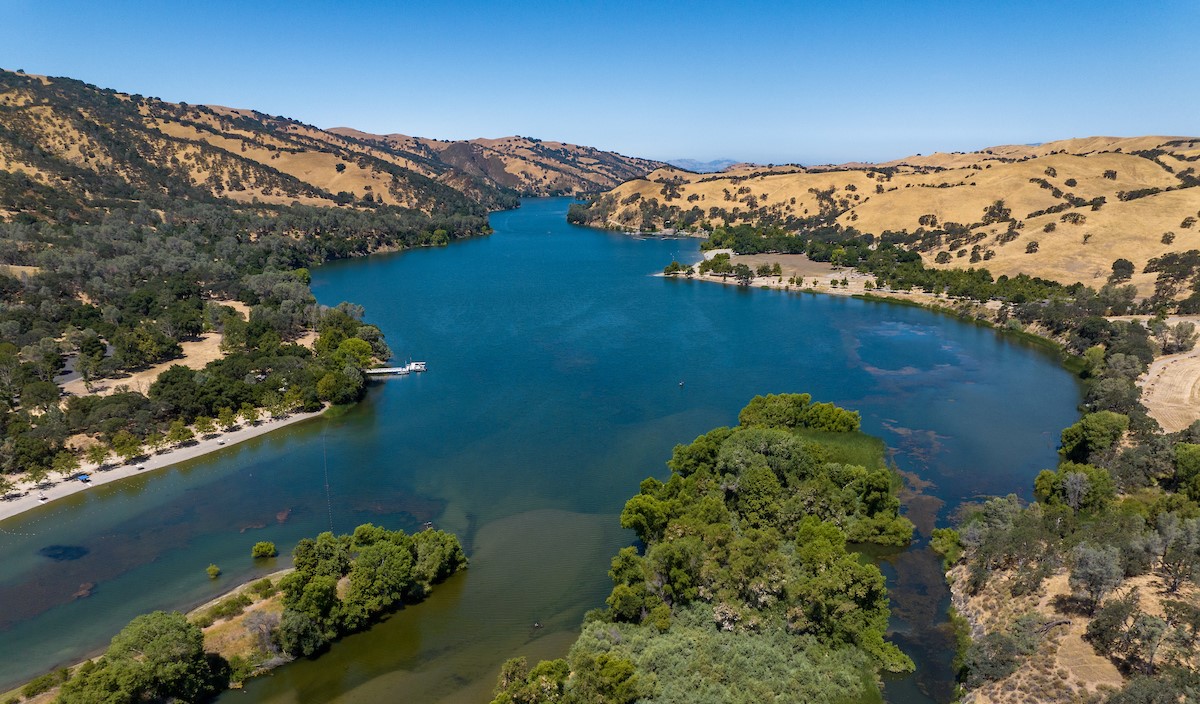
“Invasive golden mussels were found in Livermore’s Lake Del Valle last month, prompting officials to classify the lake as “infested,” and implement new boating restrictions. According to officials from the East Bay Regional Park District (EBRPD) — which operates the lake — boaters who launch at Lake Del Valle will be subject to a 30-day quarantine before their watercraft may be permitted at any other waterbody managed by the park district. “Boats that launch exclusively at Lake Del Valle and return with an intact Del Valle boat band will not be subject to the quarantine,” said Del Valle’s park operations unit manager Seleney Sanchez. “Other agencies that manage waterbodies elsewhere in the Bay Area and beyond may impose their own quarantine requirements, so boaters should check the websites of respective managing agencies for current rules.” … ” Read more from the Livermore Independent.
‘Put the heart back in the Heart of the Bay.’ Hayward puts pause on new data centers
“Hayward joined a growing list of Bay Area cities to put a pause on new data centers amid public backlash over their potential negative impact on utility rates, the environment and future employment. The City Council unanimously voted Tuesday night on a 45-day moratorium using an urgency ordinance so that staff has time to develop a regulatory framework that, if needed, would include “stricter regulations or a ban on data centers,” according to a city staff report. With three data centers in operation and a fourth under construction, city staff will review what effect new facilities would have on electricity and water usage, noise pollution and air quality. The council is scheduled to review an extension of the moratorium on Dec. 1, which could continue the temporary ban for up to a year. … ” Read more from the San Jose Mercury News.
Will San Jose protect 500+ acres around former IBM site?
“San Jose Mayor Matt Mahan is pushing for permanent environmental protections for more than 500 acres of open space around a former tech research center being purchased by a data center developer. At an Oct. 16 Santa Teresa Foothills Neighborhood Association meeting, Mahan said he is working with District 10 Councilmember George Casey to protect the 565 acres of open space around the IBM Almaden Research Center, a 35-acre industrial park in the rolling hills of Coyote Valley. The site is being acquired by Blackstart Digital, a data center development and investment firm focused on sustainable redevelopment, though a spokesperson has said the company doesn’t intend to develop the surrounding open space. “The thing folks are upset about, rightly, is that when IBM initially built out the campus there, they said that they intended for the open space to be in perpetuity,” Mahan said at the meeting. “But … they never created any legally binding easement. Now there is a new owner… we are going to push them as hard as we possibly can to actually adopt a permanent conservation easement.” … ” Read more from the San Jose Spotlight.
CENTRAL COAST
City of Marina prepares for El Nino
“Marina is historically more resistant to storms than many other cities on the Monterey Peninsula, but not immune to damage. As El Niño season approaches, the city is one of many preparing for what could be a devastating storm season. Marina City Council heard a presentation Tuesday night on some of the early preparation done by their public works, police and fire departments as they look ahead to El Niño. “The main reason for the presentation tonight is really preparation,” said Fire Chief Kristan Maurer. “We’re really trying to get people to be prepared because our resources will be thin if a major disaster hits.” … ” Read more from the Monterey Herald.
Monterey County declares emergency for El Niño, prepares for storms
“Monterey County supervisors have declared a local emergency ahead of the expected El Niño winter, approving funding for emergency readiness and flood-warning equipment as county officials prepare for potential flooding, landslides and other storm-related hazards. The Board of Supervisors approved the emergency proclamation Oct. 13 after hearing presentations from the National Weather Service and county departments on the winter outlook and preparations for the coming months. The board report cited National Weather Service projections of a 98% chance of a very strong El Niño this winter and a 75% chance of a historic event exceeding the strength of previous El Niños dating to 1950. El Niño can increase the likelihood of wet conditions in California, but it does not guarantee a particularly rainy winter. … ” Read more from the Salinas Valley Tribune.
Preserving the past, powering the future: USACE brings geothermal technology to historic Hacienda
“Nearly a century ago, architect Julia Morgan designed a sprawling Spanish Colonial Revival lodge for newspaper magnate William Randolph Hearst, creating a retreat that would welcome Hollywood celebrities, ranch guests and, eventually, generations of military personnel. Now, the historic Hacienda at Fort Hunter Liggett is preparing for a different kind of transformation, one that will take place largely out of sight. The U.S. Army Corps of Engineers Sacramento District is overseeing an $8.7 million renovation that will replace the building’s aging heating and cooling systems with geothermal technology, bringing modern comfort and improved energy efficiency to the landmark while preserving the architectural character that has defined it since 1930. … ” Read more from the Army Corps of Engineers.
No data center coming to Santa Barbara’s Earl Warren Showgrounds
““We want to be absolutely clear: Earl Warren Showgrounds will not consider a data center on this property,” said Earl Warren Showgrounds CEO Ben Sprague on Wednesday. This announcement comes after the months-old data center company Global Stack U.S.A. reached out to Earl Warren Showgrounds through the California Department of Agriculture. The company has been reaching out to state owned fairgrounds across California with a pitch to build shipping-container-sized data centers inside parking structures with helipads on top. Their claim is that these centers will aid in emergency preparedness and help generate year-round revenue for fairgrounds. … ” Read more from the Santa Barbara Independent.
Montecito water district to sell nearly half of its state water allotment to Solomon Hills housing project
“What does the Montecito Water District have to do with a massive housing project proposed in North County? On September 29, the district voted to approve a nonbinding letter of intent that would sell approximately 40 percent of its current state water entitlement to Solstra Communities California, the group aiming to build 4,000 homes on an expanse of rural land south of Orcutt. The project, Solomon Hills, would build a new community: apartments, townhomes and single-family houses, along with office and retail space, a school, fire station, a fitness building and pool, and wastewater reclamation facility. The project’s 400 apartments would be marketed as affordable. A little under two-thirds of the land would serve as parks or open space. … ” Read more from the Santa Barbara Independent.
SAN JOAQUIN VALLEY
$1.9 million for FWA to monitor subsidence
“The State Department of Water Resources has invested $1.9 million for the Friant Water Authority to monitor subsidence in the Friant-Kern Canal. The funding provides for new monitoring infrastructure along the Friant-Kern Canal to strengthen real-time subsidence monitoring and help protect the canal’s long-term capacity and reliability, FWA stated. The work was concluded in September and included three continuous cGPS stations near Mileposts 98, 103 and 112, along with complementary multi-completion monitoring wells near Mileposts 103 and 112. The cGPS stations measure changes in land surface elevation over time with millimeter-level precision, allowing DWR and FWA to track whether the ground surrounding the canal is sinking. … ” Read more from the Porterville Recorder.
Farmers should seek state’s help with upcoming groundwater reports
“If farmers need help navigating the state’s online portal to report groundwater pumping, that will be between them and the state, some groundwater agencies have said. Walking farmers through the state’s pumping portal, also known as GEARS, during the last reporting period took way too much time and effort, said Travis Millwee, Resources Manager at Lower Tule River Irrigation District Groundwater Sustainability Agency (GSA). “Moving forward, the GSA is gonna have to take a step back from reporting for its landowners,” Millwee said at an Oct. 13 GSA meeting. Millwee said Lower Tule incurred significant overtime as staff helped up to five landowners a day work through GEARS so farmers could meet the state’s last reporting deadline. The GSA was inundated with calls, taking staff away from regular tasks. … ” Read more from SJV Water.
SOUTHERN CALIFORNIA
Southern California storm brings flooding, debris flows and high surf
“A powerful Pacific storm dumped heavy rain overnight across Southern California, which remains under flood watches and a beach hazards statement Thursday. “Another day of scattered showers and some thunderstorms expected to continue, with all of the rainy weather still a factor,” KTLA’s Kirk Hawkins said. A flood watch remains in effect for the Santa Monica Mountains recreational areas, including Malibu Bowl, Malibu, Pacific Palisades and Topanga, through Thursday afternoon, according to the National Weather Service. “Flooding may occur in poor drainage and urban areas. Extensive street flooding and flooding of creeks and rivers are possible,” Weather Service officials said. … ” Read more from KTLA.
Rain triggers flooding, erosion concerns across SoCal. Could it stomp out fire season?
“The string of El Niño-fueled storms that have closed roads, crumbled boardwalks and eroded beaches in Southern California in the summer and fall may have also brought a silver lining: a potential end in sight to the region’s fire season, experts say. Just a week after a 570-acre fire spread to hillside communities in Orange County, rains that arrived Wednesday could help extinguish what chance remained of another large, destructive blaze taking off in Southern California anytime soon, said Matt Shameson, a meteorologist with the U.S. Forest Service. This week’s storm brought localized flooding to several freeways by Thursday morning, including parts of Highway 101 in Los Angeles and Ventura counties and Highway 1 in San Luis Obispo County, according to the National Weather Service. Boulders blocked a road near Agua Dulce and a rock slide blocked a section of Highway 41 in the Central Coast. … ” Read more from the LA Times.
Researchers project SoCal’s climate extremes will worsen in coming decades
“Longer droughts, more extreme heat, greater wildfire risk and more beach erosion: A new state-commissioned report finds that climate change is likely to reshape the Southern California landscape and way of life. The study, which comes as part of California’s fifth statewide climate change assessment, includes more detailed models than previous reports. “What we want to highlight with this report is not how doom and gloom everything is, but just to look at climate change in the L.A. area as something that is inevitable, but which we can adapt to, and in particular, protect the most vulnerable,” said UCLA climate researcher Jesse Norris, the lead author of the report focused on Los Angeles. If the recent stories of beach and coastline erosion have you concerned, buckle up. The report notes local coastal erosion rates are expected to triple by 2050. Citing past research, the authors also note that coastal flooding is expected to quickly intensify in the mid-2030s and become a yearly event by the mid-21st century. … ” Read more from the LAist.
Should Bell Gardens privatize its water? Voters face choice in November election
“A city of Bell Gardens ballot measure in the November election asks residents if they want the city’s municipal water system to be sold to the private Golden State Water Company for $41 million. The Bell Gardens Municipal Water System provides water to one-third of the city’s residents while Golden State provides water for the rest. If voters approve the measure and the sale goes through, the city would sell the utility to Golden State and cede all of its water rights to the company. This is part of a larger trend nationally as public utilities look to sell amid higher costs and aging water infrastructure, a study from Risk Analysis, an International Journal said last year. Those who broadly oppose water privatization liken water to oil: They say water is even more valuable because it’s needed for all life and it should not be in the hands of private interests. … ” Read more from the University Times.
Chino Basin Program receives an additional $103.7 million in conditional funding from the California Water Commission
“The California Water Commission (CWC/Commission) convened on Wednesday, October 21, 2026, and conditionally approved a supplemental funding determination that provides a $103.7 million increase for the Chino Basin Program (CBP/Program), a Water Storage Investment Program (WSIP) project. Inland Empire Utilities Agency (IEUA) Board President Steve Elie and General Manager Kevin Alexander were in attendance to support the increase in funding, which will utilize uncommitted WSIP funds for inflationary increases as well as other costs associated with providing the Program’s ecosystem benefit. “We need investments that serve multiple purposes, connect regions, and give the State flexibility to respond as conditions change. The Chino Basin Program does exactly that while helping create a new local water supply,” stated Elie. … ” Continue reading from the Inland Empire Utilities Agency.
IMPERIAL/COACHELLA VALLEYS
Imperial Irrigation District approves $4.3 million in grants for local water projects
“The Imperial Irrigation District (IID) Board of Directors approved $4.3 million in grants Tuesday, Oct. 20, to fund 13 water-related infrastructure and community improvement projects across its service area, according to a press release from IID. The grants, awarded through IID’s Funding Local Opportunities for Water (FLOW) program, will support projects proposed by nine local agencies. The projects will generate more than $13.5 million in total investment, including contributions from local agencies, other grant sources and private capital. “This investment reflects IID’s commitment to advancing projects in partnership with the communities we serve,” IID Board Chairwoman Karin Eugenio said in the release. “Through FLOW, we are supporting projects that help local agencies improve water infrastructure, enhance public spaces and deliver long-term benefits for residents.” … ” Read more from the Desert Review.
Along the Colorado River …
Interior Secretary discusses Colorado River plan, calls Arizona’s water cuts ‘completely manageable’
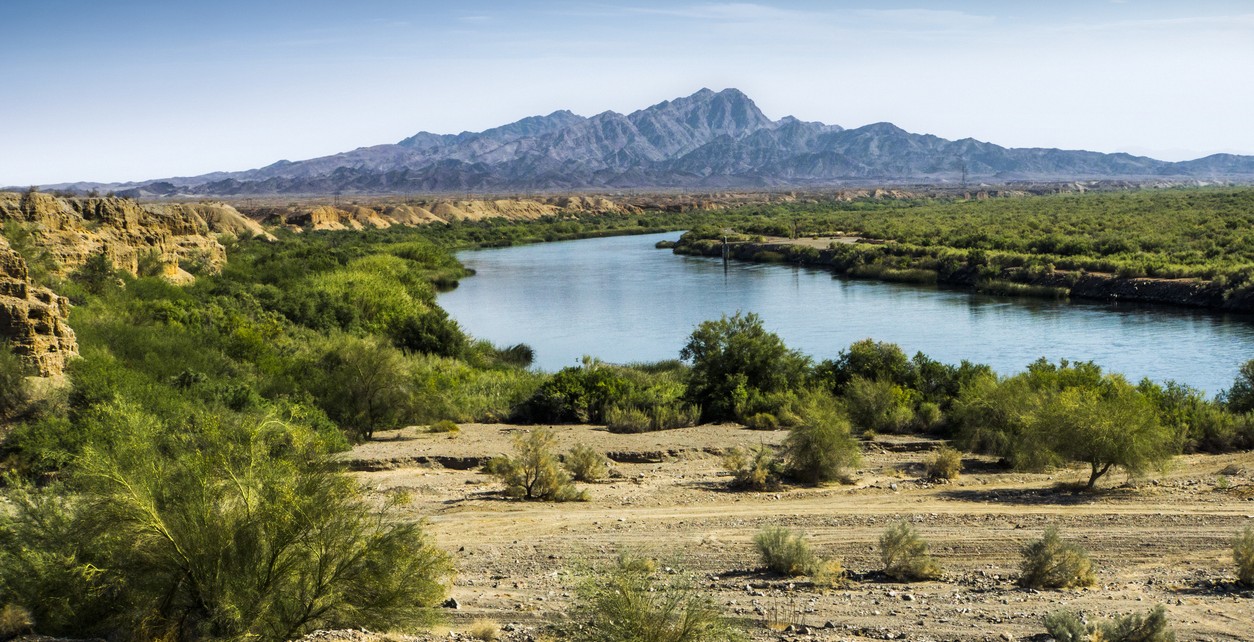
“U.S. Secretary of the Interior Doug Burgum said Arizona’s reductions under the federal government’s Colorado River plan are “completely manageable” in an exclusive interview with 13 News. Burgum’s comments come less than a week after Arizona joined a lawsuit filed by Nevada challenging the department over what the plaintiffs describe as “devastating” cuts to their water supply. Arizona Gov. Katie Hobbs joined the lawsuit filed by Nevada last week to hold the Department of Interior accountable for “failing to enforce Upper Basin water delivery obligations” and potentially imposing cuts that would devastate Lower Basin water levels. Burgum said he expects the lawsuit to be thrown out because it assumes injury that has not yet occurred. … ” Read more from Channel 13.
Column: The Arizona-Nevada-California water war is heating up, and all three states will end up parched
Columnist Michael Hiltzik writes, “No one interested in pondering what looks like an intractably difficult conflict need turn their attention to Iran or Israel. We have one much closer to home. It’s the riddle of how to divide up the ever-dwindling supply of water from the Colorado River. Seven Western states depend on that water impounded by Hoover Dam at Lake Mead, with Arizona, Nevada and California — the downstream basin states” — facing harsh steep supply cutbacks through 2028 and even harsher cuts over the following eight years under a scheme set forth by the U.S. Interior Department. So it’s not surprising that the fight has begotten a new cycle of litigation in federal court. Nevada sued to block the plan in late August. Last week, Arizona moved to join Nevada’s lawsuit. But it warned that its fight isn’t only with the federal government, but with Nevada too: Arizona’s interests in the case are “unique,” it told the court, and it can’t entrust them to “another State that has sued to protect its own unique, state-specific interests.” … ” Read more from the LA Times.
Surprising new pattern of groundwater loss may signal a turning point for the Colorado River Basin
“Western states that were thought to be resistant to prolonged drought may be more vulnerable than scientists previously believed, a new analysis of groundwater reserves in the Colorado River Basin finds. Researchers revealed the four states that together make up the Upper Basin — Colorado, New Mexico, Utah and Wyoming — lost almost twice as much groundwater as the Lower Basin did during an intense drought in the southwestern U.S. between 2020 and 2022. The finding was unexpected and might signal a turning point for the region, because the Upper Basin has long been seen as more resilient to dry spells than the Lower Basin, said Esther Oyedele, a doctoral student in geosciences at Virginia Tech and the study’s first author. “The Upper Colorado River Basin has historically been considered more resilient because it receives more precipitation, particularly snowfall in the Rocky Mountains,” Oyedele told Live Science in an email. “I think the important takeaway is that we should not assume that the Upper Basin will remain relatively resilient simply because it has historically received more precipitation and snowmelt.” … ” Read more from Live Science.
Scottsdale faces a 17% cut to its Colorado River water supply, but residents won’t feel it right away
“Scottsdale is facing a future with less water from the Colorado River, but at least in the short-term, residents may not feel much impact. The city is anticipating a 17% cut in its Colorado River supply as soon as January. But city officials say the impact on residents won’t be immediate, because the city is not currently using all of its allocation — leaving a buffer between the cuts and what’s actually used. “We have a lot of water. Our taps are not running dry,” Scottsdale City Councilwoman Jan Dubauskas said. … ” Read more from Channel 15.
Mexico breaks ground on new desalination plant in Rosarito to bolster region’s water supply
“Mexico kicked off construction Friday on what officials are touting as the largest desalination plant in Latin America, a $850 million project that aims to bolster the water supply for the cities of Tijuana, Rosarito and Ensenada. The desalination plant, being built in Rosarito and financed with public funds, will help reduce dependence on the Colorado River, the region’s main water source. Construction is expected to take about three years. “Baja California couldn’t rely solely on water from the Colorado River anymore,” Baja California Gov. Marina del Pilar Ávila said Friday during the groundbreaking ceremony in Rosarito. “We needed to open a new door.” … ” Read more from the San Diego Union-Tribune.
Arizona can’t stop homebuilding while policy ruling is appealed
“A judge won’t back down — even temporarily — from his ruling that state water officials acted illegally in changing the rules for home builders. In a new order, Maricopa County Superior Court Judge Scott Blaney rejected claims by Bo Dul, an attorney for the Department of Water Resources, that the ruling against a policy to prevent new home construction in areas without a 100-year water supply was likely to be overturned on appeal. The judge was no more sympathetic to Dul’s arguments that homebuyers will suffer “irreparable damage” if the agency cannot enforce the rule that he invalidated. “That is the exact harm the Groundwater Management Act was designed to prevent,” Dul wrote. … ” Read more from the Arizona Capital Times.
SRP pulls back curtain on Mormon Flat Dam maintenance work at Canyon Lake
“Salt River Project recently offered a glimpse of its maintenance work at Mormon Flat Dam near Apache Junction in the Tonto National Forest. Canyon Lake, just behind the dam, has been closed since Labor Day so SRP can draw it down 54 feet, diverting the water to Saguaro Lake. SRP drains Canyon Lake by about 65% every 20 years or so for upkeep of Mormon Flat Dam. This is the time of year when SRP switches from the Salt River to the Verde River to meet customer demand, making the drawdown possible. … ” Read more from KTAR.
A decade after Arizona rejected San Simon groundwater protections, local farmers try again amid worsening declines
“A decade after Arizona rejected local farmers’ effort to rein in agricultural development they feared would drain the San Simon Valley’s groundwater supply, applications for large-scale wells have surged, and the region’s already strained aquifer is being depleted faster than it can recover. Since farmers first petitioned the state for groundwater protections in 2015, landowners or companies tied to them have submitted 154 applications for high-capacity wells in the southeastern Arizona sub-basin. That’s more than were filed over the preceding 35 years combined, according to an AZCIR analysis of state records. Water officials estimate the sub-basin is losing about 50,000 acre-feet more groundwater than is naturally replenished each year—roughly the amount used by 150,000 Arizona homes. Overpumping has permanently reduced the aquifer’s ability to store water, and parts of the valley are sinking. … ” Read more from the Arizona Central for Investigative Reporting.
Utah’s big cities got their Colorado River water. Eastern Utah communities were left with unfulfilled promises.
“Trent and Eileen Potter ran out of water on some of their farmland in eastern Utah this year. Dismal runoff after a record poor winter provided creeks and rivers with a fraction of their usual flow. But the Potters’ farmland near Duchesne had consistent irrigation thanks to “project water” that’s stored in and delivered from Starvation Reservoir. That was one of the first reservoirs the Bureau of Reclamation built for the Central Utah Project — an expansive system of dams, diversions, tunnels and pipelines that takes water from eastern Utah’s Colorado River Basin to western Utah’s Wasatch Front. Starvation keeps water in the Uintah Basin, though, compensating for water lost to the state’s biggest cities. Most of that water goes to irrigate fields and some fills taps across Duchesne County. … ” Read more from the Salt Lake Tribune.
2026 Water Year report highlights record-setting heat, dry conditions across Colorado
“Colorado experienced its warmest water year on record by a substantial margin in 2026, according to a new report by Colorado State University researchers. The warm conditions, measured from Oct. 1, 2025, to Sept. 30, 2026, hit the entire state and greatly limited mountain snowpack that supports agriculture, industry and household water use. The stark findings headline the 2026 Water Year report released by the Colorado Climate Center and the Department of Atmospheric Science this week. The annual report follows climate trends over the course of a water year by following the natural movement of water in the form of precipitation, snowpack and streamflow. The report also includes discussion of long-term trends, such as ongoing drought conditions, and highlights notable events – such as wildfires, severe storms and destructive flooding – over the last 12 months. … ” Read more from Colorado State University.
Aspen Snowmass proves it: Saving snow under blankets works
“Over the weekend, the lifts were spinning at Snowmass Bike Park for the last time this season, but it wasn’t just bikers getting air on the mountain. Skiers and snowboarders had a rare opportunity to get on snow in early October, courtesy of — well, last year’s snow. Aspen Snowmass opened the Makaha Terrain Park for the weekend, giving skiers and riders a chance to ski and snowboard on about 300 feet of snow that had spent nearly five months beneath insulated blankets. Meanwhile, mountain bikers bombed down Snowmass’ trails through the golden-leafed canopy. Despite a dry winter that forced Aspen Snowmass to close some terrain early and a summer that broke historic drought records, the snow survived. Roughly 85% of the snow volume stored at Snowmass remained when the blankets were removed late this summer. At Buttermilk, where another pile rested on the slope above the half pipe, about 84% remained, including both melt and the natural compression of the pile. … ” Read more from Water Education Colorado.
Drought is reshaping Colorado’s ranches, one herd at a time
“In Colorado’s North Fork Valley, Bill McKee has been selling off his herd of cattle. A combination of drought and increased hay costs put the seasoned Western Slope rancher in a bind. “All of my friends have had to buy hay, sell cows, or a combination of both. I’ve elected to sell cows,” McKee said. At age 73, he’s been in the ranching business for decades, but the inflated cattle market combined with a lack of irrigation water made this year extremely tough. In a typical summer, McKee relies on pivot irrigation for his ranch. His source of water is Paonia Reservoir, which was hit hard and early by dwindling snowpack and heavy agricultural demand. Most other farmers and ranchers in the area also depend on the reservoir, which is now down to its “inactive” pool zone at less than 2% capacity, prompting the nearby Town of Paonia to implement stricter water restrictions. … ” Read more from the Water Desk.

