

Several news sources featured in the Daily Digest may limit the number of articles you can access without a subscription. However, gift articles and open-access links are provided when available. For more open access California water news articles, explore the main page at MavensNotebook.com.
On the calendar today …
- HYBRID EVENT: 2026 RMP Annual Meeting from 9am to 4:30pm. The 33rd Annual Meeting of the Regional Monitoring Program for Water Quality in San Francisco Bay (RMP) will be held on October 21, 2026 at the David Brower Center in Berkeley, CA, from 9:00am to 4:30pm and online over Zoom. The meeting will have a primary focus on the science and management of nutrients in the Bay, and will also include sessions on legacy contaminants, sediment, and general RMP highlights. The draft meeting agenda is available here. Click here to register.
- MEETING: California Water Commission beginning at
9:30am12:30pm. Agenda items includeEl Niño 2026: Forecast, Preparedness, and Opportunities to Build Water Resilience;Water Storage Investment Program: Chino Basin Program Consideration of Supplemental Funding Determination; Consideration of Department of Water Resources’ Dam Safety Regulations; Overview of the Colorado River Board of California; and the California Natural Resources Agency’s Tribal Consultation Policy and Environmental Justice and Equity Policy. Click here for the agenda and remote access information. (Changes sent by email Tuesday pm). - WEBINAR: Reading the Political Water Table: Key Takeaways from California’s 2026 Legislative Session from 12pm to 1pm. Brownstein’s Sacramento advocates provide an assessment of the legislation, budget actions, and political trends that shaped the 2026 legislative session, highlighting the implications for groundwater agencies, water users, and resource managers across California. Click here for more information and to register.
- WEBINAR: The State and Future of Telemetry in California from 12pm to 1:3opm. Learn how California can use real-time water data for improved decision making. What does the future hold for telemetry in California? Join members of the Telemetry Technical Advisory Committee (TAC) as they discuss their recommendations to the State Water Board. With the State Water Board’s launch of the California Water Accounting, Tracking, and Reporting System (CalWATRS) in 2025, California is better positioned to receive and use water data in near real time. The California Water Data Consortium convened water rights holders, water users, representatives of local, state, and federal government, nonprofits, and academics in the Telemetry TAC to develop recommendations for telemetered water monitoring for the State Water Board. In this Data for Lunch, TAC members will discuss those recommendations and what the future might hold for telemetry in California. Click here to register.
- GRA SoCAL: Fundamentals of Municipal Water Well Design, Construction, and Operation from 6pm to 8pm in Long Beach. Kevin McGillicuddy and Chris Coppinger will present the fundamentals of municipal well design, construction, and operations. We’ll cover the basic drilling methods used to construct most municipal supply and irrigation wells in Southwest, what data should be collected during the drilling process and how to use those data to select casing material, screen types and what intervals should be targeted for producing water. Participants will learn the basics of how drill cuttings are collected, geophysical logs are utilized to select intervals for water quality and aquifer parameter testing, and how lithology samples are processed to select materials for well construction. Click here to register.
In California water news today …
California’s rainy season to arrive with flood threat, tornado risk and Sierra snow
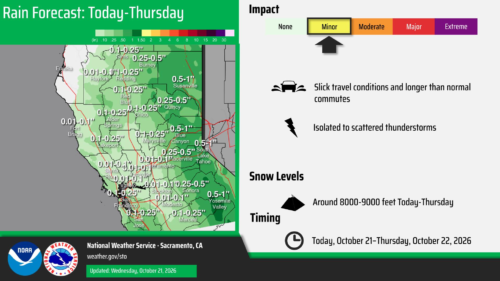 “California’s wet season is starting off with a bang. The first significant storm of the season is forecast to bring heavy rain to vulnerable burn scars near Big Sur, coastal tornado risk to the Los Angeles area, and a half-foot of snow or more to high-elevation areas in the Sierra. Wednesday is expected to be the rainiest day along the coast, and Thursday the snowiest in the Sierra. Downpours are expected to target Central and Southern California. There is also a slight chance of waterspouts and tornadoes along the coast from Monterey to Orange County. The Bay Area will be left relatively drier, but still, Wednesday will probably be the wettest day since May in San Francisco, Oakland and San Jose. Here’s what to know about the storm. … ” Read more from the San Francisco Chronicle. | Read via Yahoo News.
Climate change plus a super El Niño could add up to a record-wet winter for California

“California’s climate-change-and-El Niño-intensified extreme weather siege may only be beginning. After the state endured its hottest year-to-date period on record and a multi-million-dollar battering by Hurricane Marie in September and Hurricane Rachel in October, much greater destruction could be on the way this winter. El Niño is continuing to warm coastal waters, and because water expands as it heats, sea levels could rise to unprecedented heights during the coming king tides at Thanksgiving, Christmas, and late January. In concert with the rising seas will likely come a battering by record-wet atmospheric rivers when the jet stream assumes its usual California-centered configuration during the coming very strong (“super”) El Niño winter. Atmospheric rivers, like rivers in the sky, carry moisture out of the tropics. … ” Read more from Yale Climate Connections.
El Niño is threatening California’s fragile coast again – the 1982‑83 El Niño opened eyes to the serious erosion risks
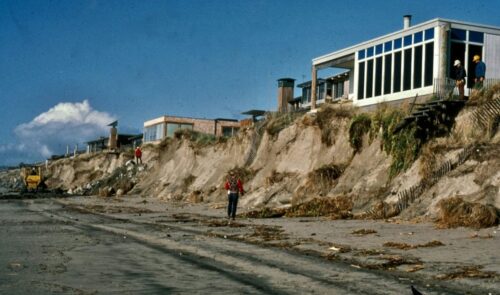
“California’s coastal bluffs and beaches look rugged, but they can be surprisingly fragile in the face of a powerful El Niño. The state saw that in 1982-83, when storms amid one of the most destructive El Niño winters in California history battered the coastline with powerful waves and torrential rain, leaving hundreds of millions of dollars in damage in its wake. The storms coincided with elevated sea levels, high astronomical tides and very large waves delivered by repeated storms. Extreme waves that winter destroyed one-third of the Santa Monica Pier and tore off large sections of the Huntington Beach Pier and the Paradise Cove Pier, while also damaging the Seal Beach, San Clemente and Malibu piers. Numerous seawalls, decks and stairways were torn apart, and 33 oceanfront homes were destroyed. … ” Read more from The Conversation.
Where El Niño may impact California coastal areas this winter
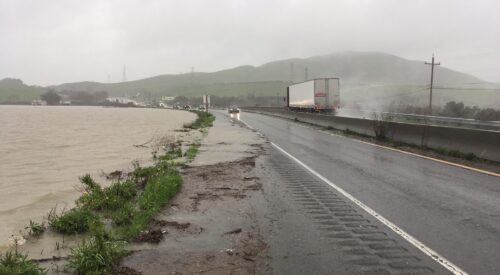
“Driving across Highway 37 in the San Francisco Bay Area on the best of days already feels like driving on top of water. Buffeted on both sides by marshlands hosting egrets, herons, ducks and a handful of endangered species, the sea-level highway is a major connector linking Marin, Sonoma, Napa and Solano Counties. It is also the sinking flagship for California’s vulnerability to sea level rise, according to the “Coastal Flooding Risks for California” report released this week from the University of California, Davis. Recent shoreline flooding in Southern California may be a precursor of what’s facing California this winter, said report author Fraser Shilling, director of the UC Davis Road Ecology Center, at the Institute of Transportation Studies. Highway 37 and other roads and highways along California’s coastline are extremely vulnerable to floods and failure during this winter’s coming El Niño, the report said. “We face the risk — though not the certainty — of catastrophic flooding in a variety of coastal towns this winter,” Shilling said. “It’s important to be informed of risk so you can make decisions.” … ” Read more from UC Davis.
SEE ALSO: USGS monitors California’s coastal hazards ahead of the 2026-2027 El Niño event, from the USGS
New report: Fifth Climate Change Assessment: Delta Impacts
 “The Sacramento-San Joaquin Delta (Delta) is essential to California’s water, agricultural, ecological, and cultural systems. It supplies a portion of the water used by more than 27 million Californians, supports a $4.6 billion agricultural economy, and sustains habitat for more than 750 plant and animal species. Yet it is also one of the most climate-vulnerable regions in the state, facing higher relative sea level rise than the San Francisco Bay Area due to land subsidence and its position at the confluence of California’s two largest rivers. This report compiles the best available data on climate change in the Delta, including relevant findings from other Fifth Climate Change Assessment reports, summarizes the Delta agencies’ and the Delta Independent Science Board’s regional adaptation planning work, and identifies major investment needs to ensure the region’s long-term resilience. The report also reflects the Delta agencies’ commitment to ensuring that adaptation planning meaningfully involves and represents marginalized and historically excluded communities.” Click here to access the report.
Vital Central Valley flood control levees are poorly maintained, state watchdog finds
“With California bracing for a wet winter, the state auditor warns that nearly a third of local agencies maintaining vital flood control levees in parts of the Central Valley have been performing “unacceptable routine maintenance” — some of them, for years. The audit says the state’s Department of Water Resources “has not followed state law requiring it to take over the maintenance of levees” when local agencies fail to do so — and urged it to start. But state water managers at the department pushed back, saying the audit “portrays a fundamental lack of understanding of the complexities of flood management” and draws too direct a link between routine maintenance and flood risk. Taking over maintenance can cost tens of millions of dollars up front “that must be weighed against other investments that may yield greater risk-reduction benefits,” the department said in a letter responding to the audit. … ” Read more from Cal Matters.
California restoration project turns sinking farmland into wetlands
“The land in California’s Sacramento-San Joaquin River Delta is sinking rapidly. And in the process, it’s releasing a lot of climate-warming carbon dioxide. Hundreds of years ago, the area was mostly a wetland where waterlogged plants slowly broke down into carbon-rich peat soil. Chamberlin: “But today it looks totally different. It’s now a network of islands, many of which are 10 to 25 feet below sea level.” Sydney Chamberlin of the Nature Conservancy says the main reason for this change is agriculture. Starting in the 1800s, levees were installed and much of the land was drained to create islands where farmers could grow crops such as corn. … ” Read more from Yale Climate Connections.
Dairy industry sues state over nitrates regulatory order
“California’s dairy industry sued a state regulatory agency this week over a new order aimed at protecting Central Valley communities from nitrate pollution caused by spreading cow manure on local farmland. The suit filed Monday in Tulare County Superior Court says the order adopted last month violates state law by requiring expanding dairies to abide by the new rules as soon as they are finalized by the Central Valley Regional Water Quality Control Board, which has five years to do so. Most existing dairies, by comparison, will have 35 years to come into compliance with the rules. Board staff have said that extended timeframe was offered because the industry expressed concerns the new rules are too burdensome financially to be instituted immediately. … ” Read more from Bakersfield.com.
California winegrowers embrace dry farming as drought pressures ease
“California’s wine industry is discovering new opportunities to grow grapes with less irrigation, following a multi-year dry farming initiative that has brought together growers, scientists and sustainability experts. Speaking to the drinks business at Sustainability in Drinks in London on 20 October, Allison Jordan, vice president of environmental affairs at Wine Institute and executive director of the California Sustainable Winegrowing Alliance (CSWA), said the project had generated considerable enthusiasm among producers. The initiative, supported by funding from the California legislature, set out to identify existing dry farming practices, investigate their environmental benefits and help more growers assess whether the technique could work in their vineyards. Jordan said the alliance initially knew of around a dozen growers practising dry farming, but subsequently discovered many dozens more. “A lot of people were doing it, but there wasn’t the sort of collection of best practices and dissemination of information and working with researchers,” she said. … ” Read more from The Drinks Business.
Utility leader urges CA lawmakers to find ‘durable’ solution on wildfire liability
“California assembly members began their discussions on the efforts by the state’s major utilities to reduce wildfire risks and the liability those companies face when their equipment starts a blaze. Tuesday’s meeting was the first in what is anticipated to be a series of hearings. The meetings follow contentious negotiations over the summer pushed by Gov. Gavin Newsom to change how the state responds to utility-caused wildfires. Critics of the governor’s pitch called it a bailout. A proposed legislative deal ultimately failed. Assemblymember Cottie Petrie-Norris, D-Irvine, said the hearings were timely in light of recent winds that swept across California and caused Southern California Edison and Pacific Gas and Electric Co. to shut off power to more than 150,000 combined customers to reduce the risk of major fires. … ” Read more from the Sacramento Bee.
5 ways data centers challenge how we think about water use
“Data centers house the hardware, such as servers and networking equipment, that underpin the digital services that most people use every day. Watching videos, storing files in the cloud, searching the internet, making video calls, using an AI chatbot, and processing credit card payments all depend on the continuous operation of data centers. Growth in artificial intelligence (AI) and other cloud-based computing services is driving an unprecedented expansion of data centers across the globe. As data centers have become much larger and more concentrated, concerns about impacts on water and energy systems have intensified. Here are five important considerations about data center water use. … ” Read more from the Pacific Institute.
Legislative attorneys say definition used by Prop. 45 likely excludes data centers
“Proponents of an environmental permitting reform ballot measure say state attorneys have cleared Proposition 45 of its association with data centers. On Tuesday, the campaign published a memo from the Office of Legislative Counsel, whose attorneys advise state lawmakers, which found a statutory definition used by the measure does not apply to the politically unpopular computing centers. The Yes on Proposition 45 campaign upheld the legal memo as a rebuke from the nonpartisan, government attorneys against their opponents’ claims that data centers were included in Prop. 45. On Tuesday, the same day the campaign published the legal opinion, their attorney cited it in a letter demanding television stations cease airing ads in which the No on Proposition 45 campaign warns the measure would allow data centers into California communities. … ” Read more from the Sacramento Bee.
SEE ALSO:
- Vote No on Prop 45 to Protect California’s Environment, from Bay Nature
- Proposition 45: A Rubber Stamp for Environmentally Harmful Development with Big Costs for Californians, from C-WIN
Report shows climate change impacts are accelerating, demonstrates importance of sustained state action
“CalEPA’s Office of Environmental Health Hazard Assessment today released the fifth edition of its Indicators of Climate Change in California Report, documenting wide-ranging impacts that global fossil fuel reliance has had on the state’s weather, water systems, plants and animals, and human health, including among tribes. “As the Trump administration turns its back on science, California is doubling down on climate action, on protecting our communities, and on building a safer future,” said Governor Gavin Newsom. “We are putting the latest science to work so communities across the state have the tools to confront the climate crisis head-on.” Since the last update in 2022, many changes have intensified and some have crossed thresholds that cannot be reversed, such as the disappearance of glaciers from the Trinity Alps. Six new indicators were added to this report, including a new indicator related to agriculture, fruit and nut pest abundance. … ” Read more from Cal EPA/OEHHA.
In regional water news and commentary today …
NORTH COAST
Humboldt Bay is California’s ‘canary in the coal mine’ for sea level rise, state climate report warns
“Humboldt County’s shoreline is changing faster than anywhere else on the West Coast, which leaves locals with the state’s smallest window to prepare for sea level rise. That is the central message of the North Coast Regional Report, part of California’s Fifth Climate Change Assessment. The report’s coordinating lead authors, Rosemary Sherriff and Andrew Stubblefield, are both Cal Poly Humboldt professors. (They and co-author Jennifer Marlow were interviewed on a recent episode of “The EcoNews Report.”) Their report includes contributions from tribal, agency and community partners. The 221-page document covers Humboldt, Mendocino, Del Norte, Lake, Siskiyou and Trinity counties, which have about 380,000 residents, all told. It features warnings about our region’s aging infrastructure as we look toward a future with rising seas, increased wildfire risk and more extreme weather. “The Humboldt Bay region has become the ‘canary in the coal mine’ for SLR [sea level rise] in California,” it says. “Immediate action is required if the communities surrounding Humboldt Bay want to minimize the impacts from, or adapt and build resiliency against, SLR.” … ” Read more from the Lost Coast Outpost.
California native tribe furious with huge new hiking trail: ‘Shoving it down our throats’
“A California native tribe is standing their ground. Members of Northern California’s Wailaki tribe say plans for the Great Redwood Trail — a 307-mile nature trail stretching from from the San Francisco Bay to Humboldt Bay, would allow tourists to walk right over the graves of their ancestors. The project, which is 40% complete, was exempted from from the California Environmental Quality Act (CEQA), which requires public agencies to notify and consult native tribes about projects that impact them, further upsetting the local tribe. Wailkai tribe member Perry Lincoln says that when locals first heard of the trail a few years ago, after plans were well underway, they felt blindsided. “You’re just kind of shoving it down our throats,” he told the LA Times. … ” Read more from the California Post.
SIERRA NEVADA
Sen. Schiff’s tour includes Almanor fuels project
“The Plumas County Fire Safe Council reports that Wesley Fink, a representative from U.S. Sen. Adam Schiff’s office, visited Plumas County as part of a tour of wildfire resilience projects across Northern California in September. After stopping at Plumas Corp’s Humbug Valley Yellow Creek Meadow Restoration Project, the group met on site at the 318-acre Peninsula Treatment Area of the Almanor Peninsula Wildfire Protection Project with Alan Burfeind of Mason, Bruce & Girard Inc. and project operator Wyatt Taylor, of Sierra Land Management Inc. The council said the visit highlighted the importance of strategically placed, landscape-scale fuels reduction. “Beyond protecting multiple Peninsula communities, the project safeguards a critical watershed,” said organizers. “Lake Almanor sits in the headwaters of the Feather River, which feeds Lake Oroville, the largest reservoir in the State Water Project, a system that supplies water to 27 million Californians.” … ” Read more from the Plumas Sun.
UC Davis may develop new Lake Tahoe science and community hub. Here’s where
“UC Davis conducts year-round research at Lake Tahoe through its environmental center based in Nevada’s Incline Village. Now, the university’s Tahoe Environmental Research Center may get another home in Placer County’s Tahoe City. At a meeting Tuesday, the Placer County Board of Supervisors unanimously approved a memorandum of agreement with the university to explore transforming three underutilized county-owned buildings in Tahoe City’s town center into a regional science, education and community hub. The county government and UC Davis will work together to evaluate if the project at the former Tahoe City fire station and surrounding properties is viable. In addition to advancing research, the county hopes the partnership will enhance public space, boost economic development and make science more accessible. … ” Read more from the Sacramento Bee.
Nevada City invites community to town hall on Deer Creek Canyon Fuels Reduction Project
“The City of Nevada City invites community members to attend a Town Hall Meeting on Monday, October 26, 2026, at the Miners Foundry Cultural Center to learn about the upcoming implementation of the Deer Creek Hazardous Fuels Reduction Project. The project will focus on reducing hazardous vegetation, improving forest health, and strengthening wildfire resilience within the southside of the Deer Creek Canyon. … ” Read more from YubaNet.
SACRAMENTO VALLEY
Tehama directors vote to exempt ‘de minimis’ users
“On Monday afternoon, the Tehama County Flood Control and Water Conservation District Board of Directors held a meeting where they discussed defining and exempting certain users from potential future groundwater fees. As Director/Supervisor Matt Hansen explained at the Board of Supervisors meeting the following day, the board’s ultimate decision “means that most people in here that have a domestic well for domestic purposes will not see a charge for the groundwater sustainability program as we move forward.” The board’s discussion on Monday was around “de minimis users.” As defined in the resolution the board voted on, “a residential groundwater user qualifies for the de minimis threshold if the user’s total verified groundwater extraction for residential domestic purposes is two (2) acre-feet or less during a calendar year.” … ” Read more from the Red Bluff Daily News.
Firefighters burn Loafer Creek in prescribed fire operation
“Smoke mimicked mist beneath an overcast sky along the hillsides Tuesday east of Oroville as Cal Fire-Butte County crews conducted a large-scale burn operation throughout the Loafer Creek campground and recreation area. Over the summer, bulldozers and hand crews raked and piled fire fuels in the area in preparation for the project, which was done in partnership between Cal Fire and the California Department of Water Resources. Chelsea Burkett, a public information officer with Cal Fire-Butte County, said the scope of the project is roughly 86 acres. “Right now we are burning part of that prescribed burn and right now what you and I are standing in is a lot of smoke, obviously because our firefighters’ test burn was successful a little bit ago,” Burkett said. “And now we are continuing to burn vegetation.” … ” Read more from the Chico Enterprise-Record.
Sacramento District puts new USACE governance framework into action
“Hands went up across the Microsoft Teams screen as technical leads waited to join the conversation. Inside the conference room, division chiefs rose from their chairs, approached the main display and pointed to project data as they discussed engineering risks, questioned assessments and worked through potential solutions. At the center of the discussion, U.S. Army Corps of Engineers Sacramento District Commander Col. Robert McTighe delivered a straightforward message. “Don’t cook the books. Don’t make things look better than they are. I want to see the real numbers,” McTighe said. The exchange unfolded during Sacramento District’s inaugural District Engineering Review (DER), one element of a coordinated governance framework the district has established to put new USACE Headquarters direction into practice. … ” Read more from the US Army Corps.
BAY AREA
Data center moratorium clears key hurdle in Oakland
“A temporary pause on data centers in Oakland has passed a key hurdle. At the City Council’s Life Enrichment Committee meeting Tuesday afternoon, committee members unanimously approved a 45-day moratorium on new data center projects. The full City Council must still vote on the moratorium for it to take effect. Introduced by District 3 Councilmember and Life Enrichment Committee Chair Carroll Fife, the idea is to give the city time to evaluate the impacts of data centers on energy and water consumption, air and noise pollution, land use, and public health. “I’ve always stood for development without displacement,” Fife said. “I still do to this day.” … ” Read more from Oaklandside.
Pittsburg weighs 45-day moratorium on new data centers
“Facing backlash and growing frustration over a previously-approved data center approved in 2024, councilmembers are now considering a 45-day moratorium on any future similar facilities. Councilmember Juan Antonio Banales, who proposed the item during a Monday city council meeting, said the moratorium would cover future building phases in the Pittsburg Technology Park along West Leland Road and “any new proposals” that come to the city. This proposed halt would not cover the initial construction phase of the data center that was already signed off in 2024, which will sit within the technology park. According to the Pittsburg Technology Park Specific Plan, phases two and three on the south side of the Contra Costa Canal would allow development of more office space, among other possible uses. “There’s a lot of confusion out there about what is the status of data center projects and developments, and this makes it clear,” Banales said during Monday’s city council meeting. The proposed moratorium is set to return to council for discussion on Oct. 26, the city said. … ” Read more from the San Jose Mercury News.
San Jose’s proposed data center rules draw criticism over environmental protections
“San Jose is creating development standards for future data center projects, but residents and advocates said they don’t go far enough to protect their health and the environment. City officials presented the draft standards for the first time Thursday in front of a packed audience at City Hall. Dozens of residents spoke during the public comment portion of the meeting, which lasted nearly two hours. Cheers erupted from the audience as speakers called for a temporary moratorium on data centers until the standards are in place. The City Council is expected to finalize the standards in December. … ” Read more from Local News Matters.
Gilroy extends moratorium on data center projects
“The Gilroy City Council has extended a temporary ban on new data center projects in the city for more than 10 months. Councilmembers on Monday unanimously approved a longer moratorium than it set last month as employees work to create objective zoning, development and operational standards for projects similar to an Amazon data center previously allowed to pass through without public input. Residents urged the council to extend the moratorium and while they are happy with it, some remain concerned about how the city will handle future projects. City Administrator Matt Morley said the city wants to get the development standards right and emphasized ensuring Gilroy’s needs are prioritized. He said the time allotted by the moratorium, which expires Sept. 3, 2027 and can be extended once more for another 12 months, allows city employees to look into best practices and connect with residents on the development standards. … ” Read more from the San Jose Spotlight.
CENTRAL COAST
Santa Cruz County prepares for potential impact from El Niño
“From road preparation to field response to resilience centers, Santa Cruz County officials across several emergency response agencies discussed efforts to mitigate potential impacts of the upcoming El Niño at Tuesday’s Board of Supervisors meeting. It is no secret that experts across the globe have been warning of a “very strong” El Niño weather event this winter, and though the impacts in Central and Northern California are less predictable than Southern California, entities across Santa Cruz County are taking efforts to ensure infrastructure is braced for impact and response measures are prepared. “If you remember 2017 … when we absolutely got hammered by rain, that was a wicked winter,” said Brian Garcia, warning coordination meteorologist with National Weather Service San Francisco and Monterey regions. “We could see that again, but it’s not a guarantee in these El Niño formats, because even in 2015 and 2016 when we had a very strong El Niño, we didn’t get impacts that we were expecting. But we have to prepare every winter like it is going to happen.” … ” Read more from the Santa Cruz Sentinel.
The contentious eminent domain case kicks off between Cal Am and the Monterey Peninsula Water Management District.
“Katie Rodriguez here, reporting that the long-awaited and contentious eminent domain case between the Monterey Peninsula Water Management District and California-American Water Company officially kicked off yesterday, Monday, Oct. 19. The trial will determine whether the district has the legal authority to take over Cal Am’s water system. The private utility provides water to roughly 100,000 people with a network of more than 680 miles of pipeline and over 100 storage tanks, regularly touted by Cal Am as one of the most complex water systems in California. Opening statements were delivered by Edward Schexnayder, an attorney representing the Monterey Peninsula Water Management District, and David Moran, an attorney representing Cal Am. The statements were followed promptly by testimony from Cal Am employees as the company began presenting its case for why it should continue operating the water system. … ” Read more from Monterey County Now.
SAN JOAQUIN VALLEY
Data center moratorium extended in Tulare County, as community calls for permanent ban
“The Tulare County Board of Supervisor extended the moratorium on data center development in any unincorporated part of the county for an additional ten months and fifteen days after holding a public hearing Tuesday morning where people on both sides of the issue spoke. The initial 45-day moratorium introduced by the board on Aug. 18 — with the possibility of extension up to a year — aimed to evaluate the impact of data centers on the county’s resources and infrastructure. The initial moratorium ordinance would have expired on Oct. 2. The board reviewed preliminary findings on electrical demand, water use, and potential regulatory options from zoning requirements to conditional use permits. The board unanimously approved Tuesday to extend the moratorium and requested regular updates, especially for comprehensive land use regulations. … ” Read more from the Sacramento Bee.
Tule Trust seeks input from small farmers looking to expand
“A free workshop focused on helping small farmers explore ways to expand operations will be held from 3 to 5 p.m. Wednesday, Oct. 28 in Tipton. The Tule Basin Land & Water Conservation Trust is sponsoring “Keeping Farmers on the Land: Identifying Practical Solutions for Small-Scale Farmers Under SGMA,” along with the University of California Agriculture and Natural Resources Extension and the Sierra Resource Conservation District. The workshop will be held at the Sociedade Portuguesa do Divino Espírito Santo Hall, or S.P.D.E.S, Hall at 198 South Evans Road in Tipton. Trust executive director Nick Reed-Krase said the goal is to listen to the needs of smaller farmers in Tulare County, and specifically the Tule subbasin. … ” Read more from SJV Water.
Western Kern County growers vote to expand water district board, which will reduce one wealthy farmer’s power
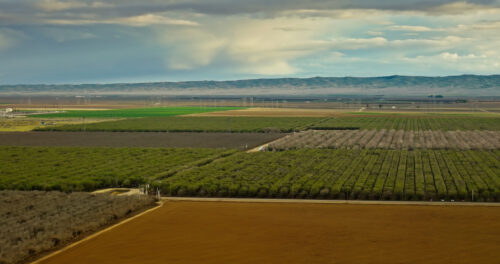
“A proposal by farmers in the Buena Vista Water Storage District to expand the district board in order to better represent farmers, and which will dilute the voting power of one large grower, was unanimously approved earlier this month. Of 68,000 votes available district wide, 53,365 were cast in favor of the expansion. Zero votes were cast opposing the expansion, according to Buena Vista General Manager Tim Ashlock. “The unanimous nature of the vote underscored the importance of the change,” wrote Buena Vista farmer Beau Antongiovanni in a text message. He said farmers were looking forward to getting significant work done in the next few years as “…a seven-man board that can function even if a couple members choose not to, or cannot, attend meetings.” … ” Read more from SJV Water.
Kern County: California public safety power shutoff disrupted water service, triggering a boil notice
“A Public Safety Power Shutoff in Kern County did more than cut electricity: It also disrupted a neighborhood water system and triggered a precautionary boil water notice in Bear Valley Springs, according to KBAK. People living on parts of Deertrail Drive, Surrey Way, Woodview Court, and Goldspike Road were advised not to use tap water for drinking or cooking unless they boil it first. The Bear Valley Community Services District’s notice covered Deertrail Drive from the south end of Surrey Way to Teal Court, along with Surrey Way, Woodview Court, Goldspike Road, and all side roads in those areas. The district confirmed the shutoff caused water supply problems that affected its system. … ” Read more from The Cool Down.
Tehachapi City Council approves new imported water purchase agreement
“The Tehachapi City Council took the next step toward finalizing a water settlement agreement with Tehachapi-Cummings County Water District Monday night. With all five members present, the council unanimously approved a contract setting out how the water district will sell the city imported State Water Project water. Development Services Director Don Marsh told the council that the contract — officially known as a “Term M&I (municipal and industrial) Agreement — is for 10 years with an automatic renewal clause every year unless either party objects to the extension by giving at least 90 days’ notice. … ” Read more from the Tehachapi News.
EASTERN SIERRA
Ridgecrest: Public demands greater transparency, desert groundwater board approves budget
“The Inyokern Community Services District agreed to settle a legal dispute with the Indian Wells Valley Groundwater Authority, Authority Legal Counsel Keith Lemieux announced following closed session. Inyokern CSD agreed to pay the authority $62,968 and follow the authority’s requirements going forward. During public comment Jennifer Slayton questioned the authority board in regards to its lobbying group, Capital Core, asking if the group had pursued legislation without proper board action. “Are we sure that all of the things that we have asked Capital Core to pursue have been done lawfully with an opportunity for the public to have input in open session or reported out of closed session, so that we can have a voice as we have a right to do?” … ” Read more from SJV Water.
SOUTHERN CALIFORNIA
Storms descend on Southern California, raising risk of dangerous surf, flooding, debris flows
“Rain is anticipated for Southern California on Wednesday into Thursday as the National Weather Service cautioned about potential beach hazards and thunderstorms from Oxnard to the Mexico border. The weather service’s Los Angeles-Oxnard office is estimating a 30% to 40% chance of thunderstorms, with widespread minor flooding and debris flow concerns in L.A. and Ventura counties. Most areas, however, will probably experience only minor impacts from this weather, the office said. The area at highest risk for flooding is the Santa Monica Mountains, according to a weather service spokesperson. “Some of the more vulnerable areas include first-year burn scars,” a spokesperson said. The Palisades and Altadena areas are among those recently scarred by wildfires. … ” Read more from the LA Times. | Read via Yahoo News.
Major loss of California beaches predicted in latest climate forecast
“As ocean levels rise, waves crash farther inland and the coast continues to crumble, Southern California is on track to lose 30 to 70% of its beaches over the next several decades. Almost half of all beach cliffs are likely to retreat by 30 to 80 feet by 2100. And a 1.6-foot increase in sea level rise by 2060 will leave low-lying coastal areas including the ports and Santa Monica, Venice and Redondo beaches particularly vulnerable to floods and storms, with one estimate predicting 15,000 people exposed in Los Angeles County. Those are just some of the dire findings in California’s Fifth Climate Change Assessment, a state-commissioned report that comes out every several years and details how climate change is expected to affect everything from public health to animal habitat to central touchstones of the California way of life. … ” Read more from the LA Times. | Read via Yahoo News.
As ocean threatens Crystal Cove cottages, sea level rise reality becomes crystal clear
“The historic cottages at Crystal Cove are a dreamy beach getaway that transports visitors back in time to coastal California’s storied past. But with the recent run of big waves and high tides, visitors are getting a look into the region’s future — when rising seas are expected to impact not just infrastructure such as roads and parking lots, but also the region’s most cherished beachfront landmarks. Tropical Storm Rachel recently combined with extreme high water levels, and that raised enough concern to prompt an evacuation of several of the oceanfront cottages in the historic district, which aren’t an easy reservation to score in the State Parks system. A water main break from the swell also caused some canceled reservations. “This is a beautiful place for millions of people who come to visit the park, they can see firsthand the balancing act we have ahead to provide access and space for people and nature,” said Brett Sanders, professor of engineering, urban planning and public policy at UC Irvine. “And that comes with some losses along the way that have to be managed.” … ” Read more from the OC Register.
Public comments on the Arroyo Seco Water Reuse Project, aka San Rafael-San Pascual Wetlands
Jesssica Hall writes, “Following on Jane’s posts (1, 2, 3) about this proposed project along the Arroyo Seco Flood Control Channel, including her documentation of the Arroyo Seco’s historical alignment and EIR comments, I’m sharing a public comment letter sent by the California Urban Streams Partnership (CUSP), drafted by me as my role there as Restoration & Policy Director. … The California Urban Streams Partnership (CUSP) is a 501(c)3 non-profit organization of local, regional and statewide groups that protect, restore, and steward urban streams. We are also an advocacy organization for urban wildlife, increasing the quality of city life and neighborhoods, and returning functioning ecosystems to urban environments. We became aware of the Arroyo Seco Water Reuse Project too late to provide timely comments on the project’s EIR, and wish to provide these remarks as public comment to you, the City leadership that will be asked to approve or provide other instruction on the future of this project. … ” Read the full post at the LA Creek Freak.
San Juan Capistrano, San Clemente make preparations to guard burn scars ahead of forecasted rain
“City officials and public works crews in San Juan Capistrano and San Clemente have spent the last few days touring where the Norte Fire burned hillsides and canyons as it raced through neighborhoods, charred 570 acres, and eventually destroyed six homes. The fire that sparked during Santa Ana Winds on Friday is now at 90% containment. Local officials, including some from the Orange County Fire Authority and the county, visited impacted areas to ensure safeguards were in place ahead of rains forecast to start Wednesday night and worsen Thursday morning. More than an inch of rain is expected in Orange County’s foothill areas, Paul Steward, a meteorologist with the National Weather Service in San Diego, said. Temperatures are also expected to be cooler, with coastal areas in the low 70s and areas inland in the mid to upper 70s. The San Bernardino Mountains and parts of the Inland Empire could see more than two inches of rain. “There is enough cold air to see thunderstorms and decent rainfall rates,” Steward added. … ” Read more from the OC Register.
IMPERIAL/COACHELLA VALLEYS
IID board approves $4.3 million in FLOW grants for local water projects
“The Imperial Irrigation District (IID) Board of Directors approved $4.3 million in Funding Local Opportunities for Water (FLOW) grants on October 20, 2026, supporting 13 projects proposed by 9 local agencies within IID’s water service area. The FLOW grant program was developed by the IID Board of Directors in early 2026 to support local infrastructure projects that have a water and/or agricultural-related nexus. The thirteen projects selected for funding demonstrated a clear public benefit upon completion. “This investment reflects IID’s commitment to advancing projects in partnership with the communities we serve,” said IID Board Chairwoman Karin Eugenio. “Through FLOW, we are supporting projects that help local agencies improve water infrastructure, enhance public spaces and deliver long-term benefits for residents.” … ” Read more from the Imperial Irrigation District.
SAN DIEGO
What climate change is costing California – and San Diego
“From heat-related illness and deaths to lost work hours and higher insurance and utility bills, climate change is already affecting California’s economy. A new statewide report in California’s Fifth Climate Change Assessment shows how the costs are rising, rippling across sectors and falling unevenly across the state – and in San Diego, the community is going to need to prepare for large-scale adaptation to much warmer conditions. … Among several regionally focused component reports, Scripps Oceanography climate scientists Julie Kalansky and Tom Corringham led an analysis of San Diego County’s climate future in the “San Diego Regional Report.” The study noted where climate change will impact a wide range of sectors as well as the many efforts needed to build resilience to climate extremes throughout the region. The report also highlighted that climate adaptation throughout the region needs to continue to adapt to warmer conditions, higher sea levels and more intense precipitation. … ” Read more from Scripps.
Tijuana River cleanup efforts expand with new construction phase
“Construction is moving forward on the next phase of the Tijuana River gates project, one of several efforts aimed at reducing sewage contamination in the Tijuana River, according to the Environmental Protection Agency. The EPA said the project is expected to prevent an estimated 5 million gallons of sewage from entering the river each day and is slated for completion in early 2027. The agency also announced that a contract has been awarded to expand the South Bay Wastewater Treatment Plant, another key component of ongoing wastewater infrastructure improvements. Meanwhile, crews continue clearing channels in the Tijuana River to help reduce flood risks ahead of potential El Niño storms. … ” Read more from Channel 10.
County appoints pollution crisis chief to tackle Tijuana River issues
“As part of ongoing efforts to combat pollution in the Tijuana River Valley, San Diego County welcomed Bridget Premont as its new pollution crisis chief Monday. The new role is intended to coordinate various local, state and international agencies to work on solutions to the longstanding issue. “For decades, San Diego families have paid the price for a sewage crisis that government after government has failed to solve,” County Board of Supervisors Chair Terra Lawson-Remer said. “We’re done waiting for someone else to fix it. We’re moving forward with plans to capture and clean polluted river water on our side of the border. But we need more than a plan on paper. We need the expertise to navigate the engineering, funding and international diplomacy it takes to get this done. That’s why we’re building a team dedicated to turning plans into action.” … ” Read more from KPBS.
Along the Colorado River …
Study: Colorado River Basin lost trillions of gallons of groundwater from 2020 to 2022

“The Colorado River’s shrinking reservoirs have become a familiar sign of the West’s water challenges. But a new study finds groundwater that helps sustain the river system is also disappearing. Researchers at Virginia Tech found the Upper Colorado River Basin lost an estimated 4.6 trillion gallons of groundwater during a severe three-year drought from 2020 to 2022. That’s enough water to halfway fill Lake Powell, stretched along the Utah-Arizona border. The losses were greater than those in the drier Lower Basin, according to thestudy published in Water Resources Research. … ” Read more from KJZZ.
SEE ALSO: The hidden water crisis beneath the American west, from the Financial Post
Democrat says ‘Arizona got screwed’ in Colorado River water agreement
“Democratic U.S. Rep. Greg Stanton said Tuesday that “Arizona got screwed” in the latest Colorado River water deal, which is why the state joined a lawsuit aimed at leveling the playing field. On Friday, Arizona signed on to Nevada’s lawsuit over Colorado River water management in a case Stanton thinks could wind up at the U.S. Supreme Court. “Arizona got hit harder by far than any other basin state despite the fact that the current agreement says that half of the water goes to the upper basin, half should go to the lower basin,” he said. “When they did these most recent cuts, they didn’t split it evenly. They hammered the lower basin and Arizona disproportionately.” … ” Read more from KTAR.
A Grand County mystery, a man’s beavers and $5.4 million in lost water
“The Colorado River is the heartbeat of many Colorado cities and millions of people downstream in the bone-dry American West. The water starts as a series of creeks and tributaries in Grand County’s north-central Rocky Mountains that end up in the river. To get the water to the thirsty Front Range, man-made waterways and sliding metal gates tame the water as it flows down the mountains into public utilities. The north Denver suburb of Northglenn lost out on $5.4 million of that water after a series of vandalism starting in 2019. And they blame one man. Right now, Fabrizio Lorenzin, 65, is sitting at the Grand County Sheriff’s Office Detention Facility. He is accused of diverting the snowpack that melts into creeks in Grand County and ends up in drinking glasses in Northglenn. He sent it back to the Fraser River, a Colorado River tributary. … ” Read more from Colorado Public Radio.
‘Ridiculously warm’: Colorado Climate Center releases 2026 water year report and the numbers are bleak
“The hottest ever. Lowest snowpack on record. Severe impacts. One for the record books. There’s no shortage of superlatives in the Colorado Climate Center report released Tuesday summarizing the 2026 “water year” — the 12 months from October through September (a timeframe that follows the natural movement of water), which climatologists use to evaluate climate data. The most striking part was the heat. These 12 months were the hottest in Colorado’s recorded history. Statewide temperatures during this period climbed 4.5 degrees above the 1991-2020 average. It was 2 degrees warmer than the next hottest water year on record, which was 1934 — the heart of the Dust Bowl era. … ” Read more from Rocky Mountain PBS.
SEE ALSO: Colorado’s hottest water year leaves its mark, from Aspen Journalism
In national water news today …
World on track for 2.8 degrees Celsius of warming
“Current climate policies put the world on a course for 2.8 degrees C of warming this century, a gross breach of international climate targets, according to a new U.N. report. Under the Paris Agreement, nations set a goal of limiting warming to 1.5 degrees C. But according to the latest U.N. “Emissions Gap Report,” the world is rapidly blowing past that threshold. Average global temperatures over the past three years were more than 1.5 degrees C warmer than the preindustrial era, and there is evidence that warming is accelerating. While the planet has not officially surpassed the Paris goal, which will be judged by the average temperature over 20 years, overshoot is imminent. Beyond 1.5 degrees C, scientists see a growing risk that the Earth will cross planetary tipping points, from the dieback of the Amazon rainforest to the thawing of Arctic permafrost, that would further intensify warming. … ” Read more from Yale e360.

