
Several news sources featured in the Daily Digest may limit the number of articles you can access without a subscription. However, gift articles and open-access links are provided when available. For more open access California water news articles, explore the main page at MavensNotebook.com.
In California water news this weekend …
State Water Board releases revised final Bay-Delta Plan
“Following a years-long process that included multiple workshops, hearings and extensive public input, the State Water Resources Control Board today released final proposed amendments to the San Francisco Bay/Sacramento-San Joaquin Delta Watershed (Bay-Delta Plan) before considering the plan for adoption at the end of the month. The proposed amendments focus on the Sacramento River watershed, Delta eastside tributaries (including the Calaveras, Cosumnes, and Mokelumne Rivers), and Delta (referred to as the Sacramento/Delta). Today’s draft includes clarifications and minor revisions to the Aug. 18 version that were made based on written comments the board received during its final written comment period, which concluded Sept. 18. Oral comments will still be heard before the board votes whether to adopt the plan at its Oct. 28-29 meeting. … ” Read more from the State Water Board.
Will El Niño deliver a big Sierra snow season? These are the detailed projections
“A historically strong El Niño is overwhelmingly predicted to bring a wet winter to California. But new data suggests the Sierra Nevada snow outlook is more complicated, and not a guaranteed bonanza. A Chronicle analysis of three major seasonal forecasting systems points to about 17% less snowfall than normal near Tahoe and Donner Summit in November and December, followed by roughly 28% more than normal from January through March. The potential late season boost is even more pronounced in the Central Sierra, near Yosemite, where forecast models suggest snowfall levels nearly 40% above normal from January to March. Those are changes in modeled snowfall, measured as the water the snow would produce if melted, compared with each model’s own historical average. They are broad regional signals, not a prediction of how many inches will fall at a particular ski resort. … ” Continue reading at the San Francisco Chronicle. | Read via Yahoo News.
El Niño Effect: How climate pattern could reshape California’s winter
“California could feel significant effects from El Niño’s return, a climate pattern linked to some of the state’s most memorable winter storms. Past El Niño events have brought relentless rain, flooded communities, collapsing hillsides, and powerful surf along the California coast. But experts caution that El Niño does not guarantee a specific outcome. A powerful El Niño can increase the likelihood of a wetter winter, though where storms make landfall and how frequently they occur can determine the severity of impacts across the state. California also faces different conditions than in previous El Niño years. Sea levels are higher, more people live in flood-prone areas, and years of drought have created challenges that make additional water no simple solution. From Southern California to the Central Valley and the Bay Area, attention is focused on what scientific research suggests, what past El Niño events can teach, and what could be at stake if the current El Niño develops as forecast. … ” Read more from ABC LA.
Drought status update for California-Nevada
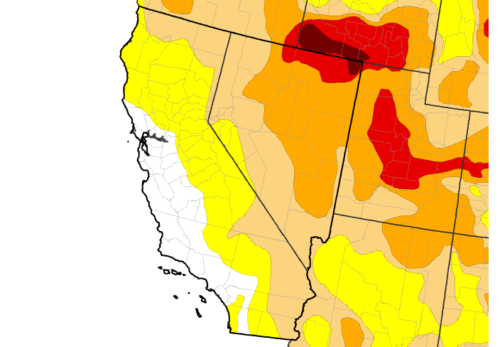 “Near-normal precipitation across the region: When looking over Water Year 2026 as a whole, much of California and Nevada received near-normal precipitation. However, the wet months came early, and the year was divided into a wet start (October-December) and a dry end (January-March). Record warm conditions: Compared to all historical water years since 1896, temperatures were among the top 10% warmest across the region. Warm winter temperatures caused low snowpack and record-setting March temperatures caused a very early snowmelt. Drought degraded in northern California-Nevada: Drought worsened in northern Nevada this water year with Extreme (D3) and Exceptional (D4) Drought emerging, while central and southern California drought conditions improved. … ” Continue reading at NIDIS.
Progress and frustration: A candid discussion of California’s water challenges
Geoffrey Vanden Heuvel, , writes, “The past week I had the opportunity to participate in Congressman Jim Costa’s Water Managers Meeting. It was a very information packed two-hour session at Fresno State. Key federal personnel from the Bureau of Reclamation, the Army Corp of Engineers, U.S. Fish and Wildlife, and the National Oceanic and Atmospheric Administration fisheries office reported on their activities as well as state officials from the Department of Water Resources and the State Water Resources Control Board. The potential for a wet winter and the preparation for both flood management and maximizing surplus water capture opportunities were major topics. Different agencies with permit responsibility are gearing up to provide those. There is significant effort related to weather forecasting and air flights to most accurately estimate snowpack so the reservoirs can be most efficiently managed. There is increased coordination between the federal, state, and local agencies that have different authorities and flood responsibilities to make sure that their resources can be quickly and efficiently deployed if necessary. … ” Read more from the Milk Producers Council.
NOTICE of status conference, procedural ruling, and preliminary assessment of issues re: Kings River’s Fully Appropriated Stream status
“The State Water Resources Control Board Administrative Hearings Office will hold a status conference on the pending petitions of Consolidated Irrigation District, Fresno Irrigation District, and Alta Irrigation District, and Semitropic Improvement District of Semitropic Water Storage District and McMullin Area Groundwater Sustainability Agency to revoke or revise the Declaration of Fully Appropriated Stream Systems with respect to the Kings River and, on the Board’s motion, the portion of the Fresno Slough to which the Kings River is tributary. … ” Continue reading from the State Water Board.
California winegrowers pulled up almost 10% of the state’s vineyards last year. Is it enough?
“California winegrowers uprooted even more vineyards this year than last — more than 47,000 acres of vines between August 1, 2025 and August 1, 2026, according to the 2026 Standing Winegrape Acreage report. It still might not be enough to counteract the seismic effects of the ongoing wine industry crisis. Wine sales have plummeted alongside the United States’ overall rate of alcohol consumption, which has spent two straight years at a historic low. Left with a years-long grape surplus that’s forced growers to spend money farming grapes that they can’t sell, many see vine removal as their only financial option. The Standing Winegrape Acreage report, which is commissioned by the California Association of Winegrape Growers, indicates that nearly 10% of California’s total vineyard land — which stands at about 439,115 acres, as of August — was stripped of vines over the past year. … ” Read more from the San Francisco Chronicle.
Migration alert: Early water and strong local production set the table for California hunters
“With a good local hatch of mallards, teal, and gadwalls, coupled with sufficient water to flood seasonal wetlands, California is poised for a better-than-average start to the waterfowl hunting season. Most of the state opens October 24, though the Northeastern Zone opened October 10. Many wetlands began flooding September 1, supporting the increased number of summer brood ponds. In the Grassland Ecological Area, the largest contiguous wetland west of the Mississippi River, northern pintails, shovelers, and American green-winged teal began arriving in late July at Volta State Wildlife Area and private wetlands south of Highway 152, where water was available early. … ” Read more from Ducks Unlimited.
In commentary this weekend …
Delta Stewardship Council hears revised Delta Conveyance Project filing
“On Thursday, October 15, the Delta Stewardship Council heard expert testimony and public comment regarding the Revised Certification of Consistency filing from the Department of Water Resources. In April, the Delta Stewardship Council unanimously determined that all but two parts of the Delta Conveyance Project are consistent with the Bay Delta Plan. The Council “remanded” those two parts to the Department of Water Resources, requiring them to address concerns on potential land use conflicts and Golden Mussels before refiling. The Council is expected to determine if they will issue a Certification of Consistency for the Delta Conveyance Project by December 9, 2026. The State Water Contractors urge the Delta Stewardship Council to deny the appeals and affirm the Department of Water Resources’ Revised Certification. … ” Read more from the State Water Contractors.
In people news this weekend …
Promotions, passings, profiles – submit people news items to maven@mavensnotebook.com.
Metropolitan board of directors elects Martin Miller as new board chair
 “Longtime water professional and businessman Martin “Marty” Miller was unanimously elected today to be the next chair of the board of directors of the Metropolitan Water District of Southern California, the largest supplier of treated water in the country. Miller, who has represented the San Diego County Water Authority on Metropolitan’s 38-member board since 2021, will serve a two-year term beginning Jan. 1. He is the first representative from San Diego to lead Metropolitan’s board in its nearly 100-year history. He succeeds outgoing Chair Adán Ortega, Jr., who has led the board since 2022. “I am grateful to my colleagues for placing their trust in my leadership for the next two years,” Chair-elect Miller said. “Our board faces some important decisions ahead on how to invest in our region’s long-term water supply reliability, while balancing concerns about the affordability of water. I am committed to working with my colleagues to produce smart solutions that benefit cities and communities across Southern California” … ” Read more from the Metropolitan Water District.
APPOINTMENTS
Jane Gray, of Goleta, has been reappointed to the Central Coast Regional Water Quality Control Board …
… where she has served since 2015. Gray has been a Senior Project Director at Dudek since 2020, where she held several other positions from 2006 to 2020 including Senior Project Manager, Project Manager, and Environmental Planner. She was a Policy Planner at Santa Barbara County Long Range and Strategic Planning from 2005 to 2006. Gray was a Policy Planner at Fresno County Community Development Division from 2003 to 2004. She was an English Language Arts and English as a Second Language Teacher at Los Angeles Unified School District in 2003. Gray was an English as a Second Language Teacher at Beverly Hills Lingual Institute in 2003. She was an English as a Second Language Teacher at Beverly Hills International School of Languages from 2002 to 2003. Gray was a Grant Writer at Southeast Area Arts Development from 2001 to 2002. She was a Regional Planning Researcher at Kwame Nkrumah University of Science and Technology from 2001 to 2002. Gray earned a Master of Science degree in Regional Planning and Management from the University of Dortmund, Germany and a Bachelor of Science degree in Social Work from the University of New York College at Buffalo. This position requires Senate confirmation, and the compensation is $250 per diem. Gray is a Democrat.
Farfalla Borah, of Santa Barbara, has been reappointed to the Central Coast Regional Water Quality Control Board …
… where she has served since 2026. Borah held multiple positions at University of California, Santa Barbara, from 1989 to 2018, including Manager, Employee & Labor Relations, Whistleblower Coordinator, Assistant Manager, and Sexual Harassment Prevention Education Coordinator. She earned a Juris Doctor Degree from The Colleges of Law, Santa Barbara and a Bachelor of Arts degree in Film Studies from University of California, Santa Barbara. This position requires Senate confirmation and the compensation is $250 per diem. Borah is a Democrat.
Denise Kadara, of Allensworth, has been reappointed to the Central Valley Regional Water Quality Control Board …
…where she has served since 2014. Kadara was a Senior Management Analyst and Economic Development Specialist for the City of San Mateo Community Development Department from 1997 to 2004. She was a Planning Committee Member of Tulare County Board of Supervisors for the 2nd District from 1994 to 1995. Kadara was a Senior Planner for the City of Hesperia Planning Department from 1990 to 1994. She was a Senior Planner and Administrative Analysts for the City of Fontana from 1986 to 1990. Kadara was a Project Coordinator for the City of Norwalk from 1984 to 1986. Kadara is a member of the ICARP Technical Advisory Committee and President of the Allensworth Progressive Association. This position requires Senate confirmation, and the compensation is $250 per diem. Kadara is a Democrat.
Peter Satin, of Palm Desert, has been reappointed to the Colorado River Basin Regional Water Quality Control Board …
… where he has served since 2018. Satin has been Conservation Program Manager at Coachella Valley Association of Governments since 2023, where he was a Regional Planner from 2020 to 2022. Satin has held multiple positions at the Mojave Desert Land Trust including Director of Land Management from 2018 to 2020 and Land Stewardship Supervisor from 2017 to 2018. He was a Wildlife Technician at the United States Forest Service in 2016. Satin was a Community Health Educator at the Peace Corps from 2011 to 2014. He earned a Master of Environmental Management degree in Ecosystem Science and Conservation from Duke University and a Bachelor of Arts degree in Comparative Religion from Vassar College. This position requires Senate confirmation, and the compensation is $250 per diem. Satin is a Democrat.
Michael Mendez, of Los Angeles, has been reappointed to the Los Angeles Regional Water Quality Control Board …
… where he has served since 2021. Mendez has been an Associate Professor and Chancellor’s Fellow for Department of Urban Planning and Public Policy at the University of California at Irvine since 2025, where he was Assistant Professor from 2019 to 2025. He was a Faculty Fellow and Associate Research Scientist at Yale School of Forestry and Environment Studies from 2016 to 2019. Mendez was a Postdoctoral Scholar and Lecturer at University of San Francisco for Department of Environmental Science from 2015 to 2016. He was Legislative Director of State Governmental Relations at the University of California, Office of the President from 2008 to 2010. Mendez was a Senior Government Affairs Advocate for Blue Shield of California from 2006 to 2008. He was Senior Legislative Aide at the California State Assembly from 2003 to 2006. Mendez is a board member of the Public Policy Institute of California and Alliance for a Better Community. He earned a Doctor of Philosophy degree in Environmental Planning from the University of California, Berkeley, a Master of City and Environmental Planning degree from the Massachusetts Institute of Technology, and a Bachelor of Arts degree in Urban and Environmental Planning from California State University, Northridge. This position requires Senate confirmation, and the compensation is $250 per diem. Mendez is a Democrat.
Hector Bedolla, of Healdsburg has been reappointed to the North Coast Regional Water Quality Control Board …
… where he has served since 2016. Bedolla has been an Agriculture Consultant at Grapewise LLC since 2011. He was a Manager and Viticulturist at Chenoweth Vineyards INC. from 2020 to 2022. Bedolla was Vineyard Manager and Viticulturist at Navarro Vineyards in 2018. He was Adjunct Faculty at Santa Rosa Junior College from 2017 to 2021. Bedolla was Vineyard and Ranch Manager at North Pacific Vineyard Management from 2016 to 2018. He was Viticulturist and Agronomist at Crop Production Services from 2013 to 2016. Bedolla was Vineyard and Ranch Manager at Stuhlmuller Vineyards from 2011 to 2013. He was a Consulting Viticulturist at Windsor Oaks Vineyards in 2011. Bedolla was Bulk Wine and Grape Broker at H and H Wine Brokerage from 2010 to 2011. He was an Agricultural Biologist at the Office of the Sonoma County Agriculture Commissioner in 2010. Bedolla was a Vineyard Manager at Kendall-Jackson Wine Estates from 2000 to 2010. He was Vineyard Manager at Stag’s Leap Wine Cellars from 1999 to 2000. Bedolla earned a Bachelor of Science degree in Plant Science at the University of California, Davis. This position requires Senate confirmation and the compensation is $250 per diem. Bedolla is a Democrat.
Alexandra Hart, of Montague has been reappointed to the North Coast Regional Water Quality Control Board …
… where she has served since 2022. Hart has been Senior Appraiser for Central California Appraisals since 2025. She has been Senior Appraiser at Land Vest Real Estate since 2022. Hart was Appraiser at Yosemite Farm Credit, ACA, from 2015 to 2022. She is a member of American Farmland Trust. Hart earned a Bachelor of Science degree in Agribusiness Management and Food Marketing from the University of Kentucky. This position requires Senate confirmation, and the compensation is $250 per diem. Hart is registered without party preference.
Andrew Gunther, of Piedmont, has been reappointed to the San Francisco Bay Regional Water Quality Control Board …
… where he has served since 2020. Gunther was Executive Director for the Center for Ecosystem Management and Restoration from 2000 to 2018. Gunther was Co- Founder for Applied Marine Sciences from 1991 to 2007. He earned a Doctor of Philosophy degree in Energy and Resources from University of California, Berkeley, a Masters of Energy and Resources from University of California, Berkeley and a Bachelor of Arts in Biology from Amherst College. This position requires Senate confirmation, and the compensation is $250 per diem. Gunther is a Democrat.
Donald Young, of Morgan Hill, has been reappointed to the San Francisco Bay Regional Water Quality Control Board …
… where he has served since 2021. Young has been a Senior Vice President at Salas O’Brien since 1998. He earned a Bachelor of Science degree in Biopsychology from University of California, Santa Barbara. This position requires Senate confirmation, and the compensation is $250 per diem. Young is a Democrat.
Podcasts …
VIC BEDOIAN: California prepares for historic El Nino
In early October Southern California was lashed by rainstorms causing high tides and flooding. It was a foreboding of the coming El Nino season that scientists forecast to be one of the strongest in history. On September 21st, Governor Gavin Newsom declared a state of emergency to prepare for responding to impacts from future storms. A panel of state experts recently explain the steps being taken to mitigate those impacts. Vic Bedoian reports from Fresno.
THINK OUT LOUD: Salmon are returning to the Upper Klamath River after 100 years
Since four Klamath River dams came down in 2024, researchers, tribes and conservation officials have all been waiting to see whether salmon would return to the rivers and streams they last populated 100 years ago. A study published in the journal “Nature” this summer shows that they have. Researchers documented thousands of salmon migrating upstream in 2024 and 2025. They found that Chinook salmon in particular have repopulated 88% of their historical range in the Klamath and its tributaries. Damon Goodman is the lead author of the study and the Shasta Cascade director for the nonprofit California Trout. He joins us with more details.
WATER IS A MANY SPLENDOR’ED THING: A Real Gully Washer
 Aspiring to live in the rural areas of the Sierra Nevada Mountain foothills, I became aware of the importance of erosion control. I noticed that it takes very little disturbance of the land surface to create big erosion control problems. Water is a Many Splendor ’ed Thing brings you another water relationship that has a personally significant impact to your life. Produced by Stephen Baker, Bringing People Together to Solve Water Problems, water@operationunite.co 530-205-6388
THINK OUT LOUD: Algal blooms happening more often around the West
For more than 20 years, Oregon has been monitoring toxic algal blooms. Other states such as Utah, Wyoming and California have been monitoring the blooms as well. Now, new reporting from High Country News highlights how these blooms are happening more frequently and are lasting longer. Reporter Christine Peterson joins us to share more on why this is happening and what states are doing to try to address it.
TALKING UNDER WATER: Water: the coolest part of infrastructure
In this episode Talking Under Water editors from other industry publications discuss how water serves as the invisible backbone of modern infrastructure, industry and technology, and what could happen if that resource suddenly disappeared. Featuring perspectives from across the Endeavor Business Media network, the conversation explores the critical role water plays in cooling data centers, supporting commercial buildings, and enabling manufacturing operations.
In regional water news this weekend …
NORTH COAST
Lower Trinity River adult Chinook salmon fishery to close Friday night
“The adult fall-run Chinook salmon fishery on part of the lower Trinity River will close Friday night after anglers are expected to reach the season quota, according to the California Department of Fish and Wildlife. CDFW said the closure will take effect at 11:59 p.m. Friday, Oct. 16, on the Trinity River from the Denny Road Bridge at Hawkins Bar downstream to the confluence with the Klamath River. The quota for that stretch of river is 536 adult Chinook salmon, and state officials expect anglers to reach that number by Friday night. … ” Read more from KRCR.
SACRAMENTO VALLEY
Settlement saves Coyote Creek trees as Sacramento County solar project shrinks
“Developers of the proposed Coyote Creek solar project agreed Friday to protect thousands of oak trees and conserve more than 1,300 acres of a Sacramento County ranch, resolving a high-profile environmental lawsuit. The settlement resolves a California Environmental Quality Act lawsuit filed by the Environmental Council of Sacramento and the California Native Plant Society against the developer of the Sacramento County-approved project. “The California Environmental Quality Act is not meant to stop projects,” said Carol Witham, ecologist and CNPS treasurer, in a phone interview with Abridged by PBS KVIE. “It’s only meant to improve them.” … ” Read more from PBS Abridged.
BAY AREA
West Marin sewage leak forces oyster farm closures
“A sewage leak has prompted state health officials to order the temporary closure of oyster farming areas in Tomales Bay. The operations will remain closed until the California Department of Public Health determines that water quality at Olema Creek has safe levels of bacteria. The creek flows north and empties into Tomales Bay, where there are three large oyster farms. Sarah Jones, director of the Marin County Community Development Agency, said the county staff began testing the water on Thursday and would continue testing for the rest of the week. National Park Service staff detected a high amount of bacteria in the creek last week during routine water testing. The leak was traced to a septic system for the Olema House hotel and its restaurant, Due West. … ” Read more from the Marin Independent Journal.
San Jose’s new $177 million ‘dewatering’ facility passes the smell test
“Nobody likes to think about what happens after we flush, but it all has to go somewhere. For decades, a lot of what is technically called digested sludge — feel free to insert your own term — ended up on 500 acres of drying beds and open-air lagoons in North San Jose. There, nature would take its course and dry out the biosolids in a process that could take up to four years. And you cannot even imagine the smell. On Thursday, though, San Jose made that job stink a lot less, cutting the ribbon on a $177 million dewatering facility at the San Jose-Santa Clara Regional Wastewater Facility off Zanker Road. It uses centrifuges and an odor control system to remove the liquid from the sludge, which is piped over from the main facility, and makes the resulting biosolids ready for use as compost or fertilizer in a day instead of years. An odor-control system captures and treats the foul air in pipes with carbon and ammonia scrubbers instead of letting it waft over to Alviso and Milpitas. … ” Read more from the San Jose Mercury News.
As San Jose presents draft rules for data centers, many still call for a moratorium
“As the city of San Jose presented its draft standards on data centers to the public for the first time Thursday evening, dozens of residents demanded an immediate pause or moratorium on the sites amid growing environmental, public health and quality-of-life concerns. The proposed regulations come as San Jose attempts to balance the economic promise of data centers against unprecedented strains on local resources and potential environmental harm. With 13 data center applications already in the pipeline, city leaders face intensifying pressure from residents who argue the draft standards do not go far enough to protect surrounding neighborhoods. There are already 25 to 40 data centers operating throughout the city. The meeting grew contentious before public comment even began. … ” Read more from the San Jose Mercury News.
SAN JOAQUIN VALLEY
Help wanted: Who will keep the Central Valley’s water moving?
“Building and maintaining infrastructure, protecting water quality, and conserving supplies are all critical to managing the Central Valley’s precious water resources. One element critical to the future of water in the Central Valley is easy to overlook: people. America’s water sector has a substantial problem: more people are retiring and leaving the sector than are discovering it. In part, this stems from a fundamental misunderstanding of what a water job is, with many assuming it is limited to water and wastewater treatment plants. From irrigation district operations to public relations, the variety of jobs in the water sector is wide, but it is so much more than that. According to the US Bureau of Labor Statistics- between 2025 and 2035, the number of people engaged in managing our water at water and wastewater treatment plants (The only water-specific BLS data collected) will fall by about 6%, mostly to retirements- but the problem extends to every corner of the water world – there simply aren’t enough new water workers to replace those who are exiting the workforce. Without enough qualified people to do the jobs necessary to make water work, nothing works. The future of our conveyance, storage, flood control, drinking water and wastewater treatment, irrigated agriculture, and more need the talents and passion of upcoming generations. Today’s water leaders must inspire those passions and develop those talents. … ” Read more from the Water Blueprint for the San Joaquin Valley.
El Nino could mean trouble for Ripon farmers & residents in parts of Manteca, Lathrop
“Pity those that live along the San Joaquin River — including those that are in southwest Manteca and parts of Lathrop not within River Islands. The dice is being rolled once again. A powerful El Nino is coming our way. Based on modeling by the National Oceanic and Atmospheric Administration that hasn’t been completely dismantled — but in all fairness has been routinely ignored by red and blue politicians for decades — the Northern San Joaquin Valley and Central Sierra are in for a potentially wild ride. The NOAA notes there is a 33 to 40 percent probability for higher than normal temperatures this winter while precipitation has a 40 to 50 percent chance of being higher than normal this winter. Can anyone say shades of 1997? … ” Read more from the Manteca Bulletin.
Los Banos, Gustine awarded $361,000 for water infrastructure projects
“Los Banos and Gustine will receive a combined $361,000 for water infrastructure projects as part of more than $1 million in grants awarded by the San Joaquin River Exchange Contractors Water Authority. The funding is part of the authority’s Community Infrastructure Fund, which uses proceeds from its Conservation Water Transfer Program to support infrastructure improvements throughout the Central Valley. … ” Read more from the Los Banos Enterprise.
“Sitting ducks.” Pond residents feel abandoned as brewing “super” El Niño raises flooding fears
“The first thing Bilqees (Bell) Ubadi shouts across Pond Road at an approaching reporter is: “No one has come. No one has done anything.” There aren’t many secrets in this tiny northern Kern County community that consists of about 15 homes, Ubadi’s Pond Mercantile and the Pond Elementary School. So, word gets around when a reporter is asking about flood preparations for the coming El Niño winter after the town was almost universally swamped in 2023. “No officials have come talked to us at all and I’m terrified,” Ubadi said as she pointed to where flood water came up from Poso Creek four miles to the south and quickly overtook the town three years ago. “We got hit twice. First, during the first storm and again a few days later. “It was the most disgusting water I’ve ever seen.” … ” Read more from SJV Water.
SOUTHERN CALIFORNIA
California residents are waking up to their homes sliding into the ocean. And the worst is yet to come.
“It was 3:30 a.m. on Oct. 9 and the unthinkable was happening all around Shawn Curtis: The boardwalk in front of his two-story beachfront apartment building was gone. The 25-foot-wide sand beach was gone. Salt water poured in from all sides. And now the building was slanting down into the ocean. Curtis couldn’t make sense of what he saw. “The doorframe was crooked. The window was crooked, and then I saw a big wave crash,” he told NBC News on Thursday. … “We rushed for our lives, but it was clear the house was toast,” Curtis said, referring to his roommate. “It was a foregone conclusion. It was gone.” The worst of El Niño is still months away, but Southern California’s fragile coastline is already being transformed by record-setting king tides and storm surges. … ” Read more from NBC News.
El Niño erosion is chewing up Calif.’s famous Pacific Coast Highway
“After a summer of strong waves and lost sand, Southern California’s famous beach communities thought there might be hope for at least a temporary fall reprieve before the winter storms arrive. But that hasn’t been the case. High, strong surf — a mix of warm ocean waters from a rapidly growing El Niño system, an underwater Kelvin wave and the remnants of Hurricane Rachel — have continued to chew up coastline recently, even knocking out or endangering some very important stretches of road. In Laguna Beach, a section of the right southbound lane of the iconic Pacific Coast Highway has been taken offline by Caltrans after a large crack was discovered along the cliffside next to the roadway. Creeping ocean waves below have been slowly lapping at the loose soil, causing extensive erosion that threatens to pull the roadway apart. Laguna Beach city officials said that, while this stretch of road is outside of their local jurisdiction, they are working with Caltrans to determine needed repairs and a reopening timeline, which as of Oct. 16 remains unknown. … ” Read more from SF Gate.
Not alone in the fight: Southern Steelhead Symposium 2026
“Southern steelhead are among the rarest fish in California. But if you ask Elizabeth Burns, CalTrout’s Southern California Project Manager and leader of the Southern Steelhead Coalition, what she wants people to take away from this year’s Southern Steelhead Symposium, her answer is hopeful: “Southern steelhead aren’t extinct. They are here and we can do something about it.” That message filled the room this year. More than 130 scientists, agency staff, Tribal members, advocates, and anglers gathered to share what’s working, wrestle with what isn’t, and figure out how to keep the momentum going for one of the state’s most resilient fish. Attendees came from across the entire Southern California steelhead DPS (distinct population segment), and from nearly every corner of the work to save it. Federal and state agencies were there, including NOAA Fisheries, CDFW, the U.S. Fish and Wildlife Service, California State Parks, the State Coastal Conservancy, the California Conservation Corps, and the State Water Board. So were local water districts, the Ventura and Santa Monica Mountains resource conservation districts, and Marine Corps Base Camp Pendleton. … ” Read more from Cal Trout.
Just 8 years after Woolsey, a new fire ignites in its scar — too soon for both residents and plants
“The rugged shrub-filled hills where the Bryson fire ignited — triggering evacuations and putting Malibu residents on edge — burned just eight years ago, a painful reminder of the speed at which freshly scarred communities are finding themselves once again at risk. The natural chaparral’s ability to quickly regrow has enabled such a quick fire return interval in the Santa Monica Mountains. But so many back-to-back ignitions are jeopardizing the ecosystem’s long-term viability — and making it even more fire-prone as invasive plants squeeze out native species. Southern California’s native chaparral ecosystems are no stranger to fire. Many species use flames to regenerate. Island manzanita and chamise, for example, develop deep root systems that can survive fires on the surface and resprout from the base. … ” Read more from the LA Times.
Torrance company aims to increase accessibility to water desalination technology
“A new Torrance company, Vital Lyfe, is working to improve and simplify water desalination technology. While much of the state is not currently in a drought, the unpredictable future of climate change has many agencies working to build water resiliency. This has become a priority in the South Bay, specifically by the California Water Replenishment District because underneath Torrance is the largest brackish groundwater plume in the Los Angeles County Water Basin, spanning 14 miles. Brackish groundwater – water with high levels of salt, like seawater – cannot be used as drinking water unless desalinated, a process that is often expensive and complicated. So Torrance has had to buy some of its water from the Metropolitan Water District. About 50% of the water in southern Los Angeles County, in fact, is imported from hundreds of miles away from sources like the Colorado River and the Sacramento Delta. … ” Read more from the Daily Breeze.
Perris fairgrounds project including small data center still in early stages, officials say
“Residents in Riverside County are raising the alarm on a small data center project being proposed for the state fairgrounds near Lake Perris. But officials who run the site say that the proposal is still in its early stages. Last month, Global Stack USA, an infrastructure company based in Santa Ana, received approval from the 46th District Agricultural Association Board of Directors to explore building a small data center for emergency response at the Southern California Fair and Events Center at Lake Perris. The 46th District Agricultural Association Board oversees the fairgrounds. According to Global Stack, “edge” data centers are the size of a shipping container or snack bar and have a lower environmental impact than larger data centers being built for Artificial Intelligence. … ” Read more from KVCR.
IMPERIAL/COACHELLA VALLEYS
Inside the long, bitter fight over one man’s quest to build the biggest AI datacenter in California
“Sebastian Rucci zoomed in on a map in late 2024, looking closely at a large block of brown earth. The barren plot sandwiched between sprawling alfalfa fields and sleepy desert suburbs was exactly what he’d been searching for – the perfect place to realize his dream of building the largest artificial intelligence datacenter in California. The dusty expanse wasn’t an obvious location. It was in the Sonoran desert, just north of the Mexican border, where temperatures regularly rose past 100F (37.8C). Water was scarce in the once-booming agricultural area, which gets its supply from the beleaguered Colorado River. And then, there was the city of Imperial – population 22,000 – to win over. As controversial datacenter projects have sprung up across the US, residents were naturally skeptical of a new, energy-guzzling neighbor. … ” Read more from The Guardian.
SAN DIEGO
Data center pitched for downtown San Diego
“The investment firm once helmed by local financier and former Union-Tribune owner “Papa” Doug Manchester is considering building what could be California’s largest AI data center right next door to downtown San Diego, our MacKenzie Elmer reveals. Emails obtained by Elmer show Manchester Financial Group is in talks with the Navy and local power officials about a proposal to build a 400-megawatt data center at the site of the Naval Information Warfare Systems Command near Old Town. The data center would be part of a larger overhaul of the 70-acre site that would include a new headquarters for the command center along with housing, hotels, retail and other amenities. If built, the data center could be the state’s largest. By comparison, a controversial data center proposed in Imperial County would be 330 megawatts. … ” Read more from the Voice of San Diego.
San Diego County taps former diplomat as pollution crisis chief amid Tijuana River sewage crisis
“San Diego County on Monday will introduce a former U.S. diplomat as its first Pollution Crisis Chief, tapping Bridget Premont to lead its response to the Tijuana River sewage and pollution crisis as a new study estimates the crisis could cost the region $7.9 billion over the next two decades if it is not fixed. Premont will be introduced at a 1 p.m. news conference at the San Diego County Administration Center, according to the county. She will be joined by Board of Supervisors Chair Terra Lawson-Remer, Chair Pro Tem Paloma Aguirre and county Counsel Damon Brown. The position, described as first-of-its-kind, will be based in the County Counsel’s office. From 2017 to 2021, Premont was political and economic chief at the U.S. Consulate in Tijuana, where she also served as acting consul general, according to the county. Her efforts there helped secure more than $340 million in U.S. and Mexican federal funding to fight cross-border water pollution, the county said. … ” Read more from the San Diego Union-Tribune.
Along the Colorado River …
Arizona moves to join lawsuit against federal Colorado River plan
 “The Grand Canyon State announced Friday that it intends to join Nevada’s lawsuit challenging the federal government’s most recent plan for the future of the Colorado River. The announcement comes after years of unsuccessful negotiations among the seven states that depend on Colorado River water to develop a plan to deal with decreasing water availability amid a 25-year mega-drought. “Like Nevada, Arizona believes the federal government’s new operating framework ignores the basic elements of the law of the river,” Arizona Department of Water Resources Director Tom Buschatzke said during a Friday afternoon press conference. “It could result in cuts to the state apportionment that would devastate Arizona’s economy.” Under the new federal framework that was revealed in August, Arizona and the other Lower Basin states will face significant cuts to their Colorado River water, but would work together on voluntary conservation efforts to at least temporarily avoid more extreme cuts proposed by the federal government. … ” Read more from the Arizona Mirror.
Arizona joins Nevada lawsuit over Colorado River cuts
“Arizona has joined Nevada in a lawsuit challenging the federal government’s plan to drastically cut Lower Basin states’ share of Colorado River water. The Arizona Department of Water Resources and Arizona Gov. Katie Hobbs announced Friday they filed a motion to intervene in a lawsuit filed by the state of Nevada in August challenging the U.S. Interior Department’s plan to impose mandatory water cuts in Nevada, Arizona, and California. In August, the federal government finalized a new operating plan for the river that requires Arizona, California and Nevada to reduce their water use by 1.25 million acre-feet in both 2027 and 2028, more than twice the largest reductions required under the current guidelines that expire at the end of the year. Upper Basin states – Colorado, New Mexico, Wyoming and Utah – would not be subject to mandatory water reductions under the plan. … ” Read more from the Nevada Current.
EXPLORE MORE COVERAGE:
- Arizona files motion to intervene in the Nevada Lawsuit challenging the recent federal decision governing the operation of the Colorado River, Statement from Tom Buschatzke, Director of the Arizona Department of Water Resources
- Arizona moves to join Colorado River lawsuit alongside Nevada, from KJZZ
- ‘Drawing a line in the sand’: Arizona joins Nevada’s lawsuit over Colorado River cuts, from the Nevada Independent
- Arizona joins lawsuit challenging Colorado River cuts, from the Courthouse News Service
Lake Mead projections improve in new 2-year study, less likely to break 1,000 feet
“Two-year projections for Lake Mead and Lake Powell show improved water levels expected for the nation’s two largest reservoirs. Comparing last month’s projections with the new October forecast released on Wednesday, it’s a change for the better. That won’t mean surplus water by any stretch of the imagination. But monthly projections haven’t improved in a long time. Usually, the projections get worse from month to month. “The modest improvement in October’s projections for Lake Powell is due to better-than-expected September precipitation, resulting in an increase in the projected inflow for water year 2027,” Alex Pivarnik, a Bureau of Reclamation supervisory hydrologist, told 8 News Now. He noted that winter conditions remain uncertain, and it’s too early to view this small gain as substantive. … ” Read more from KLAS.
Dropping Lake Powell levels reveal ‘crime against nature’
“Tucked deep in a breathtaking canyon about 50 miles from the nearest town sits a towering red rock bridge nearly as tall as the Statue of Liberty. Soaring 290 feet, Rainbow Bridge has been sacred for generations of Native Americans, including Navajo and Hopi people. So awe-inspiring that it was made a national monument in 1910, the bridge attracted Theodore Roosevelt shortly after he left the White House. So remote that it’s internationally recognized for its dark night-sky viewing, the bridge site once drew more than 300,000 visitors annually. And today, almost no one can get there. Drastically low water levels in Lake Powell have effectively halted most public access to Rainbow Bridge National Monument this year. National Park Service officials have removed the floating docks that once permitted easy boat access for tourists. And what was once a short walk from the water’s edge is now a 2-mile uphill hike that starts with a jump off a private boat into waist-deep mucky water and a wade through quicksand. … ” Read more from the USA Today.
In national water news this weekend …
Exactly how much of an environmental menace is AI? Here’s what we know
 “The staggering rise of AI has become a political flashpoint, especially when it comes to the data centers needed to train and operate it. As the industry booms, many people are increasingly worried about the environmental impacts of these hulking buildings, from their seemingly insatiable demand for water and energy, to the heat and noise they produce. Nearly 90% of Americans say they’re more concerned than excited about the rise of AI data centers, according to a CNN poll conducted by SSRS in September. Information and statistics are flying around, with some groups framing the AI data center boom as a potential environmental catastrophe, while others say concerns are overblown or even fake. It’s adding up to a confusing picture. So, just how bad is AI for the environment? … ” Read more from CNN.
PFAS Contamination creates growing concerns for farmers
“Farmers often face financial, regulatory and reputational challenges when per- and polyfluoroalkyl substances (PFAS) are detected in agricultural land, crops, water or food, even when the contamination originates elsewhere, according to a new paper from the Council for Agricultural Science and Technology (CAST). The report, titled “PFAS in Agriculture: Science, Uncertainty, and Risk Communication,” is scheduled for release Friday, October 16, 2026. The report finds that farmers and rural communities “find themselves at the center of a crisis largely not of their making,” bearing “disproportionate regulatory, economic, and reputational consequences when PFAS are detected.” “Farmers are partners in risk reduction, not convenient downstream targets for contamination they did not cause,” the report concludes. … ” Read more from Farms.com.
FEMA lays groundwork to shift disaster burden to states
“The Trump administration plans to reduce state and local dependency on federal disaster aid and could move Federal Emergency Management Agency workers out of Washington, D.C., according to an internal FEMA memo obtained by POLITICO. FEMA Administrator Cameron Hamilton wrote in an Oct. 15 memo — confirmed by two people with direct knowledge of it — that the agency will “strengthen state and local emergency management capacity” in an effort to lower reliance on the federal government. “Reducing federal dependency requires partners to build, maintain, and exercise the capabilities needed to manage incidents effectively,” the seven-page memo to agency employees says. … ” Read more from Politico.

