
A wrap-up of posts published on Maven’s Notebook this week …
Note to readers: Sign up for weekly email service and you will receive notification of this post on Friday mornings. Readers on daily email service can add weekly email service by updating their subscription preferences. Click here to sign up!
In California water news this week …
Delta tunnel opponents renew fight to rework massive water project
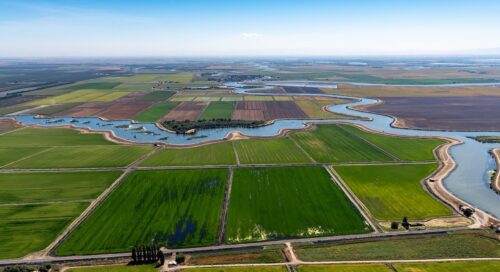
“Groups opposed to California’s Delta Conveyance Project had a second chance Thursday to argue why the massive water project fails to meet essential criteria and should return to the state water department for further workshopping. The Delta Stewardship Council heard appeals to a certificate of consistency for the massive water transfer system, making no decision that day whether to reject the appeal or send it back to the Department of Water Resources for more tweaking. The council can’t outright deny the project. A decision is expected Dec. 9. The council previously denied all appeals, except two. That led the department to rework its project certification on those two points: whether its facilities improve habitat conditions for the golden mussel, an invasive species; and if it considered and avoided, or reduced, conflicts between its twin cities complex and Sacramento Area Sewer District’s Harvest Water project. Those appealing and the Delta Protection Commission, the latter an advisory body for the council, said the water department failed to meet the mark. “It’s just too risky for our delta for all the things we’re trying to accomplish,” said Osha Meserve, representing a handful of appellants. … ” Read more from the Courthouse News Service.
Avert ‘ecological tailspin’: Advocates sue California over one of the largest water systems in the world
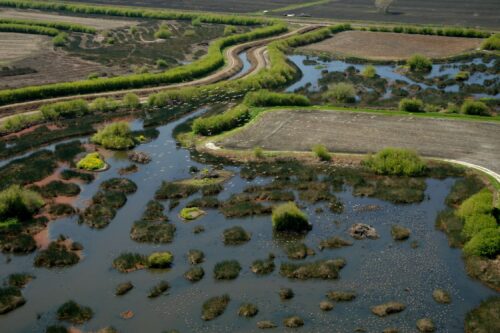 “In the Sacramento-San Joaquin River Delta, where California’s biggest rivers meet, the state’s massive pumps send water flowing into canals to about 27 million people and 750,000 acres of farmland. A major new lawsuit argues the state is taking far too much water out of the Delta, harming native fish and the ecosystem, causing toxic algae blooms, and threatening local farms and communities. “The goal that we are aiming for is to save the Delta,” said Carolee Krieger, executive director of the environmental group California Water Impact Network. “We want them to cut back the water they take out of the Delta by half.” Her group filed the lawsuit Friday together with the Central Delta Water Agency, which represents hundreds of local farmers concerned that heavy pumping can draw seawater farther into the estuary, making their irrigation water salty, damaging their crops. Dave Owen, a professor at UC Law San Francisco, said the suit is “a frontal assault on the State Water Project.” “I think this case is a very big deal if it manages to go forward,” Owen said. “This is one of the most ambitious California water lawsuits that I have seen.” … ” Read more from the LA Times. | Read via Yahoo News.
SEE ALSO: C-WIN: Lawsuit filed against the Department of Water Resources, press release from C-WIN
Keeping water instream: The promise and challenges of Section 1707
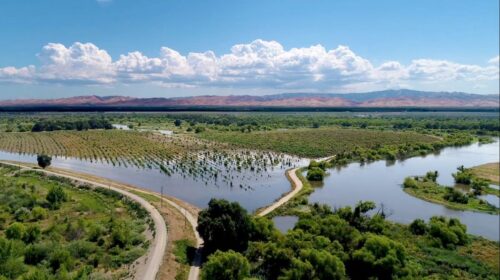
“Keeping water in a California stream can be as complicated as taking it out. Water Code Section 1707 gives water-right holders a way to dedicate water to fish, wildlife, wetlands, and recreation without giving up the underlying right—but turning that option into protected flow can require extensive analysis, public review, and downstream accounting. Those opportunities and obstacles framed an August 2026 Watershed Solutions Network virtual workshop on Section 1707 instream-flow dedications. Speakers included Joaquin Esquivel, chair of the State Water Resources Control Board; Erik Ekdahl, chief deputy director of the State Water Resources Control Board; Julie Rentner, president of River Partners; and Alex Hart, an appraiser with Central California Appraisals and a Siskiyou County rancher. … ” Continue reading from Maven’s Notebook.
Historic return of salmon to California’s once-dry San Joaquin River is spawning toward recovery, one egg at a time
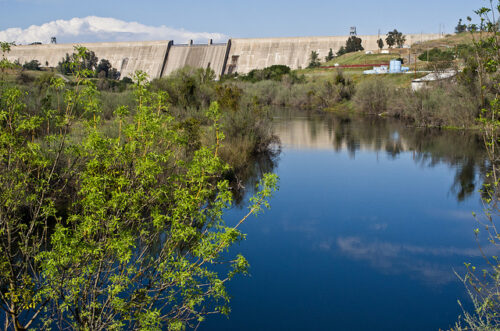 “It’s salmon squeezing time at California’s newest, most technologically advanced fish hatchery. Standing in a large tank filled with 54 degree water, a fish technician passes an ultrasound wand across the abdomen of an adult female Chinook salmon to ensure its eggs are fully developed. If so, techs then squeeze out some eggs from the salmon’s belly while feeling for the looseness of the remaining eggs. Each ripe female is then transported into a separate holding tank for spawning the following day. Male broodstock get similar handling, except the squeezing is employed to express milk. The males also get scanned (via a transponder tag embedded in their abdomen) to determine which are the least genetically related to the females. Why? Because the last thing biologists want, especially when resurrecting a salmon run that was killed off for more than six decades, is inbred fish. “Genetic diversity is really important in a population because it gives the population the ability to adapt to changing conditions in the river,” explained Brian Erlandsen, a senior environmental scientist supervisor for the California Department of Fish and Wildlife. “So you try to maximize that as much as you can.” … ” Read more from Fresnoland.
El Nino looms large over U.S. Winter Outlook
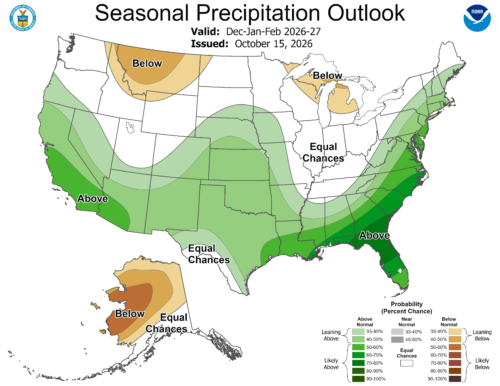 “NOAA’s U.S. Winter Outlook, released today, shows how El Nino will likely influence the upcoming winter months (December 2026 to February 2027), with warmer-than-average temperatures expected across the northern U.S.; wetter-than-average conditions likely across the southern U.S., from California to Florida, and along the Eastern Seaboard; and drought improving for the majority of the country, including areas in the East, Southern Great Plains and Southwest. “As we know from decades of observations, a very strong El Nino will likely bring a southward and eastward shift to the jet stream for the contiguous U.S., which tilts the odds toward stormier weather across the South,” said Ken Graham, director of NOAA’s National Weather Service. “While higher chances of rain and snow may bring relief to drought-afflicted areas, too much precipitation on dry soil can fuel destructive flash floods and mudslides. Now is the time for communities and individuals to plan ahead for the upcoming winter.” … ” Read more from NOAA.
Understanding the causes and impacts of 2026’s record-breaking El Niño
“Anxiety is high over this year’s El Niño. It’s breaking records, and hasn’t even peaked. So how does El Niño work? What might Southern Californians expect? And how can we prepare for a potentially rough winter? Climate, ocean and coastal-policy experts at UC Santa Barbara offer their perspective. The El Niño Southern Oscillation is a natural fluctuation of sea surface temperatures in the Pacific Ocean. The cycle repeats itself every 2 to 7 years, bringing warm water east from the tropical Pacific, toward the west coasts of North and South America for a year. Higher sea temperatures affect weather and ocean patterns, generally bringing strong storms to Southern California. So far, 2026 appears to be a superlative year. “The latest forecast out of NOAA gives a 75% chance that this will be the biggest El Niño since at least 1950,” said Samantha Stevenson, a climate scientist who specializes on the El Niño Southern Oscillation and a professor at UCSB’s Bren School of Environmental Science & Management. In fact, a recent study by Stevenson found that the cycle itself has become more intense over the last 40 years than in the previous 1,000 years. The threshold for El Niño is when surface temperatures in the tropical pacific are 0.5º Celsius higher than average for that time of year. Instruments show that the ocean surface is already 4º C higher at the equator. “And the subsurface temperatures are even higher,” Stevenson said. “It’s 10º Celsius warmer than normal along the equator.” … ” Read more from The Current.
‘A potential catastrophe’: Sacramento-San Joaquin Delta prepares for Super El Niño
“Aaron Lickingteller pointed down from the top of one of the westernmost levees in the Sacramento-San Joaquin Delta to the land 25 feet below. Without constant maintenance work, he said, these levees degrade quickly. “Squirrel holes, dead trees, little leaks, a little bit of erosion. Next thing you know, you’re springing a leak,” he said. “That leak is like a zipper on a pair of pants. You just unzip that, and everything comes out, you know what I mean, or goes in.” Like most Delta islands, Twitchell Island sits below sea level. It is less of an island, more of a bowl. On either side run the Sacramento and San Joaquin rivers, which together capture about 40% of the state’s runoff. This year, as California faces what experts are calling “Super El Niño” conditions, residents in the Delta are preparing for the prospect of devastating flooding. But they have faced tough conditions before, and while they are reading for worst-case scenarios, some feel a hard-earned confidence that comes from decades of work to improve levees and response systems. But if predictions hold, keeping the water out won’t be an easy task. The volume of water pushing against the Delta’s roughly 1,100 miles of levees — many built by hand more than a hundred years ago — will be much higher. … ” Read more from KQED.
Dozens of California dams need repair as El Niño winter draws closer
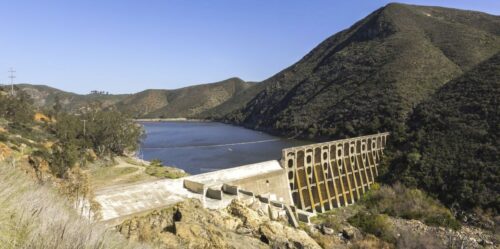
“With an El Niño winter threatening heavy rain, the State Auditor warns that California’s aging dams “continue to pose a risk to public safety,” especially in the Bay Area, San Diego, and Los Angeles areas. Lawmakers gave the state the power to penalize dam owners that violate safety requirements in 2017, after the Oroville spillway failure forced the evacuation of nearly 200,000 people. Water managers have yet to use that power, the audit found. Even if state water managers had wielded their enforcement powers, dam owners likely couldn’t have afforded the fixes. An audit released Monday found 57 dams in poor or unsatisfactory condition as of May, up from previous counts. That number is likely to keep rising, as state water officials reevaluate aging dams. The 40 riskiest dams — rated high or extremely high hazard — are located throughout the state, but cluster near densely populated coastal cities. Should these dams fail, the auditor reported, “they could collectively endanger as many as 1.5 million people and cause more than $265 billion in economic damage.” … ” Read more from Cal Matters.
SEE ALSO: California auditor gives damning assessment of state’s dams, from the Courthouse News Service
Achieving groundwater sustainability while preparing for El Niño
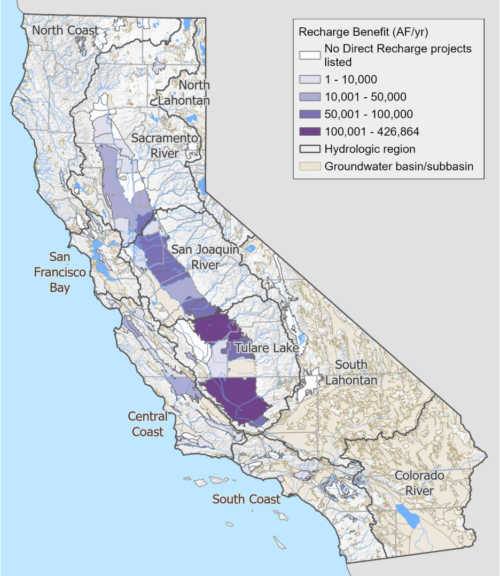 “California’s weather extremes are a reminder that managing our groundwater resources requires planning for both drought and floods. After a warm spring that rapidly melted the State’s snowpack, forecasts now point to strong El Niño conditions for this coming winter, bringing the potential for significant storms and opportunities to replenish groundwater supplies. Over the past six years, our state has experienced record-breaking weather events, from severe drought that strained domestic wells to historic precipitation that produced excess flood flows threatening life, property, and critical infrastructure. These extremes underscore the importance of building a more resilient water supply – one that can capture and store water during periods to help sustain communities, agriculture, and ecosystems through dry years. That work is already underway. Through the Sustainable Groundwater Management Act (SGMA), local agencies are making progress toward long-term groundwater sustainability, supported by state investments in groundwater recharge, improved monitoring, and coordination. As California prepares for a potentially wet winter, state and local partners are working together to identify opportunities to capture and store available flood flows when conditions allow. … ” Read more from DWR.
DWR releases Fall 2026 California’s Groundwater Conditions, Semi-Annual Update
 “The Department of Water Resources (DWR) has released the Fall 2026 – California’s Groundwater Conditions, Semi-Annual Update, which provides a look back at California’s groundwater conditions during Water Year 2026 and the efforts to prepare for future recharge opportunities. The report documents local progress under the Sustainable Groundwater Management Act (SGMA), alongside persistent challenges that require sustained management. Building on decades of recharge experience, State and local agencies are working to ensure infrastructure, agreements, and operational plans are in place to capture and store legally available water when wet conditions arrive—helping reduce flood impacts and strengthen groundwater supplies for future dry periods. … ” Continue reading from DWR.
Tide’s End Project will complete 10-mile wetland corridor in Yolo Bypass
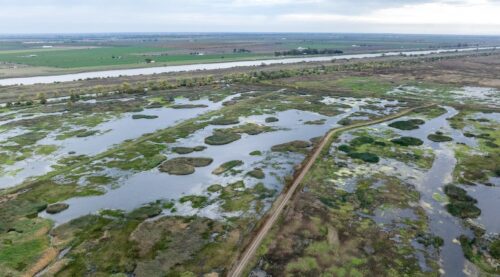
“A proposed restoration project at the southern end of the Yolo Bypass will connect existing wetlands while supporting agriculture and flood management. At the Delta Stewardship Council’s September meeting, Judah Grossman of the Department of Water Resources’ Division of Multi-Benefit Initiatives briefed council members on the ecological, flood-conveyance, and land-use benefits of the 2,212-acre Tide’s End Multi-Benefit Restoration Project. The proposed 2,212-acre Tide’s End multi-benefit restoration project is in Yolo County at the downstream end of the Yolo Bypass, about 12 miles southwest of Sacramento. Adjacent to the Cache Slough Complex and the Toe Drain along the west side of the Sacramento Deep Water Ship Channel, the site lies where the Yolo Bypass floodplain meets the Delta’s tidal influence, giving the project its name and contributing to its ecological importance. … ” Read more from Maven’s Notebook.
In 2016, a California teenager discovered thousands of golf balls underwater, two years later, combined cleanups had recovered 50,681
“A teenager in California began collecting golf balls from the ocean in 2016 after discovering thousands scattered across the seabed near Pebble Beach. By June 2018, the cleanup efforts had recovered more than 50,000 golf balls, weighing around 2.5 tonnes. Alex Weber, who was 16 when she came across the golf balls, was free-diving with her father, Mike Weber, near Carmel, California, when she spotted the unusual pollution. The balls covered the seabed so extensively that she could barely see the sand.Weber decided to remove them from the water with help of her father, friends and other divers. The effort later attracted the attention of scientists and contributed to research into golf balls as a source of marine pollution. … ” Read more from The Economic Times.
In commentary this week …
Why Newsom’s Voluntary Agreements won’t work, Part 1: Inadequate resources
Jon Rosenfield, Ph.D., Science Director for San Francisco Baykeeper, and Devon Pearse, Ph.D. Lead Scientist for Friends of the River, write, “Over the past 30 years, scientific studies of San Francisco Bay and its watershed have demonstrated the critical role that river flows play in protecting water quality, native fish and wildlife and their habitats, and the fishing, Delta, and Tribal communities that depend on vibrant aquatic ecosystems. Yet, despite all this knowledge, California’s unsustainable diversion of Central Valley rivers that create the Bay’s estuarine ecosystem has continued and even increased. Diverting large fractions of the available river flow is driving the deterioration of water quality, the decline and closure of fisheries, and the impending extinction of numerous species. The Water Board has repeatedly observed that the San Francisco Bay estuary is in crisis. Evidence for this conclusion includes the collapse of the Bay’s native fish populations (seven of which are listed as threatened or endangered under state or federal law), loss of its once-vibrant fisheries, and proliferation of toxic algal blooms in the Delta. The Water Board, which is responsible for the reasonable protection of all beneficial uses of water, has for many years also acknowledged that the solution to this crisis must include substantial increases in the amount of water from Central Valley rivers that reaches San Francisco Bay. … ” Continue reading this guest commentary.
Policy inaction will continue to threaten California’s water future
Craig Miller, General Manager, Western Municipal Water District and Jay Lund, Professor of Civil and Environmental Engineering at UC Davis write, “You might be wondering what a few hundred water policy people were doing in Davis this September. The event, the California Water Policy Conference, held at the UC Davis Conference Center on September 29, explored the theme “Adapting Together: Water Policy for a Changing California” and had a discussion about SB 72 calling for 9 million acre-feet of new supply. The conference explored “how frameworks like CEQA, the Clean Water Act, and the Endangered Species Act can be modernized and better aligned with 21st-century climate realities.” This is a critical discussion for the future of the state and comes on the heels of a study that detailed the cost of putting off decisions necessary to secure an adequate and reliable water supply for future generations. … The cost of inaction is no longer theoretical. It can be measured by anticipated revenue, job, and agricultural production losses, and the overall impact on the state’s economy. This, coupled with ongoing water supply threats such as climate challenges, an aging water infrastructure built for half the current California population, and growing needs, has created a perfect storm for California’s water supply future, unless we begin looking at water planning differently. … ” Read more from the Davis Vanguard.
Induced demand is a prerequisite for abundance
Edward Ring writes, “Not quite two years ago an influential book, “Abundance,” by Ezra Klein and Derek Thompson challenged the conventional liberal approach to achieving affordability and equity. They argued that economic and social goals could more effectively be realized by achieving abundance than by redistributing existing wealth and resources. To this end, the authors identified well-intentioned but excessive regulations as the biggest obstacle to economic development. But in response, California’s state legislature is restricting regulatory relief to only a few favored avenues of development, insufficient to make a difference. This brings us to a core premise of what are now well-established policies in California that guarantee chronic scarcity of everything – roads, housing, water, and energy. It is the concept of “induced demand,” which posits that if you increase supply, it won’t just bring down prices, it will also induce more demand. And more demand, according to this reasoning, is not sustainable. This is why “conservation” (more aptly referred to as “rationing”) is the only policy governing resource management that enjoys a broad political consensus in states like California. Do nothing, because doing nothing is sustainable. … ” Read more from Edward Ring.
Thanks to El Niño, California is getting a grim preview of its climate change future
Leah C. Stokes, Anton Vonk Associate Professor of Environmental Politics at UC Santa Barbara, writes, “This past weekend, Tropical Storm Rachel slammed into Southern California. High tides flooded streets in Newport Beach, and surf tore apart the Long Beach boardwalk, leaving homes on the verge of collapse. Storms like this rarely make landfall in California. But Rachel is just the latest impact from an El Niño that’s already the strongest ever recorded. It may just be the strongest in a thousand years. During El Niño years, warm water pools in the eastern Pacific, particularly off Peru, and weather around the world goes haywire. The last big El Niño to drench California came in 1997, flooding the state that winter — and this year’s is looking even stronger. In Southern California, it’s easy to feel the effects. In the past few weeks, temperatures have topped 100°F — in October. That’s around 22° above normal. To try to cool down, I’ve often taken my kids to the ocean, which, at 10° warmer than normal, has felt more like the Caribbean. Climate change already has the Pacific running a fever, and with El Niño on top, it’s smashing records. … ” Continue reading at the San Francisco Chronicle.
Data centers consume like cities. They should contribute like cities as well
Dean Florez, a former California Senate majority leader, writes, “California has always hidden the true price of progress somewhere beyond the horizon. The water arrives from a distant river. The electricity crosses a mountain range. By the time the benefits reach us, the damage has been assigned elsewhere. Now the future is arriving in windowless buildings. Data centers are rising from industrial corridors and farmland with the appetite of cities. They pull electricity by the hundreds of megawatts. Inside, servers build fortunes. Outside, residents open their utility bills and wonder what will remain. Before California approves another facility, every host community deserves an answer: What will this project make better here? … ” Read more from the LA Times.
Permitting reform bill attacks 4 pillars of environmental protection
Chris Shutes with the California Sportfishing Protection Alliance writes, “On September 30, 2026, several senators from both major parties rolled out a 417-page piece of legislation that if passed would change the national landscape of environmental protection. The bill contains major rollbacks of protections in the Clean Water Act, the Endangered Species Act, the Federal Power Act, and the National Environmental Policy Act. The bill is entitled the “Bipartisan American Affordability and Jobs Act of 2026“. Its purported overarching purpose is to expedite construction of major energy infrastructure, in particular pipelines and electric transmission. Much of the impetus for the bill is projected energy demand for new Artificial Intelligence data centers. One of the present major bottlenecks for the construction and new energy projects is the current federal administration’s executive rescission and defunding of planned renewable energy projects. This bill would partially solve this real but temporary problem by preventing some rescission of energy projects by the executive branch. In exchange, this bill would permanently weaken a suite of foundational environmental laws. … ” Read more from the California Sportfishing Protection Alliance.
In regional water news this week …
Geothermal project divides Northern California community
“Patricia Miller was planning on visiting Surprise Valley in Modoc County last week to tour a 5-acre farm with an unusual selling point. It came with a geothermal hot well yielding mineral spring water of up to 128 degrees Fahrenheit. Miller, a Colorado-based licensed healer, envisioned turning the farm into a small retreat center revolving around the hot spring. Backed up into the Warner Mountains facing the Nevada state line, the valley is where the West remains unbridled. Wild horses gallop across the high-altitude desert valley, and on cold mornings, seven natural hot springs can steam up into the sky to form a gaseous, mile-long mushroom. Surprise Valley rests beneath one of the country’s only dark sky sanctuaries, so it’s a fitting location for a retreat, but the more Miller dug in, the more she got cold feet. A much larger venture next door is also interested in tapping into the geothermal supply underneath the northeast corner of California. Ormat Technologies, one of the biggest geothermal operators in the world, could begin exploratory drilling in Surprise Valley by the end of the year. The Reno-based company is preparing to develop up to 11 geothermal test wells on nine well pads across a nearly 40-acre span in the valley. One of the well sites neighbors the farm for sale, and after Miller learned that it was less than 100 feet away, she withdrew interest and canceled her trip to Modoc. … ” Continue reading at SF Gate.
PG&E plans November repair of void at Cape Horn Dam in Mendocino County
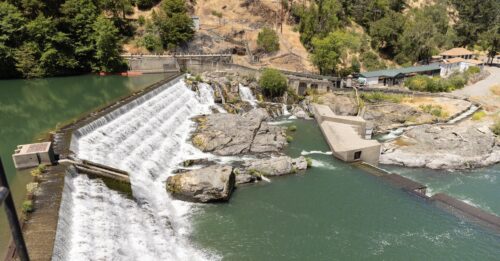
“PG&E plans to start repairing a void at the base of Cape Horn Dam by Nov. 20, according to a letter the utility filed with federal dam-safety regulators Oct. 6. Cape Horn Dam holds back Van Arsdale Reservoir on the Eel River in Mendocino County. An intake 400 feet upstream of the dam sends Eel River water into the Potter Valley Project’s tunnels. The water runs to the Potter Valley powerhouse, which empties into the East Fork of the Russian River. PG&E is obligated to deliver up to 19,000 acre-feet of that water to the Potter Valley Irrigation District, according to the Federal Energy Regulatory Commission. The dam is also home to the Van Arsdale Fisheries Station, where salmon and steelhead climb a fish ladder past the dam. A FERC engineer found the void during an inspection Sept. 8 and 9, 2025, according to FERC’s follow-up letter to PG&E dated Sept. 12, 2025. The letter lists two items at Cape Horn. … ” Read more from the Mendocino Voice.
Investing in life on the move: Sacramento Valley floodplains support remarkable migrations
“Every year, the Sacramento Valley is home to some of the most remarkable wildlife migrations in North America. Chinook salmon move from our rivers to the Pacific Ocean and eventually return to the waters where their lives began. At the same time, millions of ducks, geese and shorebirds travel along the Pacific Flyway, using the Sacramento Valley as an essential place to rest, feed and prepare for the next leg of their journeys. A new Floodplain Forward publication, Investing in Life on the Move, illustrates an increasingly important principle for the Sacramento Valley: healthy rivers depend on healthy landscapes, and reconnecting water with the landscape at the right time can provide extraordinary benefits for fish and wildlife. … ” Read more from the Northern California Water Association.
Vina groundwater agency says no to raising minimum water level
“The Vina Groundwater Sustainability Agency board of directors on Wednesday voted against a plan by suggested by Chico State Professor Todd Greene to protect at-risk wells from going dry. The agency is working on its 5-year review of its groundwater sustainability plan and voted in August to set new criteria for “minimum threshold” of the water table. It also established a “local management level” that triggers an assessment of domestic wells when levels fall 15 feet below the objective water level. Greene, a member of the stakeholder advisory committee for Vina GSA and an environmental services professor, said Wednesday he thinks that the minimum threshold set by the agency is too low, and would cause “irreversible consequences” if that level is met. The agency considered Green’s alternative Wednesday in the Chico City Council Chambers, which suggested raising minimum thresholds from an average of 63 feet to a flat 40 feet. … ” Read more from the Chico Enterprise-Record.
Gridley: Groundwater holds steady despite dry years
“Groundwater supplies across the Butte Subbasin have remained stable despite two dry years that increased pumping demands, according to findings approved Oct. 5 by the Gridley City Council. The evaluation covers 2021 through 2025 and found no significant problems threatening groundwater sustainability. City Administrator Elisa Arteaga said the findings indicate water levels showed little change, groundwater storage showed signs of recovery by 2025, and monitoring found no significant land subsidence, or sinking of the ground. Groundwater officials said the findings reflect how the region manages its water supplies. During wetter years, agriculture relies heavily on surface water from the Feather River, Sacramento River and Butte Creek. When those supplies decline, groundwater helps make up the difference, they said. … ” Read more from the Gridley Herald.
The Claw’s return nears: How Sacramento crews are preparing for Super El Niño
“Each fall city crews prepare the months-long grind of collecting thousands of tons of wet leaves, broken limbs and fallen trees to keep Sacramento’s streets safe. This year city officials are confident in their ability to manage the effects of the predicted Super El Niño, but are asking that residents do their part to prevent flooding. Sacramento’s tree canopy is one of the most iconic features of the city, but the lush greenery that provides relief from summer heat has drawbacks in the winter, particularly during harsh, stormy weather. “Sacramento is synonymous with the Claw and our trees,” Mayor Kevin McCarty said. “We want to make sure we have plentiful urban forest in Sacramento. But with that comes lots of leaves, and with big storms or atmospheric rivers, potential for massive havoc in the neighborhood.” … ” Read more from the Sacramento Bee.
The light and dark of bioluminescence in the San Francisco Bay Area
“We met at the water’s edge at dusk. The evening was warm and the sky was clear—a nearly perfect early September evening for a paddle in the dark. At this time of year, roughly 75 miles north of San Francisco, at the mouth of the Russian River, when the moon has faded and the water temperatures and tides are just right, the water glows. Our group of six had come to the small town of Jenner, along the Sonoma County coast, to experience the bioluminescence of the Russian River’s estuary. The conditions on the night of our visit, as luck would have it, were nearly perfect. The water extended to the horizon like polished glass. There was not a trace of wind and only the wispiest cloudlets hung over the typically fog-choked bay at the river’s terminus. Most importantly, the thin crescent of the waning moon would not rise until much later in the evening. … ” Read more from Bay Nature.
Metropolitan board of directors elects Martin Miller as new board chair
 “Longtime water professional and businessman Martin “Marty” Miller was unanimously elected today to be the next chair of the board of directors of the Metropolitan Water District of Southern California, the largest supplier of treated water in the country. Miller, who has represented the San Diego County Water Authority on Metropolitan’s 38-member board since 2021, will serve a two-year term beginning Jan. 1. He is the first representative from San Diego to lead Metropolitan’s board in its nearly 100-year history. He succeeds outgoing Chair Adán Ortega, Jr., who has led the board since 2022. “I am grateful to my colleagues for placing their trust in my leadership for the next two years,” Chair-elect Miller said. “Our board faces some important decisions ahead on how to invest in our region’s long-term water supply reliability, while balancing concerns about the affordability of water. I am committed to working with my colleagues to produce smart solutions that benefit cities and communities across Southern California” … ” Read more from the Metropolitan Water District.
The Colorado River crunch: How water scarcity could reshape housing growth across the West
 “For decades, the Colorado River helped fuel the rise of some of the nation’s fastest-growing housing markets. Today, however, a combination of long-term drought, population growth, and aging water allocation agreements is forcing policymakers, utilities, developers, and builders to rethink assumptions about future growth across the Southwest. At the center of the challenge is a simple imbalance: demand for Colorado River water has outpaced the river’s long-term supply. The system was originally governed by agreements developed more than a century ago, based on flow estimates that are now widely viewed as overly optimistic. Since then, major metropolitan areas across Arizona, Nevada, and Southern California have expanded dramatically while the river has experienced a prolonged period of drought beginning in the early 2000s. The result has been a significant decline in storage levels at Lake Mead and Lake Powell, two reservoirs that are critical to both water delivery and hydropower production throughout the region. Federal officials have increasingly intervened to stabilize reservoir levels and protect the infrastructure that supports millions of residents and businesses, most recently outlining the largest mandatory usage cuts in the river system’s history. … ” Read more from Builder.

