

Several news sources featured in the Daily Digest may limit the number of articles you can access without a subscription. However, gift articles and open-access links are provided when available. For more open access California water news articles, explore the main page at MavensNotebook.com.
On the calendar today …
- PUBLIC HEARING: Revised certification of consistency for the Delta Conveyance Project beginning at 9:30am. The Council will hold a hearing regarding the appeals of the revised certification of consistency for the Delta Conveyance Project No. C20262 submitted to the Council on July 24, 2026, by the Department of Water Resources. Click here for the full agenda.
- WEBINAR: Basin Characterization Exchange: Student Showcase from 12:30 to 1:30pm. This special session of the BCX will showcase presentations from graduate student researchers. First, Using Airborne Electromagnetic Data to Update Existing Mapping of the Corcoran Clay – Jonathan Mells, Stanford University, and then Parameterized Geostatistical Ensemble Simulation Incorporating AEM Survey Data in Groundwater Model Calibration – Leland Scantlebury, UC Davis/SSPA.Click here to register.
In California water news today …
Keeping water instream: The promise and challenges of Section 1707
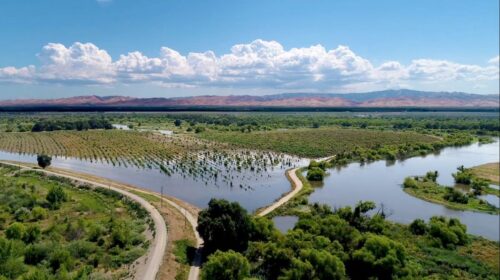
“Keeping water in a California stream can be as complicated as taking it out. Water Code Section 1707 gives water-right holders a way to dedicate water to fish, wildlife, wetlands, and recreation without giving up the underlying right—but turning that option into protected flow can require extensive analysis, public review, and downstream accounting. Those opportunities and obstacles framed an August 2026 Watershed Solutions Network virtual workshop on Section 1707 instream-flow dedications. Speakers included Joaquin Esquivel, chair of the State Water Resources Control Board; Erik Ekdahl, chief deputy director of the State Water Resources Control Board; Julie Rentner, president of River Partners; and Alex Hart, an appraiser with Central California Appraisals and a Siskiyou County rancher. … ” Continue reading from Maven’s Notebook.
Historic return of salmon to California’s once-dry San Joaquin River is spawning toward recovery, one egg at a time
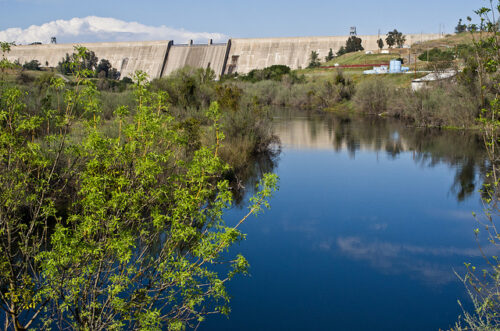 “It’s salmon squeezing time at California’s newest, most technologically advanced fish hatchery. Standing in a large tank filled with 54 degree water, a fish technician passes an ultrasound wand across the abdomen of an adult female Chinook salmon to ensure its eggs are fully developed. If so, techs then squeeze out some eggs from the salmon’s belly while feeling for the looseness of the remaining eggs. Each ripe female is then transported into a separate holding tank for spawning the following day. Male broodstock get similar handling, except the squeezing is employed to express milk. The males also get scanned (via a transponder tag embedded in their abdomen) to determine which are the least genetically related to the females. Why? Because the last thing biologists want, especially when resurrecting a salmon run that was killed off for more than six decades, is inbred fish. “Genetic diversity is really important in a population because it gives the population the ability to adapt to changing conditions in the river,” explained Brian Erlandsen, a senior environmental scientist supervisor for the California Department of Fish and Wildlife. “So you try to maximize that as much as you can.” … ” Read more from Fresnoland.
El Nino looms large over U.S. Winter Outlook
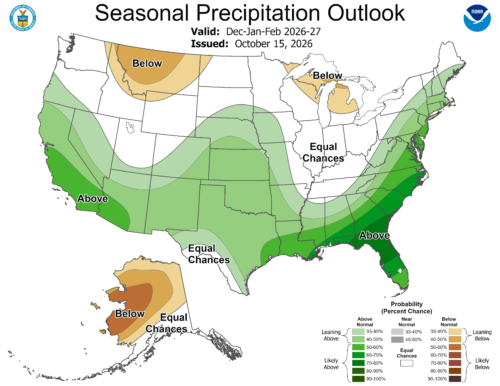 “NOAA’s U.S. Winter Outlook, released today, shows how El Nino will likely influence the upcoming winter months (December 2026 to February 2027), with warmer-than-average temperatures expected across the northern U.S.; wetter-than-average conditions likely across the southern U.S., from California to Florida, and along the Eastern Seaboard; and drought improving for the majority of the country, including areas in the East, Southern Great Plains and Southwest. “As we know from decades of observations, a very strong El Nino will likely bring a southward and eastward shift to the jet stream for the contiguous U.S., which tilts the odds toward stormier weather across the South,” said Ken Graham, director of NOAA’s National Weather Service. “While higher chances of rain and snow may bring relief to drought-afflicted areas, too much precipitation on dry soil can fuel destructive flash floods and mudslides. Now is the time for communities and individuals to plan ahead for the upcoming winter.” … ” Read more from NOAA.
DWR releases Fall 2026 California’s Groundwater Conditions, Semi-Annual Update
 “The Department of Water Resources (DWR) has released the Fall 2026 – California’s Groundwater Conditions, Semi-Annual Update, which provides a look back at California’s groundwater conditions during Water Year 2026 and the efforts to prepare for future recharge opportunities. The report documents local progress under the Sustainable Groundwater Management Act (SGMA), alongside persistent challenges that require sustained management. Building on decades of recharge experience, State and local agencies are working to ensure infrastructure, agreements, and operational plans are in place to capture and store legally available water when wet conditions arrive—helping reduce flood impacts and strengthen groundwater supplies for future dry periods. … ” Continue reading from DWR.
“It will go quick” – $171 million in one-time funding cobbled together to save state’s drinking water program
“An all-hands-on-deck effort saved one of the state’s most effective drinking water programs, at least for next year. But what happens after that? The SAFER program, which had received $130 million annually to provide emergency water and long-term solutions for families whose wells go dry, was set to be cut by nearly half until an unlikely coalition of social justice, farmer and water manager groups rallied to save it. On Oct. 8, about 40 people gathered on the dusty bank of a Tulare County recharge basin to celebrate that win, which resulted in one-time funding of $171 million for SAFER in the 2027-28 fiscal year. About $71 million of that will come from the state’s greenhouse gas reduction fund and the rest is Proposition 4 money. … ” Read more from SJV Water.
Restore the Delta: 2026 Delta water quality testing: E. coli, HABs, and golden mussels abound
“Restore the Delta’s Delta Science Program officially wrapped up its summer water quality monitoring at the end of September. Since 2022, our water quality monitoring program includes recording water temperatures and weather conditions, testing for harmful algal blooms (HABs), and assessing salinity levels. New this year, in collaboration with the Central Valley Regional Water Quality Control Board (Region 5 of the State Water Board), we added E. coli collection and sampling to our regular monitoring routine. With the introduction of golden mussels into the Delta via Rough and Ready Island and the added E. coli sampling, we have a few new topics to cover, and we want to help break them down. … ” Read more from Restore the Delta.
When water concerns put development on hold: Lessons from California data center moratoria
“Across California, local governments are pausing data-center development as they confront questions about water supply, infrastructure, and the adequacy of existing land use rules. On October 6, 2026, Oakland adopted an interim urgency ordinance pausing approvals of land use entitlements and agreements for data centers. San Francisco also approved a 45-day pause that day. Water consumption figured among the concerns surrounding these facilities, alongside electricity demand and other community impacts. In our earlier post on data centers and water supply, we discussed water supply issues to address early in project development in the context of new state legislation. But developers must also navigate local land use restrictions and water suppliers’ service requirements, a challenge now playing out in litigation over a proposed data center in Imperial County. That litigation shows how concerns about water supply can raise two distinct questions: whether a local government can lawfully impose a development moratorium and whether a developer can secure the water its project needs. … ” Read more from Downey Brand.
Solano County proposes zoning change for maritime industrial uses east of Collinsville
 “A proposed zoning change for property owned by California Forever would allow a shipyard, manufacturing facility or other specific development projects, but would require a Board of Supervisors-approved Specific Plan or Policy Plan. A use permit and project-level environmental review under the California Environmental Quality Act also would be required, and agricultural mitigation would remain part of the process, the county administration said in a statement released on Wednesday. The proposed changes are for 1,312 acres east of Collinsville, the county administration stated. It would change the zoning to Industrial–Water Dependent. Existing agricultural uses could continue, the county stated. … ” Read more from the Daily Republic.
Stanford scientists find new way to revive bleached coral
“Researchers at Stanford University have seen for the first time starving, struggling corals return to colorful, vibrant life within a matter of weeks by being placed in contact with healthy clones, genetically identical copies. “This was shocking, stunning,” said Danny Collins, lead author of a study published Monday. “We were blown away [to] actually watch the healthy coral restore the color of the bleached corals essentially right before our eyes.” Color returned within days, with full recovery occurring in just seven weeks — the fastest documented recovery to date. “It was so much faster and more intense than we ever expected,” said Collins, a Ph.D. student at the Stanford Doerr School of Sustainability. … ” Read more from KQED.
In commentary today …
Why Newsom’s Voluntary Agreements won’t work, Part 1: Inadequate resources
Jon Rosenfield, Ph.D., Science Director for San Francisco Baykeeper, and Devon Pearse, Ph.D. Lead Scientist for Friends of the River, write, “Over the past 30 years, scientific studies of San Francisco Bay and its watershed have demonstrated the critical role that river flows play in protecting water quality, native fish and wildlife and their habitats, and the fishing, Delta, and Tribal communities that depend on vibrant aquatic ecosystems. Yet, despite all this knowledge, California’s unsustainable diversion of Central Valley rivers that create the Bay’s estuarine ecosystem has continued and even increased. Diverting large fractions of the available river flow is driving the deterioration of water quality, the decline and closure of fisheries, and the impending extinction of numerous species. The Water Board has repeatedly observed that the San Francisco Bay estuary is in crisis. Evidence for this conclusion includes the collapse of the Bay’s native fish populations (seven of which are listed as threatened or endangered under state or federal law), loss of its once-vibrant fisheries, and proliferation of toxic algal blooms in the Delta. The Water Board, which is responsible for the reasonable protection of all beneficial uses of water, has for many years also acknowledged that the solution to this crisis must include substantial increases in the amount of water from Central Valley rivers that reaches San Francisco Bay. … ” Continue reading this guest commentary.
Induced demand is a prerequisite for abundance
Edward Ring writes, “Not quite two years ago an influential book, “Abundance,” by Ezra Klein and Derek Thompson challenged the conventional liberal approach to achieving affordability and equity. They argued that economic and social goals could more effectively be realized by achieving abundance than by redistributing existing wealth and resources. To this end, the authors identified well-intentioned but excessive regulations as the biggest obstacle to economic development. But in response, California’s state legislature is restricting regulatory relief to only a few favored avenues of development, insufficient to make a difference. This brings us to a core premise of what are now well-established policies in California that guarantee chronic scarcity of everything – roads, housing, water, and energy. It is the concept of “induced demand,” which posits that if you increase supply, it won’t just bring down prices, it will also induce more demand. And more demand, according to this reasoning, is not sustainable. This is why “conservation” (more aptly referred to as “rationing”) is the only policy governing resource management that enjoys a broad political consensus in states like California. Do nothing, because doing nothing is sustainable. … ” Read more from Edward Ring.
Policy inaction will continue to threaten California’s water future
Craig Miller, General Manager, Western Municipal Water District and Jay Lund, Professor of Civil and Environmental Engineering at UC Davis write, “You might be wondering what a few hundred water policy people were doing in Davis this September. The event, the California Water Policy Conference, held at the UC Davis Conference Center on September 29, explored the theme “Adapting Together: Water Policy for a Changing California” and had a discussion about SB 72 calling for 9 million acre-feet of new supply. The conference explored “how frameworks like CEQA, the Clean Water Act, and the Endangered Species Act can be modernized and better aligned with 21st-century climate realities.” This is a critical discussion for the future of the state and comes on the heels of a study that detailed the cost of putting off decisions necessary to secure an adequate and reliable water supply for future generations. … The cost of inaction is no longer theoretical. It can be measured by anticipated revenue, job, and agricultural production losses, and the overall impact on the state’s economy. This, coupled with ongoing water supply threats such as climate challenges, an aging water infrastructure built for half the current California population, and growing needs, has created a perfect storm for California’s water supply future, unless we begin looking at water planning differently. … ” Read more from the Davis Vanguard.
In regional water news and commentary today …
NORTH COAST
Yurok Wildlife’s 3-year study tracks endangered marten comeback
“A team of Yurok Tribe wildlife biologists and technicians have spent the last two years researching one of the region’s most elusive creatures: the Humboldt marten. The Humboldt marten was thought to be completely wiped out for decades before being rediscovered in ancestral Yurok Territory in 1996. The animal is protected under both California and federal endangered species laws. Martens are charismatic but difficult to study. They’re small, fast-moving and stay well hidden in thick undergrowth. The terrain they live in is often steep, dense and time-consuming for researchers to navigate. … ” Read more from Channel 12.
PG&E plans November repair of void at Cape Horn Dam in Mendocino County
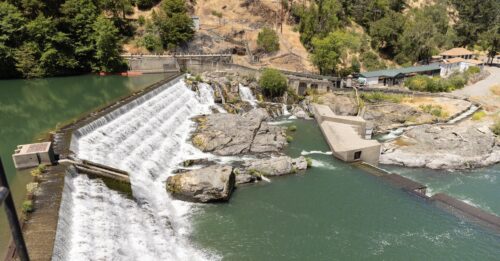
“PG&E plans to start repairing a void at the base of Cape Horn Dam by Nov. 20, according to a letter the utility filed with federal dam-safety regulators Oct. 6. Cape Horn Dam holds back Van Arsdale Reservoir on the Eel River in Mendocino County. An intake 400 feet upstream of the dam sends Eel River water into the Potter Valley Project’s tunnels. The water runs to the Potter Valley powerhouse, which empties into the East Fork of the Russian River. PG&E is obligated to deliver up to 19,000 acre-feet of that water to the Potter Valley Irrigation District, according to the Federal Energy Regulatory Commission. The dam is also home to the Van Arsdale Fisheries Station, where salmon and steelhead climb a fish ladder past the dam. A FERC engineer found the void during an inspection Sept. 8 and 9, 2025, according to FERC’s follow-up letter to PG&E dated Sept. 12, 2025. The letter lists two items at Cape Horn. … ” Read more from the Mendocino Voice.
State budget sends $900,000 to Boonville fairgrounds for drinking water fixes
“The new state budget includes $900,000 for Mendocino County to fix up the fairgrounds in Boonville, with the drinking water system the main focus, the county said in a news release. The project will also help the fairgrounds connect to a community water system the Anderson Valley Community Services District has proposed, according to the release. The county called the Anderson Valley Fairgrounds a critical community hub. It hosts the Mendocino County Fair and Apple Show. It also supports emergency response, such as fire camps, and it is a major resource and shelter in Anderson Valley for residents and their livestock when evacuation orders come down. … ” Read more from the Mendocino Voice.
SIERRA NEVADA
More snow for Tahoe? What El Niño could mean this winter
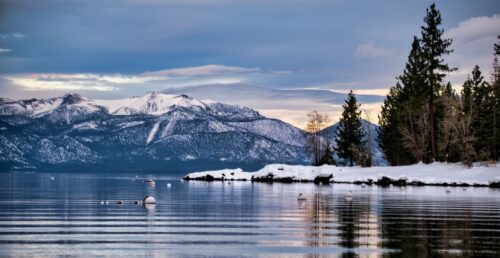 “A potentially historic El Niño is strengthening in the Pacific Ocean, increasing the chances of a wetter-than-normal winter across much of California. Tahoe is in a cold snap this week, with temperatures dropping enough for snow to reach the area’s mountaintops and for one ski resort to start snowmaking. But while the early taste of winter may have some residents wondering whether a big snow season is ahead, forecasters say it’s too soon to draw conclusions from a single cold stretch. Federal forecasters favor above-normal precipitation around Lake Tahoe and the Sierra Nevada from December through February. However, while a strong El Niño can increase the likelihood of more winter storms, it does not guarantee a blockbuster snow season. … ” Read more from USA Today.
Nevada County expands capacity, efforts to restore forests, protect communities
“After receiving a $229,106 Regional Forest and Fire Capacity Program subgrant from the Sierra Nevada Conservancy (SNC) in 2024, the Nevada County Office of Emergency Services (OES) expanded its forest-management staff and accelerated planning and implementation of critical landscape-scale treatments in high-fire risk zones, especially those outlined in Nevada County’s recently updated Community Wildfire Protection Plan (CWPP). “Prior to our CWPP update and the Regional Forest and Fire Capacity Program our approach to pursuing funding was opportunistic,” said Alex Keeble-Toll, director of Nevada County OES. “Granted in a landscape where 92 percent of the population lives in high or very high fire hazard severity zones there is no ‘wrong’ place to go for wildfire mitigation. Our CWPP, however, really allowed us to drill down into the where, not just places where we know the wildfire hazard is most significant on the landscape, but also the places that our community wants to see protected.” … ” Read more from the Sierra Nevada Conservancy.
SACRAMENTO VALLEY
Corning preps for potential storms
“Corning Public Works Director Elijah Stanley said the city is preparing for possible El Niño storm conditions forecast for this fall and winter. Tehama County and Red Bluff public works departments have also been taking steps to prepare, and the governor’s office signed an emergency declaration in September, ahead of the potential storms. “Federal forecasters say El Niño is strengthening, with a greater than 90% chance of a very strong event this fall and winter and a 75% chance it could reach historic strength. In plain terms, the Pacific is unusually warm, and that warmth can shift storm tracks and load the atmosphere with more energy over the months ahead,” a September 21 press release from the governor’s office stated. In Corning, Stanley said the public works department has taken steps to prepare and will continue to do so, in the hope of reducing community flooding risks. … ” Read more from the Red Bluff Daily News.
Butte County: What is SGMA and why should we care?
“In 2014, the California legislature passed the Sustainability Groundwater Management Act (SGMA). The goal of SGMA is to ensure groundwater sustainability over the long term. Groundwater is crucial to California, comprising up to 60% of the total supply in drought years and about 40% in average years. Our local groundwater fluctuates annually, with groundwater levels declining during droughts and increasing during wet years. However, in the last 30 years we have had more dry years and fewer wet years; therefore the long-term trend is a steady decline. … Locally, there are 3 subbasins: Vina, Butte and Wyandotte Creek. Each subbasin has its own GSA and plan to achieve sustainability. This article will mainly focus on the Vina subbasin which underlies Durham, Chico and Northern Butte County. … ” Read more from UC Ag and Natural Resources.
Two ‘large electrical load’ data centers considered for Sacramento region, SMUD says
“A second “large electrical load” data center proposal is in the works within the Sacramento Municipal Utility District’s service area, the utility confirmed. In September, Abridged by PBS KVIE published findings that SMUD has been in talks since February about a “large load” data center planned in southeast Sacramento. Email communications acquired by Abridged indicated that Link Logistics, a subsidiary of Blackstone Inc., is shaping up plans for a data center of at least 50 megawatts. Now SMUD has a second large load project progressing and under consideration. “We now have 2 large electrical load inquiries in the early feasibility stage, each exceeding 50 megawatts in capacity,” states a fact sheet published by SMUD in late September. … ” Read more from PBS Abridged.
NAPA/SONOMA
Making room for coho to grow in the Atascadero watershed
“The heavy equipment is back on Green Valley Creek. Just upstream from last year’s salmon restoration at Iron Horse Vineyards, three excavators, dump trucks, a water truck, and a crew of hand laborers are reshaping another stretch of the floodplain so that juvenile coho and steelhead have a place to go when winter storms turn the creek into a torrent. The work is the second phase of a long-running effort led by the Gold Ridge Resource Conservation District (Gold Ridge) and funded by the California Department of Fish and Wildlife and the National Oceanic and Atmospheric Administration (NOAA) Restoration Center. PCI Ecological, the Sebastopol firm that designed the Iron Horse project, again provided the engineering design and is overseeing construction. “What we’re doing here is not that different,” says John Green, Gold Ridge’s self-effacing lead scientist and program manager, standing at the edge of a freshly carved side channel. “The goals are very similar. It’s just that the configuration of the project fits what was already here.” … ” Read more from the Sebastopol Times.
BAY AREA
Sewage spill prompts closure of Tomales Bay shellfish growing areas
“All Tomales Bay shellfish growing areas have been temporarily closed by state regulators following a recent sewage spill into Olema Creek, Marin County officials announced Wednesday. The sewage spill was reported Friday at the Olema House hotel and Due West tavern along state Highway 1 south of Tomales Bay. The county said in a press release that its Environmental Health Services staff discovered a septic system leak and drainage pipe connected to the creek, and the leak was promptly capped. According to the county, the California Department of Public Health on Monday closed all shellfish growing areas and wet storage intakes at Tomales Bay, and follow-up sampling will be conducted in Olema Creek to confirm bacteria levels have returned to safe levels. The county’s press release said there have been “no reports of adverse effects on people or wildlife in the area.” … ” Read more from Local News Matters.
SEE ALSO: Hog Island suspends Tomales Bay oyster harvesting after sewage spill, from the San Francisco Chronicle
Caltrans closing troubled Bay Area highway for emergency El Niño repairs
“Ahead of an extraordinary El Niño, a troubled highway bordering San Francisco Bay is closing for a weekend this month so that Caltrans can shore up the roadway. A section of state Route 37 between Vallejo and rural Sonoma County is closing for 55 hours starting late Friday, Oct. 23, through early Monday, Oct. 25. An ongoing effort to widen the highway is now set aside for emergency repairs, which include elevating over 1,000 feet of roadway 3 feet higher. Caltrans designed a detour to circumvent the closure between Mare Island in Vallejo and Sears Point near the Sonoma Raceway. What can take about 10 minutes with no traffic could quadruple in time over the weekend for the roughly 40,000 daily drivers. … ” Read more from SF Gate.
A planetary wave just crept into San Francisco
 “El Niño has sent a deep-sea wave from the tropics into California waters. Unlike waves that crash over the beach, this so-called Kelvin wave traveled underwater, lifting the sea surface by up to a foot. The Kelvin wave arrived in San Francisco Bay in recent days, contributing to local flooding. “I do think it made it to San Francisco,” Dillon Amaya, an assistant professor of marine, earth and atmospheric sciences at North Carolina State University, told SFGATE. “It originated in the western equatorial Pacific in August, propagated along the equatorial strip, ran into South America, moved up the Central American and Mexican coastlines, entered the Gulf of California and moved up the U.S. West Coast.” … ” Read more from SF Gate.
Belvedere plans flood barriers for El Niño winter storms
“Belvedere is exploring temporary flood barrier options in anticipation of heavy winter storms. The City Council received a report on flood preparations from city staff, the county and Pacific Gas & Electric Co. on Monday. Like much of the county, the city is working quickly to secure its infrastructure ahead of the El Niño winter, which, along with more rain, is predicted to bring higher tides potentially above current estimates. “One of the challenges we’re seeing is coastal water levels can be difficult to predict when you combine gravitational tides, atmospheric pressure and storm surge,” City Manager Robert Zadnik said. “For a community like Belvedere, with significantly low-lying areas and waterfront infrastructure, that is something that we need to take seriously.” … ” Read more from the Marin Independent Journal.
Starving birds are washing up on Bay Area beaches. One animal rescue group has a theory about why
“Bird carcasses decomposing in the sand at Marin County’s Rodeo Beach Sunday offered a stark sign of a widespread avian starvation event that wildlife officials said has killed or sickened an increasing number of birds this year, compared to previous seasons. International Bird Rescue, an avian rehabilitation organization based in Fairfield and San Pedro (Los Angeles County) has taken in about 250 starving common murres over the past two months — nearly eight times the number the group would typically expect over that period, according to CEO J.D. Bergeron. Bergeron suspects warming ocean waters have disrupted the birds’ food supply as fish avoid warmer coastal waters, though the official cause has not been established. “It feels pretty sad to have such a charismatic species being affected so terribly, after about 4 million of them have been proven to disappear just a few years ago in Alaska,” Bergeron said. “This is the third starvation wave or problem we’ve seen in 10 years.” … ” Read more from the San Francisco Chronicle.
San Jose leaders zero in on flood risks, preparedness amid strong El Niño
“As a strong El Niño season heightens flood risks throughout California, some in San Jose are raising the alarm that shaky coordination between South Bay government agencies could hamstring emergency preparation efforts. During a Tuesday joint meeting between the Valley Water board of directors and San Jose City Council, a chorus of officials and residents warned that fuzzy jurisdictional boundaries often make it unclear who is responsible for dealing with floods risks when they arise along San Jose’s 140 miles of waterways. The tangled lines of authority have generated frustration from residents who fear such confusion will lead to delays in flood mitigation work — such as clearing debris like garbage or fallen trees — that could prove catastrophic should El Niño trigger heavy rains this winter, as weather forecasting suggests is likely. “I think it’s important that we keep in mind that when our residents, our shared constituents look into the waterways and see a fallen tree or a blockage … they shouldn’t have to think about the jurisdictional boundaries between our agencies,” San Jose Mayor Matt Mahan said during the meeting. “They just see a problem, and they want a solution, and they expect us to deliver it.” … ” Read more from Local News Matters.
SOUTHERN CALIFORNIA
Hot weather and winds raise California wildfire threat as power shutoffs start
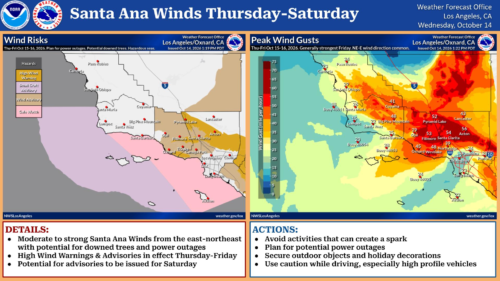 “Large swaths of California are expected to see fire weather starting Thursday and thousands of people could lose power as utilities try not to spark wildfires during hot and windy conditions expected to last through Saturday. Los Angeles Mayor Karen Bass, who has faced criticism for her city’s response to deadly fires in 2025, said she’s directed the fire department to deploy personnel and equipment ahead of the winds. The fire department has also requested assistance from the state’s office of emergency services, she said. “It’s a pretty widespread event of elevated fire weather, so the whole SoCal region should really be on alert,” said Rose Schoenfeld, a meteorologist with the National Weather Service. Dry, warm and gusty northeast winds known as Santa Anas, which blow from the interior of Southern California toward the coast and offshore, are expected, with the strongest winds forecast for Thursday afternoon through Friday afternoon. … ” Read more from the Associated Press.
How Southern California fire agencies and utilities are preparing for Santa Ana winds
“With strong Santa Ana winds in the forecast for the next couple of days, Southern Californians were urged Wednesday to prepare for potential public safety power shutoffs while fire agency officials made plans to mobilize resources to protect against wind-driven wildfires. The state of California moved Cal Fire and California Governor’s Office of Emergency Services fire resources to Southern California to prepare for the strong winds Thursday through Sunday. Low humidity was also in the forecast, raising the fire risk. The Los Angeles County Fire Department was putting additional staffing in place, starting Thursday, Oct. 15, at 6 a.m. for the Red Flag weather event, which should end Friday at 10 p.m. if the weather models are correct, according to a spokesperson. The department has prepositioned strike teams in vulnerable areas, such as Malibu and Santa Clarita, and mobilized additional camp crews and heavy equipment, water tenders, firefighting aircraft, contracted Quebec 1 and 2, two helitankers, so if any fire starts, it can be kept small, according to the department. … ” Read more from the OC Register.
After so many L.A. fire failures, this week’s Santa Ana winds test whether officials can do better
“Since the Eaton and Palisades fires, there has been report after report documenting how woefully unprepared city, county and fire officials were. This week’s upcoming Santa Ana winds will provide one of the first major tests of whether Los Angeles has applied those painful lessons. A red flag alert is in place across most of Los Angeles and Ventura counties from 6 a.m. Thursday through 10 p.m. Friday, with forecasters warning of sustained winds of 20 to 40 mph and gusts of 40 to 60 mph. The powerful Santa Anas will coincide with toasty temperatures of 85 to 95 degrees and low humidity rates, between 5% and 15%, across much of the region. “There’s a high risk for any new fires to grow really fast,” said Ryan Kittell, a meteorologist with the National Weather Service in Oxnard. … ” Read more from the LA Times.
SEE ALSO:
- LA County red flag warning starts Thursday for ‘extreme fire risk’ potential, from the LAist
- Climate change is weakening Santa Ana winds — but won’t save SoCal from devastating fires, from the LA Times
The El Niño stars are aligning in record-breaking ways. Here’s how the high tides stack up
“With homes nearly toppling into the ocean and back-to-back floods and hurricanes amplifying our sense of dread, keeping track of all things El Niño can be overwhelming. So I called up Patrick Barnard, who spent years leading the U.S. Geological Survey’s renowned coastal hazards team in California and now helms key climate adaptation research at UC Santa Cruz. A maestro at bringing together all manner of data, Barnard broke down the numbers in no-nonsense terms — explaining why the coming weeks and months might bring extreme flooding like we’ve never seen before. “All the stars are aligning for a pretty dramatic winter,” said Barnard, as he pored over the El Niño tea leaves, so to speak, and rattled off every high tide phenomenon on track to converge by the holidays. “If you start stacking all these things up, the flood risk just goes up exponentially.” … ” Read more from the LA Times. | Read via Boiling Point newsletter.
Perris bans data centers, is first in western Riverside County to do so
“Perris on Tuesday night, Oct. 13, became the first city in western Riverside County to ban data centers, joining a growing list of California cities to outlaw the high-tech buildings facing fierce public backlash from coast to coast. Cheers and applause from the audience followed the Perris City Council’s 5-0 vote to ban data centers within the city limits. Initiated by the council in June, the ban “obviously gained a lot of traction (with) the public,” Councilmember Marisela Nava said before the vote. “I am so glad to know that … we have gotten ahead of an item that could have definitely jeopardized our community,” Nava said. “I am … really proud of us for doing the right thing because general welfare of our community should never be up for negotiation.” … ” Read more from the Riverside Press-Enterprise.
Along the Colorado River …
How to actually fix the Colorado River crisis
“About 40 million people rely on the Colorado River. But an extended drought and a century-old legal framework have pushed the system to a breaking point. Now, a federal plan threatening deep cuts has ignited a fierce political and legal war across the Southwest. WSJ spoke with Arizona State University water law professor Rhett Larson, who broke down where the government’s framework falls short, why easy fixes won’t solve the issue, and what structural overhauls are needed to protect a crucial regional economy.”
Arizona’s lifeline to the Colorado River is drying up. Were warnings from history ignored?
“The Phoenix area as we know it today wouldn’t exist without a massive, gravity-defying canal that cuts through the desert. For decades, the metro has grown on the back of an unusual water supply. The Central Arizona Project is a canal system that pulls water from the Colorado River on the state’s western border, then carries it more than 300 miles, uphill through a series of pipes and pumps to the Phoenix and Tucson areas. Today, water shortages threaten that improbable system, and a series of warnings about the canal’s future from the 1960s, largely ignored for decades, seem prescient. “It’s an engineering marvel,” said Rich Weissinger, who spent nearly 30 years working for the organization that operates the canal. Weissinger, who most recently worked as director of field maintenance for the Central Arizona Project, or CAP, stood inside one of the pumping plants that keeps water flowing through the canal. Inside the facility, motors and turbines kicked into action and emitted a steady, thundering whir. … ” Read more from KJZZ.
Video: Arizona prepares to draw water from underground Colorado River banks
“Arizona has stored Colorado River water since the 1980s through the Central Arizona Project Canal. Arizona will draw from decades-old underground water banks that store surplus Colorado River water after federal funding cuts. Extracting the water requires permits, treatment infrastructure and wells that many cities don’t have access to. The state created the Arizona Water Banking Authority in the late 90s to manage storage of unused Colorado River water. Terry Goddard, President of the Central Arizona Water Conservation District (CAWCD) Board of Directors, joined “Arizona Horizon” to discuss the future of underground water usage in Arizona.” Watch video at Arizona PBS.
Virginia Tech researchers reveal accelerating groundwater depletion across the Colorado River Basin
“The Upper Colorado River Basin, long considered the more drought-resilient half of the Colorado River system, lost nearly double the groundwater of the Lower Basin during the 2020-2022 drought, according to a Virginia Tech study published Tuesday. The researchers estimated the Upper Basin lost about 4.6 trillion gallons of groundwater during the drought that spanned water years 2020 through 2022. The Lower Basin lost an estimated 2.5 trillion gallons. The findings appeared in the journal Water Resources Research. Lead author Esther Oyedele, a Virginia Tech geosciences graduate student, and Susanna Werth, an assistant professor of hydrology and remote sensing at the university, used NASA’s Gravity Recovery and Climate Experiment satellites and their follow-on mission to track changes in the pull of gravity over the basin. “We generally think of the Upper Basin as more resilient because of its snowmelt-driven recharge,” stated Oyedele. “I did not expect to see so much groundwater loss there during the recent drought. What surprised me even more was that groundwater did not track surface-water shortages in the same way in the Upper and Lower Basins.” … ” Read more from the Las Vegas Sun.
SEE ALSO: Colorado River’s Underground Water Reserves Are Disappearing, from Newsweek
Is Arizona’s water supply getting boost from recent storms, El Niño?
“Recent storms in Arizona may have helped raise some reservoir levels, but snowpack is more important to the state’s water supply than rain, according to a local expert. “Rain is not what our reservoir systems are designed to capture. So, rain helps, and it helps directly and indirectly, but it’s not what we need,” Sarah Porter, director of the Kyl Center for Water Policy at Arizona State University, told KTAR News 92.3 FM’s Arizona’s Morning News on Wednesday. Porter explained that the Phoenix-area water system managed by Salt River Project (SRP) relies mostly on snowpack from the mountains in national parks east and north of the Valley. “And then we have the Colorado River system, and that’s a system that’s really stressed,” she said. “And that system relies on snow, not rain, but snow in the upper Rockies, up in Wyoming, in Colorado, Utah.” … ” Read more from KTAR.
How much water Front Range communities did — and didn’t — save this summer
“You can’t make a landscape revolution happen all at once, even when the mercury in the thermometer is flashing a bright, hot “100.” Beleaguered Front Range water utilities responded to historic drought conditions in the just-ended watering season with a variety of mandates, restrictions, price increases, friendly reminders and educational seminars. The results were decidedly mixed. With no guarantee that predicted El Niño weather will bring deep powder in the spots drained by Front Range cities, utility experts will be studying their results in case they need to redeploy restrictions in 2027. We asked a handful of cities to tell us what they learned, and to add up the numbers. Not every water agency measures its savings the same way or uses the same historic period for comparison, so we’re presenting their savings in the way they talk about it in their communities. … ” Read more from the Colorado Sun.

