

Several news sources featured in the Daily Digest may limit the number of articles you can access without a subscription. However, gift articles and open-access links are provided when available. For more open access California water news articles, explore the main page at MavensNotebook.com.
In California water news today …
Waves from powerful storm pound beach homes in Southern California
“Large waves from Post-Tropical Storm Rachel slammed into homes on the beachfront in Long Beach, Calif., over the weekend, leaving some of the houses appearing close to collapsing. Long Beach city officials had red-tagged 13 homes on the peninsula, meaning all residents were forced to evacuate, in preparation for the surge in water levels from the remnants of Rachel, which moved inland from Baja California late Saturday night. One other home was yellow-tagged, meaning the occupants were ordered to prepare to evacuate at a moment’s notice. The storm surge produced dramatic visuals of large waves crashing into beachfront homes over the weekend, and while there appeared to be cracks emerging in the foundations of some, there were no reports of any of them collapsing yet, according to a spokesperson for Mayor Rex Richardson of Long Beach. … ” Read more from the New York Times.
The worst of Tropical Storm Rachel’s remnants seem to be over for Southern California
“Southern California girded for surging surf from the remnants of Tropical Storm Rachel on Sunday – feared to become the worst of several days that saw high tides, pounding waves and severe flooding – but for many coastal residents, the rainy morning brought a surprise. “The (forecasts) were a little off,” Dave Kiff, Laguna Beach’s city manager, said. “Friday’s swell was larger than indicated, and yesterday’s was about the same – and this morning seems less.” Laguna Beach Public Works crews worked late into Saturday night, scooping out sand from one side of Main Beach to build 15-foot-high sand berms along the surfline. The towering mounds were meant to buffer raging waves and high tides that on Friday had rushed over the sand, across the boardwalk, and onto Coast Highway, snarling traffic and drawing a gaggle of onlookers. Residents of Newport Beach and other cities around the region hit in recent days by enormous waves and Rachel’s proximity to Southern California were also relieved on Sunday. … ” Read more from the LA Daily News.
SEE ALSO:
- Southern California’s coastal communities deal with dangerous flooding, damage to homes as Rachel moved through region, from CBS LA
- Rachel spares Southern California major flooding as tides fall short of forecast, from the San Francisco Chronicle
- Photos: California homes on verge of collapse after battering by giant waves, from the San Francisco Chronicle
- Remnants of Rachel found in Coachella Valley as flooding risks remain, from the Desert Sun
A super El Niño threatens our food system. Here’s how farms can prepare
Liz Carlisle writes, “As forecasters warn that this year’s El Niño could become the strongest on record, concerns are growing about its effect on agriculture and food security. The United States will not be hit nearly as hard as Central and South America, the Caribbean, and southern Africa, but severe weather could cause significant crop loss in some parts of the country. As a researcher and writer who studies farmers’ responses to climate crisis, I have watched these heartbreaking events become all too common: flooded fields, missed planting windows, crops so drought-stressed they are not worth harvesting. But some farms have weathered extremes such as this year’s super El Niño better than others, for one key reason. In the winter, when most other fields are bare, these farms still have something growing. Over the past 15 years, I’ve had the privilege of visiting some of the most resilient farms in the country: the ones that soak up heavy rains when their neighbors have several inches of standing water, the ones that get 80% of their average yields in years when they have seen just 40% of their average moisture. Their secret is that they have gradually built up the carbon-rich organic matter in their soil, which allows the land to soak up and hold moisture like a sponge. … ” Read more from The Guardian.
Light rain and snow due in Sierra as fall temps return to California. What to expect
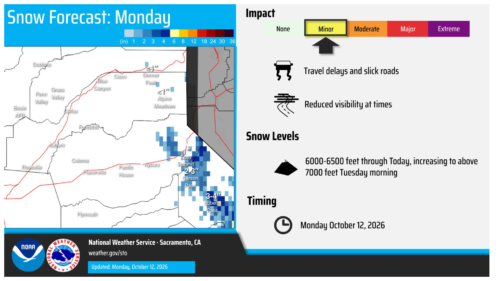 “One week ago, a heat wave of record-proportions was bearing down on California. Several days later, a fall breeze and Tropical Storm Rachel lowered temperatures by around 30 degrees inland. This week, temperatures are set to return to normal for the first time in a while. Meanwhile, light rain and snow will arrive in the Sierra. On Monday, high temperatures across the Central Valley from Sacramento through Fresno will rise into the low to mid-70s, still well below average this year, with temps actually set to be on the cooler side in the low-70s across the San Joaquin Valley thanks to lingering scattered clouds from the weekend’s cooldown — a trough of low pressure still sits across the western United States, held in place by what is left of Tropical Storm Rachel. Elsewhere along the coast, a north wind has will hold highs down into the 60s anywhere with an ocean view. … ” Read more from the Sacramento Bee.
AI’s water strain includes surging demand from electricity use
“Data center developers have started touting new technologies that slash the amount of water needed to cool hot-running servers in drought-stressed places like Arizona. Those efforts, though, are not addressing the vast majority of the water consumed by the AI buildout. Miles away from multiplying data centers, power plants are now consuming enormous volumes of water to generate the electricity required to run artificial intelligence, including those more efficient cooling systems. New research indicates that such indirect water consumption is rapidly growing. In a recent paper, University of Michigan researchers estimated water used offsite would boost the total annual consumption of three large AI data centers planned for the state by 14 billion gallons. “There has been much less attention to this indirect water usage, even though that oftentimes is significantly higher than the direct water usage and has impacts on watersheds and regional water resources,” said Shaolei Ren, a professor at the University of California at Riverside who studies data center water consumption. … ” Read more from Bloomberg.
The race for lithium is becoming a race for water
“On a border-town road surrounded by alfalfa and grain fields, William Cooper stopped before a dusty, vacant lot. Its owner, he said, is one of many investors drawn to the arid Imperial Valley by a critical mineral propelling the green energy transition. “They buy it up and leave it, just waiting for the opportunity,” Cooper said of the land investors. Now, with each gust of desert wind, dust drifts from the lot into the yards of two adjacent schools. Often, the buildings disappear behind a haze and the schoolchildren gasp for air, said Cooper, who moved here from San Diego years ago. The pollution adds to a litany of burdens plaguing one of the nation’s poorest areas. And it hints at a new pressure reshaping the area’s future: a lithium deposit buried beneath a nearby lake called the Salton Sea—the mother lode for prospectors rushing to extract this key ingredient for the batteries that power electric vehicles. … ” Read more from Inside Climate News.
California’s winding road from water plans to solutions
“According to the California Department of Water Resources, the first investigation of California’s water supplies began in 1873 when President Ulysses S. Grant commissioned a federal study from Colonel Barton Stone Alexander of the Army Corps of Engineers. Published in 1874, the “Report of the Commissioners on the Irrigation of the San Joaquin, Tulare, and Sacramento Valleys of the State of California,” established the first documented blueprint for irrigation in the Central Valley. Alexander envisioned a system of canals to complete an exchange of water from the Sacramento to the San Joaquin Valley, according to the U.S. Bureau of Reclamation. In the eighth of 24 conclusionary statements, the report stated that both the state and federal governments should support irrigation in the Central Valley. “That it is the duty of government, both State and national, to encourage irrigation, and the first step in that direction ought to be to make a complete instrumental reconnaissance of the country to be irrigated, embracing the sources from whence the irrigating-canals ought to commence, gauging the flow of the rivers and streams, and defining the boundaries of the natural districts of irrigation into which the country is divided,” the report stated. … ” Continue reading at Water Wrights.
Environmental group, farmers’ agency sue California over Delta water pumping
“An environmental group and an agency representing local farmers have sued the State of California, demanding a court order that would force the state to slash water pumping from the Sacramento-San Joaquin River Delta by half. The lawsuit, filed this week in Alameda County Superior Court, targets the State Water Project, a sprawling network of reservoirs, aqueducts, pipelines and pumping plants that moves water more than 700 miles from Northern California to the south, supplying roughly 27 million people and 750,000 acres of farmland. The California Water Impact Network and the Central Delta Water Agency filed suit against the California Department of Water Resources, according to the Los Angeles Times. The plaintiffs seek a 50% cut in State Water Project Delta exports, court oversight of pumping curtailments, and a long-term plan, arguing the pumping violates both the California Constitution and the Public Trust Doctrine. Carolee Krieger, representing the California Water Impact Network, said the goal is to save the Delta, while Brett Baker said the suit focuses on curbing ecosystem, community and economic degradation in the region, per the Times. The Central Delta Water Agency represents hundreds of local farmers, the paper reports. … ” Read more from Hoodline.
In 2016, a California teenager discovered thousands of golf balls underwater, two years later, combined cleanups had recovered 50,681
“A teenager in California began collecting golf balls from the ocean in 2016 after discovering thousands scattered across the seabed near Pebble Beach. By June 2018, the cleanup efforts had recovered more than 50,000 golf balls, weighing around 2.5 tonnes. Alex Weber, who was 16 when she came across the golf balls, was free-diving with her father, Mike Weber, near Carmel, California, when she spotted the unusual pollution. The balls covered the seabed so extensively that she could barely see the sand.Weber decided to remove them from the water with help of her father, friends and other divers. The effort later attracted the attention of scientists and contributed to research into golf balls as a source of marine pollution. … ” Read more from The Economic Times.
A once-in-a-generation opportunity for California’s ocean
“The ocean surrounding California’s Channel Islands can feel like another world. Beneath the surface sway towering kelp forests that are patrolled by huge sheephead fish, striking in pink and black with protruding teeth, along with refrigerator-sized giant sea bass. Seals and sea lions swim among colorful sponges and sea stars. “We sometimes think of the Channel Islands as our Galapagos in California,” said Doug McCauley, a professor of marine science at UC Santa Barbara. The cornucopia of marine wildlife here wasn’t always this vibrant. Violet Sage Walker, the chair of California’s Northern Chumash Tribal Council, recalled documentary footage showing the Channel Islands before marine protections were enacted, in an era when intensive commercial fishing had damaged kelp forests and key species. “It looked like Mars, like a dead planet,” she said. But beginning in 2003, areas around the Channel Islands were designated as California Marine Protected Areas, or MPAs — a conservation strategy akin to creating underwater state parks. With roughly 150 square miles of protected waters, the islands now function as a safe haven for marine flora and fauna, essentially acting as nurseries for baby fish and protecting dozens of iconic species like kelp bass, rockfish, leopard sharks, and more. … ” Read more from Grist.
In regional water news and commentary today …
NORTH COAST/MODOC PLATEAU
Geothermal project divides Northern California community
“Patricia Miller was planning on visiting Surprise Valley in Modoc County last week to tour a 5-acre farm with an unusual selling point. It came with a geothermal hot well yielding mineral spring water of up to 128 degrees Fahrenheit. Miller, a Colorado-based licensed healer, envisioned turning the farm into a small retreat center revolving around the hot spring. Backed up into the Warner Mountains facing the Nevada state line, the valley is where the West remains unbridled. Wild horses gallop across the high-altitude desert valley, and on cold mornings, seven natural hot springs can steam up into the sky to form a gaseous, mile-long mushroom. Surprise Valley rests beneath one of the country’s only dark sky sanctuaries, so it’s a fitting location for a retreat, but the more Miller dug in, the more she got cold feet. A much larger venture next door is also interested in tapping into the geothermal supply underneath the northeast corner of California. Ormat Technologies, one of the biggest geothermal operators in the world, could begin exploratory drilling in Surprise Valley by the end of the year. The Reno-based company is preparing to develop up to 11 geothermal test wells on nine well pads across a nearly 40-acre span in the valley. One of the well sites neighbors the farm for sale, and after Miller learned that it was less than 100 feet away, she withdrew interest and canceled her trip to Modoc. … ” Continue reading at SF Gate.
Blog: The mountain lake at the heart of California’s redwood empire could soon be gone
“Between the San Francisco Bay Area and the dark timber country of the Pacific Northwest, for a moment California’s coastline hits nirvana. The road cuts between ancient redwoods, through hills drenched in fog, and opens into valleys brief and brilliant, divided into green pastures and vineyards and wineries and ranches. Rain only falls in the winter here; the summers are hot and dry. From Potter Valley in Mendocino County to Bodega Bay in Sonoma, the region gets much of its water because of a man-made lake deep in the mountains of the Mendocino National Forest. That lake may soon be gone, dried up by a shift in political winds. The water, and the region, will be gone with it. Lake Pillsbury is the heart of the Redwood Empire. Without it, the famous vineyards of Sonoma would not exist, and the pear orchards and hay fields and cattle ranches of Mendocino County would shrink or disappear. … ” Read more from Unwon.
Red Hills, XGS to potentially develop data center and geothermal power plant in Lake County
“Residents of the Middletown area met Thursday evening to discuss a few issues, including the current status of data center development in Lake County. The discussion was part of the monthly Middletown Area Town Hall, or MATH, meeting. Four companies comprised of overlapping executive officers and employees — XGS Energy Inc, XGS Energy California LLC, Red Hills JJI LLC and Red Hills Infrastructure LLC — plan to build and run a geothermal powerplant, powering a data center in Lake County within the next few years, according to documents presented by Lakeport resident and retired HP consultant Thomas Lajcik. The documents included Form D filings with the Securities Exchange Commission, dockets from the California Environmental Commission, or CEC, along with business registries, an article in the Los Angeles Business Journal and meeting agendas from the Sonoma Clean Power committee. … ” Read more from the Lake County News.
SIERRA NEVADA
Protect Tahoe brings campaign against herbicides to Truckee
“Protect Tahoe, an organization advocating against the use of conventional herbicides in the Lake Tahoe Basin, hosted its first ‘town hall’ event in Truckee to share information about the potential environmental impacts of herbicides, their use in the region and the group’s efforts to change local regulations. Founders Kelly Ruerson and Tara Thornton established Protect Tahoe after a Mother Jones investigation drew attention to the U.S. Forest Service’s use of glyphosate in California forests and raised concerns about the herbicide’s potential health effects. The article highlighted the International Agency for Research on Cancer’s classification of glyphosate as “probably carcinogenic to humans,” as well as questions about the reliability of research used to evaluate its safety. The findings were particularly relevant to the Basin since the Forest Service approved the Caldor Fire Restoration Project in March 2026, a large-scale restoration initiative covering approximately 11,100 acres of National Forest System land on the south shore of Lake Tahoe that includes planned herbicide treatments, including glyphosate. … ” Read more from the Sierra Sun.
SACRAMENTO VALLEY
Tehama County readies for potential El Niño impacts
“In September, Governor Gavin Newsom signed an emergency declaration ahead of a developing El Niño storm season that could be historically strong. The declaration directed state agencies, including the Office of Emergency Services and Caltrans, to begin work to protect communities and prepare infrastructure to reduce risks. Locally, agencies are also preparing and coordinating with statewide departments. This week, Tehama County Public Works Director Dan Newton shared some of the county’s preparation so far. “The Department is actively working to address critical needs of at-risk infrastructure,” Newton stated. “Areas of concern are bridges and water crossings that have been identified as highly susceptible to damage based on their existing condition relative to stream channel alignment and flow velocities.” … ” Read more from the Red Bluff Daily News.
BAY AREA
S.F. sets another monthly high tide record — flooding hits parts of Bay Area
“Just one day after San Francisco set a new October high tide record, a gauge at Crissy Field surpassed that mark again when it measured a water level 1.73 feet above the average highest daily tide. It surpasses Saturday’s tide of 1.62 feet. Before this weekend, the previous record high October tide of 1.4 feet was set just last year. The observed water level both days was more than 0.2 of a foot higher than the National Weather Service forecast, and nearly a foot and a half higher than tide chart predictions. Tides are predicted to be more than a half-foot higher on Oct. 27 and 28. October typically has the least extreme tides of the year due to gravitational alignments of the moon and sun, but the weekend tides were in the range more typical of winter king tides. El Niño is fueling record-breaking sea surface temperatures off the coast of California. Warmer-than-normal water takes up more volume and pushes tides higher, a process known as thermal expansion. … ” Read more from the San Francisco Chronicle.
Strip Marsh East: Restoring a vital Bay Area wetland
“Nestled within the San Pablo Bay National Wildlife Refuge, Strip Marsh East is a critical wetland facing habitat loss due to changing hydrology. Audubon California, in partnership with the San Pablo Bay National Wildlife Refuge, California Department of Fish and Wildlife, Sonoma Land Trust, Solano Land Trust, the Metropolitan Transportation Commission (MTC), Caltrans, as well as other agencies and restoration experts, is working to restore this vital ecosystem—enhancing habitat for wetland-dependent birds and other wildlife while ensuring long-term resilience alongside expanding development. This project aims to demonstrate how conservation and infrastructure can work hand-in-hand, creating opportunities to restore sensitive habitats while supporting wildlife and ensuring long-term coexistence. … ” Read more from Audubon.
Marin officials gird for season of tidal flooding, heavy rain
“Julian Skinner stood at Doherty Drive and Riviera Circle in Larkspur as a high tide approached homes and filled street corners with ankle-deep water. The surge on Sept. 30 offered a preview of late fall and winter, when king tides will increasingly inundate Marin’s lowest-lying shoreline communities. “We know in October it’s going to be 6 inches higher than this,” said Skinner, Larkspur’s public works director. “We know in November it’s going to be another 6 inches on top of that.” “I’ve got mapping and I’ve got data that’ll tell me we should put a wall here,” Skinner said, surveying one of the city’s vulnerable locations. “But it’s important to get out here, boots on the ground, and see, what does it mean to put a wall here or sandbags? Are we blocking sidewalks? Am I getting into vegetation? And then what happens when my wall ends? Is the water going to come around it?” … ” Read more from the Marin Independent Journal.
California’s Marin Water weighs sediment removal from Nicasio Creek
“The Marin Municipal Water District (Marin Water) in California is assessing a plan to remove about 50,000 cubic yards (38,000 cubic metres) of sediment and plant growth from Nicasio and Halleck Creeks to reduce flood risk around the community of Nicasio. The work, planned across at least two construction seasons, would cover approximately 3,150 linear feet (2,410 metres) of Upper Nicasio Creek and 1,200 linear feet (920 metres) of Halleck Creek, which converge behind Nicasio School. The proposal also calls for lowering the sediment delta in Nicasio Reservoir by about four feet (1.2 metres). It would create a bench around 100 feet (30 metres) wide along 2,000 feet (600 metres) of the creek’s right bank. Maintenance removal of up to 10,000 cubic yards (7,600 cubic metres) would follow every five to 10 years as needed. … ” Read more from Baird Maritime.
Sierra Club sues San Francisco over water demand forecasts
“A legal fight over how much water San Francisco needs could affect rivers, fish, and millions of Bay Area water customers. On October 6, 2026, the Sierra Club announced that it had filed a petition in San Francisco Superior Court challenging the San Francisco Public Utilities Commission’s forecasts of future water demand. The environmental organization alleges the utility has repeatedly predicted that customers would need far more water than they actually used. It also claims the agency has failed to explain why its internal financial forecasts differ from the water demand estimates presented to the public. At the center of the dispute is a basic question: How much water will San Francisco and its surrounding communities really need in the coming decades? … ” Read more from Western Water.
Santa Clara wants better water, air standards for data centers
“Santa Clara officials are moving forward with plans to update the city’s policies governing data center development, but have stopped short of considering a moratorium on new projects coming through the pipeline. The City Council on Oct. 6 unanimously approved a plan to prioritize new water and air quality standards for data centers and directed staff to conduct a more comprehensive policy review to examine health and safety impacts, siting, community benefits and other issues. City officials previously anticipated completing the broader work of this review by the end of 2027, but said it could bring water and air standards forward sooner. District 3 Councilmember Karen Hardy was frustrated that a potential moratorium on new data center projects, the next item on the agenda, was not heard due to the meeting being adjourned at 1 a.m. But she plans to bring it back to the Oct. 20 meeting with a focus on new standalone data centers. … ” Read more from the San Jose Spotlight.
SEE ALSO: Proposed mega data center in Silicon Valley raises energy and environmental concerns, from Spectrum 1
SAN JOAQUIN VALLEY
Fresno punts water rate discussion until after 2026 election
“Fresno lawmakers have decided to wait until after the November election to consider starting the process to increase water and wastewater services rates. The Fresno City Council voted on Tuesday to table the discussion until Nov. 5 in order to have an idea of where the city will stand financially with the results of two ballot measures that will be decided two days earlier. Driving the news: Mayor Jerry Dyer’s administration says the city needs to raise its water rates to a charge that is reflective of the true cost of service. … ” Read more from the San Joaquin Valley Sun.
SOUTHERN CALIFORNIA
The great LA River revival: from concrete channel to green space
“Picture a river that looks more like a parking lot than a waterway. That’s the LA River today. It’s 32 miles of flat gray concrete cutting right through one of America’s biggest cities. Not exactly the stuff of nature shows. But that’s changing. And honestly? It’s been a long time coming. What’s the Big Plan? The Los Angeles River Revitalization Master Plan is one bold idea. The goal: turn all that cold concrete into real, living green space. We’re talking parks, trails, trees, birds — and even fish — all coming back to a river that forgot what it was. The plan aims to reclaim over 750 acres along the channel. Here’s what that looks like on the ground: Restored natural habitat for birds and animals; Cleaner stormwater before it reaches the ocean; A connected network of parks and walking trails; Green streets that link nearby neighborhoods to the river; and Signature bridges, gateways, and public art throughout. That’s a whole lot of goods packed into one plan. … ” Read more from Los Angeleno.
IMPERIAL/COACHELLA VALLEYS
Water below the desert: How the Palm Springs aquifer works
“The Coachella Valley averages about 3 inches of rain a year, yet about 95 percent of the drinking water Desert Water Agency serves to the community and is pumped from wells, according to the agency. Nearly all the water used in the valley comes from a groundwater basin, or aquifer, beneath the surface, Desert Water Agency says. A local water-conservation campaign describes it as a body of permeable rock that stores water, 500 to 1,300 feet below the valley floor, holding about 39 million acre-feet, or roughly 13 trillion gallons. Desert Water Agency, which serves Palm Springs, operates 27 wells drilled 1,000 to 1,200 feet deep, with pumps set as far down as 500 feet. The agency says the water is of high enough quality that it only needs chlorination, as state regulations require, before delivery. … ” Read more from the Palm Springs Tribune.
SAN DIEGO
South Bay Residents concerned about sewage-contaminated floodwaters
“Although the heaviest rain from Storm Rachel may have passed, residents in the South Bay say the impacts are far from over, as flooding and concerns about sewage contamination continue to affect communities near the Tijuana River Valley. For people living near Dairy Mart Road, the recent rainfall has once again highlighted what they describe as a persistent problem: runoff and sewage flowing into flood-prone areas, bringing strong odors and concerns about potential health risks. Kevin Hogan, who lives near the Dairy Mart Road bridge overlooking the Tijuana River Valley, says the combination of heavy rain, flooding and sewage has become a recurring concern. “Every time we get these rains that come through, we always get devastated because all the backfills, it floods in,” Hogan said. Hogan says rainfall can intensify the sewage odors in the area, making it difficult for residents to spend time outdoors comfortably. “I mean, it’s hard for you to even catch your breath. It’s so, uh, ammonia-like smell,” he said. … ” Read more from Channel 10.
Along the Colorado River …
How El Niño could impact water levels in Lake Mead and other reservoirs
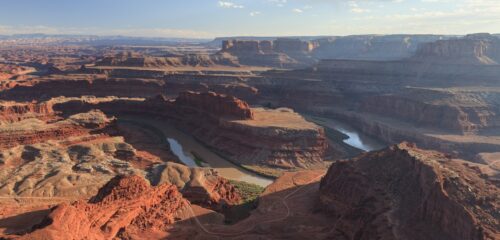 “A strengthening and potentially historic El Niño is expected to bring wetter conditions to parts of the United States this winter, raising hopes for some relief across the drought-stricken Colorado River Basin. While increased rain and mountain snowfall could benefit parts of the river system, experts say any gains for major reservoirs such as Lakes Mead and Powell are far from guaranteed. Water levels at Lakes Mead and Powell, the two largest reservoirs in the country, fell to record lows in August after what federal water managers described as record-low snowpack across the Colorado River Basin during the 2025-26 winter. The Colorado River, which stretches roughly 1,400 miles serving seven Western states and Mexico, supplies water to tens of millions of people while supporting agriculture, hydropower generation, recreation, fish and wildlife. … ” Read more from Newsweek.
Map shows cities that have no water backup if Lake Powell, Mead fails
“Smaller towns that rely almost entirely on a single water source are more vulnerable to the West’s drought crisis than major metropolitan areas such as Phoenix, Las Vegas, and Los Angeles. If Lake Powell or Mead were to fall below the levels needed to supply cities, some of these communities could face severe shortages because they lack the backup water infrastructure that the larger cities have built over decades, says a recent analysis from World Atlas. Kathryn Sorensen, a Colorado River expert at Arizona State University and former director of Phoenix Water Services, told Newsweek that smaller communities can be particularly vulnerable because developing alternative supplies is costly. … ” Read more from Newsweek.
The Denver area didn’t conserve enough water this summer. Now it’s taking more from the Western Slope.
“Denver Water is pulling more water from rivers, creeks and communities in Grand County to refill its reservoirs after a record-hot summer, sparking pushback from some western Coloradans. Denver Water’s reservoirs — the water storage for 1.5 million people — are far lower than normal for this time of the year. The utility has issued mandatory restrictions, which means it can also increase the amount of water it pulls from certain streams and rivers on the Western Slope for the Denver area. But that leaves a trickle of water in Grand County rivers and creeks, and the western communities that rely on them. The Winter Park area’s water supplies will be reduced. Fish eggs can die in shallow ice, impacting environments and fishing outfitters, said Kirk Klancke, president of the Colorado River headwaters chapter of Trout Unlimited. … ” Read more from the Colorado Sun.

