

Several news sources featured in the Daily Digest may limit the number of articles you can access without a subscription. However, gift articles and open-access links are provided when available. For more open access California water news articles, explore the main page at MavensNotebook.com.
On the calendar today …
- LUNCH-MAR: Economics of Managed Aquifer Recharge from 12:30pm to 1:30pm. What is managed aquifer recharge really worth? Join us as we explore the economics of MAR, from the costs and benefits identified across the research literature to new insights from the Kern Water Bank. This session will preview a forthcoming synthesis report and present an empirical case study using agricultural land values to estimate the economic value of groundwater storage and banking for landowners. Presenter: Ellen Bruno, UC Berkeley To join a Lunch-MAR Session, click here.
In California water news today …
A constant problem’: Abandoned mines causing sinkholes, other incidents across the country
“In California, a gold mine caved in beneath a family living room, killing a 32-year-old man and his dog. In Pennsylvania, a grandmother died when an abandoned coal mine gave way under her feet while she searched for her missing cat. And in New Jersey, an abandoned mine shaft opened up beneath a major highway, creating a sinkhole more than 40 feet wide. At the time, these may have appeared to be isolated incidents — but an ABC News investigation found that they were caused by decaying infrastructure from abandoned underground mines collapsing beneath residential streets, highways, and family homes, triggering sudden sinkholes, injuries, and, in some cases, fatal accidents. Abandoned or forgotten mines are inactive mining sites, dating back to the 19th and mid 20th centuries, that were left unsealed and unmonitored after operations ceased. “It’s pretty much everywhere and different stages of problems,” said Paul Santi, who has spent years studying the nation’s mining legacy at the Colorado School of Mines. “I think it’s one of these things that people aren’t really thinking about until it happens.” … ” Read more from ABC News.
Forecast for California’s El Niño winter just got even wetter. These are the new numbers
“Nearly every corner of California, from Eureka to San Diego, is forecast to see its heaviest rain in January during the historically strong upcoming El Niño winter, according to data released this week by a major seasonal model. The model came in wetter than when it was last run a month ago: San Francisco’s precipitation forecast for January grew from about 4 inches above normal to 5 inches, and Santa Rosa went from 6.3 inches above normal to 7 inches. But the peak month is only part of it. From December through March, the model’s average forecast runs at nearly double its normal rainfall in San Francisco and San Jose, and at more than two and a half times normal in San Diego. The update prompted a warning from UCLA climate scientist Daniel Swain, who wrote on X that he had “never seen such high predictive confidence in a very wet California winter” and that he is “officially concerned.” … ” Read more from the San Francisco Chronicle. | Read via Yahoo News.
Landslides, flash floods and raging seas: is California ready for the ravages of El Niño?
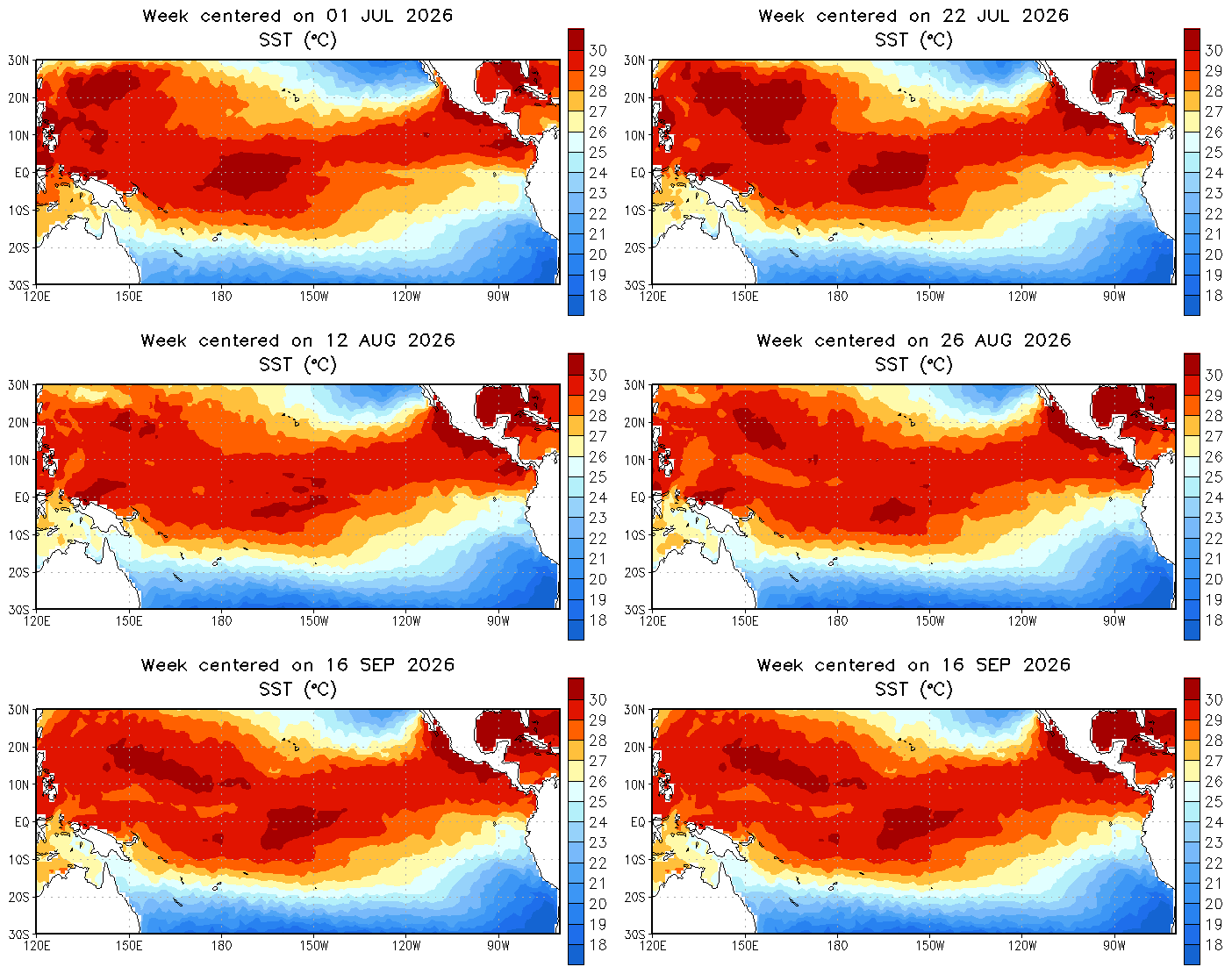 “On a cloudless autumn afternoon, sunlight sparkled on the water that had quietly swallowed a busy intersection to the north of San Francisco, as the surrounding rush-hour traffic slowed to a painful crawl. There were no crashing waves or storm surges to blame for the flood. Marin county was one of many areas up and down the California coast affected by high tides last week, as parts of the Pacific swelled with excess warmth. The submerged streets stood as an early signal of California’s vulnerabilities as it braces for what could be a tumultuous winter. “If you think this is bad, just wait until December,” a state worker grumbled as he directed swarms of cars past the choke point toward a sidestreet. Experts have warned that a potentially historic El Niño is brewing, with the power to unleash extreme weather around the world. The climate phenomenon, characterized by warmer than average equatorial sea surface temperatures, is already under way, according to federal forecasters, and it is expected to strengthen through the northern hemisphere’s autumn and winter. California is poised to be in its crosshairs. Landslides, flash floods and encroaching sea levels are all on the menu – and they could all happen at once. … ” Read more from The Guardian.
SEE ALSO:
- Winter forecast 2026-2027: El Niño to reshape snow, cold across the US, from AccuWeather
- Now’s the time to get your family ready for El Niño. Here’s how to start, from the LAist
NOAA: Kelvin waves, explained
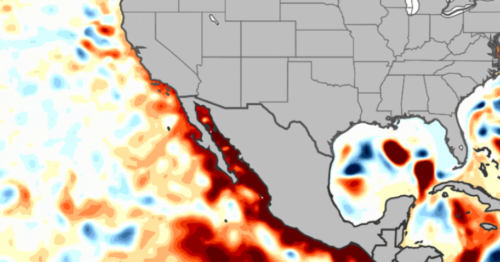
“You may be hearing a lot about Kelvin waves in the news. What are Kelvin waves, and how are they related to El Niño? We asked oceanographer Michael Jacox, from the Southwest Fisheries Science Center and NOAA Physical Sciences Laboratory, to explain the phenomenon. What is a Kelvin wave and is there currently one moving across the Pacific? Unlike the waves we’re used to seeing at the beach, Kelvin waves travel underwater, are very long, and only change sea level slightly. They often form in the western equatorial Pacific, then travel along the equator from west to east. After reaching South America, they continue as coastal trapped waves away from the equator—both north along the Central and North American coasts and south along the South American coast. As of early October, there is one making its way up the North American West Coast, and behind it there are one or two more that are still in the tropics. … ” Continue reading from NOAA.
SEE ALSO: Kelvin wave heads for US West Coast, adding to California’s coastal erosion threat, from AccuWeather
California heat wave to give way to sharp cooldown, possible Sierra snow
“California’s exceptionally hot start to October will soon give way to a major change. Cooler weather is expected, but beyond that, things are uncertain. Possibilities this weekend range from Sierra Nevada snow to rain (due to hurricane leftovers) in the southern part of the state. What’s clear is that the high-pressures system responsible for the triple-digit heat will get pushed off to the east Saturday as multiple low-pressure systems merge over the West Coast. That includes the remnants of Hurricane Rachel, which continues to spin in the open Pacific Ocean well offshore of Southern California. At a minimum, a significant cooldown is inbound. The exact position of the low-pressure systems will determine just how pronounced this cooldown will be, but high temperatures by Sunday will likely be more than 30 degrees colder than the record-breaking heat that started the month. … ” Read more from the San Francisco Chronicle.
Water demand and the Delta
“California is probably the most hydrologically altered state in the US, and the web of state and federal laws governing its water is just as complex. Our Mediterranean climate, which delivers warm, dry summers and cool, wet winters, coupled with the diversity in landscape and climate across the state, make it so. Most of California’s precipitation falls in the northern half of the state, while most of its population lives in the Southern half of the state. Water has been sent impressive distances across California to irrigate its vast agricultural lands and hydrate its growing cities. … The Sacramento Delta, the only inland delta in the United States, is technically backwards: where most deltas widen as they approach the sea, the wide edge of the Sacramento Delta is at the point of convergence between the two rivers, and these waters enter the estuary through a narrow channel. The dynamics of this delta are likewise unique and independent from other deltas in the United States: it is simultaneously tidal and fresh. … ” Read more from Audubon.
Closing the gap: A Unified Water Plan for the San Joaquin Valley
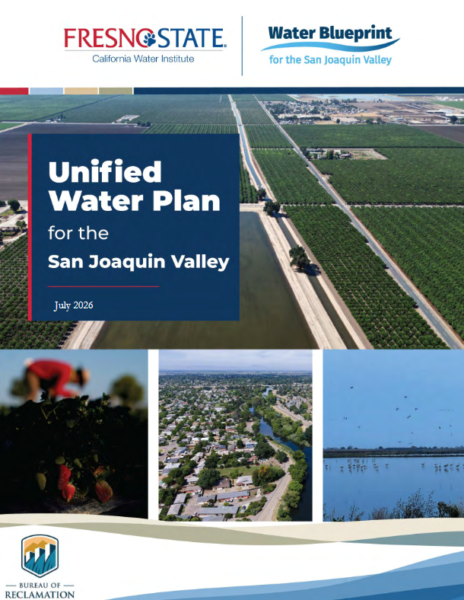 “The San Joaquin Valley faces a defining water challenge: how to secure reliable supplies, manage flood risk, and protect ecosystems across one of California’s most productive regions. The Unified Water Plan (UWP) lays out a comprehensive strategy for the eight-county Valley—San Joaquin, Stanislaus, Merced, Madera, Fresno, Kings, Tulare, and Kern—spanning the San Joaquin River and Tulare Lake hydrologic regions through 2040 and beyond. Congress directed the effort under Public Law 111-11, with funding from the U.S. Bureau of Reclamation. The California Water Institute (CWI) at Fresno State developed the plan in coordination with the Water Blueprint for the San Joaquin Valley. The plan pairs a regional strategy for water supply reliability, flood management, and ecosystem needs with a sobering conclusion: even an estimated $18 billion to $33 billion in infrastructure investments and management actions would not fully close the Valley’s projected water supply gap. … ” Read more from Maven’s Notebook.
Californians are paying some of the highest water bills in the country
“If you’ve noticed your water bills are getting a lot more expensive, you’re not alone. In a new nationwide survey of 500 large drinking water utilities, researchers found that average water bills have gone up 1.6 times faster than inflation, and Californians are paying some of the highest bills. The report by Food & Water Watch, a nonprofit advocacy group, shows that four water utilities in California rank among the top 10 most expensive in the United States. The private utility San Jose Water Co. was No. 1, while others included Escondido, Santa Barbara and Marin Municipal Water District. The researchers also found that more than half of the 25 most expensive water systems they looked at are in California. They include San José (11), San Francisco (14), Sacramento (15) and Oceanside (19), which the researchers said charged bills totaling more than $1,100 last year for typical indoor water usage for a household of three. … ” Read more from the LA Times. | Read via Yahoo News.
RELATED:
- Surging Water Costs amid the US Affordability Crisis, Report from Food & Water Watch
- New Report Unveils Enormous Cost of Privatized Water in CA, from Food & Water Watch
California rehabilitates Oroville Dam’s cold-water outlet system in $235 million project
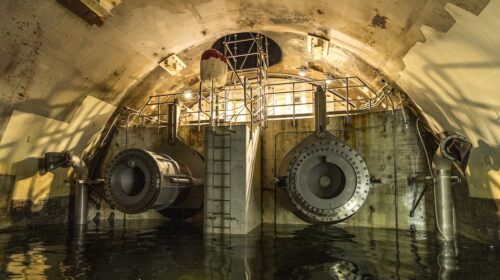
“The California Department of Water Resources (DWR) has completed a $235 million rehabilitation of the river valve outlet system (RVOS) at Oroville Dam, which should keep this essential part of the dam working reliably for many years. Standing 770 feet (235 metres) high, Oroville is the tallest dam in the United States and a cornerstone of the State Water Project. It stores water for supply, generates clean energy, helps protect downstream communities from floods and is used for recreation. Construction of the earthen dam ran from 1961 to 1967. The RVOS sits within one of the dam’s early diversion tunnels and gives operators access to the cold water held at the bottom of Lake Oroville, which can be released into the Feather River. This matters most in periods of extreme heat and drought. When storage in the lake drops, those releases can lower river temperatures and benefit fish both in the river and at the Feather River Fish Hatchery. Chinook salmon and steelhead trout spawn annually in the Feather River below the dam. “This investment in Oroville Dam’s infrastructure ensures the reliable and safe operation of the State Water Project’s largest flood protection and water supply facility,” said John Yarbrough, Deputy Director of DWR’s State Water Project. … ” Read more from Smart Water Magazine.
When a forest burns, what does it mean for lakes? Scientists are trying to find out
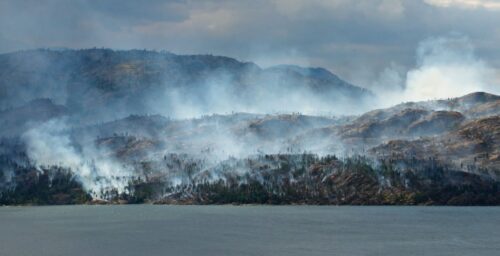 “Aquatic global change ecologist Mary Jade (MJ) Farruggia found herself studying the impact of wildfires on lakes by accident. She was researching lakes in the mountains of California in the summer of 2020 when, in “a tragic turn of events,” wildfires swept through the area, smoke clouded the sky and her plans quickly changed. “Wildfires are becoming more intense and more frequent, and so it just became a phenomenon that was getting harder and harder to ignore,” Farruggia, a postdoctoral researcher at the University of Colorado Boulder, told The Narwhal over the phone. “As lake scientists, we started wondering, ‘what’s the impact of this on the systems that we study?’ ” Canada is home to two million lakes, more than any other country. And the last three wildfire seasons have been among the worst on record here, making research like Farruggia’s critical. A record-breaking season in 2023 saw 15 million hectares of forest burned across Canada. The land hasn’t had much reprieve since. This year more than 4,700 fires burned more than four million hectares across the country by the end of August — many in Ontario. “We as humans feel the impacts of [wildfire smoke],” Farruggia said. “If it’s affecting your own health, how is it also affecting your ecosystems and the nature around you and the systems that you rely on? Is your favourite lake going to be similarly impacted by smoke?” … ” Read more from Circle of Blue.
The art of protection: guarding hatchery salmon from pathogens
“It takes effort to keep hatchery salmon safe, particularly from live disease-causing agents like bacteria, viruses, and microorganisms, which collectively are called pathogens. The fish hatcheries run by federal and state agencies employ different techniques to ensure the health of California’s salmon populations. In California, the two agencies involved in this effort are U.S. Fish and Wildlife Service (FWS) and the California Department of Fish and Wildlife (CDFW). FWS and CDFW regularly communicate about salmon and steelhead pathogens in California’s Central Valley. They often run into similar pathogen issues. They also share potential solutions, according to Krysten Kellum, an Information Officer for the Office of Communication, Education and Outreach at CDFW. … ” Read more from the California Sportfishing Protection Alliance.
These predators may soon restore California’s battered kelp forests
“An audacious effort to restore a critically endangered species to the California coast has moved one step closer to fruition after scientists temporarily released more than a dozen lab-reared sunflower stars into Monterey Bay. Once a common sight for divers, these manhole-sized, many-armed sea stars have not been seen south of the Bay Area since 2018, after a mysterious illness killed around 6 billion individuals along the West Coast of North America. Set free, the lab-reared animals quickly devoured their preferred prey, sea urchins, which have ballooned out of control in the years since the outbreak. The stars’ successful hunting raises hopes that the animals could one day be set free for good, helping to restore urchin barrens into lush, productive kelp forests. … ” Read more from SF Gate.
In regional water news and commentary today …
NORTH COAST
Regulating water quality in Siskiyou County
“On October 1, 2026, the North Coast Regional Water Quality Control Board (Regional Board) conducted a hearing regarding water quality in the Scott River and Shasta River. The Regional Board considered a five-year extension of conditional waivers for the Total Maximum Daily Loads (TMDLs) issued under the Waste Discharge Requirement program. The Regional Board gave itself three years to complete a process to set enforceable standards for water quality in the rivers. TMDLs set limits for measures of water quality called parameters. The Regional Board adopted TMDLs in 2006 for the parameters of temperature and sediment in the Scott, and in 2007 for temperature and dissolved oxygen in the Shasta. However, the Regional Board allowed what are called waivers for these requirements, to give people in the watershed time to comply. Repeated waivers have delayed implementation of the TMDLs since 2006. That is two decades of harm to native species of fish and other flora and fauna in these rivers. … ” Read more from the California Sportfishing Protection Alliance.
Checking in on the Smith River
Eric Woodruff writes, “The Smith River, whose mainstem and three forks flow a total of approximately 124 miles, flows from the Klamath Mountains to the Pacific Ocean in Del Norte County, California. This waterway is arguably the most beautiful stream in California. For my money, it’s one of the most beautiful on Earth. The Smith River is a prime example of how a coastal river system remains pristine when left untouched. “The emerald-green Smith River flows freely and naturally, without a single dam for its entire length” (U.S. Fish & Wildlife Service 2026). Smith River is also the name of an unincorporated area near the mouth of the Smith River. As of 2020, it was home to about 900 people. This area is the headquarters of the Tolowa Dee-ni’ Nation, a federally recognized group of Tolowa people. They have a vested interest in protecting the river and the native species of fish in it. … ” Read more from the California Sportfishing Protection Alliance.
Humboldt County supervisors advance sandbags for El Niño weather defense
“The Humboldt County Board of Supervisors took its first steps toward protecting the county from weather threats amid increasing discussion about the threats from a “super El Niño” this winter. They unanimously approved spending up to $25,000 on sandbags on Tuesday. First District Supervisor Rex Bohn said he’s been coordinating sandbag efforts in the past. “For the last 13, 14 years, I’ve been having sand dumped down in King Salmon. Tom (Mattson has) been giving us bags and I’ve been getting the sand donated by private contractors so people could fill their own sandbags,” Bohn said, noting that now a machine in Ferndale helps speed up the making of sandbags. “… Well, as this moves forward, we can still probably get that help, but I think it needs to be a little more organized than me getting on the phone. I know there was some concerns, but with what happens out on Old Arcata Road, what happens in King Salmon, what happens in Orick. There are issues with low-lying areas.” He noted the idea has drawn some ire. … ” Read more from the Eureka Times-Standard.
Mendocino County Board of Supervisors warned that the county may not be ready for El Niño
“Mendocino County wants to clear flood-prone creeks before this winter’s El Niño storms. On Tuesday, county staff told the Board of Supervisors that one creek could take up to 18 months and about $1 million just to permit. Although Gov. Gavin Newsom declared a statewide El Niño emergency Sept. 21, the declaration carries no funding to address the issue, Travis Kilmer, the county’s chief recovery resiliency officer, told the board. “The state was very clear with us,” he said. “There are no funds we can tap into through that at this point.” … ” Read more from Mendocino Voice.
SIERRA NEVADA
Marlette Lake Dam Project completed
“Construction on the Marlette Lake Dam Rehabilitation Project is complete and the Nevada Division of State Parks has reopened recreation access to the West side of the Spooner Lake backcountry. The historic water system was constructed in the mid-1870’s to provide water to Virginia City. After draining the reservoir, the project removed the existing earthen dam and replaced it with a new one. The project also included upgrades to help the dam better withstand earthquakes, improvements to the spillway, and replacement of the discharge piping and outlet valves. The project started in June 2025 and was completed on schedule this month. The Marlette Lake Dam is a critical component of the Marlette Lake Water System, which supplies water to Storey County and Carson City. Seepage within the dam was first identified during an inspection in 2017 by the Nevada Division of Water Resources, and it was determined that this seepage could eventually lead to a catastrophic failure. … ” Read more from the Tahoe Daily Tribune.
Trail restoration activities underway in Rabe Meadow
“The U.S. Forest Service has resumed restoration activity in Rabe Meadow on the Lake Tahoe Basin Management Unit. The Lam Watah Trail Boardwalk Project includes re-routing a section of trail that frequently floods during wet conditions to protect the sensitive meadow ecosystem while improving the trail experience for visitors. A temporary detour is scheduled to be in place beginning Oct. 19. For public safety, visitors should avoid construction areas and use the alternate routes indicated on the map below. Project activity includes rerouting the existing trail, constructing elevated boardwalks, decommissioning the existing trail and restoring area vegetation. … ” Read more from South Tahoe Now.
California’s giant sequoias are at risk. Prescribed fire is helping save them
“Five years after the KNP Complex Fire, the damage is still hard to miss along the Generals Highway, the main thoroughfare of Sequoia and Kings Canyon national parks. Thousands of acres of blackened forest lie south and west of the winding mountain road in the southern Sierra Nevada. Stands of lifeless giant sequoias, which grow naturally only in the Sierra, are among the dead trees. The most severe sequoia damage occurred on Redwood Mountain, which was recently reopened to the public and has warning signs about falling dead trees. Many of the dead giants have lost their distinctive thick red bark. The forest is crisscrossed with huge strips of bark the trees shed after dying. Because of their size and age, the dead sequoias seem like dinosaur fossils. … ” Read more from Comstock’s.
SACRAMENTO VALLEY
Red Bluff water, sewer rate increase on Tuesday agenda
“When the Red Bluff City Council meets on Tuesday night it will hold a public hearing concerning the potential approval of raising the city’s water and sewer rates. The Red Bluff City Council will meet at 5:30 p.m. in the council chambers at 555 Washington St. Per the agenda information, the proposed approach for the rates is a “phased-in” option for water rates, and a “cash-funded low capital improvement plan” for sewer rates. For water rates, the initial first year increase for singe-family residences would be, on average, from $28 to $42, with consistent increases for the following four years. Sewer rates would increase on average for single-family residences in the first year from $34 to $86, with additional increases in the next four years. The staff report with the agenda stated, “The City of Red Bluff provides water and sewer service to a population of about 14,400 people via approximately 4,600 active water and sewer connections. Water and sewer services are funded entirely through monthly rates paid by customers.” … ” Read more from the Red Bluff Daily News.
Butte County works to clear out Keefer Slough, mitigate flood risk
“The neighborhoods along Keefer Slough north of Chico have long felt the impacts of flooding throughout the rainy season and over the years, Butte County has conducted various studies to determine a solution. This year, work finally began to clear the emergency waterway of debris and create conditions that ideally will allow water to flow deeper and farther. The issues have been arising each winter with some residents going as far as to purchase and use their own pumps to keep the slough from spilling over. … “Depending on the location, the work includes sediment removal, vegetation management, and placement of Rock Slope Protection,” Esenwein said. “At Keefer Road at Keefer Slough, County crews are removing accumulated sediment from beneath and around the bridge and placing (Rock Slope Protection) to protect the crossing.” … ” Read more from the Chico Enterprise-Record.
Chico-Durham wells could go dry under current plan
“A five-year review of the Vina Groundwater Sustainability Agency’s plan could determine whether Chico and Durham residents face chronic drought conditions, according to Groundwater for Butte. The public has until Oct. 26 to submit comments on proposed changes that critics say don’t go far enough to protect domestic wells and local ecosystems. The Vina GSA released its draft Periodic Evaluation and proposed plan amendments in September. Required under California’s Sustainable Groundwater Management Act, the review will shape how groundwater is managed across the Vina Subbasin for the next 5 years. Groundwater levels in the Vina Subbasin have already declined an average of 25 feet over the past 25 years. The current plan would allow roughly 20 more feet of decline before stabilizing at its long-term goals, effectively turning historic drought-level groundwater conditions into the new normal. … ” Read more from Action News Now.
From the river: A different view of Sacramento’s erosion protection
“From the Sacramento River, the progression of work to strengthen one of the city’s most important lines of flood defense can be seen in a single boat trip. At some locations, barges and heavy equipment are placing rock along the shoreline. A short distance away, completed sites show what that construction is designed to become as native vegetation takes hold along the rebuilt riverbank. Project team members traveled the river Sept. 30 to view active and completed portions of the Sacramento River erosion protection work, part of the American River Common Features 2016 project. The trip included active construction at Sites 7 and 8 along the east bank of the river in Sacramento’s Pocket and Greenhaven area. The group also viewed completed erosion-protection work from earlier contracts near Pocket-Greenhaven and Little Pocket to see how the riverbank and vegetation are developing after construction. For Sacramento residents, the work addresses a problem that can be difficult to see from streets, trails and neighborhoods behind the levee: erosion occurring along the river side of the flood control system. … ” Read more from the Army Corps of Engineers.
NAPA/SONOMA
Sonoma County declares local emergency ahead of strengthening El Niño
“The Sonoma County Board of Supervisors passed an emergency proclamation Tuesday, Oct. 6, in anticipation of the strengthening El Niño system and the severe flooding and storms it could bring this winter. The move, passed unanimously, comes in the wake of Gov. Gavin Newsom’s similar proclamation in September. Cloverdale last month became Sonoma County’s first city to pass an emergency declaration. The county’s proclamation will allow officials to ramp up preparations for the winter season and position the county to more quickly pursue permits, coordinate response and access support tied to storm damage and recovery. “There are areas we know that are going to flood and there are areas we know that are going to have issues and we have the systems in place to mitigate them once they happen,” said Jeff DuVall, the county’s emergency management director. “However we also have the unknown, potential slides, road issues, storm stall-outs; these all have to be taken on a case by case basis, the county departments and agencies are ready to respond.” … ” Read more from the Santa Rosa Press Democrat.
SEE ALSO: Sonoma County declares local emergency ahead of expected El Niño flooding, from NBC Bay Area
BAY AREA
Sierra Club sues San Francisco, claims city is fabricating its water needs
“The Sierra Club is suing the city of San Francisco’s water department, claiming officials are manipulating water data to justify bigger water grabs for the city — and causing unnecessary harm to the environment, and inflating customer rates. The suit, filed last week in San Francisco Superior Court, calls for the San Francisco Public Utilities Commission to revise its state-mandated Urban Water Management Plan to reflect more modest water needs, notably from the Tuolumne River at Yosemite National Park, where the bulk of the city’s water comes from. The Oakland-based Sierra Club and other environmental groups have long accused San Francisco of holding back too much water at its Hetch Hetchy Reservoir in Yosemite. They say the excess storage comes at the expense of struggling salmon runs and a drying foothill landscape. The Tuolumne River, because of water draws by the city and others, averages just 21% of its natural flow during peak run-off season. … ” Continue reading from the San Francisco Chronicle.
State drafts toxic cleanup plan for Marin housing projects
“State regulators have released a draft plan for removing toxic substances from a site near San Quentin prison where two housing developments are planned. The projects along East Sir Francis Drake Boulevard are linked because they plan to share infrastructure. One project has to delay construction because the other is struggling with financing. The Marin County Public Financing Authority, a joint powers agency formed by the county government and the Marin County Office of Education, is overseeing one of the projects in partnership with Education Housing Partners. That project calls for 135 below-market rental apartments for local education employees and county workers. The other project is being developed by Eden Housing. It involves 115 apartments that would be priced to be affordable to low-income households and extremely low-income households. … ” Read more from the Marin Independent Journal.
Richmond wastewater plant to mark completion of $87M project Wednesday
“West County Wastewater is hosting an event this week at its Richmond treatment plant to commemorate the completion of its “Clean and Green” energy project. The agency’s ribbon-cutting ceremony Wednesday will mark the end of a roughly $87 million project to upgrade equipment, boost renewable energy production and better protect the sewage treatment facility from the effects of climate change. Two of the project’s main goals are to reduce the plant’s carbon emissions and increase its ability to generate its own power by, in part, converting methane released during the sewage treatment process into electricity — turning “poop into power,” according to WCW General Manager Andrew Clough. … ” Read more from Local News Matters.
Richmond plant fined for polluting air with mineral dust, air district says
“The Bay Area Air District has fined a Richmond drywall plant $188,500 for dust violations after inspectors found that fine mineral dust spread beyond the facility and affected nearby properties and public streets. The penalty resolves 13 violation notices involving unpermitted equipment and dust emissions, the air district said Tuesday. The agency also ordered the company, Gold Bond Building Products, to improve its dust controls and operating practices. The agency ordered Gold Bond to build a permanent enclosure around an outdoor gypsum pile by Dec. 31, 2027, and upgrade equipment that collects dust inside the plant. It must also strengthen inspections, maintenance, employee training and controls for loading and processing gypsum. The agency said the company is required to clean vehicles leaving the plant to prevent dust and debris from being carried into the community, which has long been plagued by polluted air. … ” Read more from the San Francisco Chronicle.
San Francisco approves, other cities consider bans and reviews on data center growth
“As artificial intelligence and digital services rapidly expand, several California local governments are stepping back to evaluate the footprint of data center development in their communities. Cities across the Bay Area and Southern California are considering pauses or reviewing long-standing policies to address rising concerns over energy demand, water usage, and environmental impacts. The City of Santa Clara stands as one of California’s primary data center hubs. Despite its population of roughly 133,000 residents, Santa Clara currently hosts 56 data centers, with two additional projects in development. … ” Read more from KTVU.
SEE ALSO: San Francisco becomes the first Bay Area county to pass moratorium on temporary data centers, from SF Gate
SF Bay’s longest-running pollution patrols go green
“In a new era for the pollution watchdog group, San Francisco Baykeeper has officially converted its patrol boat to run on solar panels and new, clean-running electric motors. For nearly 40 years, Baykeeper has been the only nonprofit organization regularly patrolling San Francisco Bay for pollution. Baykeeper’s team of field investigators, scientists, and lawyers use the boat to catch polluting companies and hold them accountable, resulting in over 300 wins to protect the Bay and Bay Area communities. The electrification experts at EVOA LLC recently retrofitted Baykeeper’s 24′ catamaran boat with high-performance electric motors and solar panels, making Baykeeper’s patrols of San Francisco Bay emission free. … ” Read more from SF Baykeeper.
SAN JOAQUIN VALLEY
Water Blueprint executive director featured as panelist at CalWA water forum, highlighting collaboration in advancing California’s water future
“Last week Water Blueprint for the San Joaquin Valley Executive Director Austin Ewell was featured as a panelist at the California Water Alliance 2026 Water Forum. This annual event brought together regional leaders and partners to discuss California’s water future, infrastructure, and statewide water challenges. The panel, featuring California water leaders spanning federal policy, water management, water law, and forecasting, explored the importance of maximizing existing infrastructure, investing in future projects, improving water operations, moving projects from planning to implementation, and aligning water and land-use decisions with California’s long-term needs. Executive Director Ewell emphasized a central message: California will not solve its water challenges by working in silos, partnerships and collaboration are essential. … ” Read more from the Water Blueprint for the San Joaquin Valley.
Mining co. wants to blast 600-foot hole near San Joaquin River north of Fresno. Locals worry
“A company that has mined the San Joaquin River since 1913 is looking for approval once again to dig a 600-foot-deep mine along the San Joaquin River — and critics of the plan are preparing to fight it. The Mexico-based multinational company CEMEX has applied to modify the Rockfield Aggregate Facility on North Friant Road to allow them to dig and blast through hard rock as deep as two football fields for 100 years. The company processes gravel, sand and other building materials, and has applied before for such a project. The application is set to go before the Fresno County Planning Commission at 8:45 a.m. Thursday in the chambers of the Fresno County Hall of Records, 2281 Tulare St. Critics of the project were recently preparing to take on the application, which they argue could have long-term effects on the San Joaquin River, lead to air and noise pollution and add more heavy trucks to Friant Road. … ” Read more from the Fresno Bee.
Fresno State Field Day to highlight groundwater recharge options for farmers
“California farmers will have an opportunity to see groundwater recharge projects in action during a November 17 field day at the Fresno State Campus. The event, called “Recharge in Action: A Farmer Field Day,” will focus on practical strategies growers can use to improve groundwater reliability as Sustainable Groundwater Management Act requirements continue to evolve. The California Water Institute and Sustainable Conservation are hosting the event for farmers who own or lease farmland. The program is designed to provide growers with practical information they can use when considering groundwater recharge projects on their own operations. Participants will learn about several approaches to groundwater recharge, including recharge basins, injection wells, subsurface recharge and on-farm recharge. The field day will provide an opportunity to see how these strategies can work in practice and better understand the considerations involved with each option. … ” Read more from AgNet West.
Fresno could hike water, sewer rates soon. Needed upgrades or ‘code for SEDA’?
“On Thursday, the Fresno City Council could decide whether to take the next step toward raising water rates for the first time in almost a decade and sewer rates for the first time in 16 years. A staff report estimates the rate change would tack on an additional $1.77 each month to a typical resident’s water bill in the first year of the five-year rate adjustment plan, while they would see a $0.95 decrease to their sewer bill — with the decrease stemming from differently structured rates for residential versus industrial and commercial customers. The council’s agenda item comes just about a month after staff presented a financial plan for the first phase of the controversial Southeast Development Area, or SEDA, project that hinged partly on city utility bills. … ” Read more from Fresnoland.
Fresno County eyes new trash contracts and scrambles to help Shaver Springs water issues
“A Fresno County Supervisor pledged $100,000 of his district’s operating budget to provide relief for the Shaver Springs community’s poor quality issues. It wasn’t immediately clear Tuesday how the money might be used. Tuesday’s motion by Supervisor Nathan Magsig, backed unanimously by the board, directed county staff to study possible solutions for the community’s poor water quality. Providing water bottles, and paying off debt from unpaid residential water and sewage costs were among the listed ways the money could be used. Shaver Springs, a small community in the Sierra foothills, has been dealing with poor water quality for years. In recent months, residents have become more vocal about the issue as they face increasing utility costs. The community gets its water from Water Works District 40 — a provider the state’s accountability dashboard says is failing. … ” Read more from Fresnoland.
Kern County water leaders to be honored at annual event
“Former Bakersfield Water Resources Director Kristina Budak will recieve the “Water Leader of the Year” award and former Kern Water Bank Authority General Manager Jonathan Parker will receive the “Water Legacy” award at the Water Association of Kern County’s 70th annual dinner Nov. 4. Budak, a civil engineer, retired as head of Water Resources earlier this summer after serving the city for three years where she managed several challenging issues including Kern River operations under a major lawsuit and the merger of the city’s Wastewater division under her department as well, according to a press release from the Water Association announcing the awards. “I am grateful to all those that I have had an opportunity to collaborate with and learn from over the years including members of the Kern River Interests, Kern County Subbasin, California Water Services Company, and the City of Bakersfield,” Budak is quoted in the press release. … ” Read more from SJV Water.
SOUTHERN CALIFORNIA
Los Angeles officials planning for potentially historic El Niño
“Officials from across many different departments of the city of Los Angeles gathered for a press conference Monday morning to outline preparations for the potentially historic El Niño. Mayor Karen Bass led the meeting, which took place at 9 a.m. and also involved officials from the National Weather Service. Discussed were preparations and actions regarding not only the current heatwave blanketing SoCal, but the impending winter weather that could shatter records. The mayor advised Angelenos and those living in the greater L.A. area that it is going to be a wet winter — and that authorities are already working to mitigate the potential effects, including flooding from anticipated heavy rains and erosion from high surf, the latter of which is already affecting SoCal beach communities. … ” Read more from KTLA.
Rancho California Water District celebrates new helicopter dip tanks
“Rancho California Water District (Rancho Water/District) is celebrating two new helicopter dip tanks at its Avocado Mesa and Via Vaquero pump stations. The tanks provide firefighting helicopters with dedicated water refill locations to support wildfire response in the De Luz, La Cresta, and Santa Rosa Plateau communities, supporting efforts to protect residents, homes, and surrounding wildlands. … ” Read more from the Canyon Lake Insider.
IEUA and regional partners complete nearly 700,000 square feet of water-efficient landscape transformations
“The Inland Empire Utilities Agency (IEUA), in partnership with Calleguas Municipal Water District (Calleguas), Las Virgenes Municipal Water District (LVMWD), and Upper San Gabriel Valley Municipal Water District (Upper Water), is proud to announce the completion of 31 landscape transformations through the Turnkey Turf Transformation Program (T3/Program). Collectively, these projects replaced nearly 700,000 square feet of non-functional turf with water-efficient landscaping across San Bernardino, Los Angeles, and Ventura counties. The Program is anticipated to generate annual water savings of approximately 90 acre-feet while enhancing the beauty, sustainability, and long-term resilience of public landscapes throughout the region. Funded through the California Department of Water Resources’ 2022 Urban Community Drought Relief Grant Program, IEUA served as lead administrator of T3, which ran from November 2023 through September 2026. The Program targeted non-functional turf, defined as ornamental grass with little or no recreational and practical use. Each participating site received a customized landscape design tailored to its unique aesthetic and functional needs, incorporating climate-appropriate plants and high-efficiency irrigation. The transformations were provided at no cost to participating agencies. … ” Read more from the Inland Empire Utilities Agency.
IMPERIAL/COACHELLA VALLEYS
Salton Sea restoration advances as the lake shrinks
“On a stultifyingly hot August day, dozens of black-necked stilts and a scattering of white and brown pelicans bob and wheel on the milky blue waters of a manufactured pond, atop what was once the southwestern end of the vast Salton Sea. Snowy egrets and a great blue heron perch in the shallows. The ponds and wetlands are the largest of a necklace of planned state projects ringing the now rapidly drying, badly polluted lake, which still faces an uncertain future. The sea — that luminous, sometimes odiferous body of water bordering the Coachella Valley’s southeastern edge — is both California’s largest lake and a huge agricultural drainage with few natural inflows and no outlet to flush pesticides, fertilizers, and other waste from the lake. Long kept afloat by Colorado River runoff from Coachella and Imperial Valley farm fields, the massive saline lake is shrinking by about 2,400 acres — nearly 4 square miles — a year due to hefty sales of former irrigation supply to thirsty suburbs and aggressive water conservation efforts. The less runoff into the sea, the faster it dwindles, and the saltier and more hazardous it becomes. Millions of fish that once teemed in a popular angler’s paradise have all died, killed by water nearly twice as salty as the ocean. Clouds of migratory birds that stopped here have disappeared. … ” Read more from Palm Springs Life.
SAN DIEGO
San Diego City Council delays vote on water rates to comply with court decision
“The San Diego City Council on Tuesday punted a decision on adopting a new structure of water rates that would lower bills for apartment buildings but increase them for most single-family homes. The proposal is intended to bring the city into compliance with Proposition 218, a voter initiative from 1996 that regulates fees charged by local governments, including fees for water service. … “Public Utilities Department does not agree with the court,” said San Diego Chief Infrastructure Officer Kris McFadden. “However, we legally required to have a rate structure that the court deems valid under Proposition 218. The city must implement a unitary rate structure for our rates to be in compliance with the court ruling.” … ” Read more from KPBS.
New state law could help San Diego revive lower water rates for people who conserve
“A new state law could allow San Diego to resume giving discounts to people who use less water, a move city officials say is crucial to encouraging conservation. San Diego is being forced to stop giving such discounts by a controversial court ruling, but the new law might allow the city to revive those discounts sometime in 2028 or 2029 — or possibly even sooner. The court ruling says San Diego’s tiered rates — lower rates for low-volume users and higher rates for high-volume users — aren’t legally justified because the city can’t prove it’s cheaper to serve low-volume customers. The ruling is having a major impact across California by casting doubt on the rate structures of all water agencies that reward conservation — nearly every water agency in the state. … ” Read more from the San Diego Union-Tribune.
Commentary: Water costs are quietly killing San Diego County farms
Michael Perricone, a rancher at Sam’s Mountain Ranch in Pauma Valley, writes, “Ask almost anyone in San Diego County if they support local farms, farmers markets and open agricultural land and the answer is nearly unanimous: yes. We love our avocado orchards dotting the hillsides, our weekend trips to the farm stand, the idea that some of what’s on our table grew just a few miles away. But there’s a question most of us have never had to think about — because until recently, we didn’t need to. Can farming actually survive here under the water costs growers face today? That question is no longer hypothetical. It’s playing out right now, on working ranches across the county — including on one of the region’s largest agricultural properties. … ” Read more from the San Diego Union-Tribune.
San Diego Foundation awards nearly $1M to binational Tijuana River, coastal projects
“San Diego Foundation has awarded nearly $1 million in grants to 10 binational projects aimed at tackling pollution, flooding and water quality problems tied to the Tijuana River sewage crisis, as well as restoring coastal habitats across the Cali-Baja region. The $983,439 in Binational Resilience Initiative grants, announced Sept. 30, bring together 21 nonprofits in the United States and Mexico, according to a foundation news release. Five projects directly address the sewage crisis and related watershed challenges, while five focus on coastal habitats, research and education. “The Tijuana River sewage crisis has affected our communities for far too long, and the need for action is urgent,” said Pamela Gray Payton, vice president and chief impact and partnerships officer at San Diego Foundation. “Water and pollution don’t stop at the border. Neither can our response.” … ” Read more from the San Diego Union-Tribune.
Along the Colorado River …
Rachel to break Southwest heat and ease drought, but with flood risk
“Hurricane Rachel is expected to eventually turn toward Mexico and send heavy rain into parts of the southwestern United States, raising concerns about renewed flooding after September’s downpours. Rachel, when combined with a non-tropical storm, could help prime the Colorado River, should drenching rain reach the basin as forecast. As of Tuesday afternoon, Rachel was a Category 1 hurricane with maximum sustained winds of 85 mph. Rachel was about 640 miles west-southwest of the southern tip of Baja California Sur, Mexico, and was moving west at 8 mph. “The hurricane is forecast to move away from land initially, keeping its strongest winds and heaviest rain offshore for much of this week,” AccuWeather Lead Hurricane Expert Alex DaSilva said. … ” Read more from AccuWeather.
Arizona to study desalination, water reuse projects in Mexico
“Arizona is investing nearly $8.5 million on a study of a seawater desalination project in Mexico, the second such Gulf of California proposal that the state’s water augmentation authority has agreed to investigate this year. The state Water Infrastructure Finance Authority board approved funds for the feasibility study at an Oct. 5 special meeting. The board also approved $5.7 million for a study of an option to purify water for reuse in Mexico, potentially to include treatment of water for use in Tijuana, Mexicali and San Luis Rio Colorado. All of the projects would lead to Arizona helping produce water for Mexico in exchange for some of that country’s Colorado River water, though the desalination plant may also include an option to pipe water north. The substantial costs for actually producing water are unknown, which board members say is one reason to conduct the studies. … ” Read more from the Arizona Daily Star.
Scottsdale considers new restrictions for large water users as demand rises
“Scottsdale is moving forward with plans to create a large water users ordinance to help mitigate the effects of Colorado River water cuts. The changes under consideration would apply to new large water users, not existing ones. At the Scottsdale City Council’s Sept. 22 work study session, staff recommended new requirements as projected demand increases for large water users. Businesses that use more than 100,000 gallons per day would need to produce a conservation plan. … ” Read more from KTAR.
“The blankets did exactly what they were supposed to do”: Aspen Snowmass considers snow storage pilot a success
“Over the weekend, the lifts were spinning at Snowmass Bike Park for the last time this season, but it wasn’t just bikers getting air on the mountain. Skiers and snowboarders had a rare opportunity to get on snow in early October, courtesy of — well, last year’s snow. Aspen Snowmass opened the Makaha Terrain Park for the weekend, giving skiers and riders a chance to ski and snowboard on about 300 feet of snow that had spent nearly five months beneath insulated blankets. Meanwhile, mountain bikers bombed down Snowmass’ trails through the golden-leafed canopy. Despite a dry winter that forced Aspen Snowmass to close some terrain early and a summer that broke historic drought records, the snow survived. Roughly 85% of the snow volume stored at Snowmass remained when the blankets were removed late this summer. At Buttermilk, where another pile rested on the slope above the half pipe, about 84% remained, including both melt and the natural compression of the pile. … ” Read more from the Colorado Sun.
In national water news today …
The overwhelming problem of plastic
“Spending more than a decade documenting the spread of plastic waste throughout the Great Lakes took a psychological toll on Melissa Duhaime. Scary findings. Seemingly few solutions to intractable problems. Scientists stacked against the world’s most clout-heavy corporations bent on tripling production of fossil fuel-based plastics. Duhaime, a University of Michigan biologist, found solace — and maybe a chance to build her own business while bolstering the regional economy — in a plastics-free alternative dating back to ancient Mesopotamia, now known as Iraq. She decided to adjust her research and focus on flax, a plant that can be spun into linen and woven into clothing instead of polyester, acrylic or other synthetic fabrics that shed plastic fibers every time they are laundered. The stems of flax, mostly grown in America these days for versatile, nutritious seeds, also are a proven substitute for petroleum-based carbon fiber in automobiles and construction. “Our farmers are interested, some big companies are interested,” Duhaime said in a recent interview. “We have the potential to create a new manufacturing sector when it comes to the growing and processing of (flax) fibers, spinning and weaving them, and developing new products.” … ” Read more from the OC Register.

