
How Section 1707 helps water-right holders protect instream flows—and why the process remains difficult
Keeping water in a California stream can be as complicated as taking it out. Water Code Section 1707 gives water-right holders a way to dedicate water to fish, wildlife, wetlands, and recreation without giving up the underlying right—but turning that option into protected flow can require extensive analysis, public review, and downstream accounting. Those opportunities and obstacles framed an August 2026 Watershed Solutions Network virtual workshop on Section 1707 instream-flow dedications. Speakers included Joaquin Esquivel, chair of the State Water Resources Control Board; Erik Ekdahl, chief deputy director of the State Water Resources Control Board; Julie Rentner, president of River Partners; and Alex Hart, an appraiser with Central California Appraisals and a Siskiyou County rancher.
Chair Esquivel calls for active water-rights administration
Chair Joaquin Esquivel opened the webinar with remarks on California’s water-rights system. He described the system as complex and less developed than those in other Western states. Historically, water-right holders had established pathways for using water to grow crops, provide drinking water, or support other beneficial uses. The process for retaining water instream to benefit ecosystems throughout a watershed was less clear. A formal pathway did not emerge until the 1990s, when water-right holders were allowed to dedicate water from existing rights to instream uses through what are known as Section 1707 dedications.
California’s water-rights system generally follows a “use it or lose it” principle: water-right holders must continue putting water to beneficial use to maintain their rights. A Section 1707 dedication allows a holder to retain a water right while using the water for instream purposes. Mr. Esquivel said this option is particularly important because California has not protected or developed instream flows as effectively as some other Western states. He attributed that shortfall in part to limited active administration of water rights and said that approach is changing.
The 2012–2016 drought underscored the need for stronger administration. Some communities lost access to water, the state faced difficulty protecting senior water-right holders, and established instream flows were insufficient or difficult to protect.
“The need to continue to be more protective and have tools out there has only grown. So, what we’re looking to do into the future is more actively administer water rights,” he said. “But the reality is, the way that you protect any of those dedications—whether it’s existing 1707 dedications or new voluntary agreements that may be on systems—you need to actively administer the water-right system so as to protect those flows through the system. So, in the years ahead, we will be seeing just an incredible growth of the administration of the water-right system, both because of increasing droughts, but also floods, and, importantly, unlocking the ability for water-right holders themselves to help us better manage this system.”
Overview of the 1707 process
Erik Ekdahl provided a high-level overview of Section 1707, including its history, requirements, and implementation challenges.
A Section 1707 instream dedication is a legal mechanism that allows an existing water right holder to change the use of water from a consumptive purpose, such as irrigation or domestic supply, to an environmental purpose.
Sections 1700–1717 of the California Water Code establish the process for changing the point of diversion, place of use, or purpose of use of water. These provisions outline petition requirements and State Water Board approvals intended to ensure that proposed changes do not harm other legal users of water and comply with environmental and regulatory requirements.
In general, a water right holder seeking to change an existing right must petition the State Water Board and obtain approval. A petition may address the location or method of diversion, the place of use, or the beneficial purpose for which the water is used.
Section 1707 took effect in 2000 and applies to water used under appropriative, riparian, or other recognized rights. Through a change petition, a water right holder may request to preserve or enhance wetlands, fish and wildlife resources, or recreational uses.
Required components
A Section 1707 petition must specify the timing, location, and scope of the proposed change, along with other relevant information. Although the statute does not define that additional information, petitioners generally use it to explain the proposed action, its environmental benefits, and how it supports the continued beneficial use of the water right.
A petition may not increase the amount of water the right holder is entitled to use or unreasonably affect any legal user of water. Because this protection applies to all legal users—not only junior water right holders—the State Water Board must consider potential effects on both senior and junior rights when reviewing a proposed change.
The petition also must comply with the California Environmental Quality Act. When a private entity submits the petition, the State Water Board serves as the lead agency and generally enters into a cost-recovery agreement under which the petitioner pays for the environmental review conducted by a contractor. When a public entity submits the petition, that entity serves as the lead agency. The State Water Board must also issue public notice of the petition and provide an opportunity to file protests.
Discretionary or optional elements
In addition to the required components, a Section 1707 petition may include other discretionary or optional changes.
For example, a petitioner seeking to retain water instream for fish and wildlife or another beneficial use may also request a change in the point of diversion. Combining related changes may lengthen the review and require additional CEQA analysis, but it is generally more efficient and cost-effective than submitting separate petitions.
Under Section 1707(c), a petitioner may ask for dedicated water to supplement an existing regulatory or statutory instream-flow requirement. For example, a dedication of 1 cubic foot per second could raise a 100-cubic-foot-per-second requirement to 101 cubic feet per second. If approved, the dedicated amount could not be counted toward the original requirement; petitioners may choose whether to request that the dedication supplement the requirement.
Alternatively, a petitioner may request that the dedication count toward the existing regulatory requirement rather than supplement it. Both approaches are available, although incorporating the dedication into an existing requirement is generally easier to administer because it presents fewer data challenges.
Water Code Section 1707(a) also allows similar outcomes through other provisions of the Water Code. Section 1435 authorizes temporary urgency change petitions, which may be used to dedicate water instream in response to an urgent need.
Section 1725, which governs water transfers, may also be used to achieve an instream-flow dedication. The San Joaquin River Restoration Program provides one example. Mr. Ekdahl said he was not aware of any instream-flow dedications completed under Section 1435, although some may exist. Because those changes are temporary, the associated financial and CEQA requirements may limit their practical use.
The State Water Board’s website provides additional information, including a history of approved Section 1707 petitions, related orders, and other supporting materials.
The 1707 process
All Section 1707 and other change petitions are submitted through the State Water Board’s online California Water Accounting, Tracking, and Reporting System, known as CalWATRS. Board staff review each petition for completeness and may request additional information. Once a petition is complete, the board issues a public notice and opens a standard 30-day protest period, which may be extended upon request. During this period, legal users of water—particularly those downstream of the point of diversion—may allege that the proposed change would affect their water use, public trust resources, or another beneficial use.
After the notice period closes, board staff compile any protests. The State Water Board must resolve all protests before proceeding. The parties generally have at least 180 days to seek resolution, with the board available to facilitate discussions and request periodic status updates.
The 180-day period may be extended at the request of the petitioner or a protestant, or on the board’s own initiative. Extensions are common when the parties are making progress because continued negotiations may resolve disputes more efficiently than a formal hearing.
If the protests cannot be resolved, the matter proceeds to a formal water-right hearing. The administrative process may vary depending on whether the hearing is conducted by the Administrative Hearings Office, handled through an exchange of written documents, or overseen by a State Water Board member serving as the hearing officer. Each process leads to a board decision.
The board typically prepares a draft order and shares it with the petitioner and protestants. Although this step is not required, early review can identify omissions, build agreement, and reduce requests to revise the final order.
When applicable, the final order may amend an existing permit or license. Temporary changes generally do not require such an amendment and are implemented through the order itself.
Key challenges in the Section 1707 process
CEQA review
CEQA review can increase the time and cost required to process a petition. Because CEQA evaluates changes from existing conditions regardless of whether a project is expected to improve or worsen those conditions, the analysis may extend beyond the instream-flow dedication itself. Petitioners must prepare the environmental document carefully because an incomplete or inadequate analysis can increase litigation risk and further delay the process.
“I don’t want that to be construed as my being anti-CEQA in any way, shape, or form,” said Mr. Ekdahl. “CEQA is the backbone of California’s environmental processes, but it does come with some specific drawbacks in this circumstance.”
Data limitations
Determining the amount of water eligible for dedication has historically been a major obstacle in processing Section 1707 petitions. The eligible amount is based on consumptive use rather than the full face value of a water right. For example, a right to 100 acre-feet per year may support a dedication of only 50 acre-feet if that is the amount historically consumed.
Annual variation in water use further complicates the calculation. Historical use may range from 25 acre-feet in one year to 75 acre-feet in another, making it difficult to establish a single amount for an instream-flow dedication.
Incomplete historical records create another challenge, particularly for smaller diversions. Limited data on past diversions and consumptive use often require petitioners and board staff to develop estimates. CalWATRS may improve reporting over time, but it cannot correct gaps in records from earlier decades.
These data limitations are especially significant when a dedication would supplement an existing regulatory flow requirement. In those cases, the board must determine the eligible amount and track the dedicated water downstream. Petitions that simply retain water instream without adding it to a regulatory requirement can generally proceed more quickly because they require less precise accounting and tracking.
Public protests and review
The public process can also create delays and additional costs. Members of the public may submit protests, and each protest must be resolved before the State Water Board can finalize the petition. Because the threshold for filing a protest is relatively low, resolving protests may require substantial time and resources.
Duration of dedications
The duration of a Section 1707 dedication can also be a concern. The State Water Board generally does not require a minimum term, allowing a petitioner to revoke the dedication relatively easily. Separate agreements, including grant conditions, may require a longer commitment, but those requirements fall outside the water-right process. As a result, evaluating the long-term value of a dedication may require coordinating several agreements, particularly when water could be returned to consumptive use during dry periods.
Stakeholder perspectives on navigating Section 1707
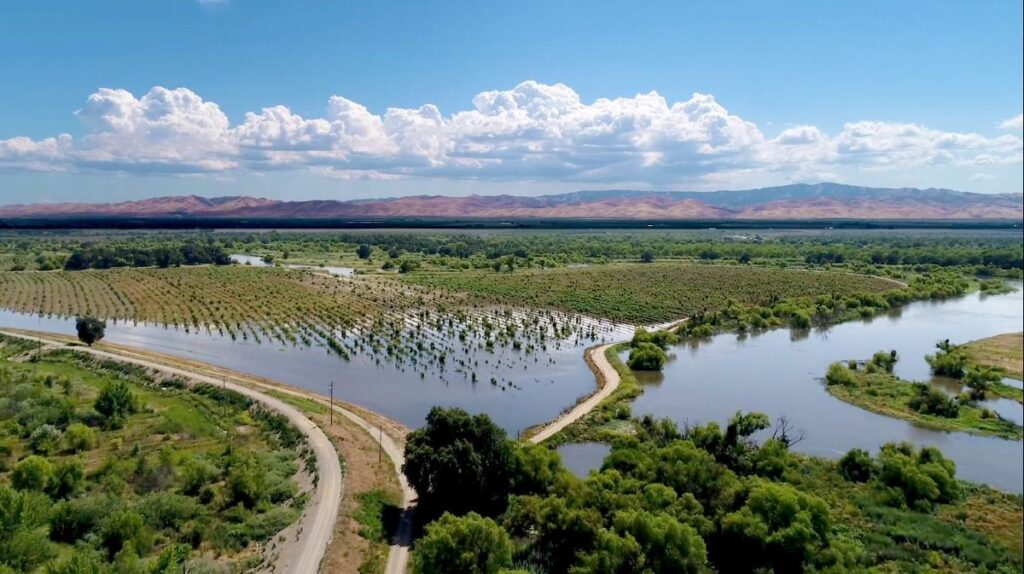
For applicants, the promise of a Section 1707 dedication can be tested by the realities of the approval process. Alex Hart of Hart Ranch in Siskiyou County and Julie Rentner, president of River Partners, described their organizations’ experiences navigating public protests, added costs and delays, and the challenge of tracking dedicated water through the Delta. Their perspectives illustrate how procedural and accounting hurdles can shape even broadly supported efforts to keep water instream.
Navigating the public protest process
Hart Ranch initially submitted its application in January 2019 and resubmitted it in June 2019 after receiving input from the California Department of Water Resources. State Water Board staff reviewed the application and prepared it for public comment. Approximately nine protests were filed during the comment period. Hart Ranch worked with the protestants, but Ms. Hart said the board ultimately found the protests “inadequate in compliance requirements and, in general, insufficient, failing to provide evidence of harm.”
Ms. Hart said she had expected the public comment period to solicit comments rather than formal protests. She emphasized that the distinction is significant because resolving protests can be costly, particularly for smaller landowners.
“It was quite an unplanned burden, shouldering those costs of not only trying to work with those protestants—which we can try to do, but they don’t have to come to the table—but also having to go back and forth with Water Board staff. The frustration built up on all sides, making the process just unnecessarily complicated.”
Ms. Hart also said the protestants in her case were given three opportunities to resubmit protests that had already been deemed inadequate, extending the process by several months. She suggested revising the public process to require protestants to meet the same standard of proof applied to applicants, particularly when the board’s initial review finds a protest inadequate or insufficient.
“There can be common-sense standards put in place,” said Ms. Hart. “If you’re expecting the applicant to be proving everything, down to where every drop of water is going, you should be able to at least say, ‘Protestants, you can’t just protest because you don’t like it. If you have a legitimate claim of harm or concern, then we’re going to entertain it.’”
The Dos Rios Section 1707 petition was also drafted in 2019 and is approximately 185 pages long. The petition seeks to dedicate water associated with Dos Rios Ranch’s riparian rights under Section 1707(c), allowing the water to supplement existing regulatory flow requirements. Located at the confluence of the Tuolumne and San Joaquin rivers, Dos Rios Ranch releases water that flows through the South Delta. The petition aims to protect that water to the confluence of the Sacramento and San Joaquin rivers, along a route that passes approximately 120 diverters in the South Delta.
Julie Rentner said the project received only a few protests. “One of the surprises was, in some of the conversations with protestants, they said, ‘I love what you’re trying to do. I think the river does need more flow. I think fish and wildlife habitat is important. But I’m always going to protest changing water rights in an area that might have an effect on me.’ So, no matter what, that protest period is going to be one that attracts a lot of comments and attention.”
Erik Ekdahl acknowledged the delays Ms. Hart experienced and said the board had learned from the process. “We have been trying to be more efficient in that overall approach we take and how many bites at the apple one might get,” he said.
Mr. Ekdahl also explained that the State Water Board recognizes four types of public input, each governed by different legal requirements and standards. Petitions and applications for new water rights are subject to a formal protest process established in the Water Code, and the board cannot proceed until all protests are resolved.
The Water Code also provides for objections related to temporary permits. Objections carry a lower standard than formal protests but a higher standard than general public comments.
Public comments submitted under the Porter-Cologne Water Quality Control Act, the Clean Water Act, and CEQA are subject to varying response requirements. Some comments require a formal response, while others do not. Mr. Ekdahl said the differing standards can be difficult for the public, regulators, petitioners, and applicants to navigate because some forms of input carry substantially higher requirements than others.
The challenge of Delta flow accounting
Ms. Rentner said the Dos Rios Ranch dedication could test whether California’s water-right accounting and dedication systems can track water released upstream as it moves through the South Delta.
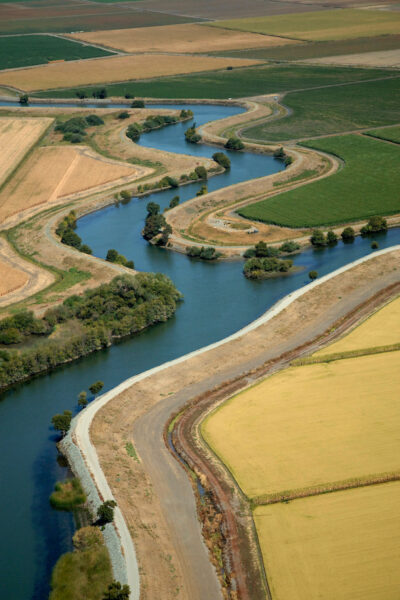
The Delta is a complex system with numerous water rights and major state and federal pumping facilities operated through coordinated procedures. Incorporating an instream dedication into those overlapping uses and operations remains difficult.
“One of the surprises for us was that there’s not actually an accounting line in the spreadsheet for environmental flows through the Delta,” said Ms. Rentner. “So, you can’t voluntarily contribute environmental flows through the Delta with the way our accounting system is currently set up.”
Current Delta water-management accounting focuses on meeting regulatory flow requirements, leaving no separate category for voluntary water dedicated above those minimums. “So, with a 1707(c) and the desire to dedicate water on top of regulatory requirements, the accounting system needs an upgrade. We need to be able to add a line in the system that says, ‘Oh, this is the water that folks upstream have voluntarily dedicated.’”
“I think that if we could get the Dos Rios dedication through the South Delta, it would be a really good illustration of how the rest of the Healthy Rivers and Landscapes—or voluntary agreements—might work, with 1707 as the protection for instream flow getting down through the Delta.”
Combining instream-flow standards and voluntary dedications
Panelists were asked whether the State Water Board should establish instream-flow requirements independently of Section 1707 dedications or use those dedications to address the absence of such requirements in parts of the state.
“It’s a little from column A, a little from column B,” said Mr. Ekdahl. “We always want to give folks the opportunity to dedicate water to serve for instream purposes, whether we have a standard set or not. And the work that Ms. Hart has done in creating the wetland habitat and all the watershed-scale series of projects is not something that the board could do, ever. That’s taking a bigger, broader vision of the watershed—the watershed health—whereas water rights, by their very nature, are very focused on streams and rivers, and every now and then interconnected groundwater. That being said, we should probably be looking at how we establish these base flows. You have to have something there that people can have a water right on top of that protects the base public trust value at the same time.”
Board Chair Joaquin Esquivel said both approaches are necessary. “It’s not an either-or. We need to be doing both and recognize, as well, that there are a lot of streams in this state. It’s a huge state, and we are needing to accelerate and do better at setting those instream flows. But the challenges that Erik talked about, even on the 1707 dedication side—the need for better data, the environmental CEQA work that goes all along—those are still major challenges. Whether you’re taking a path at the board, establishing instream flows and then folks better aligning to that, or voluntary 1707 dedications, what we keep running up into is the need to do better in administering the water-right system and more actively create these opportunities for both voluntary approaches and for willing water-right holders to do the right thing, to contribute to these outcomes in the watershed, and to continue to establish better instream-flow standards and expectations as to how much we should be keeping in our streams. And that’s all a watershed-by-watershed discussion.”
“Certainly, the board is doing its part in the Bay-Delta Plan to have standards and also to have a voluntary approach—a hybrid method—and I think that’s where, ultimately, we need both tools. It isn’t necessarily about either-or, but about how the system as a whole works to protect water-right holders, instream flows, and the beneficial uses of California’s water.”
Note: The Watershed Solutions Network hosts online workshops on the fourth Thursday of every month with the aim of sparking systems thinking, cross-sector understanding, and new ideas together. Learn more about the Watershed Solutions Network and find out what’s next on the schedule here.
- Instream flow dedication, webpage at the State Water Board
- River Partners, find out more about their projects and initiatives
- A Practitioner’s Guide to Instream Flow Transactions in California, a 206 guide from the Small Watershed Instream Flow Transfers Working Group

