
By the Department of Water Resources:
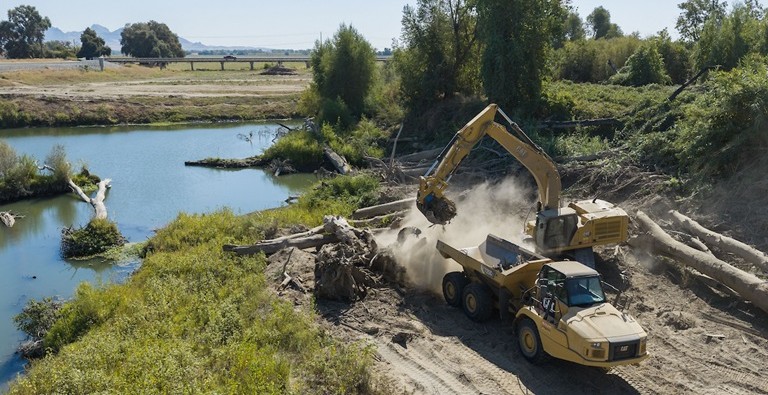
In the summer of 2022, California was in the middle of the driest three-year stretch on record. But that fall, just as they do every year, DWR staff and local flood agencies fanned out across the Central Valley to prepare its complex system of flood bypasses, weirs, canals and other infrastructure for the possibility of high water. Crews performed critical maintenance and repairs, cleared vegetation, and readied the flood system, even as the landscape around them remained dry.
That work is carried out year after year by DWR and its partner agencies responsible for maintaining the State Plan of Flood Control, the integrated state-federal flood management system that protects over 2 million Californians across the Central Valley. Just months later, that preparation proved critical.
Throughout the winter and spring of 2023, high water spilled into the Sutter and Yolo bypasses as a series of powerful storms swept across California, putting the system to the test. The Sierra Nevada received one of the largest snowpacks in state history, keeping Central Valley rivers elevated well into the summer. Some locations on the Sacramento and San Joaquin rivers remained at flood stage in late June.
The flood system performed exactly as it was intended, aided by the maintenance performed every year by DWR and its partners, and by ongoing investments described by the Central Valley Flood Protection Plan, the state’s comprehensive strategy for reducing flood risk in the Central Valley.
Under that strategy, flood protection is not defined by a single levee, dam, or other infrastructure. Instead, California is taking a systemwide approach – protecting high-risk communities while considering how floodwater moves through the valley, and how the natural landscapes and infrastructure can work together to manage high flows.
Levee improvements provide greater protection for urban communities. Expanding floodplains gives floodwater more room to spread safely, while creating new habitat and reducing levee erosion. Expanding the valley’s bypasses allows more floodwater to flow out of the main river channels and away from cities and communities. Reservoir operators are utilizing advances in forecasting to better anticipate major atmospheric rivers and using that information to protect communities from flooding and aid water supply. Over $400 million has been provided to local levee-maintaining agencies to support levee maintenance.
DWR’s Division of Safety of Dams (DSOD) also inspects every high hazard dam in the state each year and is working closely with dam owners to prepare for this winter. In recent decades, DSOD’s reevaluation program, which utilizes modern engineering techniques to evaluate the state’s oldest dams, has captured seismic risks, design defects and other previously unknown issues, ensuring dam owners are able to make repairs and take other actions to reduce risk.
As a new water year begins and El Niño conditions strengthen, all Californians should be prepared for flood season. The Central Valley faces some of the highest flood risk in the country. But California continues to reduce that risk through a comprehensive approach: maintaining and improving critical infrastructure, giving rivers more room to safely carry high flows, investing in better forecasting, and adapting the flood system to work with natural processes. It is work that happens every year – in drought and wet years alike – to prepare California for this winter and the floods that will come in the years ahead.

