

From the Department of Fish and Wildlife:
 In response to the recent detection of golden mussel (Limnoperna fortunei) in the Sacramento-San Joaquin Delta, the state of California has developed a comprehensive Golden Mussel Response Framework to address this urgent invasive species threat. The discovery in October 2024 marked the first known occurrence of golden mussel in North America. To combat this threat, the framework provides coordinated strategies by multiple California departments to prevent further introduction and spread of golden mussels, as well as to contain and suppress infestations to minimize their impact on the environment, water conveyance, recreation and agriculture.
In addition, the California Department of Fish and Wildlife (CDFW) is offering $1 million in grant funding to boating facility operators to enhance efforts against invasive mussels, particularly the threat of golden mussels. This funding supports projects that help prevent the introduction and spread of invasive mussels in lakes, reservoirs and waterways, ensuring the long-term health of state waters. The grant solicitation and application link can be found on CDFW’s website.
Native to East and Southeast Asia, golden mussels pose a significant threat to California’s natural ecosystems, water infrastructure, agriculture, and economy. The invasive species has already caused major disruptions in other parts of the world, including heavy biofouling of water intake systems, and negative impacts to habitat and wildlife.
“The discovery of golden mussels in California is a serious challenge that requires coordinated action and a long-term commitment,” said CDFW Director Charlton H. Bonham. “This response framework recommends critical steps that must be taken across state, regional and local levels to limit the spread and mitigate the impacts of this invasive species.”
“Taking coordinated action to address this invasive species will help safeguard critical water infrastructure like the State Water Project from the negative impacts golden mussels can pose to water delivery systems,” said John Yarbrough, DWR Deputy Director for the State Water Project. “Using this new framework and close collaboration with partner agencies, DWR will implement strategies to address this invasive species and minimize impacts by monitoring for the mussels in SWP waters and developing a mitigation plan.”
Reservoir managers across the state are adjusting their recreational plans for the upcoming boating season to address concerns for the golden mussel.
“Recreational boating is a significant contributor to California’s economy, and California State Parks’ Division of Boating and Waterways (DBW) is working diligently with allied industry and agency partners to provide outreach and educational information to boaters and waterbody managers on the importance of the Clean, Drain and Dry message to help protect the state’s waterways from invasive species,” said DBW Deputy Director Ramona Fernandez. “DBW recommends boaters contact the waterbody manager to learn of any updated requirements before they head out.”
DBW maintains a list of contacts at: https://dbw.parks.ca.gov/inspections.
The response framework developed by the Golden Mussel Task Force is composed of key state and federal agencies, including CDFW, DWR, California State Parks, California Department of Food and Agriculture, and several other federal and local partners. It outlines a comprehensive strategy to respond to the invasive species, focusing on preventing further introduction, containing mussels within currently infested waters and reducing population within the invaded range where feasible.
Key recommendations in the response framework include:
- Containment and Prevention Measures
- Development of a map of Delta launch sites to prioritize management at high-use sites.
- Investigation of pathways of spread, such as watercraft and overland movement, aquaculture trade, etc.
- Increased inspection and decontamination capacity for watercraft, with expanded training for inspectors.
- Education and Outreach
- Launch of education campaigns to inform the public about the golden mussel threat and how they can help prevent its spread.
- Posting of signage at waterbodies where golden mussels are present promoting the “Clean, Drain, Dry” practice following and ending every outing.
- Collaboration with businesses that provide watercraft cleaning services to promote industry standards.
- Incentives and Partnerships
- Promotion of watercraft cleaning services within and around the Delta to assist in controlling the spread of the mussels.
The Golden Mussel Task Force will continue to collaborate to mitigate the impacts of this invasive species and protect the state’s water resources. The Golden Mussel Framework is a dynamic document, evolving with new information and adaptive management strategies.
For more information or to learn how you can help prevent the spread of golden mussel and report sightings visit: https://wildlife.ca.gov/Conservation/Invasives/Species/Golden-Mussel.
###
Media Contacts:
Krysten Kellum, CDFW Communications, (916) 825-7120
Maggie Macias, DWR Public Affairs Office, (916) 902-7405
Adeline Yee, California State Parks, Newsroom@parks.ca.gov
For more on golden mussels …
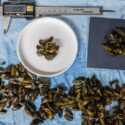
SJV WATER: State refuses to declare golden mussel emergency because there is no “long-term solution”
By Lois Henry, SJV Water Kern County water managers and officials were left scratching their heads after the California Governor’s Office of Emergency Services (CalOES) refused to declare an emergency due to golden mussels because “…there is no identified long-term solution to eliminate or control the continuation of the Golden Mussel Invasion,” according to a letter from CalOES. Without an emergency declaration, local water agencies aren’t eligible for California Disaster Assistance Act funding to help defray what’s conservatively estimated to […]

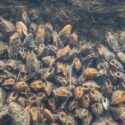
SJV WATER: Golden mussels may weaken concrete and degrade water quality, studies suggest
By Allison Hunter, SJV Water Invasive golden mussels that have been clogging pipelines throughout the state’s water systems over the past two years may also weaken concrete and cause water quality issues, according to several studies. Westlands Water District Deputy General Manager Kelly Vandergon told the district’s board in September that a study in China showed golden mussel attachment could weaken cement. Vandergon said the study showed that the way the mussel’s byssal threads attach to concrete “essentially loosens that […]
SJV WATER: Westlands Water District may get funding from Department of War to combat golden mussels
By Allison Hunter, SJV Water Westlands Water District has partnered with the Lemoore Naval Air Station to request $1.8 million in funding from the Department of War in its ongoing efforts to battle invasive golden mussels. An acoustic doppler current profiler is shown clean of golden mussels on the right in Oct. 2024, then infested in August 2025. SOURCE: Department of Water Resources The funding is through the Department of War’s Readiness and Environmental Protection Integration (REPI) program, which is […]
NOTEBOOK FEATURE: Uninvited guests: Protecting California from invasive species
Experts explain how prevention, early detection, and coordinated response can help protect California’s ecosystems, waterways, agriculture, and communities. Invasive species are reshaping California’s landscapes, waterways, farms, and communities, creating challenges that span ecology, infrastructure, public health, and the economy. During the webinar Uninvited Guests: Protecting California from Invasive Species, hosted by California Natural Resources Secretary Wade Crowfoot, experts discussed how invasive species arrive, why early detection matters, and how state agencies, researchers, land managers, and the public are working to […]
AG ALERT: Golden mussels plague farms and water districts
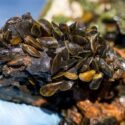
By Caleb Hampton The spread of golden mussels in California has alarmed farmers this year as the invasive species established itself in waterways across much of the state. In the Sacramento-San Joaquin Delta, the freshwater mollusks began obstructing irrigation systems that sustain billions of dollars’ worth of tree nuts, winegrapes, tomatoes and other crops. “It’s a nightmare,” said Trey Steinhart, operations director at Zuckerman Family Farms in San Joaquin County. “There’s nothing you can do to stop them.” Experts believe […]
